
Smart Rings vs. Smartwatches: The 2026 Health Tracking Comparison
As wearable technology advances, consumers face a choice between the active real-time data of smartwatches and the passive, sleep-focused monitoring of smart rings.
By Factlen Editorial Team
- Active Performance Advocates
- Prioritize real-time data, GPS accuracy, and active workout coaching.
- Recovery & Sleep Prioritizers
- Focus on resting metrics, sleep architecture, and passive stress management.
- Hybrid Fitness Analysts
- Advocate for using both devices to capture a complete 24-hour health picture.
What's not represented
- · Traditional mechanical watch collectors
- · Budget-conscious consumers
Why this matters
Choosing the right wearable determines whether you actually use it to improve your health. A mismatched device often ends up abandoned in a drawer, while the right form factor seamlessly integrates into your daily routine to provide actionable insights.
Key points
- Smartwatches act as active companions, offering real-time workout data, GPS tracking, and screen-based notifications.
- Smart rings function as passive observers, excelling in sleep tracking, overnight comfort, and multi-day battery life.
- Finger-based sensors capture cleaner resting heart rate variability (HRV) data, while wrist sensors perform better during high-intensity movement.
- A growing number of users are adopting a dual-device approach, wearing a watch during the day and a ring at night.
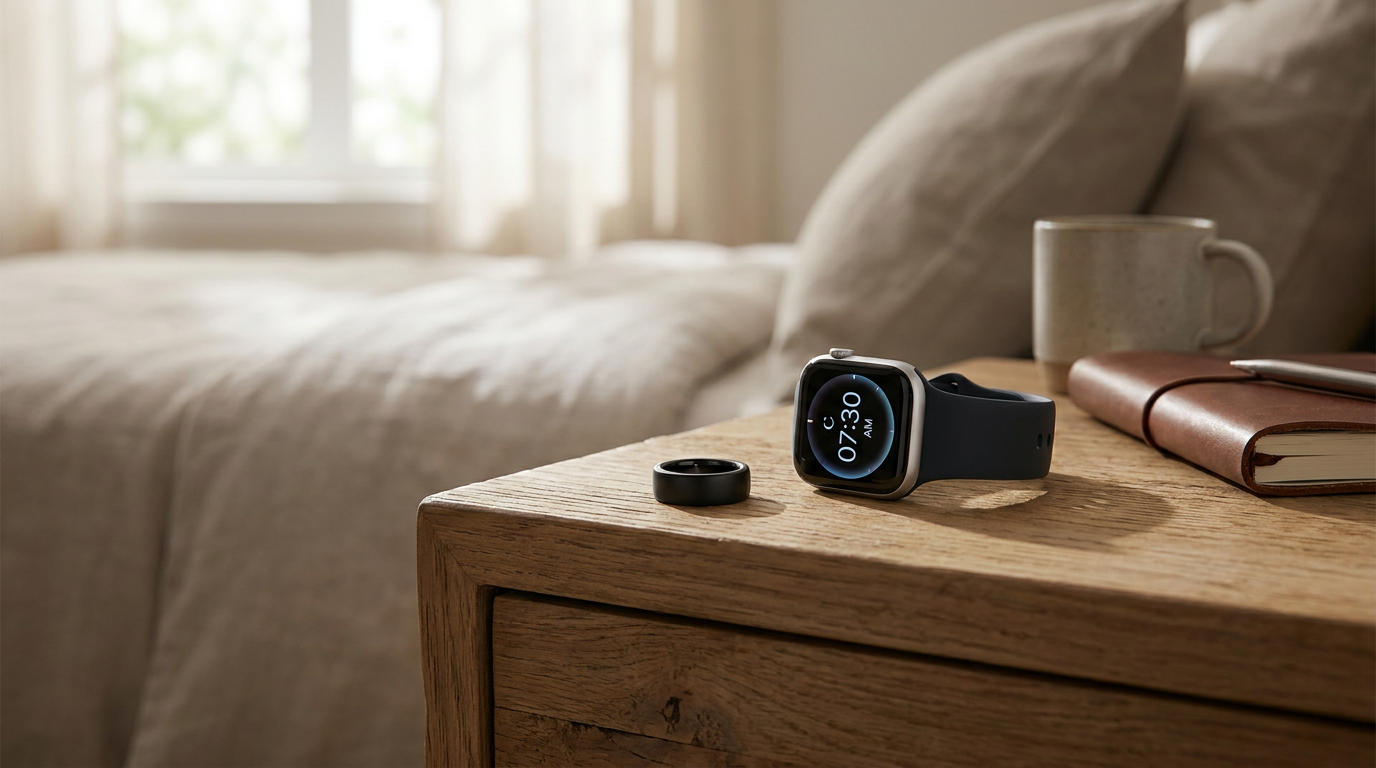
The wearable health technology landscape in 2026 has moved far beyond simple step counting. Today’s devices offer clinical-grade insights into heart rate variability, blood oxygen saturation, and sleep architecture. As consumers seek to optimize their daily recovery and athletic performance, the market has bifurcated into two distinct form factors: the traditional smartwatch and the emerging smart ring. Devices like the Apple Watch Series 11 and the Oura Ring 4 represent the pinnacle of this divide, forcing buyers to choose between an active wrist-based companion and a passive finger-based observer.[3][6]
The smartwatch and the smart ring represent fundamentally different philosophies of health tracking, and choosing between them requires understanding your own habits. A smartwatch is designed as an active interface. It provides real-time feedback, delivers notifications, and allows users to interact with applications directly on their wrist. It demands your attention to help you change behavior in the moment. In contrast, a smart ring operates as a passive data collector. It sits quietly on the finger, gathering biometric information around the clock without buzzing or glowing, and syncs that data to a smartphone for later review. Understanding this philosophical split is the first step in determining which device aligns with your personal health goals.[6]
For the smartwatch, the primary argument rests on real-time visibility and comprehensive workout tracking. Devices like the Apple Watch Series 11 and Garmin wearables feature built-in GPS, allowing runners and cyclists to track their outdoor routes accurately without needing to carry a heavy smartphone. The screen provides immediate, glanceable feedback on heart rate zones, pacing, and training load during an exercise session, which is crucial for interval training. Furthermore, smartwatches boast advanced medical features, such as electrocardiogram (ECG) capabilities that can detect atrial fibrillation, which rings currently cannot replicate due to their compact size and sensor limitations.[1][5]
Against the smartwatch, the most significant drawbacks are battery life and nighttime comfort. The robust OLED screens, continuous GPS polling, and constant background syncing require substantial power, limiting most mainstream smartwatches to an 18- to 36-hour battery life. This necessitates daily charging, which often interrupts continuous health tracking and creates gaps in your data. Additionally, many users find wearing a bulky, illuminated device on their wrist to be uncomfortable and distracting during sleep. The physical presence of a watch can interfere with sleep hygiene, leading to inconsistent nighttime data collection for those who simply take it off before bed.[4][6]

The evidence supporting smartwatches is strongest in the realm of active movement and structured exercise. During high-intensity workouts, wrist-based optical sensors and the tight fit of an adjustable watch band provide highly accurate heart rate monitoring, resisting the signal noise caused by arm swinging. Our panel of fitness analysts noted that smartwatches automatically detect and categorize workouts with precision, updating fitness statistics in real time. For athletes who need to know exactly how much time they are spending in specific aerobic zones while they are moving, the smartwatch remains the undisputed champion of the wearable market.[1][3]
The evidence supporting smartwatches is strongest in the realm of active movement and structured exercise.
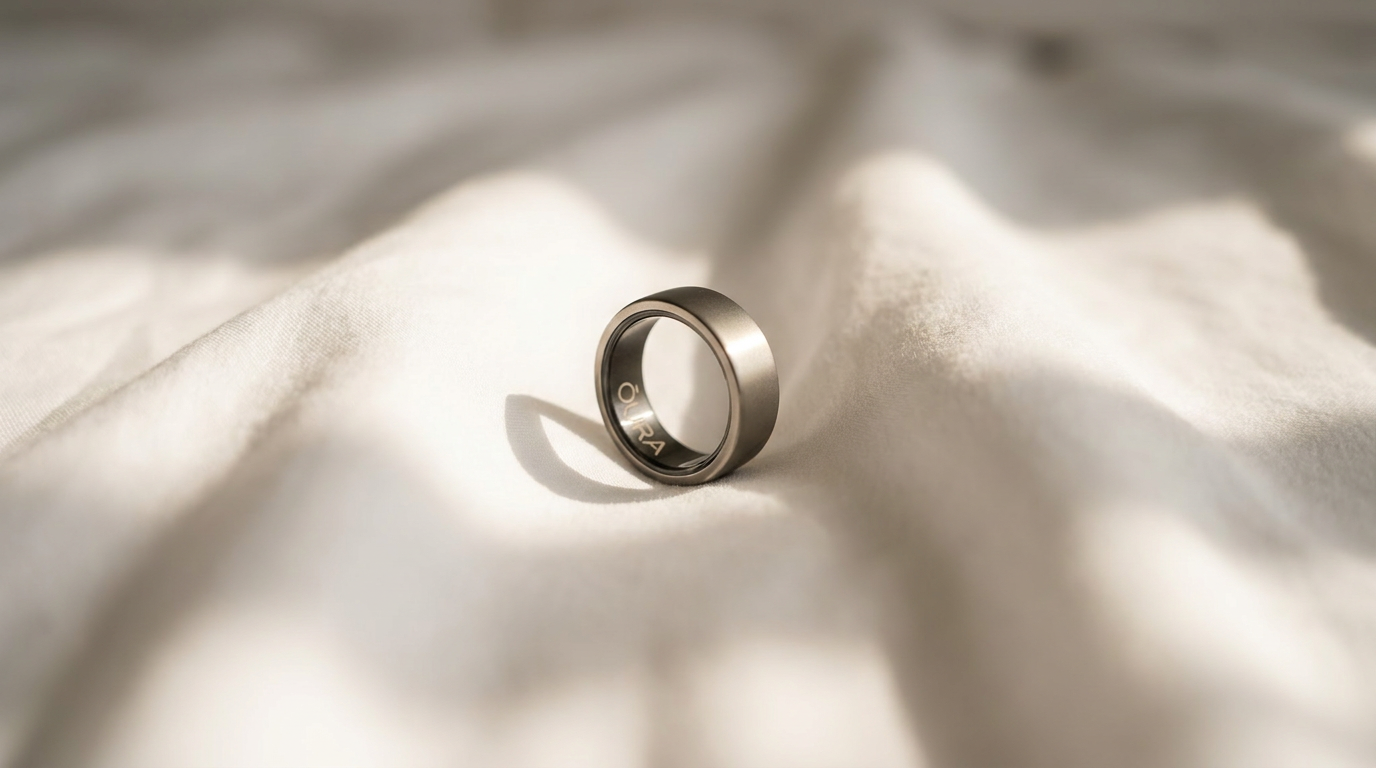
For the smart ring, the strongest argument is unmatched comfort and superior sleep tracking capabilities. Weighing just four to eight grams, devices like the Samsung Galaxy Ring 2 and Oura Ring 4 are virtually unnoticeable once placed on the finger. This lightweight, screenless design leads to significantly higher user compliance for overnight wear. Because they lack power-hungry displays and cellular radios, smart rings boast a battery life of five to seven days. This extended endurance allows for uninterrupted data collection, building a much more accurate baseline of an individual's long-term health, stress, and recovery trends over weeks and months.[2][6]
Against the smart ring, the primary limitations are the lack of real-time feedback and hidden long-term costs. Without a screen, users cannot check their heart rate mid-run, receive pacing alerts, or glance at incoming text messages. Furthermore, smart rings rely entirely on a connected smartphone for GPS tracking, making them less ideal for outdoor athletes who prefer to leave their phones at home. Financially, while the upfront cost of a ring might mirror a watch, some platforms require ongoing monthly subscriptions—such as Oura's $5.99 monthly fee—to access detailed health metrics, which significantly increases the total cost of ownership over several years.[4][6]
The evidence supporting smart rings reveals a surprising anatomical advantage for resting metrics. The digital arteries in the finger are closer to the skin surface and feature a denser capillary network than the wrist. This allows the ring's photoplethysmography (PPG) sensors to capture a cleaner, stronger pulse signal with less noise from ambient light or awkward sleeping positions. A 2024 validation study comparing wearables against clinical polysomnography found that premium smart rings achieved a 79 percent accuracy rate in four-stage sleep classification, outperforming wrist-worn alternatives for nocturnal heart rate variability and precise body temperature deviation tracking.[5][6]

The divergence in strengths has given rise to a growing trend among health enthusiasts and data optimizers: the dual-wearer approach. Rather than choosing one form factor and accepting its compromises, many users are adopting both to cover all bases. In this setup, the smartwatch is worn during the day and for specific training sessions to capture real-time performance data, track GPS routes, and manage notifications. At night, the watch is placed on the charger, and the smart ring takes over to seamlessly track sleep architecture, respiratory rate, and recovery metrics without the bulk of a wristband disrupting their rest.[2][4]
Ultimately, the smartwatch fits well when your primary goal is active lifestyle management and real-time connectivity. It is the optimal choice for runners, cyclists, and fitness enthusiasts who require live pacing, built-in GPS, and immediate access to workout data on their wrist. It also serves those who want a connected extension of their smartphone for calls, texts, and mobile payments. However, the smartwatch does not fit well when you suffer from screen fatigue, prioritize discreet traditional accessories, or find wrist-worn devices too cumbersome and distracting to wear consistently to bed every single night.[1][3]

Conversely, the smart ring fits well when your focus is on passive health monitoring, long-term stress management, and sleep optimization. It is ideal for individuals who want comprehensive biometric data—such as overnight heart rate variability and temperature trends—without the distraction of a glowing screen or constant notifications. It is also perfect for those who prefer wearing traditional mechanical watches during the day. The smart ring does not fit well when you need live workout coaching, precise outdoor route tracking without carrying a phone, or if you are strongly opposed to paying potential subscription fees for your health data.[5][6]
How we got here
2015
The launch of the Apple Watch normalizes wrist-based health tracking for the mainstream consumer.
2021
The Oura Ring Gen 3 introduces continuous heart rate monitoring to the finger form factor.
2024
Samsung enters the smart ring market, validating the category for mainstream Android users.
2026
Smart rings and smartwatches reach feature parity in baseline metrics, forcing consumers to choose based primarily on form factor.
Viewpoints in depth
Active Performance Advocates
Prioritize real-time data, GPS accuracy, and workout coaching.
This camp, often composed of runners, cyclists, and triathletes, views health tracking as an active pursuit. They argue that data is only useful if it can be acted upon in the moment. For them, a wearable must have a screen to display heart rate zones, pacing, and interval timers during a workout. They favor smartwatches because the built-in GPS and robust sensor arrays provide the high-resolution data required to optimize athletic performance, dismissing smart rings as too passive for serious training.
Recovery & Sleep Prioritizers
Focus on resting metrics, sleep architecture, and long-term stress management.
Users in this camp believe that health is built during rest, not just during exercise. They argue that the most critical metrics—such as overnight heart rate variability, respiratory rate, and temperature—require a device that is comfortable enough to wear 24/7. They champion smart rings because the finger provides a superior optical signal for resting metrics, and the lack of a screen reduces digital distraction and blue light exposure before bed. To them, the smartwatch is an intrusive notification machine that disrupts the very peace it claims to measure.
Hybrid Fitness Analysts
Advocate for using both devices to capture a complete 24-hour health picture.
This perspective acknowledges the inherent physical limitations of both form factors. Rather than compromising, these users advocate for a dual-device ecosystem. They rely on the smartwatch for its undeniable superiority in workout tracking and daytime connectivity, but transition to the smart ring at night for its unmatched sleep tracking accuracy and comfort. They argue that as health platforms become better at merging data from multiple sources, the 'watch by day, ring by night' approach offers the most uncompromising view of human health.
What we don't know
- Whether future smart rings will be able to incorporate micro-displays or haptic feedback complex enough to provide real-time workout pacing.
- How upcoming non-invasive blood glucose monitoring technology will be distributed between wrist and finger form factors.
Key terms
- Photoplethysmography (PPG)
- An optical measurement technique used by wearables that shines light into the skin to detect blood volume changes and calculate heart rate.
- Heart Rate Variability (HRV)
- The measure of the time variation between consecutive heartbeats, used as a key indicator of physical stress and nervous system recovery.
- Electrocardiogram (ECG)
- A test that measures the electrical activity of the heartbeat, available on premium smartwatches to detect irregular rhythms like atrial fibrillation.
- Polysomnography
- A comprehensive sleep study used as the clinical gold standard for diagnosing sleep disorders, often used to test wearable accuracy.
Frequently asked
Do smart rings require a monthly subscription?
It depends on the brand. The Oura Ring requires a monthly fee for full data access, while the Samsung Galaxy Ring and Ultrahuman Ring Air do not.
Can a smart ring track my outdoor runs accurately?
Smart rings lack built-in GPS and real-time screens, meaning they must rely on a connected smartphone to track distance and cannot show you live pacing.
Is it redundant to wear both a smartwatch and a smart ring?
Not necessarily. Many users wear a smartwatch during the day for notifications and workouts, and switch to a smart ring at night for more comfortable and accurate sleep tracking.
Sources
Source coverage
6 outlets
3 viewpoints surfaced






[1]ForbesActive Performance Advocates
Oura Ring Vs. Apple Watch: Fitness Tracking
Read on Forbes →[2]Runner's WorldHybrid Fitness Analysts
Samsung Galaxy Ring vs smartwatch sleep tracking accuracy
Read on Runner's World →[3]NBC NewsActive Performance Advocates
Apple Watch vs Oura Ring: Which fitness tracker is best?
Read on NBC News →[4]Garage Gym ReviewsHybrid Fitness Analysts
Oura Ring vs Apple Watch
Read on Garage Gym Reviews →[5]Wearable Wellness GuideRecovery & Sleep Prioritizers
Stress Tracker Comparison 2026: Ring, Watch & Biofeedback
Read on Wearable Wellness Guide →[6]AskVoraRecovery & Sleep Prioritizers
Smart Ring vs Smartwatch: 2026 Wearable Decision Guide
Read on AskVora →
More in shopping
See all 5 stories →

Every angle. Every day.
Get shopping stories with full source coverage and perspective breakdowns delivered to your inbox.