
Climate Tech Startup Fervo Energy Activates First Commercial Next-Gen Geothermal Plant
The Google-backed startup has officially brought its Cape Station facility online in Utah, proving that advanced geothermal technology can deliver 24/7 carbon-free baseload power at a commercial scale.
By Factlen Editorial Team
- Climate Tech Investors
- View this as a massive de-risking event that proves EGS can be profitable and scalable.
- Grid Operators
- Desperate for firm, reliable clean power to balance the intermittency of wind and solar.
- Tech Industry Buyers
- See advanced geothermal as the key to powering energy-hungry AI data centers without carbon emissions.
What's not represented
- · Traditional fossil fuel baseload providers
- · Local water conservation advocates
Why this matters
Solving the intermittency problem of wind and solar is the holy grail of the energy transition. By proving that enhanced geothermal can operate profitably at scale, this milestone unlocks a massive new source of reliable, around-the-clock clean electricity for homes and data centers.
Key points
- Fervo Energy has activated Cape Station, the world's first commercial-scale Enhanced Geothermal System.
- The Utah facility delivers 400 megawatts of continuous, carbon-free baseload power to the grid.
- The technology adapts horizontal drilling techniques from the oil and gas industry to create underground heat reservoirs.
- Tech companies like Google are major backers, viewing geothermal as critical for powering AI data centers.
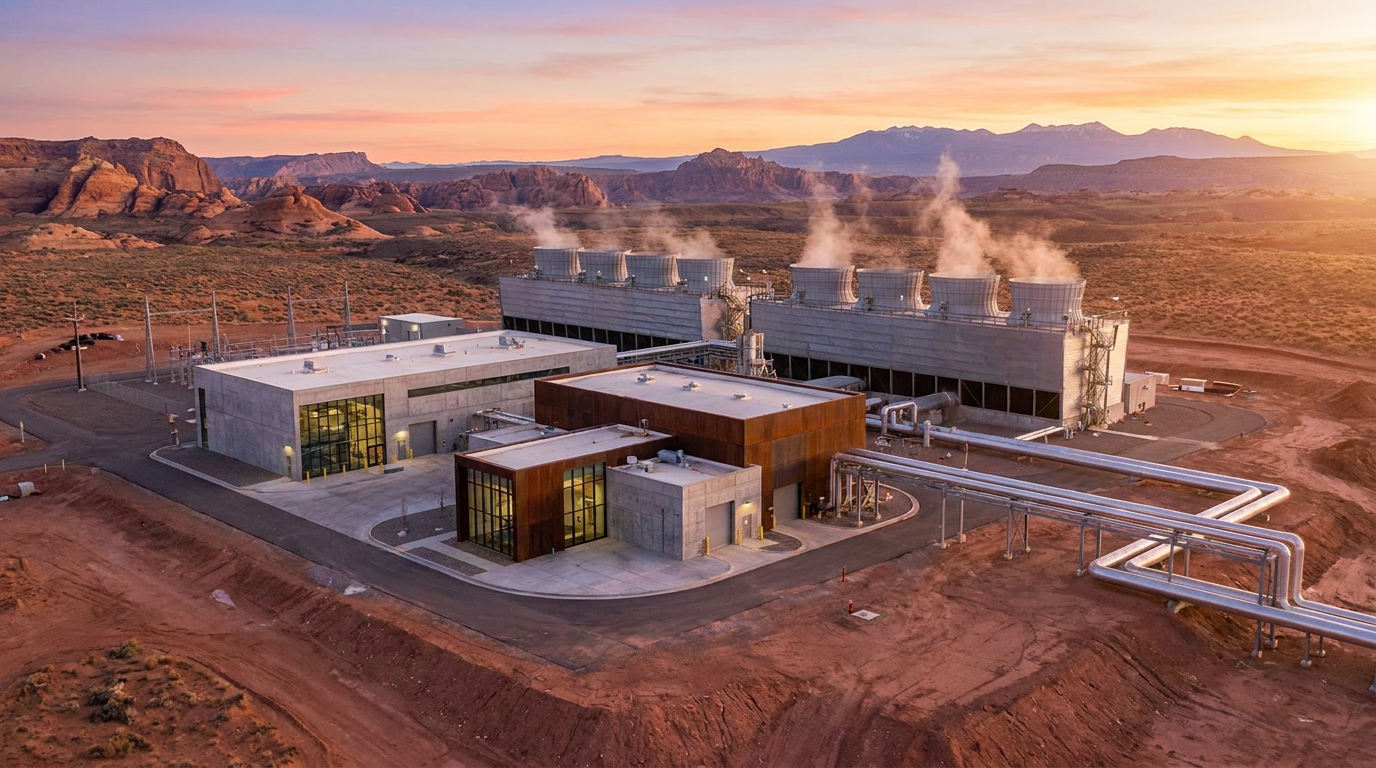
The holy grail of renewable energy—power that flows even when the sun sets and the wind stops blowing—just took a massive step toward commercial reality. On Sunday, climate tech startup Fervo Energy officially activated its Cape Station facility in Beaver County, Utah, beginning continuous commercial power delivery to the regional grid.[1][3]
The launch marks a watershed moment not just for the Houston-based startup, but for the broader energy transition. Cape Station is the world’s first utility-scale Enhanced Geothermal System (EGS) to achieve commercial operation, delivering a steady 400 megawatts of carbon-free baseload power.[2][4]
That output is enough to supply roughly 300,000 homes with uninterrupted electricity, proving that next-generation geothermal can graduate from small-scale pilot projects to grid-scale heavy lifting. It represents a critical victory for a technology that many energy analysts view as the missing puzzle piece in a fully decarbonized electrical grid.[6][8]
Traditional geothermal energy has historically been limited to regions with naturally occurring underground hot springs, such as Iceland or parts of California. Fervo’s breakthrough involves applying horizontal drilling and hydraulic fracturing techniques—technologies perfected by the oil and gas industry over the last two decades—to hot, dry rock deep beneath the earth's surface.[7]

By injecting water into these artificially created subsurface fractures, the company creates a closed-loop underground radiator. The water absorbs the earth's natural heat, returns to the surface as high-pressure steam, and spins a turbine to generate electricity before being cooled and recirculated back underground in a continuous, zero-emission loop.[5][8]
By injecting water into these artificially created subsurface fractures, the company creates a closed-loop underground radiator.
"We are no longer talking about the potential of advanced geothermal; we are putting megawatts on the board," Fervo Energy’s leadership announced during the activation ceremony. The successful launch of Cape Station validates years of intensive research and development, backed by early partnerships with tech giants eager to secure clean power for their operations.[4]
Google, which partnered with Fervo in 2021 to develop a smaller 5-megawatt pilot project in Nevada, has been a crucial early adopter. The tech industry's insatiable demand for 24/7 clean energy to power artificial intelligence data centers has created a massive, guaranteed market for firm renewable power that doesn't rely on the weather.[2][5]
Wind and solar power have seen precipitous cost declines over the past decade, but their intermittent nature requires expensive battery storage or natural gas peaker plants to maintain grid stability. Geothermal offers a "capacity factor" of over 90%, meaning it produces its maximum power output nearly all the time, compared to roughly 25% for solar and 35% for wind.[6][7]

The financial markets have taken notice of this unique value proposition. Fervo recently closed a massive late-stage funding round, bringing its total capital raised to over $2 billion, signaling deep investor confidence in the company's ability to replicate the Cape Station model across the American West.[1][8]
Regulatory hurdles and grid interconnection delays remain significant bottlenecks for the broader deployment of EGS technology. However, the successful commercialization at Cape Station is expected to provide a blueprint for streamlining permitting processes, particularly on federal lands where many of the best geothermal resources are located.[3][6]

Looking ahead, the startup is already breaking ground on expansions that will push Cape Station's capacity even higher by 2028, while actively exploring new sites in Nevada, Idaho, and California. If the technology can continue to drive down drilling costs through economies of scale, enhanced geothermal could soon become a foundational pillar of the global clean energy economy.[4][7]
How we got here
2017
Fervo Energy is founded to adapt oil and gas drilling techniques for clean energy.
2021
Google and Fervo partner to develop a next-generation geothermal pilot project.
2023
Project Red in Nevada successfully proves the commercial viability of the drilling technology.
June 2026
Cape Station officially comes online, delivering 400 MW of commercial power to the Utah grid.
Viewpoints in depth
Climate Tech Investors
View this as a massive de-risking event that proves EGS can be profitable and scalable.
For years, venture capital has treated advanced geothermal as a high-risk, capital-intensive science project. The successful commercialization of Cape Station fundamentally changes that math. Investors now point to Fervo's ability to drive down drilling times and costs with each successive well as proof that EGS can follow the same steep cost-decline curve that solar and wind experienced in the 2010s. With a proven business model, capital is expected to flood into the sector to scale operations across the American West.
Grid Operators
Desperate for firm, reliable clean power to balance the intermittency of wind and solar.
Utility companies and regional grid operators face a mounting crisis: as they retire aging coal and natural gas plants, they are replacing them with wind and solar power that disappears when the weather changes. Grid managers view advanced geothermal as the ultimate stabilizing force. Because it provides 'firm' baseload power that runs 24/7, a megawatt of geothermal is vastly more valuable to grid stability than a megawatt of solar, reducing the need for expensive lithium-ion battery arrays.
Tech Industry Buyers
See advanced geothermal as the key to powering energy-hungry AI data centers without carbon emissions.
The explosion of generative AI has triggered a massive spike in electricity demand from hyperscale data centers, threatening the ambitious carbon-neutral pledges of companies like Google, Microsoft, and Amazon. These tech giants require power that is both 100% clean and 100% reliable. They have become the primary financial catalysts for advanced geothermal, signing long-term power purchase agreements that guarantee Fervo a market and allow the startup to secure project financing.
What we don't know
- How quickly permitting and regulatory approvals on federal lands can be streamlined to allow for rapid scaling.
- The exact floor for drilling costs as the technology matures and achieves true economies of scale.
Key terms
- Enhanced Geothermal System (EGS)
- A technology that generates electricity by pumping water into deep, artificially fractured hot rock to create steam, rather than relying on natural hot springs.
- Baseload Power
- The minimum amount of electric power needed to be supplied to the electrical grid at any given time, requiring power plants that can run continuously.
- Capacity Factor
- The ratio of a power plant's actual electrical energy output over a given period to the maximum possible electrical energy output over that same period.
Frequently asked
What makes 'enhanced' geothermal different?
Traditional geothermal requires naturally occurring underground hot water reservoirs. Enhanced Geothermal Systems (EGS) drill into hot, dry rock and inject water to create artificial reservoirs, meaning plants can be built in far more locations.
How much power is 400 megawatts?
400 megawatts of continuous baseload power is enough to supply roughly 300,000 average American homes with electricity around the clock.
Does this technology cause earthquakes?
EGS involves fracturing rock, which creates micro-seismicity. However, modern projects use advanced monitoring and strict protocols to keep these events far below the threshold that can be felt on the surface or cause damage.
Sources
Source coverage
8 outlets
3 viewpoints surfaced








[1]BloombergClimate Tech Investors
Fervo Energy Activates First Commercial Next-Gen Geothermal Plant
Read on Bloomberg →[2]TechCrunchClimate Tech Investors
Climate tech unicorn Fervo Energy proves 24/7 geothermal is ready for the grid
Read on TechCrunch →[3]ReutersGrid Operators
US startup Fervo begins commercial geothermal power delivery in Utah
Read on Reuters →[4]CNBCTech Industry Buyers
Google-backed Fervo Energy hits major milestone with 400MW geothermal launch
Read on CNBC →[5]The VergeTech Industry Buyers
Next-gen geothermal just became a reality
Read on The Verge →[6]Utility DiveGrid Operators
Fervo's Cape Station comes online, signaling new era for firm clean power
Read on Utility Dive →[7]WiredTech Industry Buyers
The Startup That Drilled Deep to Solve Renewable Energy's Biggest Problem
Read on Wired →[8]Financial TimesClimate Tech Investors
Geothermal startup Fervo transitions from pilot to commercial powerhouse
Read on Financial Times →

Every angle. Every day.
Get business stories with full source coverage and perspective breakdowns delivered to your inbox.