
How the PWHL's Centralized Ownership Model Solved Women's Hockey's Decades-Old Problem
By abandoning the traditional franchise model in favor of a single-entity structure, the Professional Women's Hockey League has achieved unprecedented financial stability and viewership in its first three seasons.
By Factlen Editorial Team
- League Management
- Focuses on financial sustainability, pooled resources, and controlled growth to prevent bankruptcy.
- Players & Labor Union
- Prioritizes guaranteed benefits, living wages, and professional working conditions secured through the CBA.
- Sports Economists
- Analyzes the long-term viability and potential market limitations of a single-entity monopoly.
What's not represented
- · Independent team investors
- · Amateur hockey development programs
Why this matters
For decades, professional women's hockey was plagued by competing leagues, folded franchises, and financial instability. The PWHL's structural blueprint not only secures the future of women's hockey but offers a proven, replicable business model for other emerging sports leagues globally.
Key points
- The PWHL uses a single-entity model, meaning one group owns the league and all six teams.
- This structure pools revenues, preventing wealthy markets from outspending developing ones.
- Centralized ownership enabled an 8-year CBA guaranteeing salaries, housing, and maternity leave.
- The model prevents bidding wars that have bankrupted previous alternative sports leagues.
- Unified broadcast rights have made games consistently accessible across North America.
Women's hockey has historically been a story of on-ice brilliance overshadowed by off-ice instability. For years, leagues like the Canadian Women's Hockey League (CWHL) and the Premier Hockey Federation (PHF) struggled with undercapitalization, fragmented ownership, and fierce competition for the same small pool of resources.[7]
Players frequently found themselves caught in the middle of administrative chaos, often forced to work second jobs while competing at the highest professional level. The landscape was fractured, with the best talent divided between competing entities that were slowly bleeding each other dry.[7]
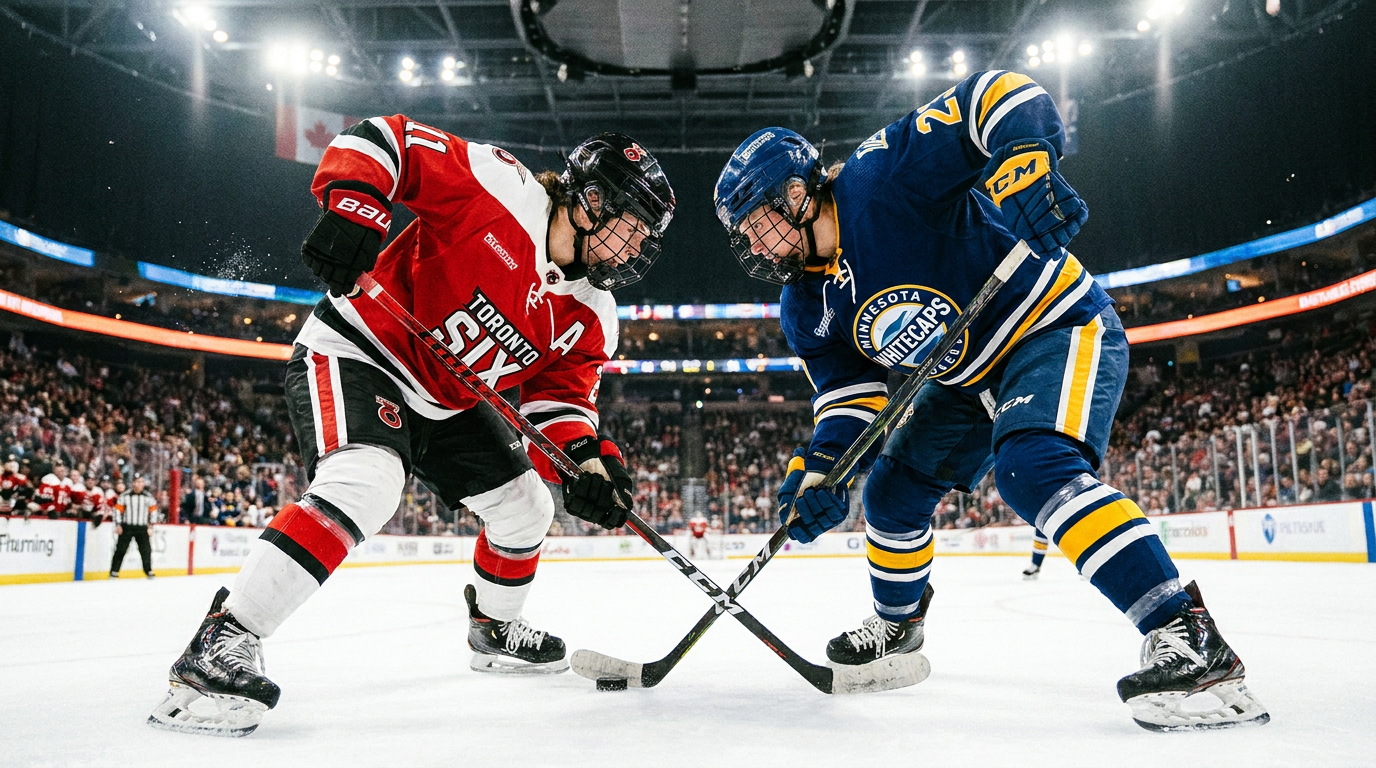
That dynamic changed permanently with the launch of the Professional Women's Hockey League (PWHL). Now concluding its third highly successful season in 2026, the league has achieved a level of commercial and operational stability that eluded its predecessors.[1]
The secret to the PWHL's survival wasn't just the consolidation of the world's best talent onto six rosters. It was a radical restructuring of the underlying business model, shifting away from the traditional sports franchise system.[2]

Instead of relying on independent franchise owners who buy individual teams and compete for local revenues, the PWHL utilizes a "single-entity" ownership model. Under this structure, the entire league is owned and operated by a single organization: the Mark Walter Group, backed by Billie Jean King Enterprises.[3][7]
In a traditional franchise model—like the NHL or NFL—a wealthy owner buys the Toronto team, another buys the Boston team, and they operate as separate businesses under a league umbrella. If one owner faces financial ruin, their specific team might fold or relocate, damaging the league's overall credibility and schedule.[4]
The single-entity model eliminates this weak-link vulnerability. Because the central league owns all six teams (Boston, Minnesota, Montreal, New York, Ottawa, and Toronto), all revenues and expenses are pooled into a single corporate entity.[2][3]
This pooling means that a highly profitable, sold-out market like Montreal effectively subsidizes a developing market. It ensures that all teams have identical, league-mandated resources for marketing, training facilities, medical staff, and player support, creating competitive parity from day one.[3][4]
This pooling means that a highly profitable, sold-out market like Montreal effectively subsidizes a developing market.
Crucially, this unified ownership structure allowed the league to negotiate a groundbreaking Collective Bargaining Agreement (CBA) with the players' union before a single puck was ever dropped.[5]
The resulting eight-year CBA guarantees minimum salaries, housing stipends, health insurance, and maternity leave—benefits that were historically precarious or non-existent in professional women's hockey. By negotiating with one entity, the players secured long-term protections that independent owners might have balked at.[5][7]

The centralized model also streamlined the league's broadcast and sponsorship strategy. Instead of individual teams negotiating fragmented local TV deals, the PWHL packaged its entire inventory as a single national product.[6]
This unified approach allowed the league to strike comprehensive deals with major networks across North America, ensuring that fans could find games consistently without navigating regional blackouts or obscure streaming platforms.[6]

Sports economists note that the single-entity model is particularly effective for emerging leagues. It prevents bidding wars for players that can artificially inflate salaries beyond what league revenues can support—a phenomenon that has bankrupted numerous alternative sports leagues in the past.[4]
However, the model is not without its long-term questions. Because the league owns all teams, there is no organic market competition for player services outside the CBA's structured free agency, which some argue could eventually cap player earning potential.[1][5]
Furthermore, all financial risk is concentrated in one ownership group. If the primary backers were to step away or face financial difficulties, the entire ecosystem would require an immediate, massive buyer, rather than just replacing one franchise owner.[3]
Despite these theoretical risks, the practical results over the first three seasons have been overwhelmingly positive. The league has consistently seen sold-out arenas, record-breaking broadcast numbers, and robust merchandise sales.[6][7]

Most importantly, it has created a stable environment where athletes can focus entirely on their on-ice performance rather than worrying about whether their paychecks will clear.[1]
As the PWHL looks toward potential expansion in the coming years, its centralized blueprint stands as a masterclass in sports business. By prioritizing collective stability over individual franchise autonomy, the league has finally given women's hockey the permanent professional home it has long deserved.[1][2]
How we got here
2007
The Canadian Women's Hockey League (CWHL) is founded, eventually folding in 2019 due to financial instability.
2015
The NWHL (later rebranded as the PHF) is founded, operating on a traditional franchise model.
2023
The Mark Walter Group acquires PHF assets and announces the formation of the single-entity PWHL.
Jan 2024
The inaugural PWHL season begins with a ratified eight-year Collective Bargaining Agreement.
2026
The league completes its third season, demonstrating unprecedented financial and operational stability.
Viewpoints in depth
League Management's View
Centralized control is the only way to ensure long-term survival for an emerging sport.
League executives and sports business analysts argue that the single-entity model is a necessary evolution for women's hockey. By pooling resources, the league avoids the 'arms race' of independent owners overspending on player salaries to win championships, which historically led to franchise bankruptcies. This structure allows the league to subsidize weaker markets, negotiate massive national broadcast deals as a unified front, and ensure that the product on the ice remains competitive across all cities.
Labor Advocates' View
The structure provided the leverage needed to secure historic player protections.
For the players' union, negotiating with a single, well-capitalized entity was vastly superior to haggling with individual franchise owners of varying wealth. This dynamic allowed the union to secure an unprecedented eight-year Collective Bargaining Agreement before the league even launched. Labor advocates point to the guaranteed minimum salaries, housing stipends, and maternity leave as proof that centralized ownership can benefit workers, provided there is a strong union to hold the central entity accountable.
Sports Economists' View
The model ensures survival but may eventually limit player earning potential.
While economists praise the single-entity model for stabilizing the league, they caution about its long-term effects on the labor market. Because the league owns all the teams, there is no true free-market competition for a player's services. If a star player wants a higher salary, she cannot spark a bidding war between the Toronto and Montreal franchises, because both are ultimately signing her paychecks from the same corporate bank account. Economists suggest this could artificially depress top-end salaries as the league's revenues grow.
What we don't know
- How the league will structure the financial buy-ins for future expansion teams.
- Whether the single-entity model will eventually transition to a franchise model once the league is fully established.
- How player salary caps will adjust if broadcast revenues significantly exceed initial projections.
Key terms
- Single-Entity Model
- A sports league structure where a single central organization owns the league and all of its participating teams.
- Collective Bargaining Agreement (CBA)
- A written legal contract between an employer and a union representing the employees, detailing wages, hours, and terms of employment.
- Franchise Model
- A traditional sports structure where independent owners purchase the rights to operate individual teams within a league.
Frequently asked
Who owns the PWHL?
The entire league and all six of its teams are owned by a single organization, the Mark Walter Group.
How long is the players' contract?
The inaugural Collective Bargaining Agreement (CBA) runs for eight years, expiring in 2031.
Will the PWHL expand to more cities?
While currently at six teams, the centralized model allows the league to carefully control and fund future expansion when league-wide revenues permit.
Sources
Source coverage
7 outlets
3 viewpoints surfaced







[1]Factlen Editorial TeamSports Economists
Synthesis by Factlen editorial team
Read on Factlen Editorial Team →[2]PWHL OfficialLeague Management
League Structure and Operations
Read on PWHL Official →[3]Sports Business JournalLeague Management
Analyzing the Single-Entity Structure of the PWHL
Read on Sports Business Journal →[4]Journal of Sports EconomicsSports Economists
Economic Viability of Single-Entity Sports Leagues
Read on Journal of Sports Economics →[5]The AthleticPlayers & Labor Union
Inside the PWHL's groundbreaking Collective Bargaining Agreement
Read on The Athletic →[6]CBC SportsPlayers & Labor Union
How the PWHL's unified broadcast strategy is driving record viewership
Read on CBC Sports →[7]Wikipedia
Professional Women's Hockey League
Read on Wikipedia →

Every angle. Every day.
Get sports stories with full source coverage and perspective breakdowns delivered to your inbox.