
How Sodium-Ion Batteries Are Rewriting the Rules of the EV Market
After years of development, sodium-ion batteries are entering mass production, offering a cheaper, cold-resistant alternative to lithium for affordable EVs and grid storage.
By Factlen Editorial Team
- Battery Manufacturers
- Prioritizing supply chain security and cost reduction by scaling sodium alongside lithium.
- Automotive Market Analysts
- Viewing sodium not as a lithium killer, but as a market segmenter for budget and urban vehicles.
- Energy & Climate Researchers
- Highlighting the safety and scalability of sodium for stationary renewable energy storage.
What's not represented
- · Lithium Mining Industry
- · Premium EV Consumers
Why this matters
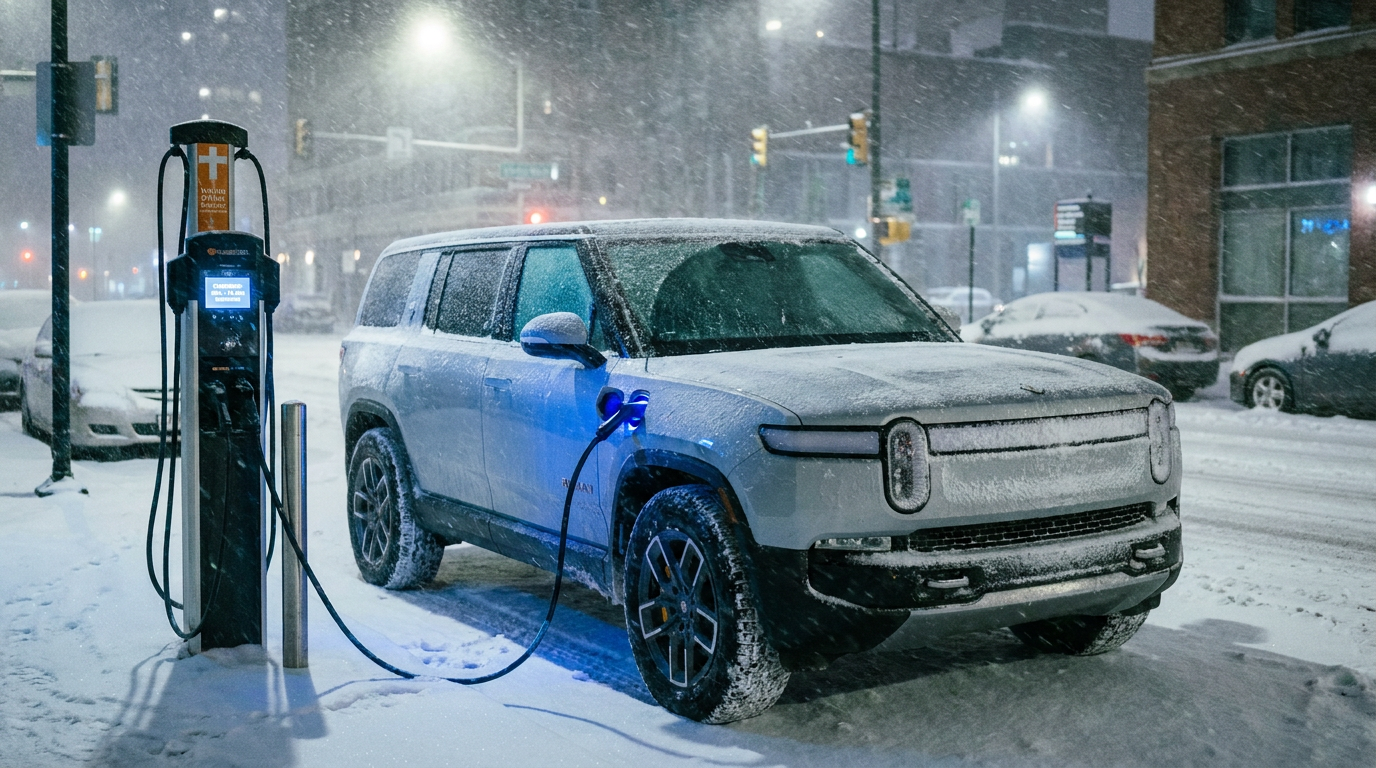
By replacing expensive lithium with one of the Earth's most abundant elements, sodium-ion technology promises to make electric vehicles significantly cheaper and eliminate the severe range loss drivers experience in freezing winter weather.
Key points
- Sodium-ion batteries function identically to lithium-ion but use widely abundant sodium extracted from salt.
- The chemistry retains up to 90 percent of its functional capacity in extreme cold, solving winter EV range loss.
- Due to lower energy density, sodium batteries are heavier and are being targeted at budget city cars rather than long-range luxury vehicles.
- Major manufacturers have committed over $20 billion to scale production, heavily targeting stationary grid storage.
For the past decade, the electric vehicle revolution has been tethered to a single, volatile element: lithium. While lithium-ion batteries have successfully powered millions of cars, their reliance on expensive, geographically concentrated materials like cobalt and nickel has created persistent supply chain anxieties.[5]
Beyond economics, lithium chemistry harbors a well-known physical limitation: it degrades significantly in freezing temperatures, causing severe winter range anxiety for drivers in colder climates.[2]
But a fundamental shift is materializing in 2026. Sodium-ion batteries—long considered a laboratory curiosity—have officially crossed the threshold into mass commercialization, promising to democratize electric mobility and stabilize power grids.[1][3]
To understand why sodium is disrupting the market, it helps to look at the underlying mechanism. In a standard rechargeable battery, energy is stored and released by shuttling charged particles between two electrodes: the cathode, which acts as the positive terminal, and the anode, which serves as the negative terminal.[7]
These charged particles travel back and forth through a chemical medium called an electrolyte. Sodium-ion batteries operate on the exact same "rocking-chair" principle as lithium-ion batteries, but they swap lithium ions out for sodium ions.[7]

Because the underlying architecture is so remarkably similar, battery manufacturing giants like CATL and BYD have been able to produce sodium cells using almost identical factory equipment, avoiding the need to build entirely new production lines from scratch.[5][6]
The primary advantage of this chemical substitution is sheer abundance. Sodium is the sixth most abundant element in the Earth's crust and can be easily extracted from rock salt or seawater.[4][7]
This ubiquitous supply chain eliminates the need for controversial and expensive metals. Consequently, analysts project that at scale, sodium-ion batteries could be 30 to 40 percent cheaper to produce than their lithium counterparts.[4][6]
This ubiquitous supply chain eliminates the need for controversial and expensive metals.
But cost is only half the story; the chemistry also solves the winter EV crisis. Sodium-ion cells exhibit extraordinary resilience in extreme cold, retaining roughly 90 percent of their functional capacity at temperatures as low as -40°C.[2][5]
For drivers in Nordic countries or northern North America, a battery that can still accept a fast charge when frozen solid is a far more practical breakthrough than a marginal increase in theoretical summer range.[2]

Furthermore, sodium chemistry is inherently more stable. The cells are significantly less prone to thermal runaway—the chain reaction that causes battery fires—and can be completely discharged to zero volts for safe transport without damaging the internal structure.[7]
If sodium is cheaper, safer, and better in the cold, why isn't it in every new luxury EV? The limiting factor is energy density. Because sodium ions are physically larger and heavier than lithium ions, they store less energy per kilogram of battery weight.[5][7]
Currently, top-tier sodium-ion cells, such as CATL's Naxtra brand, achieve an energy density of about 175 watt-hours per kilogram (Wh/kg).[1][4]
While this matches older lithium iron phosphate (LFP) technology, it still trails the 205 Wh/kg of modern LFP packs and the 265 Wh/kg found in premium nickel-manganese-cobalt (NMC) batteries used for long-range travel.[5]
This physical reality is driving a structural bifurcation in the 2026 energy market. Sodium-ion is not replacing lithium; it is conquering the segments where weight is secondary to cost.[3][5]

In the automotive sector, sodium is being deployed in affordable, short-range city cars, electric scooters, and light commercial delivery vans. Vehicles like the Changan Nevo A06 are already proving the viability of sodium packs for daily urban commuting.[2][3]
Perhaps the most profound impact will be stationary. BYD and other manufacturers are aggressively pivoting their sodium technology toward massive grid-storage facilities, where the physical size of the battery is irrelevant, but fire safety and low cost are paramount.[3][5]
The scale of this transition is staggering. Global capital committed to sodium-ion capacity expansion has surpassed $20 billion, with cell shipments jumping 150 percent year-over-year to reach 9 GWh in 2025.[1]
As the technology matures, sodium-ion stands as a critical insurance policy for the energy transition—ensuring that the future of electrification is built on materials we can pull from the ocean, rather than just the mine.[1][6]

How we got here
1991
Lithium-ion batteries commercialize, dominating portable electronics and eventually EVs.
Late 2023
The first prototype sodium-ion battery-powered electric cars are introduced in China.
2025
Global sodium-ion battery shipments reach 9 GWh as major manufacturers scale up production lines.
Early 2026
CATL's Naxtra sodium cells pass China's national EV safety standards, clearing the way for mass deployment.
Viewpoints in depth
Battery Manufacturers
Prioritizing supply chain security and cost reduction by scaling sodium alongside lithium.
For the world's largest battery makers, sodium represents an escape hatch from the volatile lithium market. By utilizing existing lithium-ion manufacturing infrastructure, companies like CATL and BYD can rapidly scale sodium production without massive capital overhauls. Their strategy is to offer automakers a cheaper, more stable alternative for entry-level vehicles, insulating the broader EV market from future spikes in lithium or cobalt prices.
Automotive Market Analysts
Viewing sodium not as a lithium killer, but as a market segmenter for budget and urban vehicles.
Industry analysts emphasize that sodium's lower energy density prevents it from competing in the premium, long-range EV sector. Instead, they see the technology creating a distinct bifurcation in the market. Sodium will dominate the sub-300-mile range category, powering affordable city cars, delivery vans, and two-wheelers, while lithium and emerging solid-state technologies will remain the standard for luxury sedans and heavy-duty trucks.
Energy & Climate Researchers
Highlighting the safety and scalability of sodium for stationary renewable energy storage.
For climate researchers, the most exciting application of sodium-ion isn't in cars at all, but on the grid. As the world transitions to intermittent renewable energy like solar and wind, massive stationary batteries are required to store excess power. In these applications, the physical weight of the battery is irrelevant, making sodium's low cost, high thermal stability, and reliance on abundant seawater materials the perfect solution for global grid decarbonization.
What we don't know
- Whether sodium-ion energy density can ever be pushed past 200 Wh/kg to compete directly with standard lithium packs.
- How quickly charging infrastructure in Western markets will adapt to the specific voltage curves of sodium-based vehicles.
- The exact timeline for when major European and American automakers will integrate sodium packs into their domestic fleets.
Key terms
- Cathode
- The positive terminal of a battery, where ions flow to during discharge.
- Anode
- The negative terminal of a battery, which stores ions when the battery is fully charged.
- Electrolyte
- The liquid or gel medium inside a battery that allows ions to travel back and forth between the cathode and anode.
- Energy Density
- A measure of how much power a battery can store relative to its weight, usually expressed in watt-hours per kilogram (Wh/kg).
- Thermal Runaway
- A dangerous chain reaction within a battery cell that causes rapid overheating and potential fires.
Frequently asked
Can I buy a car with a sodium-ion battery today?
Yes, primarily in China, where models like the Changan Nevo A06 have entered mass production for urban commuting.
Will sodium batteries replace lithium-ion?
No. Lithium will remain the standard for long-range, premium EVs, while sodium will dominate budget cars and stationary grid storage.
Why are sodium batteries better in winter?
The specific liquid electrolytes used in sodium cells remain highly conductive at sub-zero temperatures, preventing the severe range loss seen in lithium batteries.
Are sodium batteries heavier?
Yes. Because sodium ions are physically larger than lithium ions, the batteries require more mass to store the same amount of energy.
Sources
Source coverage
7 outlets
3 viewpoints surfaced







[1]Battery-TechBattery Manufacturers
Sodium-Ion in 2026: Commercial Footprint at a Glance
Read on Battery-Tech →[2]EleportEnergy & Climate Researchers
Sodium-Ion batteries go mainstream
Read on Eleport →[3]CarNewsChinaAutomotive Market Analysts
Mid-2026 market data shows a structural bifurcation in the sodium-ion battery sector
Read on CarNewsChina →[4]EV CentralBattery Manufacturers
CATL pushes ahead with sodium-ion battery mass production
Read on EV Central →[5]International Energy AgencyEnergy & Climate Researchers
Global EV Outlook 2026: Sodium-ion batteries are entering the scale-up phase
Read on International Energy Agency →[6]S&P GlobalAutomotive Market Analysts
CATL and BYD at the forefront of global battery electric vehicle technology
Read on S&P Global →[7]The Battery Show AsiaEnergy & Climate Researchers
How Do Sodium-Ion Batteries Work? Pros and Cons
Read on The Battery Show Asia →
Every angle. Every day.
Get automotive stories with full source coverage and perspective breakdowns delivered to your inbox.