
The Physical Backbone of AI: How Data Center REITs Are Powering the 2026 Tech Boom
As artificial intelligence drives unprecedented demand for computing power, specialized real estate investment trusts are emerging as the essential, dividend-paying landlords of the AI revolution.
By Factlen Editorial Team
- Digital Infrastructure Bulls
- Viewing physical power and cooling capacity as the ultimate economic moat of the 2020s.
- Income-Oriented Investors
- Prioritizing stable, recurring cash flows and mandated dividend distributions over speculative capital appreciation.
- Macroeconomic Skeptics
- Warning that capital intensity and interest rate exposure create hidden vulnerabilities for the sector.
What's not represented
- · Local Municipalities
- · Environmental Advocates
Why this matters
While semiconductor stocks grab headlines, the physical infrastructure required to house, cool, and power AI models offers everyday investors a more stable, dividend-yielding entry point into the AI boom, fundamentally reshaping commercial real estate.
Key points
- Generative AI requires massive physical infrastructure, driving unprecedented demand for specialized data centers.
- Data center REITs own the buildings, power, and cooling systems, leasing space to major tech companies.
- The sector offers a unique blend of AI growth exposure and mandated dividend distributions.
- Power availability, rather than tenant demand, has emerged as the primary bottleneck for industry expansion.
- High interest rates and massive capital expenditure requirements remain the primary risks for investors.
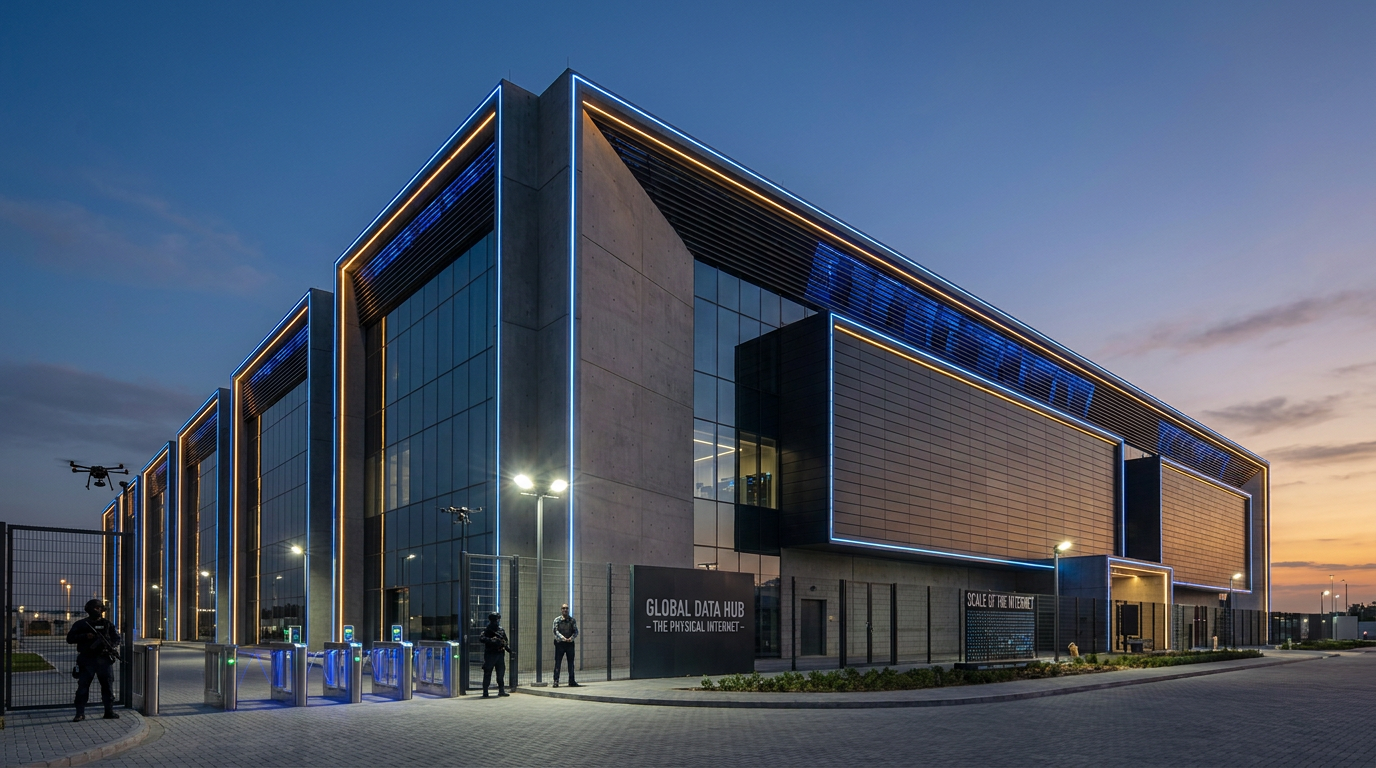
Every time a user asks a generative AI model to write a line of code, draft an email, or generate an image, something profoundly physical happens. A server—housed inside a massive, temperature-controlled warehouse—spins up to process the request. The "cloud" is not an ethereal concept floating in the sky; it is a sprawling network of concrete, steel, fiber-optic cables, and industrial air conditioners. As the artificial intelligence revolution accelerates in 2026, these physical warehouses have become some of the most valuable and heavily contested pieces of real estate on the planet.[1][6]
The scale of the infrastructure required to support modern AI is staggering. The "Magnificent Seven" technology giants are projected to spend a collective $527 billion on AI and data center capital expenditures in fiscal year 2026 alone. This represents a massive acceleration in spending, driven by the realization that training and operating next-generation large language models requires unprecedented computing density. Yet, despite their vast resources, companies like Amazon, Microsoft, and Google generally prefer not to act as their own landlords.[2]
This preference has created a lucrative opening for a specialized class of companies known as Data Center Real Estate Investment Trusts, or REITs. Created by the U.S. Congress in 1960, the REIT structure was designed to democratize commercial real estate, allowing everyday individuals to buy shares in large property portfolios just as they would buy mutual funds. To qualify for this tax-advantaged status, a REIT must distribute at least 90% of its taxable income back to shareholders in the form of dividends.[3]
Data center REITs operate on a straightforward but highly capital-intensive business model. They do not typically own the actual servers or the data stored on them. Instead, they own the highly engineered shell: the reinforced building, the massive industrial cooling systems, the multi-layered physical security, and, crucially, the high-capacity connections to the local power grid. Tech companies rent this specialized space, bringing their own proprietary hardware to plug into the REIT's infrastructure.[3][6]

The financial mechanics of this relationship are highly attractive to income-focused investors. Because moving thousands of delicate, interconnected servers is incredibly risky and expensive, tech companies rarely leave once they move into a facility. They sign ironclad leases that often span ten to fifteen years, complete with built-in annual rent escalators. This creates a highly predictable, recurring revenue stream for the REIT, insulating it from the quarter-to-quarter volatility that often plagues consumer-facing technology stocks.[3]
In the first five months of 2026, this stability, combined with explosive AI demand, propelled the data center REIT sector to a staggering 40.11% total return, vastly outperforming traditional real estate sectors like office and retail. Investors have increasingly recognized that while picking the winning AI software company is a gamble, investing in the physical infrastructure guarantees exposure to the broader megatrend. It is the modern equivalent of selling pickaxes and shovels during a gold rush.[7]
However, the nature of the data center business is fundamentally changing. The industry is currently undergoing a massive transition from traditional cloud computing to AI-specific infrastructure. Traditional data centers were designed to host thousands of independent web servers, which draw a predictable and relatively modest amount of power. AI models, by contrast, require densely packed clusters of specialized Graphics Processing Units (GPUs) that operate simultaneously to crunch massive datasets.[6]
However, the nature of the data center business is fundamentally changing.
These AI clusters run incredibly hot and draw an immense amount of electricity. A single rack of AI servers can consume five to ten times more power than a traditional cloud server rack. This extreme energy density has rendered many older data centers obsolete, forcing REITs to undertake massive retrofitting projects. Advanced thermal management, including liquid cooling systems that pump coolant directly to the server chips, has transitioned from a niche luxury to an absolute necessity.[6]
Consequently, power—not silicon—has emerged as the ultimate bottleneck of the AI era. The data center industry is no longer constrained by tenant demand; it is constrained by the physical limits of the electrical grid. Goldman Sachs projects that global data center power demand will surge 220% by 2030, reaching a record 1,350 Terawatt-hours. In the United States alone, data centers are projected to consume 11% of the nation's total electricity by the end of the decade, nearly double their current share.[2]

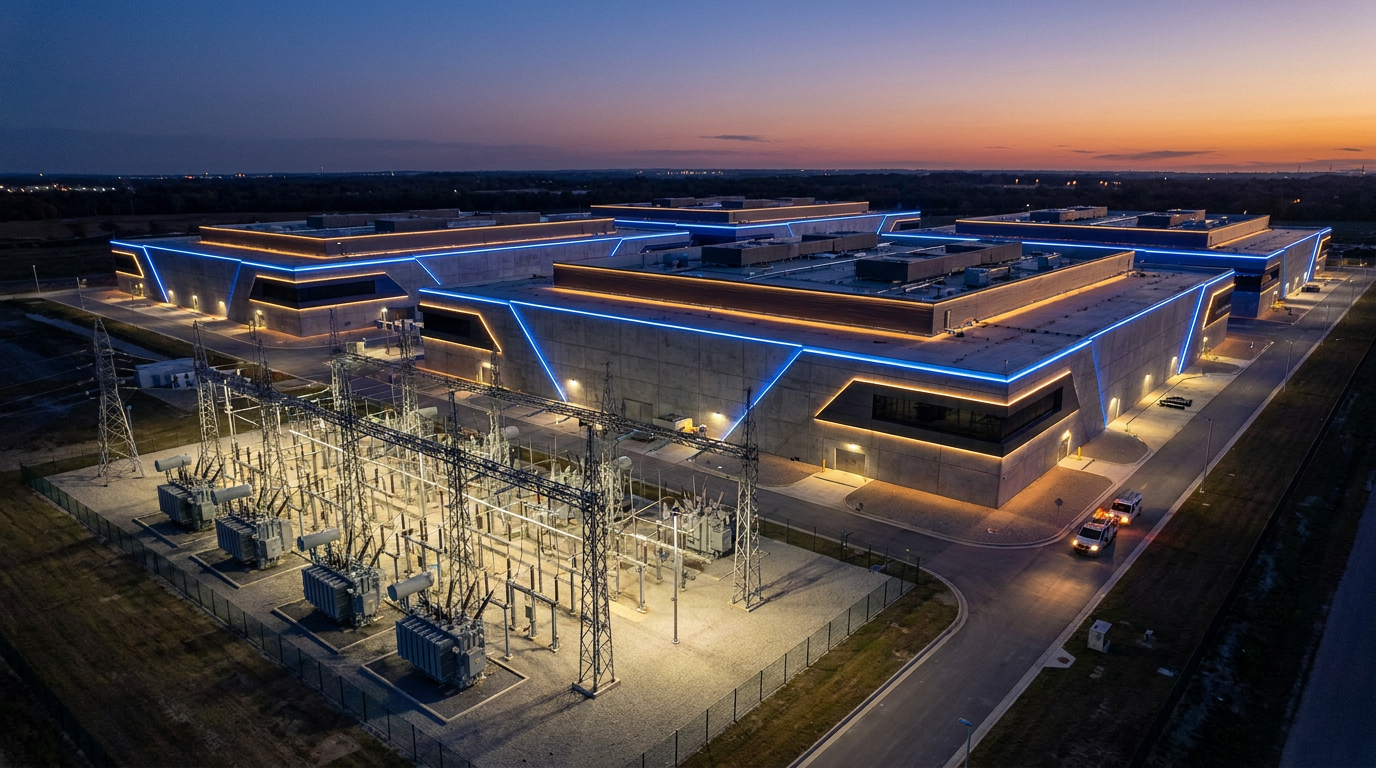
This power crunch has dramatically shifted the balance of power toward the landlords. Data center REITs that successfully secured gigawatt-scale power agreements with local utilities years ago now hold incredibly valuable assets. Because it can take up to five years to permit and build a new electrical substation, new competitors cannot simply enter the market to meet the surging demand. This regulatory and physical friction creates a deep economic moat for established players.[6]
The industry's largest operators are moving aggressively to capitalize on this dynamic. Equinix, a global leader in digital infrastructure, has committed to investing up to $5 billion annually through 2029 to double its global capacity. Digital Realty Trust is actively developing massive new campuses in key innovation hubs, specifically engineered to handle the extreme weight and power requirements of AI workloads. Meanwhile, companies like Iron Mountain are finding lucrative niches in asset lifecycle management as hyperscalers rapidly decommission older servers to make room for AI hardware.[4][5]
The geography of the internet is also shifting. Historically, data centers were clustered in major hubs like Northern Virginia or Silicon Valley. However, as AI transitions from the "training" phase—which can happen anywhere with cheap power—to the "inference" phase, proximity to the end user becomes critical. Inference, the process of an AI model answering a user's prompt in real-time, requires low latency. This is driving a boom in "edge" data centers located closer to secondary and tertiary population centers.[5]

Despite the overwhelming tailwinds, the sector is not without significant risks. The most pressing vulnerability is interest rate sensitivity. Building a state-of-the-art data center requires billions of dollars in upfront capital. REITs finance this construction by issuing debt and equity. If macroeconomic conditions force interest rates to remain elevated, the cost of servicing that debt increases, which can compress profit margins and limit dividend growth.[3]
Furthermore, high interest rates make the dividend yields offered by REITs look less attractive compared to risk-free government bonds. If an investor can earn a guaranteed 5% on a Treasury bill, a REIT must offer a compelling combination of yield and growth to justify the added risk. This dynamic can lead to short-term stock price volatility, even when the underlying leasing fundamentals remain exceptionally strong.[3]
There is also the long-term risk of technological obsolescence and oversupply. The current data center construction boom is predicated on the assumption that AI models will continue to require exponentially more computing power. If software engineers discover algorithmic breakthroughs that make AI models drastically more efficient, the demand for physical space could cool. Operators building massive facilities on speculation could find themselves with vacant, highly specialized real estate.[3][6]

Nevertheless, for investors seeking to participate in the AI revolution without enduring the whiplash of semiconductor product cycles, data center REITs offer a compelling middle ground. They provide a tangible, dividend-yielding asset backed by the deepest pockets in the corporate world. As the digital economy continues to expand its physical footprint, the landlords of the internet are quietly positioning themselves as the foundational infrastructure of the 2030s.[1]
How we got here
1960
The US Congress creates the REIT structure to allow everyday investors to buy shares in commercial real estate portfolios.
Late 1990s
The first dedicated data center REITs emerge to house the servers powering the early dot-com boom.
2010s
The rapid expansion of cloud computing drives a massive wave of hyperscale data center construction globally.
Late 2022
The launch of ChatGPT triggers an industry-wide pivot toward high-density AI infrastructure.
Early 2026
Data center power demand projections are revised sharply upward, cementing physical infrastructure as the primary bottleneck for AI growth.
Viewpoints in depth
Income-Oriented Investors
Prioritizing stable, recurring cash flows over speculative capital appreciation.
For this camp, the appeal of data center REITs has little to do with the hype surrounding artificial intelligence and everything to do with contract law. Because hyperscalers sign ironclad, decade-long leases for facility space, the underlying revenue streams remain highly predictable regardless of which tech company wins the AI software race. Combined with the legal requirement to distribute 90% of taxable income, these investors view digital infrastructure as a modernized utility sector—a reliable engine for compounding wealth through quarterly dividends.
Digital Infrastructure Bulls
Viewing physical power and cooling capacity as the ultimate economic moat of the 2020s.
This perspective argues that while software algorithms can be copied and semiconductor leads can vanish, securing a gigawatt of power from a municipal grid takes years of permitting and billions of dollars. Bulls point out that the tech industry is currently constrained not by a lack of demand, but by a lack of physical places to plug in their servers. Consequently, they believe the landlords who already own permitted, powered, and cooled facilities hold unprecedented pricing power over the world's wealthiest technology companies.
Macroeconomic Skeptics
Warning that capital intensity and interest rate exposure create hidden vulnerabilities.
Skeptics caution that the data center boom is uniquely vulnerable to macroeconomic headwinds. Building a modern AI-ready campus requires billions in upfront capital expenditure, forcing REITs to constantly issue new debt or equity. If interest rates remain elevated, the cost of servicing that debt eats directly into profitability. Furthermore, this camp warns of potential oversupply; if hyperscalers eventually figure out how to make AI models significantly more efficient, the current speculative frenzy of data center construction could result in a glut of vacant, highly specialized real estate.
What we don't know
- Whether future algorithmic breakthroughs will make AI models significantly more efficient, reducing the need for massive physical infrastructure.
- How long the current surge in hyperscaler capital expenditure will last before normalizing.
- Whether local electrical grids can successfully upgrade capacity fast enough to meet the projected 2030 power demands.
Key terms
- Real Estate Investment Trust (REIT)
- A company that owns, operates, or finances income-producing real estate and is legally required to distribute most of its taxable income to shareholders.
- Hyperscaler
- Massive cloud service providers, such as Amazon Web Services, Google Cloud, and Microsoft Azure, that dominate global computing demand.
- Colocation
- A data center model where multiple different companies rent space, power, and cooling within the same physical facility.
- Liquid Cooling
- An advanced thermal management technique using liquid coolants rather than air to prevent high-density AI servers from overheating.
- Inference
- The phase of artificial intelligence where a trained model processes new data to generate responses, predictions, or content for end users.
Frequently asked
What exactly does a data center REIT own?
They own the physical building, the high-capacity power connections, the industrial cooling systems, and the security infrastructure, while tenants provide their own servers.
Why do AI models require specialized data centers?
Training AI requires densely packed clusters of GPUs that run extremely hot and draw massive amounts of electricity, necessitating specialized liquid cooling and reinforced power grids.
How do interest rates impact these investments?
Because REITs borrow heavily to finance new construction, higher interest rates increase their debt costs and can make their dividend yields look less attractive compared to risk-free bonds.
What is the difference between AI training and inference?
Training is the initial, energy-intensive process of teaching an AI model, while inference is the ongoing process of the model answering user queries in real-time.
Sources
Source coverage
7 outlets
3 viewpoints surfaced







[1]Factlen Editorial TeamMacroeconomic Skeptics
Synthesis by Factlen editorial team
Read on Factlen Editorial Team →[2]TickeronDigital Infrastructure Bulls
Data Center Power Demand and AI Infrastructure ETFs in 2026
Read on Tickeron →[3]The Motley FoolIncome-Oriented Investors
Why REITs Are the Best Way to Play AI's Second Act
Read on The Motley Fool →[4]ForbesDigital Infrastructure Bulls
Data Center Stocks As Long-Term Investments
Read on Forbes →[5]24/7 Wall St.Digital Infrastructure Bulls
The Infrastructure REITs Powering AI's Physical Backbone
Read on 24/7 Wall St. →[6]Investing EngineerDigital Infrastructure Bulls
The Biggest Themes Driving Data Center REITs in 2026
Read on Investing Engineer →[7]2nd Market CapitalIncome-Oriented Investors
May 2026 REIT Sector Performance
Read on 2nd Market Capital →
Every angle. Every day.
Get real estate stories with full source coverage and perspective breakdowns delivered to your inbox.