
E-Bike Motors Compared: Mid-Drive vs. Hub Motor
The choice between a mid-drive and hub motor is the most consequential decision an e-bike buyer will make. While mid-drives dominate steep hills and trails, hub motors offer unmatched simplicity and value for flat city commutes.
By Factlen Editorial Team
- Performance & Trail Riders
- Prioritize torque, natural ride feel, and hill-climbing ability, favoring mid-drive systems.
- Urban Commuters
- Value reliability, lower upfront costs, and throttle capabilities for flat city riding.
- E-Bike Mechanics
- Focus on long-term maintenance costs, drivetrain wear, and repair simplicity.
What's not represented
- · Traditional cyclists who prefer non-electric bikes
- · Delivery gig workers who push e-bikes to their absolute mileage limits
Why this matters
Choosing the wrong e-bike motor can lead to thousands of dollars wasted on unnecessary maintenance or a bike that fails to climb the hills on your daily commute. Understanding this single engineering difference ensures you buy a machine perfectly tailored to your terrain and budget.
Key points
- Mid-drive motors leverage the bicycle's gears, making them highly efficient for steep hill climbing and off-road trails.
- Hub motors operate independently of the drivetrain, offering a simpler, lower-maintenance solution for flat urban commuting.
- Because mid-drives channel power through the chain and cassette, they cause significantly faster wear on drivetrain components.
- Hub motors frequently feature a throttle for pedal-free riding, while mid-drives typically rely on pedal-assist sensors.
- Mid-drive e-bikes generally cost more upfront due to complex frame integration and advanced torque sensors.
As electric bicycles cement their status as a dominant form of urban and recreational transit in 2026, buyers face a market flooded with overlapping specifications and marketing claims. Yet beneath the battery capacities and frame geometries lies a single engineering choice that dictates the entire character of the bicycle: the motor system. For anyone looking to invest in an e-bike, the decision between a mid-drive and a hub motor is the most consequential choice they will make. This is not merely a debate over brand names, but a fundamental divergence in how power is delivered to the pavement.[7]
The industry has largely coalesced around these two distinct propulsion philosophies, each with its own dedicated following of mechanics, commuters, and trail riders. While marketing materials often blur the lines by boasting similar wattage figures for both systems, real-world testing reveals stark contrasts. Neither motor type is universally superior; rather, they are highly specialized tools designed to solve different problems. Understanding the mechanics behind each system is the only way to cut through the noise and match the machine to the terrain.[3][4]
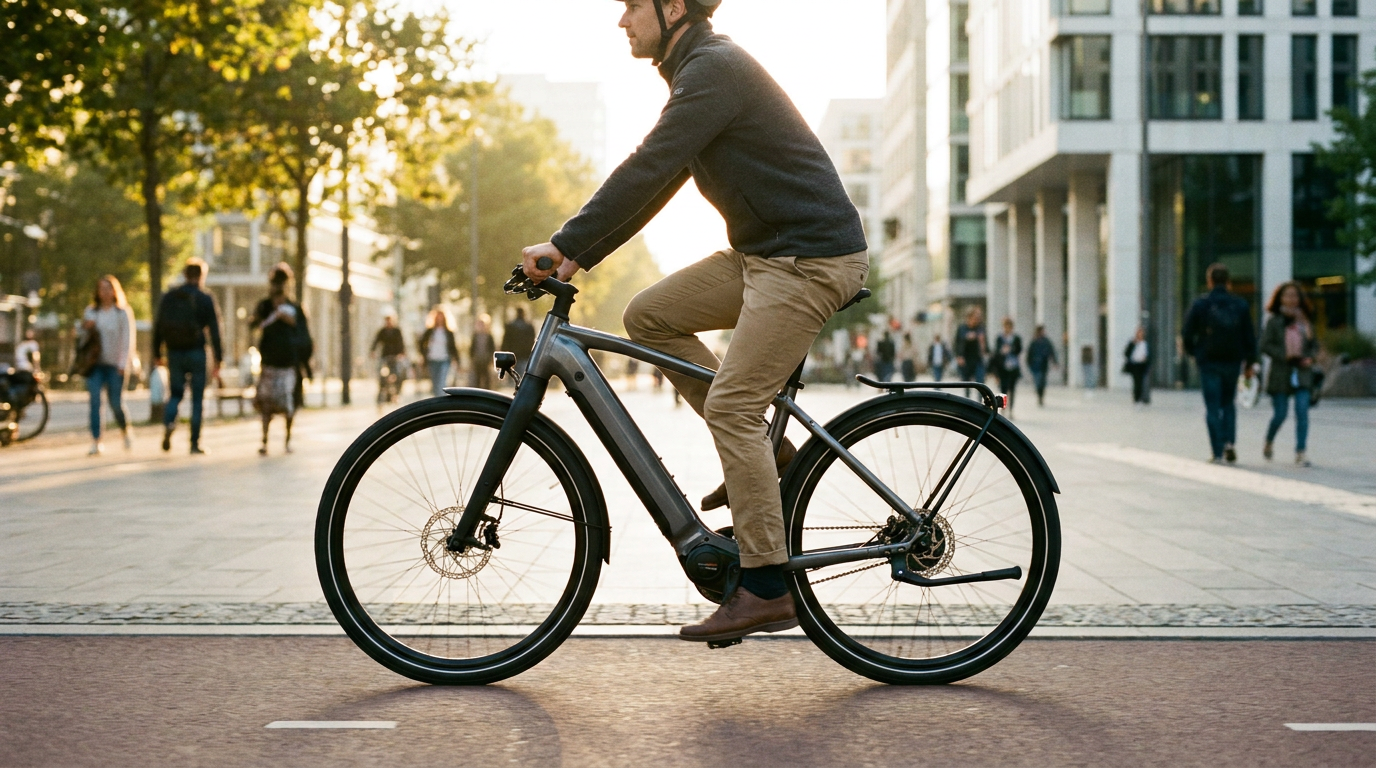
The hub motor represents the older, simpler, and more ubiquitous of the two technologies. Encased entirely within the center of the front or rear wheel, a hub motor drives the wheel directly. It operates completely independently of the bicycle's chain, cassette, and derailleurs. When the rider pedals or presses a throttle, the motor simply spins the wheel, creating a sensation of being pushed or pulled along the road. This self-contained design has made it the undisputed king of the entry-level and mid-range commuter markets.[2][4]

In contrast, the mid-drive motor is integrated directly into the frame's bottom bracket, sitting squarely between the rider's pedals. Instead of spinning the wheel directly, a mid-drive motor powers the front chainring, sending its force through the bicycle's existing drivetrain. This means the motor's output is multiplied or reduced by the bike's gears, exactly like a car's transmission. When the rider shifts into a lower gear for a climb, the motor benefits from that mechanical advantage, allowing it to spin at a highly efficient RPM while delivering massive force to the rear wheel.[1][6]
When examining the case for mid-drive motors, the evidence heavily favors performance, efficiency, and balance. By leveraging the bicycle's gearing, mid-drives excel in varied and challenging terrain. They typically output between 50 and 90 Newton-meters of torque, but that raw number is amplified by the cassette. On steep grades exceeding 10 to 15 percent, a mid-drive system maintains its momentum without bogging down, overheating, or excessively draining the battery. This mechanical synergy makes them the gold standard for electric mountain bikes and heavy-duty cargo haulers.[3][6]
Furthermore, the case for mid-drives is bolstered by their superior ride feel. Because they are centrally located, they keep the bike's center of gravity low and balanced, improving handling on technical trails. Additionally, mid-drives are almost universally paired with sophisticated torque sensors that measure exactly how hard the rider is pushing on the pedals. The motor responds proportionally in real-time, creating a seamless, "amplified pedaling" sensation that feels like a natural extension of the rider's own legs, rather than an external force taking over.[5][8]
Furthermore, the case for mid-drives is bolstered by their superior ride feel.
However, the argument against mid-drive systems centers on mechanical complexity and accelerated wear. Because the motor's substantial power is channeled entirely through a standard bicycle chain and cassette, these components take a severe beating. Riders who fail to shift gears properly or who constantly ride in high gears under heavy load will find themselves replacing snapped chains and worn cassettes far more frequently than on a traditional bicycle. This added maintenance requires both time and a willingness to visit the local bike shop.[2][5]

The evidence against mid-drives also includes a significant financial premium. The complex engineering required to integrate a motor into the frame's bottom bracket, combined with the cost of advanced torque sensors, drives up the retail price. A quality mid-drive e-bike often commands a premium of $1,000 or more over a comparably equipped hub-motor model. For riders who simply need to get from point A to point B, this upfront cost can be difficult to justify.[4][8]
Looking at the case for hub motors, the primary advantages are simplicity, reliability, and accessibility. Because the motor bypasses the bike's drivetrain entirely, it places zero additional stress on the chain or gears. This mechanical isolation translates to remarkable longevity; a well-built direct-drive hub motor has very few moving parts and can last for tens of thousands of miles with virtually no maintenance. Furthermore, if the bicycle's chain breaks during a ride, a hub motor can still propel the rider home.[2][6]
The evidence supporting hub motors is also highly visible in their everyday utility for urban commuters. They are significantly cheaper to manufacture and install, keeping the total cost of the e-bike accessible. Additionally, hub motors frequently support throttle-only operation—a feature that is rare on mid-drive systems. For commuters who want the option to cruise to the office in a suit without breaking a sweat, the ability to rely entirely on the motor is a massive selling point.[4][5]
However, the case against hub motors becomes glaringly apparent when the road tilts upward. Lacking the ability to downshift, a hub motor forced to climb a steep hill at low speeds loses its mechanical efficiency rapidly. It begins to convert battery energy into heat rather than forward motion, which drains the battery quickly and can cause the system to overheat on sustained climbs. Additionally, placing a heavy motor in the rear wheel alters the bike's weight distribution, making the rear end feel sluggish over bumps and less agile in tight corners.[3][6]

Ultimately, a mid-drive system fits well when the rider lives in a hilly or mountainous area, regularly tackles off-road trails, carries heavy cargo, or prioritizes a natural, bicycle-like pedaling experience. The premium price and increased drivetrain maintenance are easily justified by the system's superior efficiency under load and its balanced, refined handling. For the performance-oriented cyclist or the dedicated cargo hauler, the mid-drive is an indispensable tool.[1][8]
In contrast, a hub motor fits well when the rider commutes primarily on flat or gently rolling city streets, values the option of a throttle, wants to minimize maintenance chores, and is looking for the most cost-effective reliable transportation. For the vast majority of urban riders who use their e-bikes as car replacements for short, paved trips, the simplicity and durability of a hub motor provide exactly the right balance of power and practicality without overcomplicating the ride.[2][7]
Viewpoints in depth
Performance & Trail Riders
Advocates for mid-drive systems due to their superior torque and natural ride feel.
For mountain bikers and off-road enthusiasts, the mid-drive motor is non-negotiable. This camp argues that the ability to leverage the bike's gearing is essential for clearing technical climbs and steep, loose terrain where a hub motor would simply stall or spin out. They highly value the low, centered weight distribution, which keeps the bike nimble and balanced in the air and through tight corners. To this group, the natural 'amplified pedaling' feel provided by torque sensors is worth the premium price and the extra chain maintenance.
Urban Commuters
Favors hub motors for their reliability, lower cost, and throttle capabilities on flat city streets.
Daily city commuters prioritize getting to work reliably and without arriving drenched in sweat. This camp heavily favors hub motors, pointing to their mechanical simplicity and the fact that they don't accelerate wear on the bike's chain and cassette. The availability of a throttle is a major selling point for this group, allowing them to bypass pedaling entirely when tired. They argue that for flat, paved environments, the expensive hill-climbing efficiency of a mid-drive is an unnecessary luxury that only adds unwanted maintenance chores.
E-Bike Mechanics
Focuses on the long-term cost of ownership, drivetrain wear, and repair simplicity.
From a maintenance perspective, mechanics see the starkest contrast between the two systems. They note that mid-drive motors, while highly efficient, channel immense torque through bicycle chains and cassettes that were originally designed for human leg power, leading to frequent drivetrain replacements. Conversely, they praise direct-drive hub motors for their near-indestructibility, noting that they have almost no moving parts to wear out. However, mechanics also point out that fixing a flat rear tire is significantly more complicated on a hub-motor bike due to the heavy motor and wiring harness.
What we don't know
- Whether solid-state batteries will eventually make the efficiency gap between the two motor types irrelevant for daily commuters.
- How quickly automatic electronic shifting will become standard on mid-drive systems to prevent user-caused drivetrain wear.
Key terms
- Mid-Drive Motor
- An electric bike motor positioned at the bottom bracket between the pedals, driving power through the bicycle's chain and gears.
- Hub Motor
- A motor encased within the center of the front or rear wheel, driving the wheel directly without using the bike's gears.
- Torque Sensor
- A mechanism that measures how hard the rider is pedaling and adjusts the motor's power output proportionally for a smooth ride.
- Cadence Sensor
- A basic sensor that detects whether the pedals are turning, delivering a fixed amount of motor power regardless of pedaling effort.
- Drivetrain
- The mechanical system of a bicycle, including the chain, cassette, chainrings, and derailleur, that transmits power to the rear wheel.
Frequently asked
Can I ride a hub motor e-bike up steep hills?
Yes, but it will be less efficient and drain the battery faster than a mid-drive, as it cannot leverage the bike's gears.
Which motor type requires more maintenance?
Mid-drive motors put significantly more stress on the chain and cassette, requiring more frequent drivetrain replacements compared to hub motors.
Do both motor types have a throttle?
Hub motors frequently feature a throttle for pedal-free riding, whereas mid-drive systems usually rely strictly on pedal-assist.
Which motor feels more like a traditional bicycle?
Mid-drive motors, especially those with torque sensors, provide a more natural 'amplified pedaling' feel compared to the 'pushed from behind' sensation of a hub motor.
Sources
Source coverage
8 outlets
3 viewpoints surfaced







[1]HPC BikesPerformance & Trail Riders
Comparing Mid-Drive vs. Hub Motor Kits: Which Is Better for Speed and Torque in 2026?
Read on HPC Bikes →[2]Bike-EVUrban Commuters
Choosing between a mid-drive and a hub motor e-bike in 2026
Read on Bike-EV →[3]Zeus eBikesUrban Commuters
The 30-Second Answer: Mid-Drive vs Hub Motor at a Glance
Read on Zeus eBikes →[4]Bike Yard OnlineE-Bike Mechanics
Hub motor or mid-drive?
Read on Bike Yard Online →[5]Gazelle BikesPerformance & Trail Riders
Hub Drive vs Mid Drive Motor Overview
Read on Gazelle Bikes →[6]EveloPerformance & Trail Riders
Unsure whether a mid-drive or hub motor eBike is right for you?
Read on Evelo →[7]TenwaysUrban Commuters
mid drive or hub motor
Read on Tenways →[8]Factlen Editorial TeamE-Bike Mechanics
Synthesis by Factlen editorial team
Read on Factlen Editorial Team →
More in shopping
See all 5 stories →E-Bike Tech
The 2026 Guide to Buying an E-Bike: Understanding Motors, Batteries, and Classifications
7 sources

Appliance Tech
The Science and Shift Behind Induction Cooking: Why Magnets Are Replacing Gas
8 sources

E-Reader Tech
Color vs. Black-and-White E-Readers in 2026: Which Display Technology Wins?
6 sources

Every angle. Every day.
Get shopping stories with full source coverage and perspective breakdowns delivered to your inbox.