
The Science of Koji: How an Ancient Fungus is Transforming Modern Home Cooking
Aspergillus oryzae, the microscopic mold behind miso and soy sauce, is breaking out of high-end restaurant labs. By using its powerful enzymes to unlock deep umami from simple ingredients, koji is revolutionizing plant-based cooking and everyday flavor.
By Factlen Editorial Team
- Culinary Scientists & Innovators
- Focus on how koji's enzymatic power can be isolated and applied to non-traditional substrates, like creating zero-waste garums or rapid-aging meats.
- Traditional Fermentation Practitioners
- Emphasize the spiritual and cultural lineage of koji, viewing the mold as a living partner that requires intuition and respect for centuries-old Japanese techniques.
- Home Cooks & Health Advocates
- Value koji primarily for its practical benefits—its ability to effortlessly elevate weeknight dinners with natural umami, while offering digestive benefits.
What's not represented
- · Industrial food manufacturers scaling koji production
- · Individuals with severe mold or fungal allergies
Why this matters
Understanding koji unlocks a natural, sustainable way to build profound flavor without relying on ultra-processed additives or meat-heavy stocks. As home kitchens shift toward plant-based cooking, this ancient microbial technology offers the ultimate tool for making sustainable food irresistibly delicious.
Key points
- Koji is a domesticated fungus that has formed the backbone of Japanese cuisine for millennia.
- It secretes powerful enzymes that break down starches into sugars and proteins into amino acids.
- This enzymatic breakdown naturally generates glutamic acid, the compound responsible for deep umami flavor.
- Modern chefs use koji to rapidly dry-age meats and create zero-waste flavor bases from kitchen scraps.
- Shio koji, a simple paste of koji, water, and salt, allows home cooks to easily tenderize proteins and boost flavor.
- Koji pre-digests food, making nutrients more bioavailable and supporting overall gut health.
The culinary world is undergoing a quiet revolution, and it is being led by a microscopic fungus. For millennia, Aspergillus oryzae—known commonly as koji—has been the invisible architect of Japanese cuisine, quietly transforming plain grains into deep reservoirs of umami. Today, this ancient microbial technology is breaking out of traditional breweries and high-end restaurant laboratories, democratizing complex, restaurant-quality flavor for everyday home cooks. It represents a profound shift in how we understand food, moving away from viewing ingredients as static objects and instead treating them as dynamic ecosystems that can evolve, break apart, and recombine into entirely new flavor profiles.[8]
The fundamental challenge of cooking has always been flavor extraction. Western culinary traditions often rely on time, heat, and reduction to build depth. A classic French demi-glace, for instance, requires roasting bones and simmering them for days to extract the savory compounds locked within the animal proteins. It is a process of concentration. Koji, however, takes an entirely different path. Rather than extracting umami from meat, it uses the power of fermentation to create umami from scratch, using minimal, often plant-based ingredients. It achieves this not through heat, but through a highly evolved partnership between human observation and microbial intelligence.[4][8]
To understand this transformation, one must look at the organism itself. Aspergillus oryzae is a filamentous fungus that was first domesticated in Asia thousands of years ago. Unlike the wild molds that cause food spoilage, koji is a benign, cultivated partner. The process begins by inoculating cooked grains—typically rice, barley, or soybeans—with koji spores. The grains are then placed in a warm, humid environment, traditionally known as a muro or fermentation room. Under these carefully monitored conditions, the spores germinate and begin to grow, seeking out the nutrients locked inside the starchy host.[1][5]
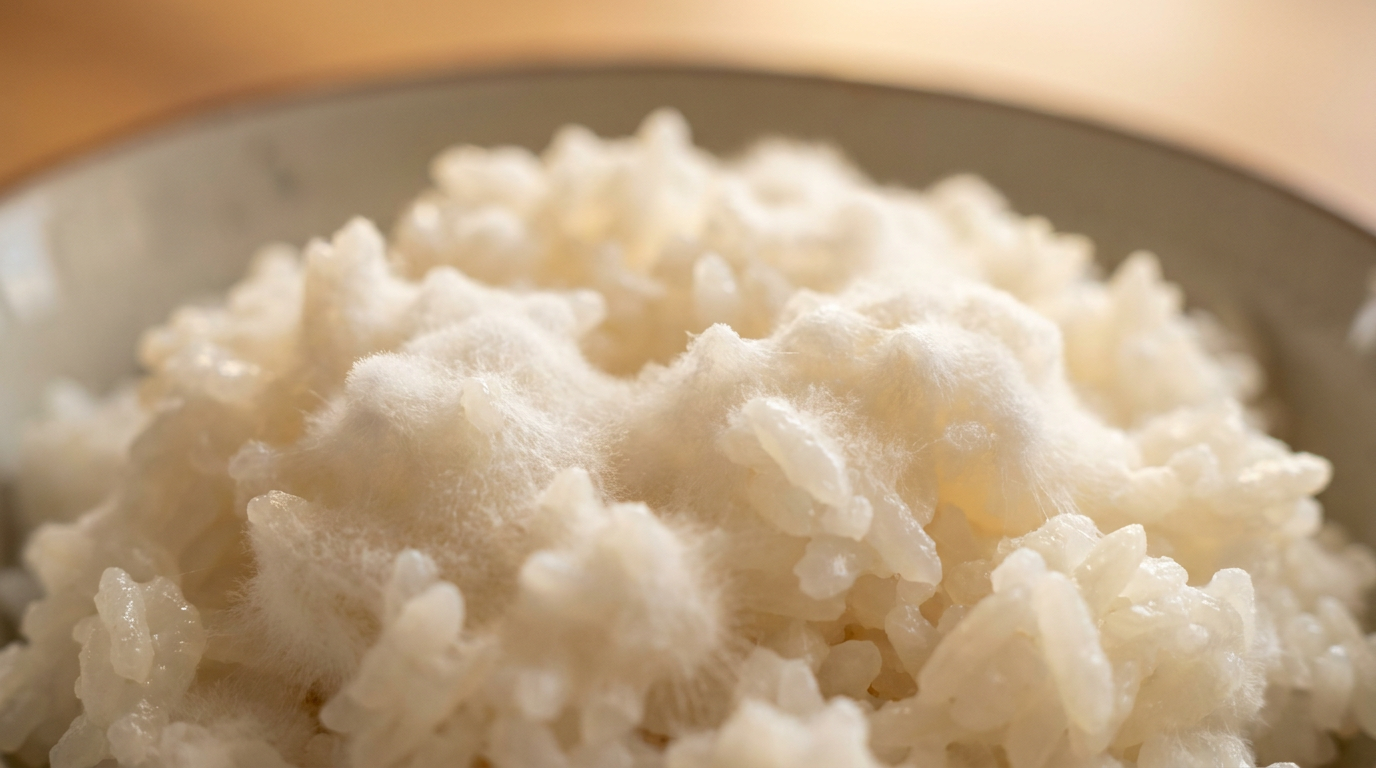
As the mold thrives, it sprouts an intricate network of branching cells known as hyphae. These microscopic, root-like structures spread rapidly across the surface of the grain before penetrating deep into its core. Within about forty-eight hours, the individual grains of rice or barley become clumped together, bound by a pristine, fuzzy white blanket of mycelium. At this stage, the inoculated grain emits a distinct, intoxicating aroma—often described as a mix of sweet roasted chestnuts, fresh mushrooms, and subtle floral notes. The grain has been fundamentally altered, primed for the next stage of its culinary life.[3][6]
The true magic of koji lies in the chemical payload the mold secretes as it digests its host. Because the fungus cannot ingest the grain whole, it must digest it extracellularly. To do this, koji acts as a biological factory, producing and releasing over one hundred different powerful enzymes into the surrounding environment. The most critical of these are amylase, protease, and lipase. Each enzyme acts as a highly specialized microscopic scissor, designed to dismantle specific complex macromolecules into their simpler, more flavorful constituent parts.[1][2][6]

Amylase targets complex carbohydrates, breaking down the dense starches in the rice or barley into simple sugars like glucose. This is why raw koji rice tastes surprisingly sweet on the tongue. Protease, meanwhile, attacks proteins, snipping long, tightly folded protein chains into individual amino acids. Lipase performs a similar function on fats, breaking them down into rich fatty acids. Together, this enzymatic trio unlocks a cascade of chemical reactions that generate the characteristic sweet, savory, and rich flavors that define fermented foods.[1][2]
Amylase targets complex carbohydrates, breaking down the dense starches in the rice or barley into simple sugars like glucose.
The proteolytic action—the breakdown of proteins by protease—is the biological engine of umami. When proteins are dismantled, one of the primary amino acids released is glutamic acid. Glutamic acid is the very compound responsible for the deep, savory, mouth-filling taste that humans instinctively crave. By unleashing these enzymes, koji effectively pre-digests the food, freeing the umami compounds that were previously locked away in tasteless protein structures. This is why a simple mixture of soybeans and koji can eventually transform into a complex, intensely savory paste.[4][7]
Historically, this enzymatic power was harnessed in temple kitchens and early breweries to create the foundational pillars of Japanese flavor. Koji is the essential starting point for miso, soy sauce, mirin, and sake. In sake production, for instance, the mold's amylase is required to convert the rice starch into fermentable sugars, which yeast then consumes to create alcohol—a delicate double-fermentation process. For centuries, the cultivation of koji was a highly specialized craft, with spores sold by dedicated merchants to brewers who guarded their environmental techniques closely.[1][5]
Today, culinary innovators and research institutions like the Nordic Food Lab are pushing koji far beyond its traditional East Asian borders. High-end restaurants have established dedicated fermentation labs to explore novel applications for the mold. Chefs are realizing that the enzymes produced by koji do not care whether they are breaking down a soybean or a completely different ingredient. This realization has sparked a wave of experimentation, using koji to transform local, non-traditional substrates into entirely new categories of flavor, from zero-waste garums made of kitchen scraps to fermented grains.[2][3]

One of the most striking modern applications is the use of koji in dry-aging meats. By rubbing koji spores or koji-inoculated rice directly onto cuts of beef or poultry, chefs can dramatically accelerate the aging process. The mold's protease enzymes penetrate the muscle fibers, rapidly tenderizing the meat while simultaneously boosting its umami profile. What traditionally takes weeks in a climate-controlled dry-aging room can be achieved in a matter of days, resulting in incredibly tender, flavorful meat with a distinct, nutty complexity.[5][6][7]
More importantly, koji is revolutionizing the landscape of plant-based cooking. As the culinary world seeks sustainable alternatives to meat, the challenge has always been replicating the savory depth of animal proteins. Koji provides a natural, biological solution. By applying the mold to vegetables, legumes, or root crops, cooks can generate profound, meaty umami without relying on ultra-processed additives or artificial flavor enhancers. It expands the possibilities for vegan charcuterie and plant-based ferments, proving that deep flavor does not require an animal source.[5][6]
For the everyday home cook, the most accessible gateway into this microbial world is shio koji. Translated as 'salt koji,' it is a simple, living seasoning paste made by fermenting koji-inoculated rice with salt and water. Over a few days at room temperature, the mixture softens into a sweet, salty, umami-rich porridge. Used as a marinade or a direct salt substitute, shio koji tenderizes proteins, draws out the natural sweetness in roasted vegetables, and adds a subtle, refined complexity to vinaigrettes and sauces, effortlessly elevating weeknight dinners.[6][7]

Beyond its remarkable culinary applications, koji offers significant health and nutritional benefits. Because the mold's enzymes break down complex carbohydrates and proteins before the food even enters the body, koji effectively acts as an external digestive system. This pre-digestion makes the nutrients in the food highly bioavailable and easier for the human gut to absorb. Furthermore, unpasteurized koji products are rich in beneficial probiotics and enzymes that support a healthy microbiome, bridging the gap between delicious food and functional nutrition.[6][8]
As we look toward a future defined by the need for more sustainable, plant-forward diets, this ancient microbial partnership offers a powerful blueprint. Koji teaches us that we do not need to rely on resource-heavy meat production or artificial chemical flavorings to create deeply satisfying food. By understanding and collaborating with the microscopic world, we can unlock the hidden potential within the simplest of ingredients, ensuring that the sustainable food of the future is also irresistibly delicious.[8]
How we got here
Ancient Asia
Early domestication of mold-based fermentation begins, laying the groundwork for East Asian cuisine.
13th Century
Koji spores are commercialized in Japan, sold by specialized merchants to brewers and miso makers.
2004
The genome of Aspergillus oryzae is fully sequenced, revealing its massive enzymatic potential.
2010s
High-end Western restaurants, notably Noma, establish fermentation labs to explore novel uses for koji.
Today
Koji products like shio koji become widely available to home cooks as a natural, plant-based flavor enhancer.
Viewpoints in depth
Culinary Scientists & Innovators
Focus on how koji's enzymatic power can be isolated and applied to non-traditional substrates.
For modern culinary innovators, koji is less about tradition and more about biological utility. Institutions like the Nordic Food Lab and high-end restaurant test kitchens view Aspergillus oryzae as a microscopic tool that can be deployed on almost any organic matter. By understanding the specific enzymes the mold produces, these scientists and chefs can create zero-waste garums from kitchen scraps, rapidly tenderize tough cuts of meat, and invent entirely new categories of plant-based charcuterie that mimic the savory depth of animal proteins.
Traditional Fermentation Practitioners
Emphasize the spiritual and cultural lineage of koji, viewing the mold as a living partner.
In traditional Japanese brewing and miso making, koji is treated with a reverence that borders on the spiritual. Practitioners emphasize that making koji is a craft requiring deep intuition, careful environmental control, and respect for centuries-old techniques. To them, the mold is not just a chemical catalyst but a living organism that responds to the subtle shifts in the muro (fermentation room). This perspective values the slow, deliberate processes that have defined Japanese cuisine for millennia, warning against reducing koji to a mere industrial shortcut.
Home Cooks & Health Advocates
Value koji primarily for its practical benefits in everyday cooking and its digestive advantages.
For the everyday home cook and health advocate, the appeal of koji lies in its accessibility and functional benefits. Products like shio koji offer a foolproof way to elevate weeknight dinners, acting as a natural MSG alternative that tenderizes meat and amplifies the flavor of vegetables without ultra-processed additives. Furthermore, this camp highlights the health benefits of fermentation, noting that koji's enzymatic action pre-digests complex macromolecules, making nutrients more bioavailable and supporting a healthy gut microbiome.
What we don't know
- The full extent of the microbial interactions when koji is introduced to non-traditional, wild-foraged substrates.
- How the commercial scaling of koji-based meat alternatives will impact the traditional artisanal fermentation industry in Japan.
Key terms
- Aspergillus oryzae
- The scientific name for the domesticated filamentous fungus used to create koji.
- Hyphae
- The microscopic, branching, root-like filaments of the fungus that penetrate grains to extract nutrients.
- Amylase
- An enzyme secreted by koji that breaks down complex starches into simple, sweet sugars.
- Protease
- An enzyme that breaks down proteins into amino acids, including the umami-rich glutamic acid.
- Shio Koji
- A versatile, living seasoning paste made from fermented rice koji, salt, and water, used as a marinade or salt substitute.
- Muro
- The traditional, carefully climate-controlled cedar room where koji spores are incubated on grains.
Frequently asked
Is koji safe to eat since it is a mold?
Yes. Aspergillus oryzae is a domesticated, benign fungus that has been safely used in food production for thousands of years. It does not produce the toxins associated with wild spoilage molds.
Can I use koji if I don't eat meat?
Absolutely. Koji is entirely plant-based and is actually one of the most powerful tools for adding deep, meaty umami flavors to vegan and vegetarian dishes without using animal products.
Where can a home cook buy koji?
Dried koji rice or ready-made shio koji paste can be found in Japanese grocery stores, specialty health food shops, or ordered easily online.
What does raw koji taste like?
Before it is mixed with salt or soybeans, raw koji rice tastes surprisingly sweet, with an aroma reminiscent of roasted chestnuts and fresh mushrooms, due to the amylase enzymes breaking down the rice starches into sugars.
Sources
Source coverage
8 outlets
3 viewpoints surfaced








[1]The Japanese Food LabTraditional Fermentation Practitioners
The Science of Koji: Enzymes, Umami, and Fermentation
Read on The Japanese Food Lab →[2]Nordic Food LabCulinary Scientists & Innovators
Koji: The Functional Backbone of Flavor
Read on Nordic Food Lab →[3]Institute of Culinary EducationCulinary Scientists & Innovators
Exploring Koji Fermentation in the Culinary Kitchen
Read on Institute of Culinary Education →[4]NipponTraditional Fermentation Practitioners
The Power of Koji Condiments: Extracting Umami
Read on Nippon →[5]WikipediaTraditional Fermentation Practitioners
Aspergillus oryzae
Read on Wikipedia →[6]Onima PantryHome Cooks & Health Advocates
The Magic of Koji in Modern Cooking
Read on Onima Pantry →[7]Kyoto YamasanHome Cooks & Health Advocates
Why Japanese Chefs Rely on Koji for Natural Umami
Read on Kyoto Yamasan →[8]Factlen Editorial Team
Synthesis by Factlen editorial team
Read on Factlen Editorial Team →

Every angle. Every day.
Get lifestyle stories with full source coverage and perspective breakdowns delivered to your inbox.