
Oil Prices Slide as US-Iran Peace Talks Unlock Millions of Barrels in the Strait of Hormuz
An interim diplomatic agreement in Switzerland has allowed heavily discounted Iranian crude to flood the global market, providing immediate relief to energy benchmarks. However, central banks remain on high alert as volatile negotiations and regional tensions threaten to reignite inflation.
By Factlen Editorial Team
- Energy Markets & Traders
- Views the diplomatic developments primarily through the lens of supply and demand, focusing on the release of 20 million barrels of crude and the steep discounts offered to Chinese refiners.
- Western Policymakers
- Focuses on the macroeconomic stakes, viewing the Strait of Hormuz as a critical inflation chokepoint and prioritizing the prevention of second-round wage inflation.
- Iranian Negotiators
- Prioritizes securing immediate economic relief and export waivers while utilizing walkouts and threats of waterway closures as leverage against U.S. military posturing.
What's not represented
- · Independent Chinese Refiners (Teapots)
- · Commercial Shipping Operators
Why this matters
The cost of crude oil directly dictates the price of gasoline, transport, and everyday goods. If this fragile 60-day diplomatic window holds, consumers could see sustained relief at the pump; if it collapses, central banks may be forced to keep interest rates painfully high to combat a renewed surge in inflation.
Key points
- The U.S. and Iran have agreed to a 60-day negotiating roadmap in Switzerland, easing immediate fears of a global energy crisis.
- In response to the interim deal, Brent crude prices have slipped toward $79 a barrel.
- At least 20 million barrels of Iranian crude have recently left the port of Chabahar, effectively ending a six-week export blockade.
- Iran is offering steep discounts of $2.50 to $5 a barrel to entice independent Chinese refiners to purchase its stockpiled oil.
- The European Central Bank is closely monitoring the situation, warning that energy volatility could still trigger 'second-round' wage inflation across the Eurozone.
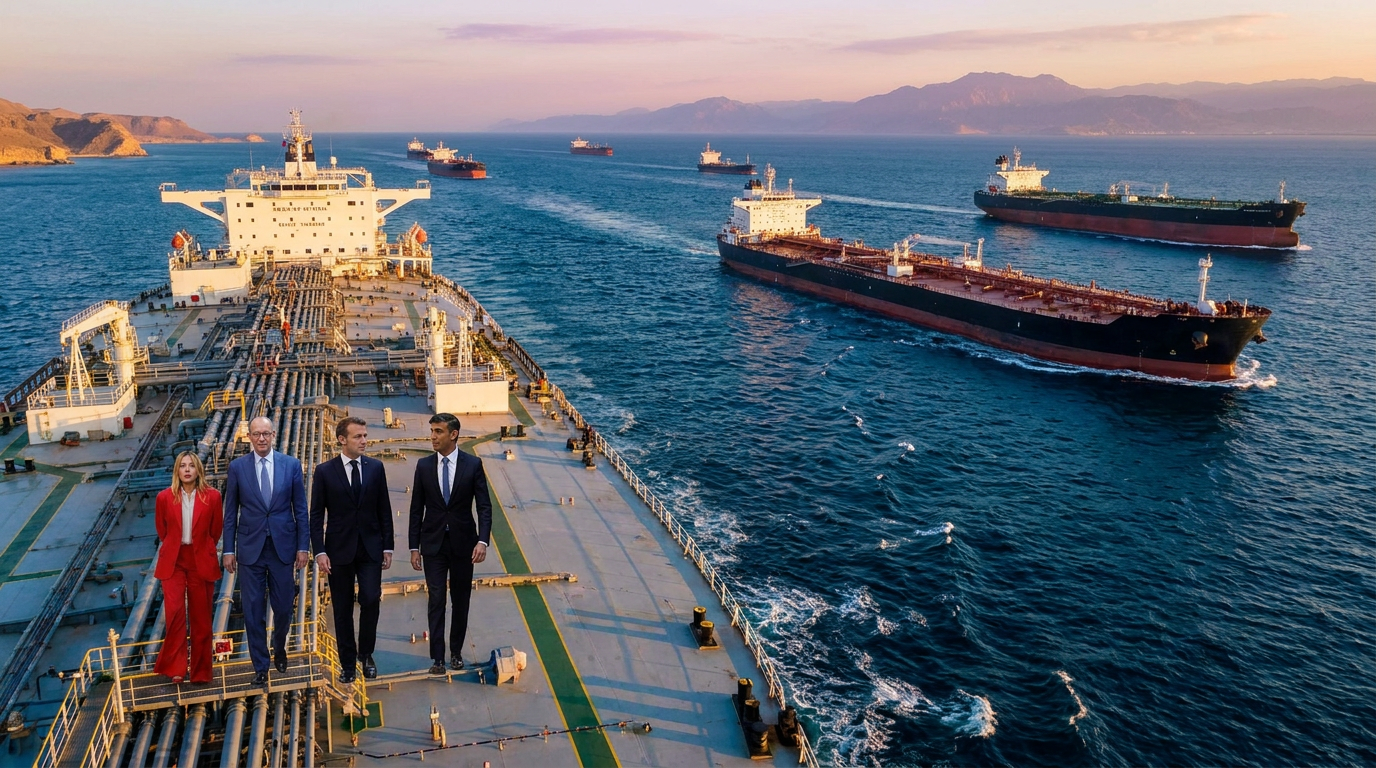
The interim peace agreement between the United States and Iran is already sending shockwaves through global energy markets, fundamentally altering the flow of crude oil and shifting the calculus for central banks worldwide. After weeks of naval blockades and geopolitical brinkmanship, the physical manifestation of diplomatic progress is now visible on the water. Millions of barrels of Iranian crude are actively exiting the Strait of Hormuz, easing fears of a catastrophic supply shortage that had threatened to cripple the global economy.[1]
The immediate impact on energy benchmarks has been stark. Brent crude, the international benchmark, slipped toward $79 a barrel early this week, reversing earlier spikes that had pushed prices well above $82. This price relief comes as high-ranking officials from Washington and Tehran attempt to hammer out a lasting framework, easing the risk premium that traders had baked into oil futures over the past month.[1][5]
The diplomatic backdrop enabling this market shift is the Lake Lucerne Summit in Switzerland, where negotiators have agreed to a 60-day roadmap aimed at securing a permanent deal. Mediated by Qatar and Pakistan, the talks have yielded immediate economic concessions, with Iranian Foreign Minister Abbas Araqchi confirming that Tehran has secured vital waivers for its oil and petrochemical exports.[3][4][5]
However, the path to these waivers has been exceptionally volatile. The summit experienced a highly turbulent opening over the weekend, nearly collapsing before technical discussions could begin. The fragility of the negotiations was laid bare when the Iranian delegation, led by Parliament Speaker Mohammad Bagher Ghalibaf, temporarily walked out of the venue in protest.[1][2][3]

The walkout was triggered by aggressive rhetoric from U.S. President Donald Trump, who used appearances on Fox News and posts on Truth Social to threaten fresh military strikes against Iran. Trump explicitly warned that the U.S. military would take over the Strait of Hormuz and potentially charge a toll if Tehran interfered with commercial shipping, telling Iranian officials that they "won't have a country" if the waterway was closed.[3][4]
In response to the bellicose rhetoric, Vice President JD Vance, who is leading the U.S. delegation in Switzerland, attempted to stabilize the room during an 80-minute face-to-face session. Vance urged the negotiators to "turn over a new leaf" and permanently change relations in the Middle East, rather than reverting to the hostilities that have defined the past several months.[4]
Despite the diplomatic friction, the economic imperatives for both sides have kept the oil flowing. Ship-tracking data reveals a massive mobilization of Iranian petroleum assets, with at least 11 tankers carrying a combined 20 million barrels detected leaving the Iranian port of Chabahar in recent days. Furthermore, Tehran has resumed loadings at Kharg Island, its primary export terminal, following a roughly six-week halt under a U.S. naval blockade that was lifted as part of the interim understanding.[1]
The primary destination for this sudden influx of crude is China, which typically absorbs roughly 90% of Iran's oil exports through complex logistical and financial workarounds. To rapidly clear the backlog of oil that accumulated during the blockade, Iranian sellers are currently orchestrating a massive fire sale.[1][6]

To rapidly clear the backlog of oil that accumulated during the blockade, Iranian sellers are currently orchestrating a massive fire sale.
Spot cargoes of Iranian Light crude for July arrival are being offered to Chinese buyers at steep discounts of $2.50 to $5 a barrel below the Brent benchmark. This represents a dramatic price cut compared to the modest $1 discount that was standard before the peace deal was struck.[1][6]
The aggressive pricing strategy is specifically designed to entice China's independent refiners, colloquially known as "teapots." These independent processors have been struggling with razor-thin margins and mounting economic pressure, prompting Beijing to relax previous mandates that required them to produce fuels at all costs. By slashing prices, Tehran hopes to stimulate demand from these crucial buyers and secure much-needed revenue.[1][6]
While the resumption of Iranian exports is a boon for energy traders and Chinese refiners, the macroeconomic ripple effects are being closely monitored by Western policymakers. The volatility of the past month has left deep scars on the inflation outlook, prompting central banks to adopt a highly defensive posture.[7]
In Europe, the European Central Bank is explicitly warning that the recent fluctuations in energy markets could still derail their efforts to tame inflation. Speaking in Barcelona, ECB Governing Council member José Luis Escrivá cautioned that the baseline economic scenario for the Eurozone remains subject to "considerable uncertainty" due to the Middle East conflict.[7]

Escrivá highlighted a specific mechanism of inflation transmission that is currently troubling the central bank: the way raw energy costs bleed into the broader economy. He noted that higher fuel prices are already spreading into the services and transport sectors, where energy represents a non-negotiable operating expense.[1][7]
The ultimate fear for the ECB is the emergence of "second-round effects." This occurs when workers, squeezed by the rising cost of transport and everyday services, demand higher wages to compensate. If companies grant these wage increases and subsequently raise their own prices to protect profit margins, inflation becomes entrenched in the economy, regardless of what happens to the price of crude oil.[7]
While Escrivá acknowledged that these second-round wage effects have "yet to materialize," the ECB remains hyper-vigilant. The central bank's caution underscores why the safe passage of commercial vessels through the Strait of Hormuz is not just a regional security issue, but a foundational pillar of global monetary policy.[4][7]
The success of the 60-day roadmap also hinges on external geopolitical factors, most notably the fragile ceasefire between Israel and Hezbollah in southern Lebanon. The interconnected nature of these conflicts means that violence in the Levant can instantly threaten shipping lanes in the Persian Gulf.[1][5]

This vulnerability was demonstrated over the weekend when Iran briefly claimed it had closed the Strait of Hormuz in retaliation for Israeli strikes in Lebanon that killed at least 20 people. Although commercial vessels ultimately continued to pass through the waterway, the threat alone was enough to temporarily spike oil prices and rattle negotiators in Switzerland.[4][5]
As the technical talks continue in the Swiss Alps, the global economy remains in a delicate holding pattern. The interim deal has successfully unlocked millions of barrels of crude and provided immediate price relief, but the underlying tensions remain unresolved.[1][4]
For the next 60 days, energy markets, independent refiners, and central bankers will be watching the Strait of Hormuz with intense scrutiny. The difference between a lasting diplomatic breakthrough and a return to conflict will ultimately determine whether the current drop in oil prices is a permanent correction or merely a temporary reprieve.[4][7]
How we got here
April 2026
A tenuous ceasefire is established in the broader Middle East conflict, temporarily halting direct military engagements.
Mid-May 2026
U.S. naval blockades halt Iranian oil loadings at Kharg Island, starving Tehran of revenue and trapping millions of barrels of crude.
June 14, 2026
U.S. and Iranian officials digitally sign a preliminary memorandum of understanding to end hostilities and reopen shipping lanes.
June 21, 2026
High-level face-to-face talks begin at the Lake Lucerne Summit in Switzerland, marked by a brief Iranian walkout over U.S. military threats.
June 22, 2026
Mediators announce a 60-day roadmap for a final deal, as global oil prices drop in response to Iranian crude flooding the market.
Viewpoints in depth
Energy Markets & Traders
Focuses on the physical flow of oil and the immediate pricing of Brent crude.
This camp views the diplomatic developments purely through the lens of supply and demand. Analysts note that the release of 20 million barrels of Iranian crude and the steep discounts offered to Chinese refiners are the primary drivers pulling global benchmarks back down to $79 a barrel. For traders, the political rhetoric is secondary to the physical movement of tankers through the Strait of Hormuz.
Western Policymakers
Focuses on the macroeconomic stakes of the geopolitical conflict and the threat of inflation.
For central bankers and administration officials, the Strait of Hormuz is a critical inflation chokepoint. Their primary concern is preventing volatile energy costs from bleeding into the services sector and triggering a cycle of wage increases. Policymakers argue that securing the waterway is essential to preventing inflation from becoming permanently embedded into the Western economy.
Iranian Negotiators
Focuses on securing immediate economic relief while projecting strength against U.S. military threats.
This camp prioritizes the acquisition of export waivers to rescue Iran's heavily sanctioned economy and clear its massive backlog of stockpiled crude. However, the delegation remains highly sensitive to aggressive rhetoric, utilizing walkouts and threats of waterway closures as leverage to ensure the U.S. adheres to the interim understanding and respects Iranian sovereignty.
What we don't know
- Whether the 60-day diplomatic roadmap will actually result in a permanent, formalized peace treaty between Washington and Tehran.
- How the fragile ceasefire between Israel and Hezbollah in Lebanon might impact Iran's willingness to keep the Strait of Hormuz open.
- Whether the recent fluctuations in global energy prices have already triggered irreversible wage inflation in the European services sector.
Key terms
- Strait of Hormuz
- A narrow, strategically vital waterway between the Persian Gulf and the Gulf of Oman through which roughly a fifth of the world's oil consumption passes.
- Brent Crude
- The leading global price benchmark for Atlantic basin crude oils, used to price two-thirds of the world's internationally traded crude oil supplies.
- Teapot Refiners
- Independent, privately owned oil refineries in China that operate outside the control of the country's massive state-owned energy conglomerates.
- Second-Round Effects
- An economic phenomenon where an initial price shock triggers a chain reaction of wage increases and further price hikes, embedding inflation into the broader economy.
- Waivers
- Official exemptions granted by a sanctioning body that allow a country to sell specific goods, such as oil, without facing financial penalties.
Frequently asked
Why are oil prices dropping right now?
Oil prices are sliding toward $79 a barrel because the U.S. and Iran have reached an interim peace agreement, allowing millions of barrels of previously blocked Iranian crude to exit the Strait of Hormuz and enter the global market.
Why is Iran offering steep discounts on its oil?
To quickly clear a massive backlog of crude built up during recent naval blockades, Iranian sellers are offering discounts of up to $5 a barrel below the Brent benchmark to entice independent Chinese refiners who are struggling with weak profit margins.
What are the 'second-round effects' the European Central Bank is worried about?
The ECB fears that recent spikes in energy costs will force workers to demand higher wages to cover their living expenses. If businesses raise prices to afford those higher wages, inflation becomes permanently locked into the economy.
Did the U.S. and Iran sign a final peace treaty?
No. The two nations have agreed to a 60-day roadmap to negotiate a final deal. The current arrangement is an interim understanding that includes waivers for Iranian oil exports in exchange for a pause in hostilities.
Sources
Source coverage
7 outlets
3 viewpoints surfaced







[1]BloombergEnergy Markets & Traders
Oil Declines After US-Iran Peace Talks Show Signs of Progress
Read on Bloomberg →[2]TimeWestern Policymakers
U.S. and Iran Sign Preliminary Agreement to End Hostilities
Read on Time →[3]The GuardianIranian Negotiators
US-Iran talks set to continue despite Iranian walkout
Read on The Guardian →[4]The Washington PostWestern Policymakers
Vance begins high-stakes talks with Iran as Trump threatens fresh attacks
Read on The Washington Post →[5]The StarEnergy Markets & Traders
Oil slips after US-Iran conclude talks in Switzerland
Read on The Star →[6]The Business TimesEnergy Markets & Traders
Iranian crude offered to China at discount as demand softens
Read on The Business Times →[7]Investing.comWestern Policymakers
ECB's Escriva warns of uncertainty in baseline economic scenario
Read on Investing.com →
Every angle. Every day.
Get business stories with full source coverage and perspective breakdowns delivered to your inbox.