
How Over-the-Counter Glucose Monitors Are Changing Everyday Metabolic Health
With continuous glucose monitors now available without a prescription, health optimizers are tracking real-time blood sugar to fine-tune their diets. But while the devices offer unprecedented metabolic visibility, experts debate whether healthy individuals truly benefit from the constant data.
By Factlen Editorial Team
- Metabolic Optimizers
- Argue that real-time data empowers individuals to prevent metabolic dysfunction before it starts through personalized nutrition.
- Medical Skeptics
- Warn that continuous monitoring in healthy people lacks clinical evidence and can trigger eating disorders or data anxiety.
- Endurance Athletes
- View CGMs purely as a fueling gauge to optimize carbohydrate intake and prevent fatigue during intense training.
What's not represented
- · Health insurance providers
- · Low-income patient advocates
Why this matters
Understanding your unique glycemic response to different foods can help prevent energy crashes, optimize athletic performance, and potentially delay the onset of metabolic syndrome—shifting healthcare from reactive treatment to proactive optimization.
Key points
- The FDA recently cleared the first continuous glucose monitors for over-the-counter sale to non-diabetics.
- Sensors measure glucose in the interstitial fluid, providing real-time data to a smartphone app.
- Studies show healthy individuals have vastly different glycemic responses to the exact same foods.
- Users leverage the data to blunt glucose spikes by walking after meals or pairing carbs with protein.
- Medical professionals warn that hyper-fixation on normal glucose fluctuations can lead to data anxiety.
- Experts suggest using CGMs as a short-term educational tool rather than a permanent wearable.
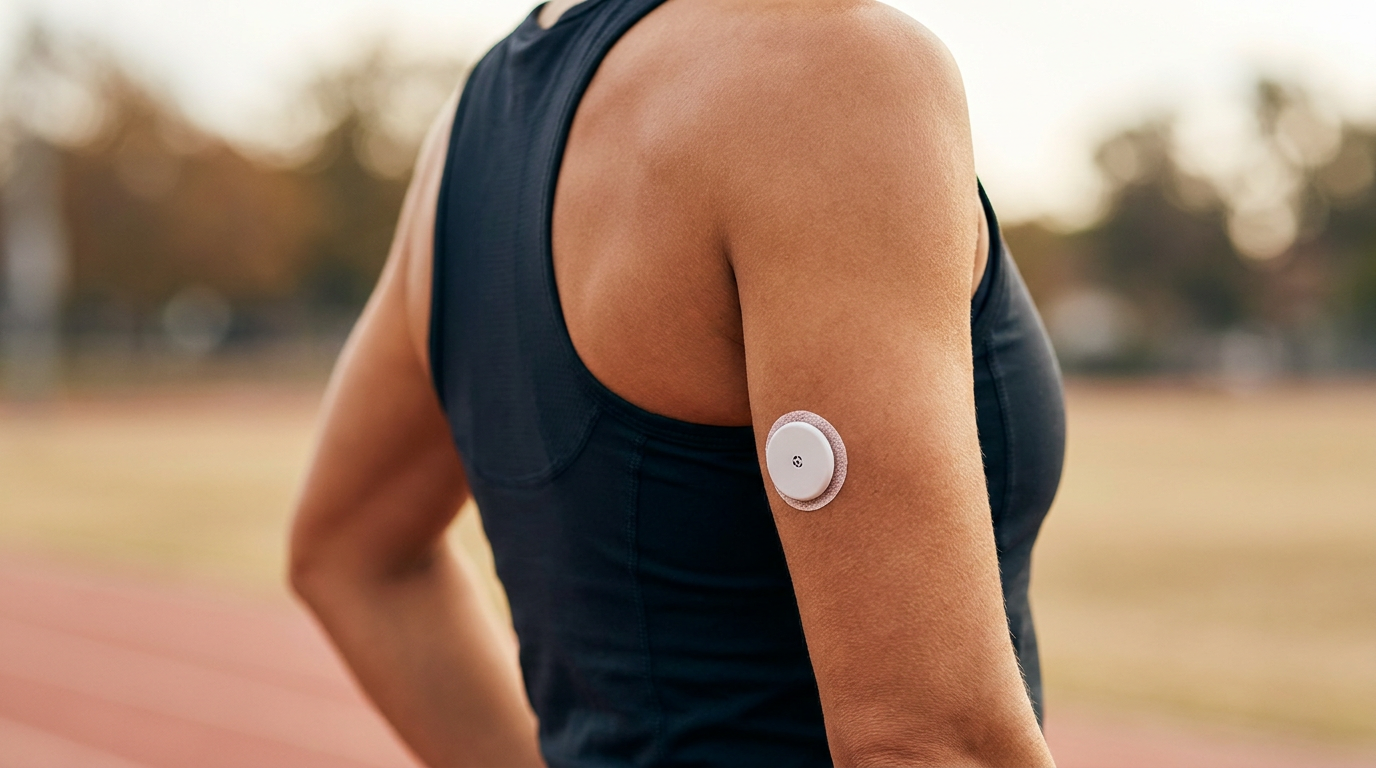
The wearable technology revolution has officially moved beneath the skin. For years, health-conscious consumers have tracked their steps, sleep cycles, and resting heart rates using smartwatches and rings. But the ultimate metric of metabolic health—real-time blood sugar—remained locked behind a prescription pad, reserved almost exclusively for the millions of Americans managing diabetes. That paradigm shifted dramatically when federal regulators cleared the first wave of over-the-counter continuous glucose monitors (CGMs), transforming a critical medical device into a mainstream biohacking tool. Today, these quarter-sized sensors are appearing on the triceps of marathon runners, tech executives, and wellness enthusiasts who want to see exactly how their bodies react to a bowl of oatmeal or a stressful meeting.[1][6]
To understand why healthy individuals are suddenly eager to wear a medical sensor, one must look at the limitations of standard health screenings. The traditional annual physical relies on a fasting blood glucose test or an A1C measurement, which provides a three-month average of blood sugar levels. While these metrics are excellent for diagnosing established diabetes, biohackers and longevity researchers argue they are lagging indicators. By the time fasting glucose rises out of the optimal range, metabolic dysfunction and insulin resistance may have been developing silently for years. Continuous monitoring promises to illuminate the hidden spikes and crashes that occur in the hours immediately following a meal, offering a proactive window into metabolic health.[5][7]
The technology driving this metabolic visibility is remarkably elegant. A CGM does not actually measure blood; instead, an applicator painlessly inserts a microscopic, flexible filament just under the skin into the interstitial fluid—the liquid that surrounds the body's cells. An enzyme on the filament called glucose oxidase reacts with the glucose in this fluid, generating a tiny electrical current. The sensor translates this current into a glucose reading, transmitting the data via Bluetooth to a smartphone app every five to fifteen minutes. The result is a continuous, 24-hour graph of the wearer's glycemic landscape, revealing exactly how their metabolism responds to food, exercise, sleep, and stress.[6][7]

Because interstitial fluid is not blood, there is a crucial physiological delay that new users must understand. When a person eats a carbohydrate-heavy meal, glucose enters the bloodstream first, and it takes approximately 10 to 15 minutes for that glucose to diffuse into the interstitial fluid. This means the CGM graph is always slightly behind real-time blood sugar. During periods of rapid change—such as during an intense workout or immediately after eating a sugary dessert—the sensor reading might temporarily diverge from a traditional finger-prick blood test. Understanding this lag is essential for interpreting the data correctly and avoiding unnecessary panic over sudden, transient spikes.[5][6]
The core revelation driving the OTC CGM trend is the discovery of profound individual glycemic variability. For decades, nutritional guidelines relied on the glycemic index, a standardized ranking of how quickly different foods raise blood sugar. However, landmark research published in leading scientific journals has demonstrated that this index is fundamentally flawed when applied to individuals. In studies equipping healthy, non-diabetic participants with CGMs, researchers found that two people can eat the exact same banana or slice of whole-wheat bread and experience completely different metabolic responses. One person might see a gentle, healthy rise in glucose, while the other experiences a massive, pre-diabetic spike.[2][7]
This extreme variability is driven by a complex web of individual factors, with the gut microbiome playing a starring role. The trillions of bacteria residing in the digestive tract dictate how efficiently carbohydrates are broken down and absorbed. Additionally, a person's muscle mass, sleep quality the night before, baseline insulin sensitivity, and even their genetics heavily influence their post-meal glucose curve. Armed with a CGM, biohackers are abandoning generic dietary advice in favor of personalized nutrition, using the sensor to identify and eliminate their specific trigger foods while keeping the carbohydrates their unique biology can handle efficiently.[2][7]
The physiological stakes of managing these post-meal spikes are significant. When blood glucose surges abnormally high, the pancreas must pump out a correspondingly large amount of insulin to shuttle that sugar out of the bloodstream and into the cells. Over time, repeated massive insulin surges can cause the body's cells to become numb to the hormone—a condition known as insulin resistance. As insulin resistance develops, the body must produce even more insulin to achieve the same effect, creating a vicious cycle that promotes fat storage, increases systemic inflammation, and eventually leads to metabolic syndrome and type 2 diabetes.[5][7]
The physiological stakes of managing these post-meal spikes are significant.
Beyond long-term disease prevention, many users are drawn to CGMs to solve immediate, daily quality-of-life issues, most notably the dreaded afternoon energy crash. When a large glucose spike triggers a massive insulin release, the insulin often works too well, rapidly clearing the sugar and causing blood glucose to plummet below baseline. This phenomenon, known as reactive hypoglycemia, is interpreted by the brain as a state of starvation. The immediate physiological response is a wave of fatigue, brain fog, and intense cravings for more sugar, trapping the individual in a rollercoaster of energy highs and debilitating lows throughout the workday.[4][7]

By visualizing these crashes in real-time, users can implement immediate behavioral interventions to flatten their glucose curves. One of the most popular strategies to emerge from the CGM community is the concept of clothing your carbs. Data consistently shows that eating carbohydrates on an empty stomach results in a sharp spike. However, if those same carbohydrates are consumed after a portion of dietary fiber, healthy fats, or protein, the digestion process slows dramatically. The glucose enters the bloodstream at a steady trickle rather than a flood, resulting in a gentle, sustained energy release that keeps the user full and focused for hours.[4][7]
Another powerful behavioral shift driven by CGM data is the resurgence of the post-meal walk. The sensors provide undeniable, immediate visual proof that light physical activity after eating acts as a potent glucose sink. When a person walks for just ten to fifteen minutes after a meal, the contracting muscles in the legs demand immediate energy. Because these working muscles can absorb glucose from the bloodstream without requiring insulin, the post-meal spike is effectively blunted. For many users, seeing this real-time cause-and-effect on their smartphone screen is the ultimate behavioral catalyst, turning a vague health recommendation into a daily, data-driven habit.[4][7]
While metabolic optimizers focus on blunting spikes, endurance athletes are using OTC CGMs for the exact opposite reason: ensuring they have enough glucose to fuel extreme exertion. Marathon runners, cyclists, and triathletes have long struggled with bonking—the sudden, catastrophic fatigue that occurs when the body depletes its glycogen stores. By wearing a CGM during long training sessions, athletes can monitor their glucose levels in real-time, precisely timing their intake of energy gels and sports drinks to maintain optimal fuel levels. For these users, the sensor is a dashboard gauge, ensuring the engine never runs out of gas.[7]
Despite the enthusiastic adoption by consumers, the medical establishment remains deeply divided on the utility of CGMs for healthy individuals. Traditional endocrinologists and medical researchers caution that the human body is designed to experience glucose fluctuations. A spike after eating a meal is a normal physiological response, not necessarily a pathological event. Critics argue that the wellness industry is medicalizing normal digestion, creating a culture of fear around perfectly healthy foods like fruit and root vegetables simply because they cause a temporary rise in the data graph.[3][5]

This medical skepticism is compounded by the exercise paradox seen on CGM graphs. High-intensity interval training, heavy weightlifting, and even sauna sessions trigger the release of stress hormones like adrenaline and cortisol. These hormones signal the liver to dump stored glucose into the bloodstream to fuel the fight-or-flight response, resulting in a massive glucose spike on the CGM. Without proper context, a user might misinterpret this spike as a negative health event, when in reality, the exercise is profoundly beneficial for long-term insulin sensitivity. The data requires nuanced interpretation that many consumers lack.[3][7]
There is also a growing concern about the psychological toll of continuous monitoring. Psychologists warn that hyper-fixation on real-time health metrics can lead to orthorexia—an unhealthy obsession with eating only foods deemed pure or perfect by the data. When every meal is graded by a line on a screen, the joy of eating can be replaced by data-driven anxiety. For individuals prone to obsessive-compulsive tendencies or eating disorders, the constant feedback loop of a CGM can be actively harmful, transforming a tool meant for empowerment into a source of chronic stress.[3][7]

Ultimately, the consensus emerging among moderate health experts is that healthy individuals do not need to wear a CGM year-round. Instead, the devices are best utilized as a short-term educational tool. Wearing a sensor for a single 14-day or 28-day period provides enough data to map one's unique metabolic responses, identify trigger foods, and validate the effectiveness of habits like post-meal walking. Once those lessons are learned and integrated into daily life, the user can remove the sensor, trusting the behavioral changes they've made without needing a continuous digital tether to confirm them.[6][7]
How we got here
1999
The FDA approves the first professional continuous glucose monitor, which only provided retrospective data for doctors.
2006
The first real-time CGM is approved, allowing patients to see their glucose levels instantly.
2024
The FDA clears the first over-the-counter CGMs, removing the prescription requirement for non-insulin users.
2026
OTC CGMs become widely adopted by athletes and wellness enthusiasts for metabolic optimization.
Viewpoints in depth
Metabolic Optimizers
Biohackers and longevity researchers who view CGMs as essential tools for proactive health.
This camp argues that the traditional medical system is entirely too reactive, waiting until a patient reaches pre-diabetic thresholds before intervening. By utilizing CGMs, optimizers believe individuals can map their unique microbiome and genetic responses to specific foods. They view post-meal glucose spikes not just as a diabetes risk, but as a primary driver of daily fatigue, systemic inflammation, and accelerated aging. For them, the sensor is an empowering dashboard that turns abstract nutritional advice into actionable, personalized science.
Medical Skeptics
Traditional endocrinologists who warn against the medicalization of normal digestion.
Many in the medical establishment are deeply concerned by the mainstreaming of CGMs among healthy populations. They point out that a temporary rise in glucose after eating a banana is a perfectly normal, healthy physiological process, not a disease state. This camp warns that the wellness industry is creating a culture of fear around carbohydrates, leading to orthorexia and data-driven anxiety. They argue that without a medical background, consumers often misinterpret harmless spikes—such as those caused by intense exercise or a sauna session—as metabolic failures.
Endurance Athletes
Sports nutritionists and athletes using the devices purely for performance fueling.
For the athletic community, the CGM is less about preventing disease and entirely about maximizing output. Endurance athletes use the sensors to ensure their glycogen stores are adequately topped off during long training blocks. Instead of trying to flatten their glucose curves, these users are actively trying to keep their numbers elevated during exercise to prevent 'bonking.' The data allows them to precisely time the ingestion of energy gels and carbohydrate drinks, turning fueling from a guessing game into an exact science.
What we don't know
- Whether blunting every single post-meal glucose spike actually extends lifespan in non-diabetic individuals.
- How the long-term psychological effects of continuous dietary monitoring will impact the broader wellness culture.
- If the out-of-pocket costs of OTC CGMs will eventually drop enough to make them accessible to lower-income populations.
Key terms
- Interstitial fluid
- The fluid surrounding the body's cells, which is where continuous glucose monitors actually measure sugar levels, rather than directly in the blood.
- Postprandial glucose
- The measurement of blood sugar levels in the hours immediately following a meal.
- Insulin resistance
- A condition where the body's cells stop responding effectively to insulin, requiring the pancreas to produce more of the hormone to keep blood sugar in check.
- Reactive hypoglycemia
- A sudden drop in blood sugar that occurs after a large spike, often resulting in feelings of fatigue, brain fog, and intense hunger.
- Glycemic variability
- The magnitude and frequency of fluctuations in blood glucose levels throughout a 24-hour period.
Frequently asked
Do I need a prescription to buy a CGM?
No. As of 2024, the FDA has cleared several CGM models, such as the Dexcom Stelo, for over-the-counter purchase by adults who do not use insulin.
Does applying the sensor hurt?
Most users report that application is painless. The device uses a tiny, flexible filament rather than a rigid needle, which sits just under the skin.
Can I wear a CGM in the shower or while swimming?
Yes. Most modern sensors are water-resistant and designed to be worn continuously during showers, swimming, and intense exercise for up to 14 days.
Is the reading exactly the same as a finger-prick blood test?
Not exactly. CGMs measure glucose in the interstitial fluid, which typically lags behind actual blood glucose by 10 to 15 minutes, especially during rapid changes.
Sources
Source coverage
7 outlets
3 viewpoints surfaced







[1]U.S. Food and Drug Administration
FDA Clears First Over-the-Counter Continuous Glucose Monitor
Read on U.S. Food and Drug Administration →[2]Nature MedicineMetabolic Optimizers
Metabolic variability in healthy individuals using continuous glucose monitoring
Read on Nature Medicine →[3]JAMAMedical Skeptics
Clinical Utility of Continuous Glucose Monitoring in Non-Diabetic Adults
Read on JAMA →[4]Cell MetabolismMetabolic Optimizers
Postprandial glycemic dips and hunger
Read on Cell Metabolism →[5]American Diabetes AssociationMedical Skeptics
Standards of Care in Diabetes: CGM Guidelines
Read on American Diabetes Association →[6]DexcomEndurance Athletes
Stelo by Dexcom: OTC Glucose Tracking
Read on Dexcom →[7]Factlen Editorial TeamMetabolic Optimizers
Synthesis by Factlen editorial team
Read on Factlen Editorial Team →


Every angle. Every day.
Get health stories with full source coverage and perspective breakdowns delivered to your inbox.