
US and Iran Agree to 60-Day Roadmap in Swiss Talks Despite Tense Opening
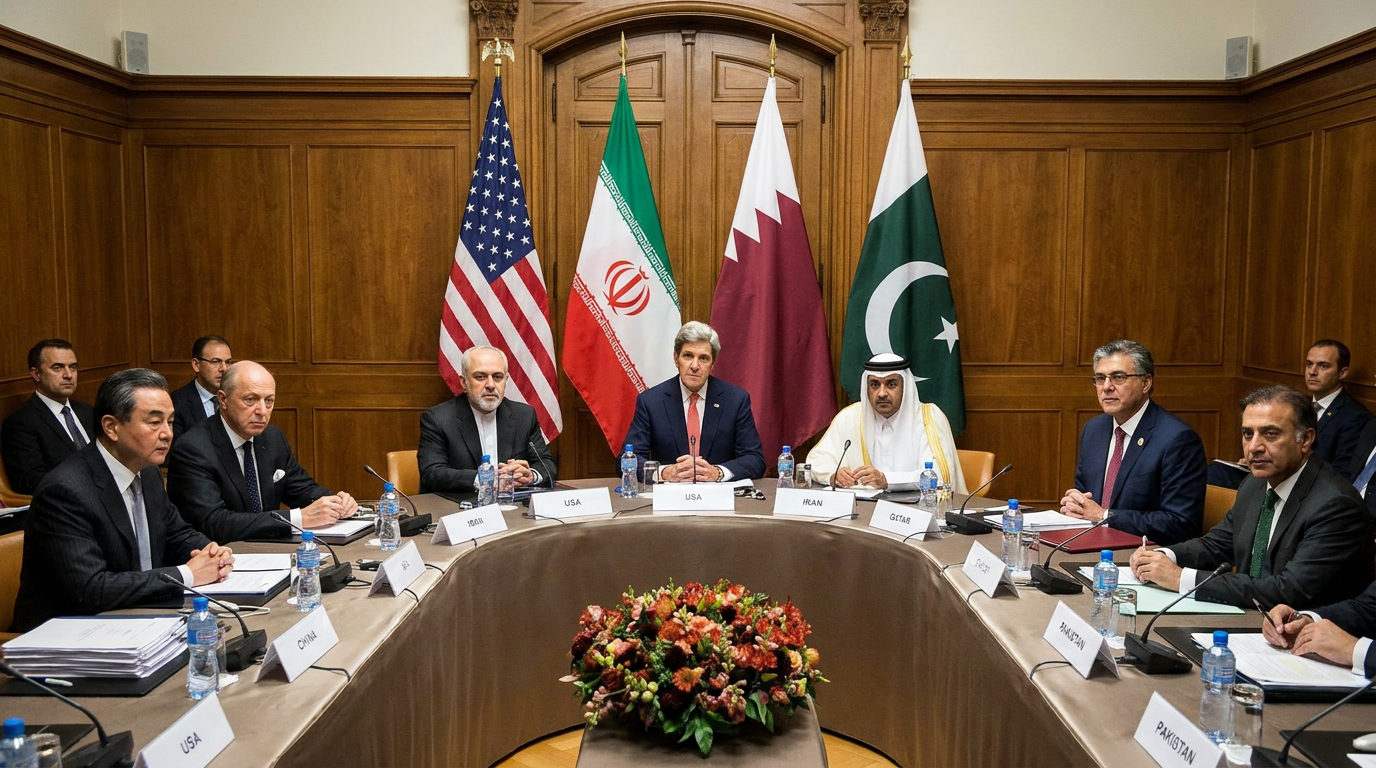
High-level negotiations between the United States and Iran have yielded a preliminary 60-day roadmap for a comprehensive agreement, mediated by Qatar and Pakistan. The breakthrough follows a volatile first day in Switzerland that included an Iranian walkout over renewed threats regarding the Strait of Hormuz.
By Factlen Editorial Team
- Diplomatic Optimists
- View the 60-day roadmap as a tangible breakthrough that prevents immediate military escalation and opens a window for de-escalation.
- Skeptical Regional Allies
- Warn that Iran is using the negotiations to buy time for nuclear enrichment while maintaining proxy aggression in places like Lebanon.
- Iranian State Hardliners
- Demand immediate sanctions relief as a prerequisite for any concessions and view the walkout as necessary leverage against US threats.
What's not represented
- · Commercial shipping operators
- · Lebanese civilians affected by proxy conflicts
Why this matters
A successful deal could stabilize global energy markets by securing the Strait of Hormuz and de-escalating regional proxy conflicts. Conversely, a collapse of this 60-day window risks immediate military confrontation and spiking global inflation driven by oil shortages.
Key points
- The US and Iran agreed to a 60-day roadmap for a potential nuclear and maritime security deal.
- Talks in Switzerland were mediated by diplomatic teams from Qatar and Pakistan.
- The summit nearly collapsed on the first day after an Iranian walkout over US military threats.
- Technical talks between lower-ranking officials will continue through the week.
- Regional allies, including Israel, remain highly skeptical of Iran's intentions during the 60-day window.
High-level negotiations between the United States and Iran have produced a preliminary 60-day roadmap toward a broader diplomatic agreement, surviving a highly volatile opening day in Switzerland. The talks, mediated by Qatar and Pakistan, initially stalled when the Iranian delegation staged a walkout in response to renewed American political threats, but resumed after intense backdoor diplomacy.[1][3]
A joint statement issued by the Qatari and Pakistani mediating teams confirmed that both Washington and Tehran have agreed to a structured timeline to address nuclear enrichment limits and maritime security. Technical discussions between lower-ranking officials are scheduled to continue in Switzerland through the end of the week to flesh out the operational details of the 60-day framework.[1][4]
The near-collapse of the summit on Monday morning underscored the fragility of the diplomatic effort. Iranian diplomats briefly abandoned the negotiating table following statements from former US President Donald Trump threatening to authorize military strikes if Tehran continued to disrupt commercial shipping. In response, Iranian state media reiterated threats to close the Strait of Hormuz entirely if their demands were not met.[1][2]

The economic stakes of the standoff remain exceptionally high for global markets. The Strait of Hormuz serves as the transit chokepoint for roughly a fifth of the world's daily oil consumption. Any sustained closure or military escalation in the waterway would immediately trigger a severe energy shock, a reality that heavily incentivized European and Asian stakeholders to push for the resumption of talks.[4][6]
The economic stakes of the standoff remain exceptionally high for global markets.
Despite the early friction, Iran’s foreign ministry ultimately characterized the first day as a step forward. Iranian officials indicated that progress had been made on the sequencing of potential sanctions relief, which remains Tehran's primary prerequisite for any binding commitments regarding its nuclear program or regional military posture.[1][6]
American negotiators have maintained a more guarded public stance, emphasizing that the 60-day roadmap is merely an agreement to keep talking rather than a finalized treaty. The US delegation's core objectives remain focused on securing verifiable caps on uranium enrichment and halting Iranian material support for proxy militias operating across the Middle East.[2][4]

The negotiations are taking place against the backdrop of ongoing regional violence that threatens to derail the diplomatic process at any moment. Active hostilities in Lebanon and ongoing security operations by Israel continue to create friction, with Israeli officials expressing deep skepticism about the utility of the Swiss talks.[1][5]
Regional allies of the United States, particularly in Jerusalem, have warned that Tehran frequently uses protracted negotiations as a stalling tactic to advance its nuclear capabilities while avoiding immediate military or economic retaliation. These allies are pressing Washington to maintain maximum pressure and enforce existing sanctions strictly during the 60-day window.[2][5]
The immediate focus now shifts to the technical working groups remaining in Switzerland. These teams are tasked with drafting the specific, verifiable steps both sides must take over the next two months to build enough mutual trust for a formal summit. If the technical talks collapse, the 60-day roadmap is likely to dissolve before it can be implemented.[3][4]
How we got here
Monday Morning
Iranian delegation stages a brief walkout over US political threats regarding military strikes.
Monday Afternoon
Qatar and Pakistan mediate a resumption of talks, leading to the announcement of a 60-day roadmap.
Rest of Week
Lower-ranking technical officials continue meetings in Switzerland to draft operational details.
Viewpoints in depth
Mediating Nations' View
Qatar and Pakistan emphasize the necessity of keeping dialogue open to prevent a regional war.
For the mediating nations, the mere fact that both sides returned to the table after a walkout is a victory. Qatar and Pakistan view the 60-day roadmap as a critical cooling-off period that prevents immediate military escalation in the Persian Gulf. They argue that incremental, technical agreements are the only viable path to untangling the complex web of sanctions and security threats.
Iranian Delegation's View
Tehran insists that any permanent agreement must begin with verifiable economic relief.
Iranian officials frame the negotiations as a test of Western reliability. From their perspective, the walkout was a necessary demonstration that Tehran will not negotiate under the threat of military strikes. State media heavily emphasizes that progress on the 60-day roadmap is entirely contingent on the US providing a clear, sequenced plan for lifting economic sanctions that have crippled the Iranian economy.
US and Allied Skeptics' View
Washington and its regional allies demand verifiable halts to nuclear enrichment and proxy support before lifting sanctions.
American negotiators, backed strongly by allies like Israel, view the 60-day window with deep caution. They argue that Iran has historically used protracted diplomatic frameworks to buy time for its nuclear program while continuing to fund proxy violence in Lebanon and the Red Sea. For this camp, the roadmap is only useful if it includes immediate, verifiable caps on uranium enrichment during the 60-day period.
What we don't know
- Whether Iran will actually halt or slow its uranium enrichment during the 60-day technical window.
- The exact sequence of sanctions relief being proposed by the mediating teams.
- How ongoing military actions in Lebanon might disrupt the technical talks later this week.
Key terms
- Strait of Hormuz
- A narrow waterway between the Persian Gulf and the Gulf of Oman through which roughly 20% of the world's daily oil supply passes.
- Sanctions Relief
- The lifting or easing of economic penalties imposed on a country, which Iran is demanding in exchange for limiting its nuclear program.
- Proxy Militias
- Armed groups funded and equipped by a larger state power to fight on its behalf, allowing the state to avoid direct military confrontation.
Frequently asked
What is the 60-day roadmap?
It is a preliminary timeline agreed upon by the US and Iran to structure technical talks regarding nuclear enrichment limits, maritime security, and potential sanctions relief.
Why did the Iranian delegation walk out?
Iranian diplomats briefly left the negotiating table in response to renewed political threats from the US regarding military strikes if commercial shipping disruptions continued.
Who is mediating the talks?
Diplomatic teams from Qatar and Pakistan are serving as the primary mediators between the US and Iranian delegations in Switzerland.
Sources
Source coverage
6 outlets
3 viewpoints surfaced






[1]The GuardianDiplomatic Optimists
Iran hails ‘progress’ as first day of talks with US conclude after shaky start
Read on The Guardian →[2]Fox NewsSkeptical Regional Allies
US-Iran talks resume in Geneva amid skepticism over Tehran's Strait of Hormuz threats
Read on Fox News →[3]Al JazeeraDiplomatic Optimists
Qatar and Pakistan mediate crucial US-Iran dialogue in Switzerland
Read on Al Jazeera →[4]ReutersDiplomatic Optimists
US, Iran agree to 60-day roadmap for nuclear and maritime security deal
Read on Reuters →[5]The Times of IsraelSkeptical Regional Allies
Jerusalem watches warily as US and Iran outline potential 60-day roadmap
Read on The Times of Israel →[6]Tehran TimesIranian State Hardliners
Iranian delegation stands firm on sanctions relief during Swiss negotiations
Read on Tehran Times →

Every angle. Every day.
Get news politics stories with full source coverage and perspective breakdowns delivered to your inbox.