
E-Bike Motors Compared: Hub vs. Mid-Drive
Choosing the right electric bike comes down to the motor. We break down the trade-offs between affordable, low-maintenance hub motors and powerful, hill-climbing mid-drives.
By Factlen Editorial Team
- Urban Commuting Advocates
- Prioritize simplicity, low maintenance, and cost-effectiveness for city riding.
- High-Performance & Off-Road Riders
- Demand maximum torque, balanced handling, and natural pedal response for technical trails.
- Industry Technicians
- Focus on long-term durability, repairability, and drivetrain wear.
What's not represented
- · Traditional Cyclists (who prefer unpowered bicycles)
- · E-Bike Battery Manufacturers
Why this matters
The motor dictates how an e-bike handles hills, how often it needs repairs, and how much it costs. Picking the wrong system can leave riders struggling on steep commutes or overpaying for off-road power they never use.
Key points
- Hub motors are located in the wheel and operate independently of the bike's gears, making them affordable and low-maintenance.
- Mid-drive motors are mounted at the pedals and drive the chain, allowing them to leverage the bike's gears for massive hill-climbing torque.
- Hub motors typically require chain replacements every 3,000 to 5,000 kilometers, while mid-drives wear out chains twice as fast.
- Mid-drives offer a more natural, responsive ride feel thanks to torque sensors, whereas hub motors often feel like a scooter-style push.
- Hub motors fit best for flat urban commutes and budget builds, while mid-drives are essential for steep hills and technical off-road trails.
As electric bikes continue to replace cars for urban commutes and dominate recreational trails in 2026, buyers face a confusing technical hurdle before they even take a test ride. The market is split between two fundamentally different engineering approaches to pedal assistance: the hub motor and the mid-drive motor. While both systems aim to get riders up the road with less effort, they deliver power in entirely different ways. Understanding this mechanical divide is the single most important factor in choosing an e-bike that matches a rider's actual terrain and budget.[1][2]
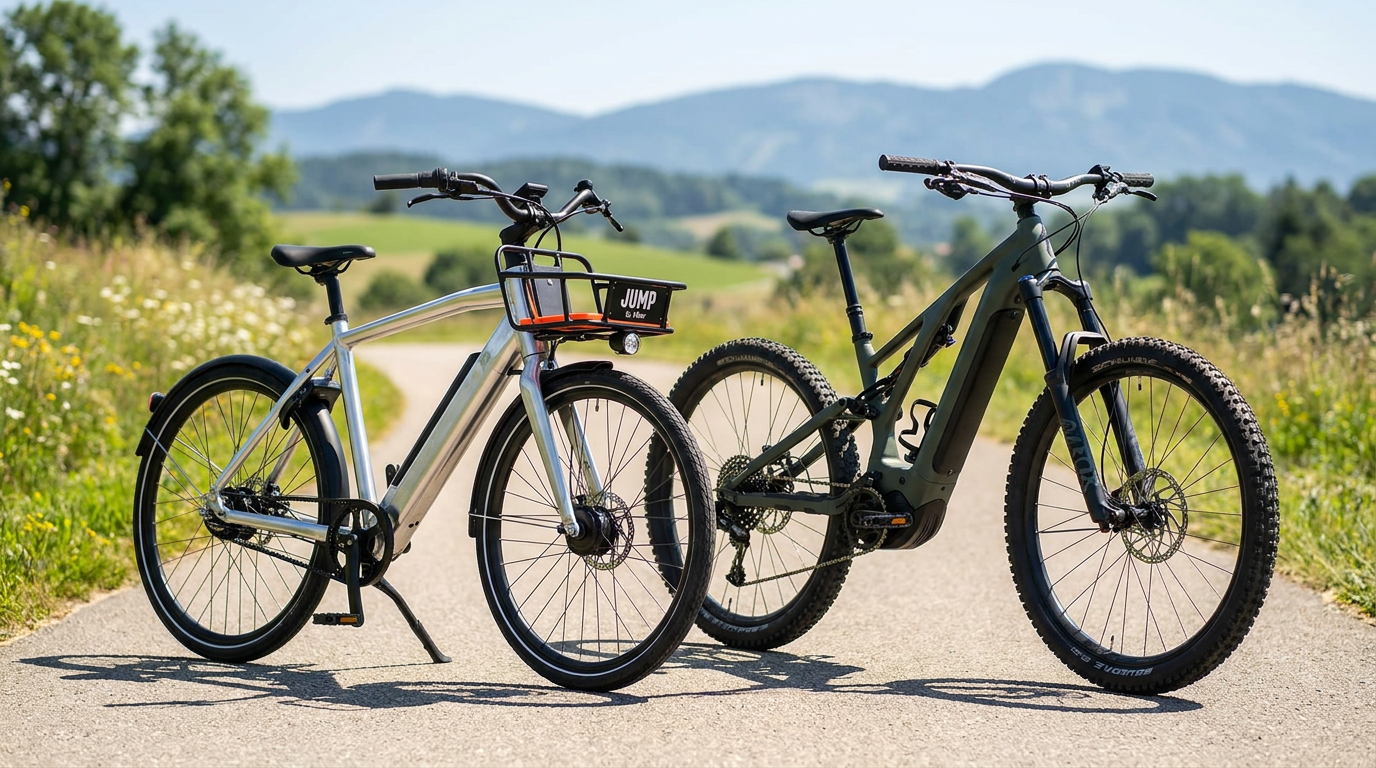
The fundamental difference between the two systems comes down to location, which in turn dictates how the motor interacts with the bicycle's gears. A hub motor is housed directly inside the center of the wheel—usually the rear—and applies rotational force directly to the axle. In contrast, a mid-drive motor is positioned at the bottom bracket, right between the pedals. Instead of turning the wheel directly, a mid-drive motor pulls the bicycle's chain, meaning its power is routed through the rear cassette and derailleur just like the rider's own leg power.[2][4]
The argument for the hub motor centers heavily on simplicity, affordability, and a hassle-free ownership experience. Because the motor operates entirely independently of the bicycle's drivetrain, it does not add any extra stress to the chain or gears. This separation makes hub motors incredibly reliable and cheap to maintain. They are essentially sealed units that brute-force their way forward, often paired with a simple cadence sensor that detects when the pedals are turning and delivers a flat rate of power.[5][7]

The evidence for this low-maintenance advantage is clearly visible in component lifespans. Industry data shows that e-bikes equipped with hub motors typically require chain replacements only every 3,000 to 5,000 kilometers. Because the motor is not yanking on the chain, standard bicycle components last just as long as they would on an unpowered bike. Furthermore, if a chain does happen to snap during a ride, a hub motor with a throttle can still propel the rider home, acting as a fully independent backup system.[2][4]
However, the argument against the hub motor becomes apparent the moment the road tilts upward. Because hub motors drive the wheel directly, they cannot take advantage of the bicycle's gears. When climbing a steep hill, the motor is forced to operate at a low RPM, which is highly inefficient. This causes the motor to draw massive amounts of battery power and generate excess heat. On long, steep gradients, a hub motor can struggle to maintain momentum, making it a poor choice for mountainous terrain or heavy cargo hauling.[3][6]
This is where the case for the mid-drive motor takes over, built entirely around torque, efficiency, and hill-climbing prowess. By driving the chain, a mid-drive motor leverages the bicycle's existing gearing. When a rider shifts into a low gear to tackle a steep incline, the motor also benefits from that mechanical advantage. It is exactly like a manual transmission car staying in first gear to pull a heavy load up a mountain. The motor continues spinning at its optimal, highly efficient RPM while the gears do the heavy lifting.[3][4]
This is where the case for the mid-drive motor takes over, built entirely around torque, efficiency, and hill-climbing prowess.
The evidence for mid-drive superiority on hills is found in torque output and battery efficiency. While standard hub motors typically produce 40 to 60 Newton-meters of torque at the wheel, high-performance mid-drives can generate anywhere from 50 to 185 Newton-meters at the crank. Because this power is multiplied by the rear cassette, mid-drives easily conquer 15 to 20 percent gradients that would stall a hub motor. This geared efficiency also means mid-drives drain the battery much slower during stop-and-start city traffic or sustained climbs.[2][6]

The trade-off against the mid-drive motor involves increased complexity, higher upfront costs, and accelerated wear and tear. Because the motor's substantial torque is channeled directly through the chain and cassette, those components degrade much faster. Evidence shows that mid-drive chains often need replacing every 1,500 to 3,000 kilometers—roughly twice as often as hub motor chains. Additionally, mid-drives require the rider to actively shift gears to prevent stalling the motor, demanding more engagement than the "pedal and go" nature of a hub system.[2][4]
Beyond raw power and maintenance, the two systems offer vastly different riding experiences. Mid-drive motors almost exclusively use advanced torque sensors, which measure exactly how hard the rider is pressing on the pedals and amplify that exact effort. Pedal lightly, and the motor gives a gentle nudge; stand on the pedals, and it surges forward. This creates a highly intuitive, bionic-leg sensation that mimics natural cycling. Hub motors, relying mostly on basic cadence sensors, often feel more like being pushed by an invisible scooter.[5][7]
Weight distribution also plays a critical role, particularly for off-road enthusiasts. A mid-drive motor places its weight low and perfectly centered in the frame, maintaining the bicycle's natural center of gravity. This centralized mass improves handling, balance, and maneuverability on technical dirt trails. Conversely, a rear hub motor adds significant unsprung mass to the back wheel. While this rear-heavy bias is barely noticeable on smooth pavement, it can make the bike feel sluggish and unbalanced when navigating rocky terrain or dropping off curbs.[2][6]

Another practical consideration is flat tire repair. Changing a rear flat on a mid-drive e-bike is identical to changing a flat on a standard bicycle, as the rear wheel is completely standard. Removing a rear wheel with a hub motor, however, involves disconnecting heavy power cables and wrestling with a much heavier wheel assembly. For riders who frequently venture far from bike shops, the ease of trailside maintenance heavily favors the mid-drive setup.[4]
Ultimately, choosing between these two technologies requires matching the motor to the reality of the rider's daily routes. A hub motor fits well when 90 percent of a rider's journeys are flat urban commutes, leisurely park rides, or budget-conscious builds. It is the ideal choice for riders who want a low-maintenance, sweat-free experience, or those who specifically want a throttle to cruise without pedaling. It does not fit well when the daily commute involves steep, sustained hills or technical off-road trails.[1][2][7]

Conversely, a mid-drive motor fits well when a rider faces steep gradients, hauls heavy cargo, or rides aggressive singletrack mountain bike trails. It is the definitive choice for cycling purists who want the motor to feel like a natural extension of their own physical effort, and who are willing to pay a premium for superior balance and range efficiency. It does not fit well when a rider wants to minimize ongoing maintenance costs, or when the budget simply does not allow for the higher price tag of a mid-drive system.[1][3][6]
Viewpoints in depth
Urban Commuters & Budget Riders
Prioritize simplicity, low maintenance, and cost-effectiveness for city riding.
For riders navigating flat city streets, the hub motor is widely viewed as the most practical and economical choice. This camp argues that the massive torque of a mid-drive is wasted on paved, level ground. They value the "sweat-free" push of a cadence sensor and the ability to use a throttle in stop-and-go traffic. Crucially, urban commuters appreciate that hub motors don't accelerate wear on the bicycle's chain and cassette, keeping annual maintenance costs low and preventing greasy roadside repairs on the way to the office.
Off-Road & Mountain Bikers
Demand maximum torque, balanced handling, and natural pedal response for technical trails.
In the e-mountain bike (eMTB) community, mid-drive motors are considered mandatory. This camp points out that hub motors add heavy "unsprung mass" to the rear wheel, which ruins the bike's suspension dynamics and makes it difficult to hop over obstacles. By placing the motor's weight low and centered at the pedals, mid-drives maintain the bike's natural agility. Furthermore, off-road riders rely on the mid-drive's ability to leverage the bike's lowest gears, allowing them to crawl up 20-percent dirt gradients without overheating the system.
E-Bike Mechanics & Technicians
Focus on long-term durability, repairability, and drivetrain wear.
From a service perspective, mechanics see distinct trade-offs. They praise hub motors for their sealed, independent nature, noting that they rarely require internal servicing. However, mechanics dread changing flat tires on rear-hub bikes due to the heavy motor and complex wiring harnesses. Conversely, mechanics appreciate that mid-drive bikes use standard rear wheels, making flats easy to fix. But they also warn buyers that mid-drives chew through chains and cassettes rapidly, meaning the bike will spend more time in the shop for routine drivetrain replacements.
What we don't know
- How upcoming solid-state battery technology might change the weight distribution math for both motor types.
- Whether future internal gearboxes will eventually replace external cassettes, potentially solving the mid-drive's drivetrain wear problem.
Key terms
- Hub Motor
- An electric motor built directly into the center (hub) of a bicycle's front or rear wheel, driving the wheel independently of the pedals and gears.
- Mid-Drive Motor
- An electric motor mounted at the bicycle's bottom bracket (between the pedals) that provides power by pulling the chain and utilizing the bike's rear gears.
- Torque Sensor
- A sensor that measures exactly how hard the rider is pushing on the pedals, allowing the motor to provide a proportional, natural-feeling boost.
- Cadence Sensor
- A basic sensor that detects whether the pedals are turning (regardless of how hard), usually triggering a fixed amount of motor assistance.
- Unsprung Mass
- The weight of the components not supported by the bike's suspension (like the wheels). High unsprung mass from a hub motor can make a bike handle poorly on bumpy terrain.
Frequently asked
Which e-bike motor is better for climbing steep hills?
Mid-drive motors are significantly better for steep hills. Because they drive the chain, they can use the bike's lower gears to multiply their torque, allowing them to climb efficiently without overheating.
Do hub motors require less maintenance?
Yes, generally. Hub motors operate independently of the bike's chain and gears, meaning they don't cause accelerated wear on the drivetrain. A hub motor bike's chain will last roughly twice as long as one on a mid-drive bike.
Can I ride a mid-drive e-bike without pedaling?
Usually, no. Most mid-drive systems rely on torque sensors that only provide power when you are actively pedaling. If you want a throttle-only option to cruise without pedaling, a hub motor is typically required.
Which motor type gives better battery range?
Mid-drive motors generally offer better range, especially on hilly terrain. By utilizing the bike's gears, the motor stays in its most efficient RPM band, wasting less energy as heat compared to a direct-drive hub motor.
Sources
Source coverage
7 outlets
3 viewpoints surfaced






[1]Factlen Editorial TeamIndustry Technicians
Synthesis by Factlen editorial team
Read on Factlen Editorial Team →[2]Bike Yard OnlineIndustry Technicians
Hub Motor vs Mid-Drive E-Bikes - A Complete Comparison
Read on Bike Yard Online →[3]Zeus E-BikesHigh-Performance & Off-Road Riders
Mid-Drive vs Hub Motor at a Glance
Read on Zeus E-Bikes →[4]Hi Power CyclesHigh-Performance & Off-Road Riders
Mid-Drive vs. Hub Motor Kits: Which is Better in 2026?
Read on Hi Power Cycles →[5]TENWAYSUrban Commuting Advocates
Hub Motor vs Mid-Drive: Which is Better?
Read on TENWAYS →[6]Yozma SportHigh-Performance & Off-Road Riders
Mid-Drive vs. Hub Motor: Why Mid-Drive Wins for Dirt Bike E-Bikes
Read on Yozma Sport →[7]VelectriXUrban Commuting Advocates
Hub Motor vs. Mid Drive Motor: Which One Is Right for You?
Read on VelectriX →



Every angle. Every day.
Get shopping stories with full source coverage and perspective breakdowns delivered to your inbox.