
The Cold Truth: Why Ice Baths Might Be Sabotaging Your Muscle Growth
Cold water immersion is highly effective at reducing muscle soreness, but a growing body of evidence reveals it actively blunts the biological signals required to build muscle mass and strength.
By Factlen Editorial Team
- Hypertrophy & Strength Athletes
- Prioritize long-term muscle growth and strength adaptations, viewing acute inflammation as a necessary trigger to be protected rather than suppressed.
- Endurance & Field Athletes
- Value immediate recovery, pain reduction, and the ability to perform repeatedly over short timeframes, making cold therapy a highly beneficial tool.
- Sports Science Researchers
- Emphasize that recovery modalities are not universally 'good' or 'bad', but must be precisely timed and matched to specific physiological goals.
What's not represented
- · Commercial Cold Plunge Manufacturers
- · Recreational Fitness Enthusiasts
Why this matters
Millions of recreational athletes use cold plunges to recover faster, but matching the wrong recovery tool to your specific fitness goals can erase hours of hard work in the gym. Understanding the physiological trade-offs of cold exposure allows you to optimize for either immediate performance or long-term strength.
Key points
- Cold water immersion effectively reduces Delayed Onset Muscle Soreness (DOMS) by constricting blood vessels and limiting acute inflammation.
- Acute inflammation is a necessary biological trigger for muscle repair and growth after resistance training.
- Ice baths taken immediately after lifting weights significantly blunt the mTOR signaling pathway and reduce protein synthesis.
- Endurance athletes can safely use ice baths without negatively impacting their cardiovascular adaptations.
- To maximize muscle growth while still using cold therapy, athletes should separate ice baths from lifting sessions by at least 4 to 6 hours.
Over the past decade, cold water immersion has migrated from professional locker rooms to suburban backyards. Driven by endorsements from elite athletes and wellness influencers, the post-workout ice bath is widely marketed as the ultimate recovery hack. Proponents claim it flushes toxins, accelerates healing, and builds mental resilience. But as sports science catches up to the trend, a more nuanced reality is emerging: the very mechanism that makes ice baths feel so effective for recovery is exactly what makes them detrimental to building muscle.[6]
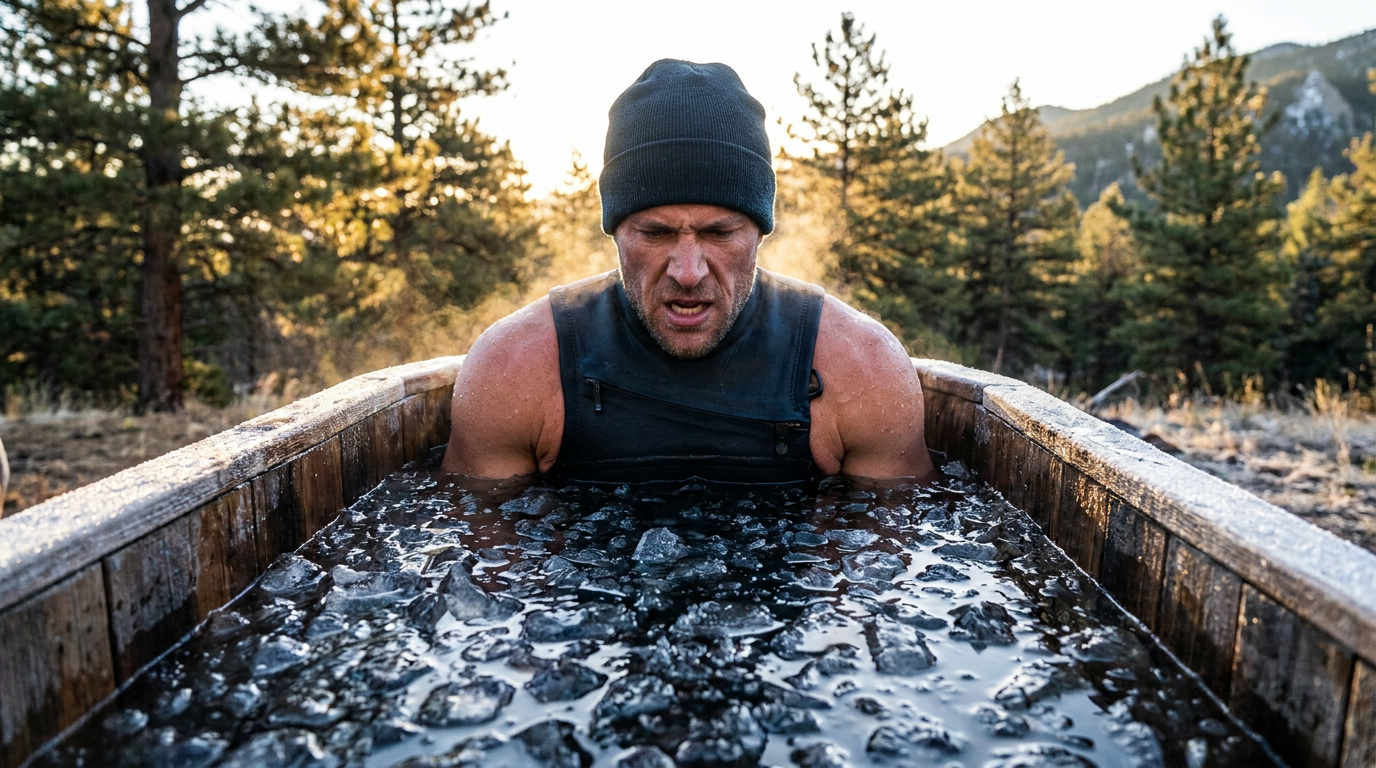
To understand the paradox, we have to look at what happens to the human body when it is submerged in water between 10 and 15 degrees Celsius. The immediate physiological response is severe vasoconstriction—the rapid narrowing of blood vessels. The body pulls blood away from the extremities to protect the core organs and maintain a safe internal temperature. This process dramatically reduces blood flow to the skeletal muscles that were just taxed during a workout.[4][6]
For an athlete suffering from the micro-tears of a grueling training session, this vasoconstriction feels like magic. By limiting blood flow to the damaged tissue, cold water immersion blunts the acute inflammatory response and reduces localized swelling. Clinical data confirms that athletes who utilize cold plunges experience significantly less Delayed Onset Muscle Soreness (DOMS) and report feeling recovered 24 to 96 hours faster than those who rely on passive rest.[4]
However, that reduction in inflammation comes with a steep biological cost. In the context of resistance training, inflammation is not a mistake or a malfunction—it is the primary signal the body uses to initiate muscle growth. When you lift heavy weights, you create micro-trauma in the muscle fibers. The subsequent swelling brings a rush of macrophages, immune cells, and amino acids to the site to repair the tissue, making it thicker and stronger than it was before.[1][6]

By jumping into an ice bath immediately after a lifting session, you are effectively putting out the fire before it can forge the steel. A landmark study published in The Journal of Physiology demonstrated that cold water immersion severely blunts the activation of key proteins and satellite cells in skeletal muscle for up to two days after strength exercise. The cold temperature suppresses the mTOR signaling pathway, which is the central cellular engine responsible for muscle protein synthesis.[1][5]
By jumping into an ice bath immediately after a lifting session, you are effectively putting out the fire before it can forge the steel.
The long-term consequences of this blunted signaling are measurable. A comprehensive meta-analysis of randomized controlled trials found that participants who routinely used cold water immersion after resistance training saw significantly reduced gains in muscle size compared to those who simply rested. The cold exposure reduced blood flow so effectively that it hindered the muscles' ability to absorb the dietary protein vital for hypertrophy.[2][3]
This does not mean that ice baths "kill" all your gains, but they do demonstrably attenuate them. The participants in these studies still built some muscle, but their progress was statistically handicapped compared to the control groups. If your primary objective in the gym is to maximize muscle mass, strength, or power, applying near-freezing water to your limbs immediately after a workout is physiologically counterproductive.[3][6]

So, who actually benefits from cold water immersion? The answer lies in separating athletes by their specific goals. For endurance athletes, field sport players, and combat athletes, the calculus is entirely different. A runner completing a marathon or a soccer player in the middle of a multi-game tournament does not care about maximizing bicep hypertrophy; their priority is clearing metabolic waste, reducing joint pain, and restoring their ability to perform at a high level the very next day.[4][6]
For these athletes, the ice bath is a highly effective tool. Research indicates that cold water immersion does not negatively impact aerobic adaptations or cardiovascular endurance. Because endurance training relies on different cellular pathways than heavy resistance training, runners and cyclists can enjoy the pain-relieving benefits of the cold plunge without sacrificing their cardiovascular progress.[2][4]
For fitness enthusiasts who want the best of both worlds—the mental health and dopamine benefits of cold exposure alongside the muscle-building benefits of lifting—timing is everything. Sports scientists recommend separating the two stressors. If you must plunge on a lifting day, do it before the workout, which can provide an adrenaline boost and pre-cool the core. Alternatively, wait at least four to six hours after lifting to allow the initial inflammatory repair cascade to complete its work.[6]

Ultimately, the science of recovery is about matching the intervention to the desired adaptation. Inflammation is the enemy of immediate performance, but it is the architect of long-term growth. By understanding how cold water manipulates our vascular and cellular systems, athletes can stop blindly following trends and start using temperature as a precise, targeted tool.[5][6]
Viewpoints in depth
Hypertrophy & Strength Athletes
Prioritize long-term muscle growth and strength adaptations, viewing acute inflammation as a necessary trigger to be protected rather than suppressed.
For bodybuilders, powerlifters, and athletes whose sport demands maximum force production, the post-workout window is sacred. This camp relies on the mechanical tension of lifting to create micro-tears, and they view the subsequent inflammation not as an injury to be iced, but as the first step in the remodeling process. By suppressing the immune response and restricting blood flow to the muscles, cold water immersion deprives the tissue of the amino acids required for repair. Consequently, strength-focused athletes are increasingly abandoning post-workout cold plunges, opting instead for active recovery, heat therapy, or passive rest to ensure their anabolic signaling remains uninterrupted.
Endurance & Field Athletes
Value immediate recovery, pain reduction, and the ability to perform repeatedly over short timeframes, making cold therapy a highly beneficial tool.
Marathon runners, triathletes, and tournament-style competitors operate under a different physiological paradigm. Their primary limiting factors are systemic fatigue, joint inflammation, and the accumulation of metabolic waste, rather than a lack of muscle mass. Because aerobic adaptations (like increased mitochondrial density and capillary formation) are not blunted by cold exposure in the same way that muscle hypertrophy is, endurance athletes can leverage ice baths without penalty. For a soccer player facing three matches in five days, the immediate reduction in perceived soreness and the rapid clearance of fatigue far outweigh the negligible loss of potential muscle growth.
Sports Science Researchers
Emphasize that recovery modalities are not universally 'good' or 'bad', but must be precisely timed and matched to specific physiological goals.
The academic consensus has shifted away from viewing cold water immersion as a blanket solution for all athletic recovery. Researchers emphasize the principle of specificity: the body adapts to the specific demands placed upon it, and recovery tools manipulate those adaptations. Sports scientists advocate for periodizing recovery just like training. During a heavy muscle-building phase (off-season), they recommend avoiding ice baths entirely. Conversely, during a high-intensity competition phase where peak performance and rapid turnaround are required (in-season), they endorse cold water immersion as a highly effective intervention to manage fatigue and maintain readiness.
What we don't know
- Whether specific nutritional interventions (like consuming fast-absorbing whey protein immediately before a cold plunge) can offset the blunted protein synthesis.
- The exact threshold of water temperature and duration required to trigger the negative effects on hypertrophy, as most studies test a narrow 10-15°C window.
- How long-term adaptation to regular cold exposure might alter the body's baseline inflammatory response to exercise over years of training.
Key terms
- Hypertrophy
- The enlargement of an organ or tissue from the increase in size of its cells; in fitness, the process of building muscle mass.
- Vasoconstriction
- The narrowing of blood vessels, which reduces blood flow to the extremities and helps clear metabolic waste while preserving core temperature.
- DOMS
- Delayed Onset Muscle Soreness; the pain and stiffness felt in muscles several hours to days after unaccustomed or strenuous exercise.
- mTOR Pathway
- A central cellular signaling pathway that regulates cell growth, proliferation, and protein synthesis, making it crucial for muscle building.
- Macrophage
- A type of white blood cell that removes dead cells and stimulates the action of other immune system cells during the inflammatory repair process.
Frequently asked
Does a cold shower have the same negative effect on muscle growth?
Generally, no. A standard cold shower does not lower deep muscle tissue temperature significantly enough to cause the profound vasoconstriction and blunted protein synthesis seen with 10-15 minutes of full-body cold water immersion.
When is the best time to take an ice bath if I lift weights?
To protect muscle growth, it is best to take an ice bath on active recovery days, or wait at least four to six hours after a resistance training session to allow the initial inflammatory repair process to occur.
Do ice baths help with cardiovascular recovery?
Yes. Cold water immersion is highly effective for endurance athletes, as it helps lower core temperature and reduces soreness without blunting the aerobic adaptations gained from cardiovascular training.
What is the optimal temperature and duration for an ice bath?
Most clinical studies showing recovery benefits utilize water temperatures between 10 and 15 degrees Celsius (50 to 59 degrees Fahrenheit) for a duration of 10 to 15 minutes.
Sources
Source coverage
6 outlets
3 viewpoints surfaced






[1]National Institutes of HealthSports Science Researchers
Cold water immersion attenuates anabolic signaling and skeletal muscle hypertrophy
Read on National Institutes of Health →[2]ExamineHypertrophy & Strength Athletes
Does cold water immersion after resistance exercise reduce muscle growth?
Read on Examine →[3]SportRχivHypertrophy & Strength Athletes
Throwing cold water on muscle growth: A systematic review with meta-analysis
Read on SportRχiv →[4]Victoria UniversityEndurance & Field Athletes
Effects of cold-water immersion on recovery of athletic performance
Read on Victoria University →[5]The Journal of PhysiologySports Science Researchers
Post-exercise cold water immersion attenuates acute anabolic signalling and long-term adaptations in muscle
Read on The Journal of Physiology →[6]Factlen Editorial TeamSports Science Researchers
Synthesis by Factlen editorial team
Read on Factlen Editorial Team →

Every angle. Every day.
Get fitness stories with full source coverage and perspective breakdowns delivered to your inbox.