
How Beanless Coffee and Precision Fermentation Are Re-Engineering the Morning Brew
As climate change threatens traditional coffee farming, food tech startups and beverage giants are turning to upcycled ingredients, microbes, and bioreactors to brew coffee without the bean.
By Factlen Editorial Team
- Food Tech Innovators
- Startups and scientists focused on decoupling coffee from agriculture to solve climate and sustainability challenges.
- Beverage Conglomerates
- Multinational corporations seeking supply chain stability and cost reduction for mass-market drinks.
- Traditional Coffee Industry
- Roasters and purists who believe terroir and agricultural heritage cannot be replicated in a lab.
What's not represented
- · Smallholder coffee farmers in the Global South
- · Agricultural labor unions
Why this matters
With climate change threatening to wipe out half of the world's coffee-growing land by 2050, lab-grown alternatives offer a vital lifeline for the beverage industry. This technology could stabilize prices for consumers and drastically reduce the environmental footprint of your morning routine.
Key points
- Climate change is projected to halve the global land suitable for growing Arabica coffee by 2050, prompting a search for resilient alternatives.
- Startups are using molecular mimicry to recreate coffee's flavor profile by roasting and brewing upcycled ingredients like legumes and sunflower seeds.
- Advanced methods like precision fermentation and cellular agriculture use microbes and bioreactors to produce bioidentical coffee compounds without traditional farming.
- Major beverage conglomerates, including Coca-Cola and Asahi, are launching mass-market beanless coffee products to ensure supply chain stability.
The morning ritual of coffee is facing an existential threat. According to World Coffee Research, climate change is on track to halve the global land suitable for growing Arabica coffee by 2050. Frosts and droughts in major producing nations like Brazil have already decimated recent harvests, while traditional farming continues to drive millions of acres of deforestation annually. As supply tightens and commodity prices surge, the beverage industry is racing to find a solution that does not rely entirely on the fragile Coffea plant. The answer arriving on supermarket shelves in 2026 is "beanless coffee"—a rapidly expanding sector of food technology that recreates the complex flavor, aroma, and caffeine kick of coffee without using a single harvested bean.[1][3][4]
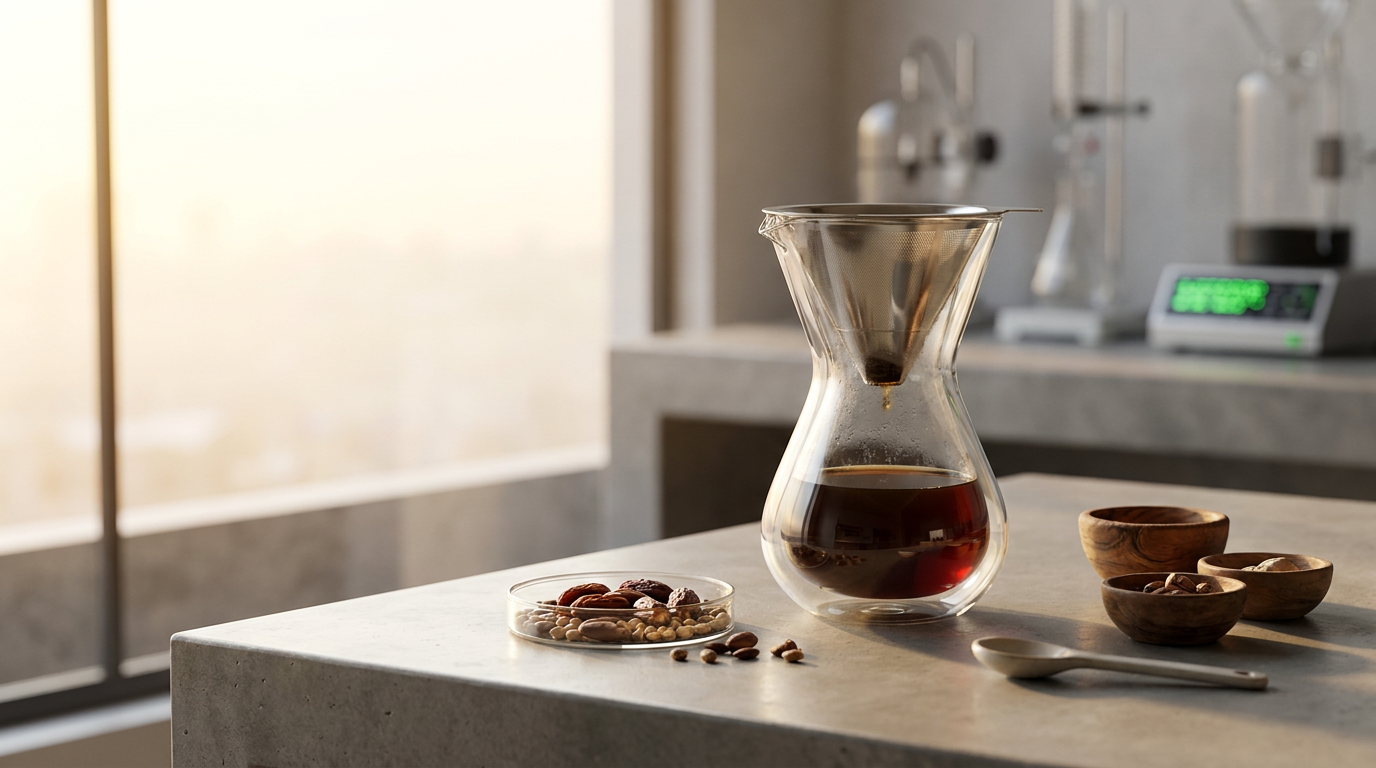
The landscape of this innovation is divided into three distinct scientific approaches: molecular mimicry, precision fermentation, and cellular agriculture. Each method attempts to solve the same fundamental problem, but through vastly different mechanisms. The first and most commercially advanced method is molecular mimicry, where companies deconstruct the chemical profile of roasted coffee and rebuild it using upcycled plant materials. Startups like Seattle-based Atomo Coffee and Belgian firm Koppie use ingredients such as date pits, sunflower seeds, legumes, and pea protein. By roasting and brewing these abundant, climate-resilient crops, food scientists can mimic the hundreds of volatile compounds that give coffee its signature taste and mouthfeel.[2][3][4]
Koppie, which recently secured millions in follow-on funding, ferments local legumes to create a highly concentrated coffee alternative. The company is currently scaling up its industrial operations to reach a 1,000-tonne production capacity by the end of 2026. Rather than trying to replace traditional coffee entirely, Koppie is focusing on "hybrid" blends that mix conventional beans with their legume-based alternative. This approach allows European retailers and coffee majors to lower their prices and reduce their environmental footprint while maintaining a familiar flavor profile for consumers who might be hesitant to switch to a fully synthetic brew.[2][3]

The second approach gaining traction is precision fermentation, a technology already widely used to create animal-free dairy and alternative proteins. In this process, scientists engineer microorganisms like yeast or bacteria to produce specific coffee compounds. By feeding sugars to these microbes in large, temperature-controlled fermentation tanks, companies can harvest pure chlorogenic acids, caffeine, and aromatic esters. This method allows for a highly controlled flavor profile, effectively stripping out the bitter "off-notes" that sometimes plague lower-tier commodity coffee beans. It also boasts a staggering environmental advantage, with some producers claiming a 95 percent reduction in water usage compared to traditional agriculture.[4][6]
The third and most futuristic frontier is cellular agriculture—literally growing real coffee from plant cells in a laboratory environment. At the VTT Technical Research Centre of Finland, scientists have successfully cultivated cells extracted from a living coffee plant inside bioreactors. Because these cells multiply infinitely in a nutrient-rich broth, a new batch of coffee can be harvested in just weeks, compared to the years it takes to mature a traditional coffee tree from seed to fruit. The Finnish researchers recently published their complete methodology, hoping to spur the creation of a new ecosystem where cultivators, roasters, and brands collaborate to commercialize cell-cultured coffee.[5][6]
The third and most futuristic frontier is cellular agriculture—literally growing real coffee from plant cells in a laboratory environment.
While nimble startups have pioneered the underlying science, global beverage conglomerates are now validating the market at scale. In Japan, the massive ready-to-drink coffee sector is undergoing a rapid transformation as giants like Coca-Cola and Asahi enter the beanless space. Coca-Cola Japan is launching "Cafe Water" under its flagship Georgia brand, utilizing corn-derived fiber and proprietary flavoring ingredients to replicate coffee's taste. Priced at just $0.93 for a 500-milliliter bottle, the beverage targets younger, eco-conscious consumers while insulating the corporation from volatile global commodity prices.[1]

Asahi and Suntory are developing similar mass-market products, utilizing advanced extraction technologies to deliver the bitterness, body, and caffeine content of coffee without relying on vulnerable crops. For these massive corporations, the primary driver is not necessarily culinary innovation, but rather ensuring a stable, climate-resilient supply chain for their ready-to-drink portfolios. If a global crop blight or severe drought were to wipe out a season's Arabica yield, these beanless alternatives provide a vital insurance policy that keeps production lines moving.[1]
Navigating the regulatory landscape is the next major hurdle for the beanless coffee sector. Because molecular mimicry relies on widely consumed ingredients like chickpeas and sunflower seeds, products from companies like Koppie generally bypass strict novel food regulations in Europe and the United States. However, precision fermentation and cellular agriculture face a steeper climb. Cultivated coffee cells and genetically engineered microbes require rigorous safety approvals from agencies like the FDA before they can hit supermarket shelves. As these technologies clear regulatory bottlenecks over the next few years, the trickle of beanless products is expected to become a flood, reshaping the global beverage economy.[2][6]
Despite the influx of capital and corporate interest, the ultimate test for beanless coffee remains consumer acceptance. Early blind taste tests have shown remarkable promise, with some synthetic blends actually outperforming traditional specialty coffees in consumer preference panels. Startups claim their engineered brews offer a smoother finish with significantly less bitterness than conventional dark roasts. However, traditionalists and industry purists argue that lab-grown alternatives will never fully replicate the terroir—the unique environmental characteristics of soil, altitude, and microclimate—that defines high-end, single-origin Arabica.[3][4]

Experts suggest that beanless coffee is unlikely to replace the artisanal pour-over experience at specialty cafes anytime soon. Instead, its immediate future lies in ready-to-drink lattes, canned cold brews, and commercial blends where milk, sugar, and flavorings mask subtle differences in the cup. By replacing the millions of tons of commodity-grade coffee used in these everyday products, beanless alternatives could dramatically reduce the industry's carbon emissions and water footprint. As 2026 unfolds, the definition of coffee is fundamentally shifting, proving that the future of the world's favorite stimulant may no longer be tethered to the bean.[2][3][5]
How we got here
2021
Scientists at the VTT Technical Research Centre of Finland successfully brew the first cup of coffee from lab-grown cells.
Jan 2025
Seattle-based Atomo Coffee raises $7.8 million to expand its beanless coffee blends internationally.
Jun 2025
Belgian startup Koppie secures funding to scale its legume-based coffee alternative to industrial production levels.
Sep 2026
Coca-Cola Japan launches 'Cafe Water', a mass-market beanless coffee beverage made from corn-derived fiber.
Viewpoints in depth
Food Tech Innovators
Startups and scientists argue that decoupling coffee from agriculture is essential for the planet.
This camp views traditional coffee farming as an ecological disaster that drives deforestation and consumes massive amounts of water. By utilizing upcycled ingredients, precision fermentation, and cellular agriculture, they believe they can democratize access to high-quality coffee flavors while insulating the supply chain from climate shocks. For these innovators, the molecular structure of the beverage is what matters, not the plant it originally came from.
Beverage Conglomerates
Multinational corporations view beanless coffee as a vital supply chain insurance policy.
Companies like Coca-Cola and Asahi are less focused on the artisanal romance of coffee and more concerned with the volatile commodities market. With Arabica yields threatened by frost and drought, these conglomerates see beanless alternatives as a way to maintain consistent production of ready-to-drink mass-market beverages. Their goal is price stability and scale, utilizing corn-derived fibers and advanced extraction to keep costs low for everyday consumers.
Traditional Coffee Industry
Roasters and purists maintain that lab-grown alternatives cannot replace the terroir of real coffee.
The traditional coffee sector acknowledges the climate threat but argues the solution lies in resilient farming practices and supporting smallholder farmers, not abandoning the crop. They emphasize that coffee's value comes from its terroir—the unique combination of soil, altitude, and microclimate that gives single-origin beans their distinct character. To this camp, beanless products are acceptable as cheap caffeine delivery systems for canned lattes, but they will never replicate the complex, artisanal experience of a true specialty brew.
What we don't know
- Whether consumers will embrace fully synthetic coffee once the novelty wears off, or if they will view it as an artificial substitute.
- How quickly regulatory bodies like the FDA will approve cell-cultured coffee for mass-market consumption.
- The long-term economic impact on millions of smallholder coffee farmers in developing nations if conglomerates shift to lab-grown alternatives.
Key terms
- Molecular Mimicry
- The process of deconstructing the chemical profile of a food and rebuilding it using alternative, often upcycled, plant ingredients.
- Precision Fermentation
- A technology that uses genetically engineered microorganisms, like yeast or bacteria, to produce specific complex molecules such as proteins or flavor compounds.
- Cellular Agriculture
- The production of agricultural products directly from cell cultures in a laboratory, rather than harvesting them from plants or animals.
- Terroir
- The unique environmental factors, including soil, topography, and climate, that give an agricultural product its distinct flavor and character.
- Bioreactor
- A manufactured vessel or system that supports a biologically active environment, used to grow cells or microbes under controlled conditions.
Frequently asked
Does beanless coffee contain caffeine?
Yes. Most beanless coffees either naturally extract caffeine from alternative plants like green tea, or use precision fermentation to produce bioidentical caffeine molecules.
Is beanless coffee better for the environment?
Proponents claim it is significantly more sustainable, with some lab-grown methods using up to 95% less water and land compared to traditional coffee farming, while also preventing deforestation.
Will beanless coffee replace traditional coffee beans?
It is unlikely to replace high-end specialty coffee in the near future. Instead, it is expected to be used in ready-to-drink beverages, canned lattes, and commercial blends to reduce costs and environmental impact.
Is beanless coffee safe to drink?
Yes. Products using upcycled ingredients like legumes and sunflower seeds are generally recognized as safe, while those using fermentation or cell cultures must pass rigorous regulatory safety approvals before hitting the market.
Sources
Source coverage
6 outlets
3 viewpoints surfaced






[1]Inside FMCGBeverage Conglomerates
Coca-Cola joins 'beanless coffee' foray in Japan
Read on Inside FMCG →[2]Green QueenFood Tech Innovators
Legume Lattes: Koppie Brews Up New Funding to Launch Beanless Coffee By Year-End
Read on Green Queen →[3]Perfect Daily GrindTraditional Coffee Industry
What is “beanless” coffee?
Read on Perfect Daily Grind →[4]GulfoodFood Tech Innovators
The Next Big Thing in Coffee Isn't Grown – It's Engineered or Lab Grown
Read on Gulfood →[5]StoneXFood Tech Innovators
Scientists in Finland Release Recipe for Lab-Grown Coffee to Accelerate the Creation of a New Coffee Ecosystem
Read on StoneX →[6]GEAFood Tech Innovators
Closing the gap to more sustainable food production
Read on GEA →

Every angle. Every day.
Get lifestyle stories with full source coverage and perspective breakdowns delivered to your inbox.