
US and Iran Agree to 60-Day Peace Roadmap Following High-Level Swiss Summit
Following intensive mediation by Qatar and Pakistan, US and Iranian officials have established a 60-day framework to finalize a peace agreement, reopen the Strait of Hormuz, and halt fighting in Lebanon.
By Factlen Editorial Team
- US & Iranian Administrations
- View the roadmap as a necessary, pragmatic breakthrough to halt a devastating regional war and stabilize the global economy.
- Regional Security Skeptics
- Argue the agreement is a dangerous concession that enriches Tehran and sidelines Israel's existential security concerns.
- Iranian Opposition
- Condemn the deal's non-interference clause as a betrayal that abandons the Iranian public to the regime's domestic crackdowns.
What's not represented
- · Lebanese civilians affected by the ongoing border conflict
- · European energy importers reliant on Middle Eastern oil
Why this matters
A finalized US-Iran peace deal would fundamentally reshape Middle Eastern security, reopen one of the world's most critical energy arteries, and avert a broader regional war that has already caused hundreds of billions in economic damage.
Key points
- The US and Iran agreed to a 60-day roadmap to finalize a comprehensive peace agreement.
- Qatar and Pakistan mediated the high-level talks at the Bürgenstock resort in Switzerland.
- A 'de-confliction cell' was created to enforce the cessation of military operations in Lebanon.
- The parties established a direct communication line to ensure safe commercial shipping through the Strait of Hormuz.
- Iran claims it has secured waivers for oil exports and backing for a massive reconstruction fund.
- The deal faces heavy criticism from Israeli officials and Iranian opposition groups.
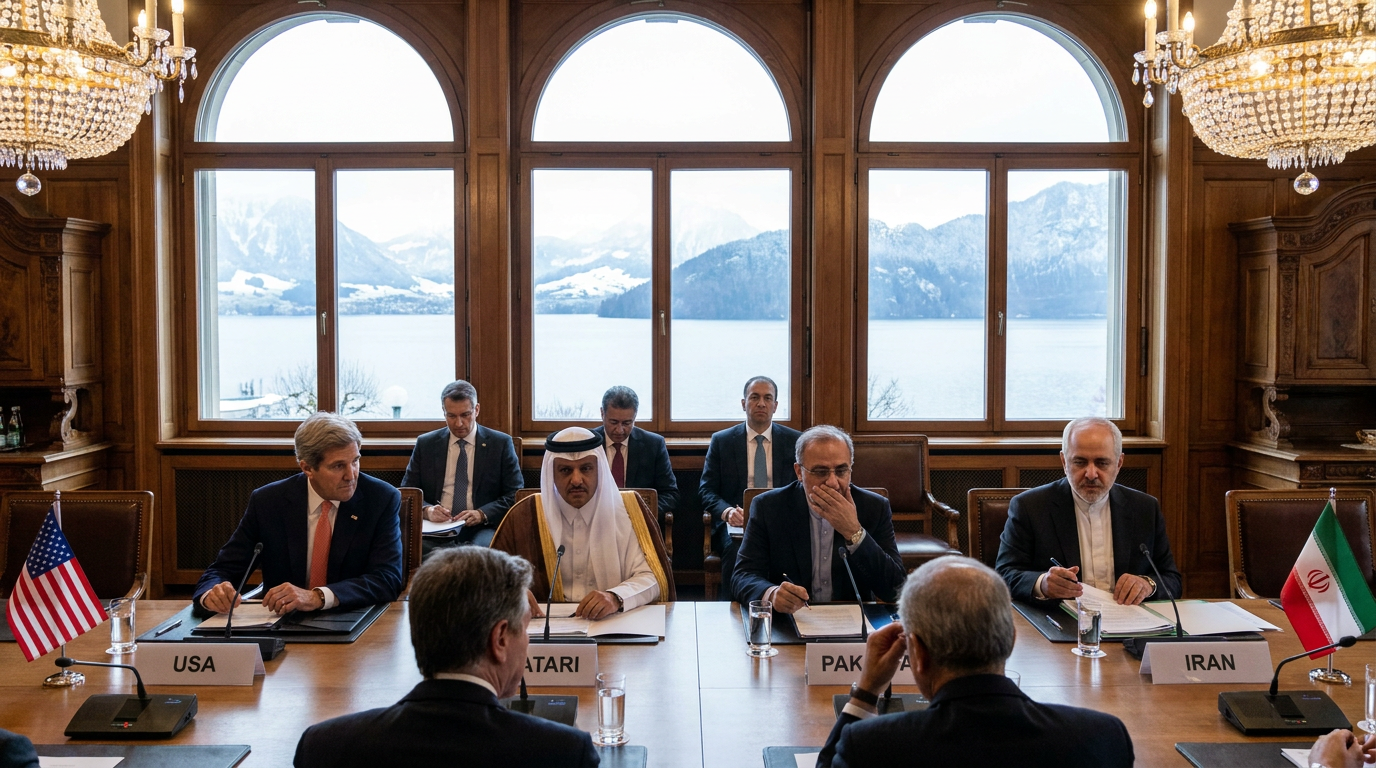
The United States and Iran have agreed to a strict 60-day roadmap aimed at securing a final peace agreement, marking a profound diplomatic breakthrough after months of devastating regional conflict. Following nearly 18 hours of intensive, high-level negotiations at the Bürgenstock resort in Switzerland, mediators Qatar and Pakistan announced the formation of a joint political oversight committee to guide the final stages of the deal.[1][2][7]
The summit brought together US Vice President JD Vance and Iranian Foreign Minister Abbas Araghchi, alongside Parliament Speaker Mohammad Bagher Ghalibaf. The primary objective was to operationalize a 14-point Memorandum of Understanding (MoU) signed last week, which seeks to permanently end hostilities, reopen the Strait of Hormuz, and address Iran's nuclear program and crippling US sanctions.[1][3][5]
However, the historic talks nearly collapsed before they began. Just hours before the delegations were scheduled to meet, US President Donald Trump posted on social media threatening that Iran "won't have a country" if it attempted to close the Strait of Hormuz again. He also reiterated threats to seize the waterway and impose American tolls.[1][7]
The aggressive rhetoric prompted an immediate backlash from Tehran. According to regional reports, the Iranian delegation initially refused to enter the main negotiating room, forcing Qatari and Pakistani diplomats to shuttle messages between the two camps. Despite the fractured start, US officials downplayed the friction, with Vice President Vance noting that such high-stakes negotiations are "always a little bit messy."[1][7]

Once the framework was stabilized, the delegations achieved significant tangible progress. The most urgent breakthrough was the creation of a "de-confliction cell" involving the US, Iran, and the Lebanese government. This mechanism is designed to strictly monitor and enforce the cessation of military operations in Lebanon, where ongoing clashes between Israel and Hezbollah had threatened to unravel the broader ceasefire.[1][3][4]
Once the framework was stabilized, the delegations achieved significant tangible progress.
To secure global energy markets, the parties also established a direct emergency communication line. This channel aims to prevent miscalculations and ensure the safe passage of commercial vessels through the Strait of Hormuz, a critical maritime chokepoint that Iran had periodically blockaded in retaliation for strikes on its allies.[3][4][7]
The economic implications of the roadmap are massive. Following the summit's conclusion, Iranian Foreign Minister Araghchi took to social media to claim that Tehran had already secured sweeping concessions. He stated that restrictions on Iran's oil and petrochemical exports had been waived, the broader US economic blockade lifted, and frozen assets released.[1][3]
Araghchi also highlighted the launch of a "major reconstruction and development plan" for Iran. Independent analyses suggest that the recent 40-day war caused approximately $270 billion in damage to Iranian infrastructure. Under the emerging framework, Washington and its regional partners are reportedly discussing the creation of a reconstruction fund that could total at least $300 billion.[3][5]

Global markets reacted immediately to the de-escalation. Brent crude oil, which had spiked during the height of the conflict, fell 1.5% to trade below $80 a barrel as traders priced in the secure flow of Middle Eastern energy supplies.[3]
Despite the optimism in Switzerland, the agreement faces fierce opposition on multiple fronts. In Israel, the roadmap is viewed with deep alarm. Israeli officials and security analysts argue that the US has struck a dangerous bargain that deliberately sidelines Israeli security concerns, leaving the country exposed while rewarding Tehran with massive financial relief.[4][5]

Simultaneously, the deal has drawn bitter condemnation from Iranian dissidents and diaspora groups. Critics point to Paragraph 2 of the MoU, which commits both Washington and Tehran to "refrain from interfering in each other's internal affairs." Opposition advocates argue this clause represents a total abandonment of the Iranian people, effectively giving the regime a free hand to crush domestic dissent without fear of Western pressure.[6]
With the political roadmap now set, the focus shifts to the granular details. Technical working groups will remain at the Swiss mountain resort for the rest of the week to tackle the most intractable issues: the exact limits on Iran's uranium enrichment and the sequencing of sanctions relief. The clock is now ticking on the 60-day window to turn a fragile truce into a permanent geopolitical realignment.[1][2][4]
How we got here
April 2026
A fragile, temporary ceasefire halts the immediate escalation of the 40-day regional war.
Mid-June 2026
Washington and Tehran electronically sign a 14-point Memorandum of Understanding to extend the truce and reopen the Strait of Hormuz.
June 21, 2026
High-level talks begin in Switzerland, briefly disrupted by US threats before mediators stabilize the negotiations.
June 22, 2026
The parties announce a formal 60-day roadmap to finalize the peace deal and establish technical working groups.
Viewpoints in depth
US & Iranian Administrations
View the roadmap as a necessary, pragmatic breakthrough to halt a devastating regional war and stabilize the global economy.
For Washington, the primary imperative is averting a global economic depression triggered by a prolonged closure of the Strait of Hormuz. By securing a commitment to keep the waterway open, the US administration aims to stabilize energy markets and pivot away from a costly Middle Eastern entanglement. For Tehran, the 40-day war inflicted an estimated $270 billion in infrastructure damage. The Iranian government views the roadmap as a vital off-ramp that secures its survival, lifts crippling sanctions, and unlocks massive international reconstruction funds.
Regional Security Skeptics
Argue the agreement is a dangerous concession that enriches Tehran and sidelines Israel's existential security concerns.
Security hawks in the US and officials across the Israeli political spectrum view the Swiss summit with profound alarm. They argue that Washington negotiated the ceasefire while deliberately keeping Israel out of the room, effectively abandoning its closest regional ally. Critics contend that lifting the economic blockade and providing a $300 billion reconstruction fund will only enrich the Iranian state, allowing it to rebuild its military capabilities and continue funding proxy groups like Hezbollah once the immediate scrutiny fades.
Iranian Opposition
Condemn the deal's non-interference clause as a betrayal that abandons the Iranian public to the regime's domestic crackdowns.
Iranian diaspora groups and domestic dissidents point to Paragraph 2 of the Memorandum of Understanding, which commits the US and Iran to 'refrain from interfering in each other's internal affairs.' Opposition leaders argue this represents a devastating reversal of previous US policy that supported the Iranian people's right to protest. By signing a non-interference pact, they warn, the international community is granting the Islamic Republic a diplomatic shield to suppress internal dissent and human rights movements without fear of Western intervention or renewed sanctions.
What we don't know
- Whether the technical working groups can resolve the deeply entrenched disagreements over Iran's right to enrich uranium.
- How the $300 billion reconstruction fund will be financed and which 'regional partners' will contribute.
- If the Lebanon de-confliction cell can successfully restrain independent actions by Hezbollah or the Israeli military.
Key terms
- Strait of Hormuz
- A narrow, strategically vital waterway between the Persian Gulf and the Gulf of Oman through which a massive portion of the world's oil supply passes.
- De-confliction cell
- A dedicated communication and monitoring group designed to prevent accidental military clashes and enforce ceasefire terms in a specific area.
- Memorandum of Understanding (MoU)
- A formal, written agreement between two or more parties that establishes a framework for future negotiations, though it is often not legally binding.
Frequently asked
What is the 60-day roadmap?
It is a structured timeline agreed upon by the US and Iran to finalize a comprehensive peace deal, addressing sanctions, nuclear enrichment, and regional security within two months.
How does the deal affect Lebanon?
The agreement establishes a 'de-confliction cell' involving the US, Iran, and Lebanon to strictly monitor and enforce an end to military operations between Israel and Hezbollah.
What economic relief is Iran getting?
Iranian officials claim the US has agreed to waive restrictions on oil exports, unfreeze assets, and support a massive reconstruction fund, reportedly up to $300 billion, to repair war damage.
Why are Iranian dissidents angry about the deal?
A clause in the preliminary agreement commits both nations to not interfere in each other's internal affairs, which dissidents say gives the Iranian regime a free pass to suppress domestic protests.
Sources
Source coverage
7 outlets
3 viewpoints surfaced







[1]The GuardianUS & Iranian Administrations
Iran hails ‘progress’ as first day of talks with US conclude after shaky start
Read on The Guardian →[2]Al JazeeraUS & Iranian Administrations
‘Encouraging progress’ made as first round US-Iran talks end
Read on Al Jazeera →[3]Japan TimesUS & Iranian Administrations
U.S. and Iran make 'progress' in talks, aim to keep Hormuz open
Read on Japan Times →[4]Times of IsraelRegional Security Skeptics
Iran, US agree on roadmap to reach final deal in 60 days, talks to go on all week, mediators say
Read on Times of Israel →[5]TimeRegional Security Skeptics
The U.S.-Iran Ceasefire Is a Fragile Breakthrough
Read on Time →[6]Iran InternationalIranian Opposition
MoU's forgotten casualty is the Iranian people
Read on Iran International →[7]Channel News AsiaUS & Iranian Administrations
US and Iran conclude high-level talks in Switzerland, mediators say
Read on Channel News Asia →

More in news politics
See all 5 stories →Middle East Diplomacy
US and Iran Agree to 60-Day Roadmap in Swiss Talks Despite Tense Opening
6 sources
Middle East Peace
US and Iran Establish 60-Day Roadmap and De-confliction Mechanisms in Swiss Peace Talks
8 sources
US-Iran Relations
US and Iran Agree to 60-Day Roadmap for Final Peace Deal Following Tense Switzerland Summit
7 sources
Every angle. Every day.
Get news politics stories with full source coverage and perspective breakdowns delivered to your inbox.