
WNBA and Players Union Sign Historic CBA, Securing 50-50 Revenue Split
The WNBA and its players' union have ratified a landmark collective bargaining agreement that guarantees a 50-50 revenue split for the first time in league history. The deal follows a period of unprecedented viewership growth and establishes a new financial baseline for women's professional sports globally.
By Factlen Editorial Team
- Players & Union Advocates
- View the 50-50 split as a long-overdue correction that properly values the athletes driving the league's explosive growth.
- League Ownership & Investors
- See the agreement as a necessary investment to ensure labor peace and capitalize on the league's skyrocketing media rights.
- Sports Business Analysts
- Focus on the broader economic implications, noting the deal sets a new benchmark for women's professional sports globally.
What's not represented
- · Developmental league players
- · International basketball federations
Why this matters
This agreement fundamentally rewrites the economic model for women's sports, ensuring that athletes share equally in the league's explosive financial growth. It sets a powerful precedent that other women's leagues worldwide are likely to follow, transforming professional women's basketball into a highly lucrative career path.
Key points
- The WNBA and players' union agreed to a historic 50-50 revenue split.
- The deal abolishes previous, difficult-to-reach revenue targets.
- Team salary caps are projected to more than double by 2028.
- The agreement mandates chartered flights and expanded family planning benefits.
- The CBA averts a potential work stoppage following the union's 2025 opt-out.
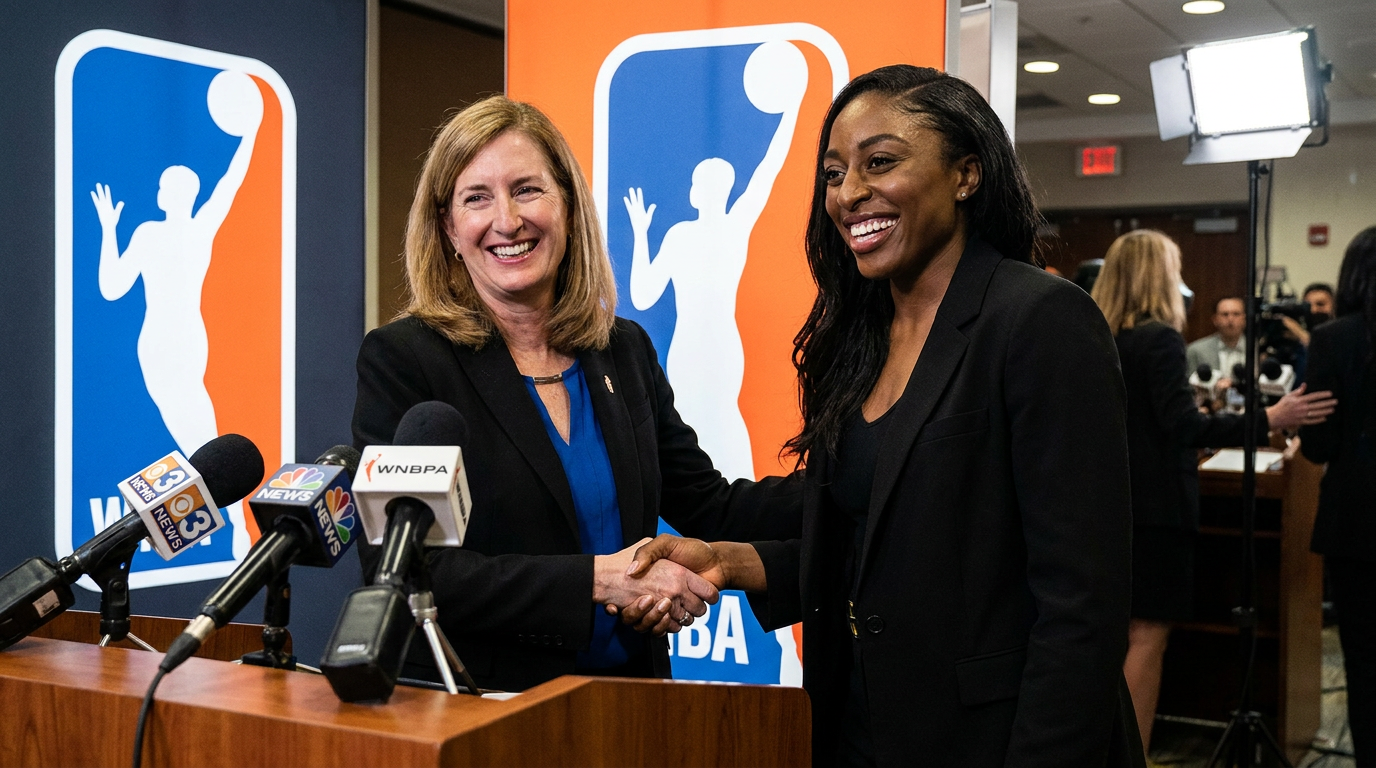
The WNBA and its players' association have officially ratified a landmark collective bargaining agreement, fundamentally restructuring the league's economic model. Announced Friday morning in New York, the new CBA guarantees players a 50-50 split of all league revenues, a threshold that has long been the gold standard in men's professional sports. The agreement averts a potential work stoppage ahead of the 2026 playoffs and cements a new financial reality for women's basketball globally.[1][4]
For years, the WNBA's revenue-sharing mechanism was tied to complex, cumulative growth targets that the players' union argued were virtually impossible to hit. Under the previous 2020 agreement, players received roughly 20% of total league revenues, with the 50% mark locked behind stringent broadcast and ticketing benchmarks. The new deal abolishes those conditional triggers entirely, implementing a hard 50-50 split effective at the start of the 2027 season.[2][7]
The catalyst for this historic shift was the unprecedented explosion in the league's popularity over the past three seasons. Fueled by the transformative 2024 rookie class and sustained by fierce rivalries, the WNBA has shattered decades-old viewership and attendance records. National broadcasts in the first month of the 2026 season averaged over 3.2 million viewers, rivaling major men's sporting events and providing the union with immense leverage at the negotiating table.[1][2]

"We knew our value, and we refused to accept a model built for a bygone era," WNBPA leadership stated during the announcement. The union had formally opted out of the previous CBA in late 2025, setting the clock ticking on a new deal. By standing firm on the revenue split, the players ensured that the league's recent multi-billion-dollar media rights package would directly translate into generational wealth for the athletes driving the product.[4][6]
The immediate financial impact on the players will be staggering. The league's hard salary cap is projected to more than double, rising from roughly $1.4 million per team in 2024 to an estimated $3.5 million by 2028. Maximum player salaries, previously capped near $250,000, are expected to eclipse the $600,000 mark, with supermax extensions potentially nearing $1 million annually by the end of the decade.[3][7]
The immediate financial impact on the players will be staggering.
From the ownership perspective, conceding the 50-50 split was viewed as a necessary investment in the league's long-term stability. Franchise valuations have skyrocketed, with recent expansion teams in Toronto and Portland commanding fees upwards of $100 million. Owners recognized that a protracted labor dispute during the league's peak growth phase would be catastrophic, opting instead for a partnership model that aligns player incentives with league-wide revenue generation.[3][5]

The agreement also introduces sweeping improvements to player welfare and working conditions. The new CBA mandates chartered flights for all regular-season and playoff games—a hard-fought victory after years of logistical hurdles and safety concerns. Additionally, the deal expands family planning benefits, fully funds childcare stipends, and guarantees year-round access to elite training facilities for all rostered players.[1][6]
Sports economists note that the WNBA's new model sets a formidable precedent for other women's professional leagues. As the National Women's Soccer League (NWSL) and the Professional Women's Hockey League (PWHL) continue to grow, the WNBA's success in securing a true revenue split provides a blueprint for labor negotiations across the broader women's sports landscape.[2][3]
The deal also restructures the league's free agency and draft systems. To promote roster continuity, teams will now have the ability to offer "designated player" extensions to homegrown talent, allowing them to exceed the salary cap to retain franchise cornerstones. Meanwhile, the rookie scale has been adjusted to ensure that incoming draft picks receive a larger slice of the expanded salary pool, reflecting their immediate impact on league revenues.[4][7]

As the 2026 season marches toward its All-Star break, the atmosphere around the league is one of triumph and validation. The focus now shifts from labor disputes to on-court competition, with the WNBA positioned as one of the fastest-growing and most equitable professional sports leagues in the world. For the players who spent years advocating for structural change, the new CBA represents the culmination of a decades-long fight for respect and fair compensation.[1][6]
How we got here
Jan 2020
WNBA and players sign a CBA that includes conditional revenue-sharing targets.
Summer 2024
A transformative rookie class drives unprecedented viewership and attendance spikes.
Nov 2025
The WNBPA formally opts out of the 2020 CBA, demanding a true 50-50 revenue split.
June 2026
The league and union ratify a new CBA, securing the 50-50 split and doubling the salary cap.
Viewpoints in depth
Players and Union Leadership
The union views the agreement as the ultimate validation of their market worth.
For the players' association, the 50-50 split is the culmination of a multi-year strategy to prove the viability of women's basketball. Union leaders argued that the previous CBA's conditional revenue targets were designed to protect owners from risk rather than reward players for growth. By leveraging the massive ratings surge of the past three seasons, the players forced a structural redesign of the league's economics, ensuring that future generations of athletes will enter a league where they are compensated as equal partners in the business.
League Ownership
Owners see the deal as a necessary pivot to ensure long-term stability and growth.
While conceding a significantly larger slice of the revenue pie, WNBA owners recognize that labor peace is essential during the league's current boom period. With franchise valuations soaring and new media rights deals injecting billions into the ecosystem, a strike or lockout would have derailed the league's momentum. Owners view the expanded salary cap and improved benefits as investments that will attract top global talent and elevate the on-court product, ultimately driving even higher returns in the future.
Sports Economists
Analysts emphasize the ripple effect this deal will have across the sports industry.
Industry experts note that the WNBA has effectively shattered the glass ceiling for women's sports economics. Historically, women's leagues have operated on austerity models, prioritizing survival over equitable profit sharing. Economists argue that the WNBA's successful transition to a 50-50 model provides a concrete blueprint for other growing leagues, such as the NWSL and PWHL, fundamentally changing how investors and broadcasters value women's sports properties.
What we don't know
- How the expanded salary cap will affect competitive parity between large-market and small-market teams.
- Whether the new financial model will accelerate further league expansion beyond the planned 16 teams.
Key terms
- Collective Bargaining Agreement (CBA)
- A legally binding contract between a sports league's management and its players' union that dictates salaries, working conditions, and revenue sharing.
- Revenue Split
- The percentage of total money generated by the league that is allocated to player compensation versus retained by team owners.
- Hard Salary Cap
- A strict maximum limit on the amount of money a team can spend on player salaries, which cannot be exceeded under any circumstances.
- Supermax Extension
- A highly lucrative contract extension offered to elite, homegrown players that allows them to earn a significantly higher percentage of the salary cap.
Frequently asked
What is a 50-50 revenue split?
It means that half of all money generated by the league—through TV deals, ticket sales, merchandise, and sponsorships—goes directly to the players in the form of salaries and benefits.
When does the new CBA take effect?
The new financial structures, including the 50-50 split and the doubled salary cap, will officially take effect at the start of the 2027 WNBA season.
How much will the salary cap increase?
The team salary cap is projected to more than double, rising from roughly $1.4 million in 2024 to an estimated $3.5 million by 2028.
Does this deal include chartered flights?
Yes. The new agreement mandates fully funded chartered flights for all regular-season and playoff games, resolving a major safety and logistical concern for players.
Sources
Source coverage
7 outlets
3 viewpoints surfaced







[1]ESPNSports Business Analysts
WNBA, players union reach landmark CBA with 50-50 revenue split
Read on ESPN →[2]The AthleticSports Business Analysts
Inside the historic WNBA CBA negotiations: How the players won their 50-50 split
Read on The Athletic →[3]ForbesLeague Ownership & Investors
WNBA's New Economic Model: What The 50-50 Split Means For Franchise Valuations
Read on Forbes →[4]Just Women's SportsPlayers & Union Advocates
A new era: WNBPA secures groundbreaking revenue sharing agreement
Read on Just Women's Sports →[5]Fox SportsLeague Ownership & Investors
WNBA avoids work stoppage with new collective bargaining agreement
Read on Fox Sports →[6]The GuardianPlayers & Union Advocates
'We know our value': WNBA players celebrate historic pay equity milestone
Read on The Guardian →[7]Yahoo SportsSports Business Analysts
WNBA salary cap set to double under new collective bargaining agreement
Read on Yahoo Sports →

More in sports
See all 401 stories →Women's Sports
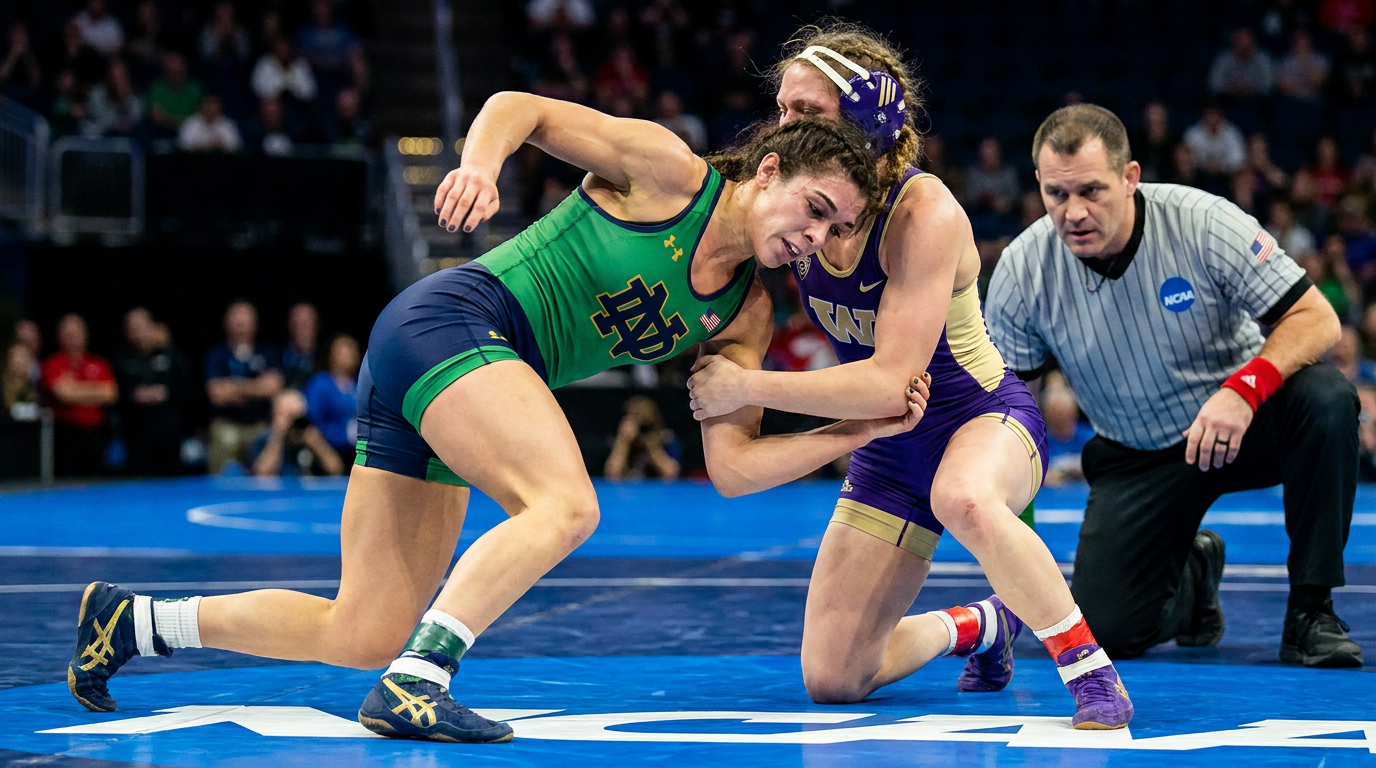
How Women's Wrestling Became the Fastest-Growing Collegiate Sport in America
8 sources
Engine Regulations
The 2026 Formula 1 Engine Revolution: How Sustainable Fuel and a 50/50 Hybrid Split Are Changing the Sport
8 sources

MLB Milestones
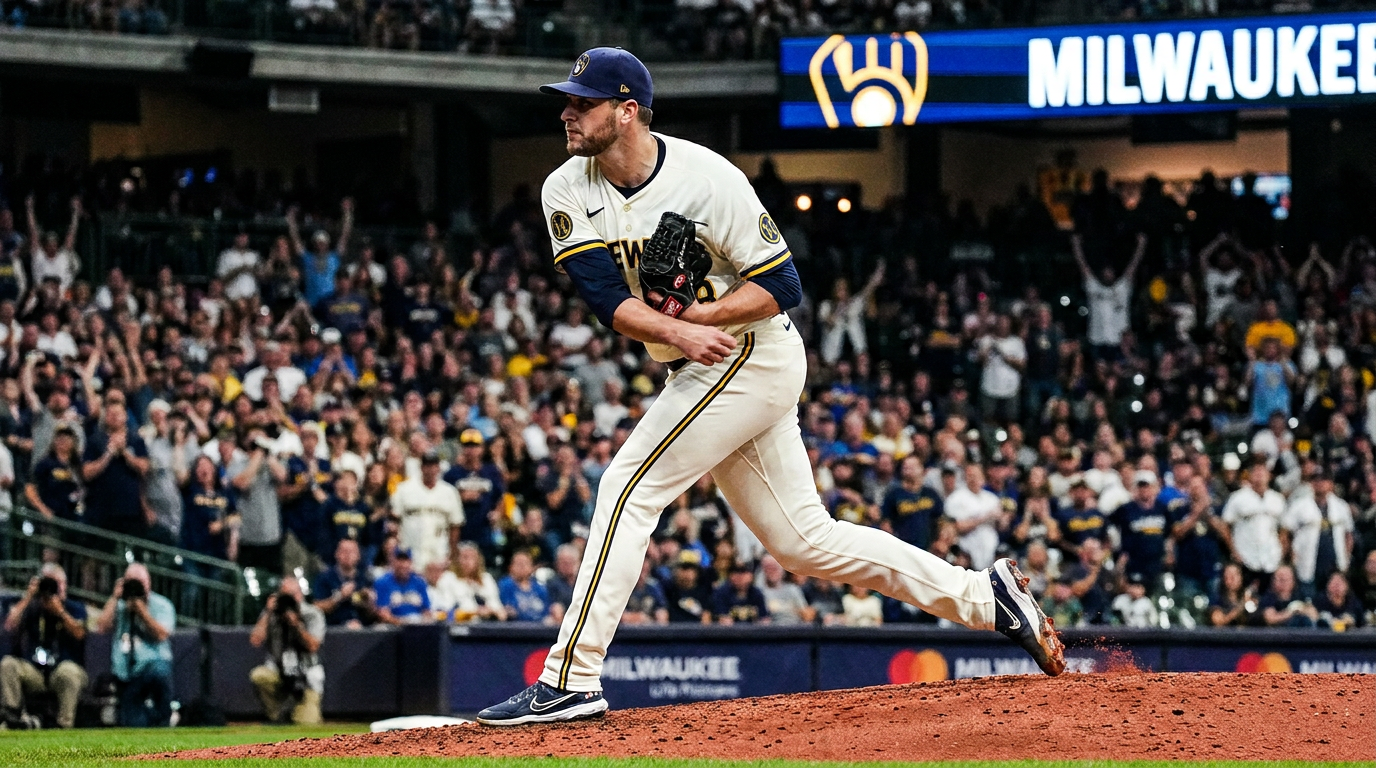
Brewers' Jacob Misiorowski Throws Historic 15-Strikeout, One-Hit Shutout
7 sources
Pitching Milestone
Jacob Misiorowski Throws Historic 15-Strikeout, One-Hit Complete Game in Brewers Win
7 sources
Every angle. Every day.
Get sports stories with full source coverage and perspective breakdowns delivered to your inbox.