
Major Esports Organizations Sign Top Chess Grandmasters Ahead of 2026 World Cup
Elite gaming organizations including Fnatic, GodLike Esports, and 9z Team have signed top chess grandmasters to their rosters. The unprecedented wave of acquisitions is driven by the inclusion of chess in the 2026 Esports World Cup in Riyadh.
By Factlen Editorial Team
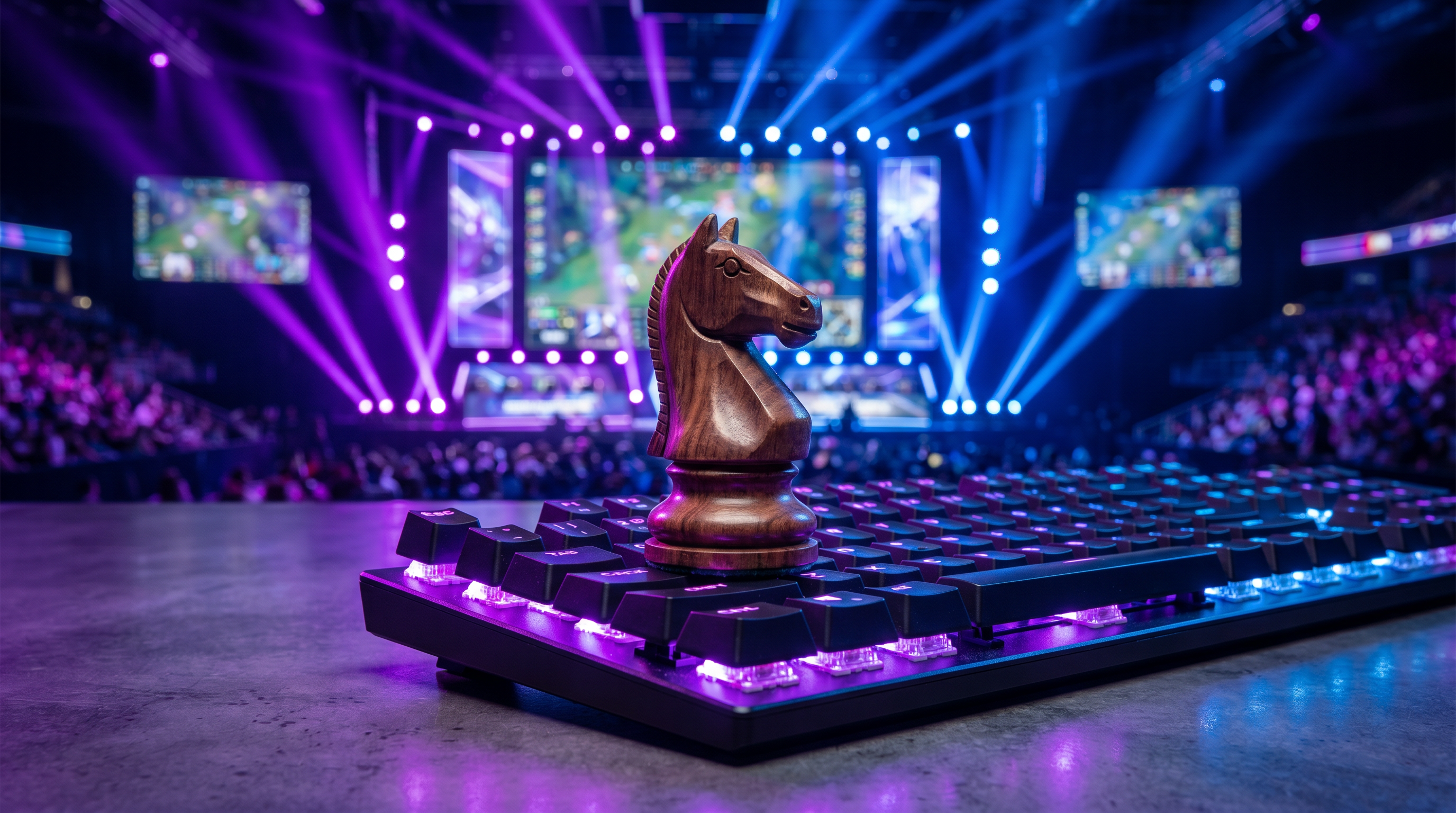
- Esports Organizations
- View chess as a strategic expansion to secure EWC club points and reach a new demographic.
- Chess Professionals
- Embrace esports contracts as a lucrative new revenue stream and a way to modernize the sport's image.
- Regional Fanbases
- Celebrate local chess prodigies and veterans gaining global backing from top-tier regional esports clubs.
What's not represented
- · Traditional FIDE officials
- · Non-digital classical chess purists
Why this matters
This merger of traditional chess and modern esports provides players with lucrative new career paths and sponsorships, while introducing the ancient game to millions of young digital sports fans globally.
Key points
- Major esports organizations are drafting top chess talent, marking a historic shift in how players are sponsored.
- Signings include Hans Niemann to GodLike Esports, Alexey Sarana to Fnatic, and Lê Quang Liêm to Team Flash.
- Argentine 12-year-old prodigy Faustino Oro also joined 9z Team to compete in the digital circuit.
- The acquisitions are driven by the 2026 Esports World Cup, which features a $1.5 million chess prize pool and a cross-game club championship.
The traditional chess world is experiencing a roster shakeup unlike any in its centuries-long history. The lucrative new contracts aren't coming from national federations, private benefactors, or elite European chess clubs—they are coming from the world's biggest esports organizations. In a flurry of spring 2026 signings, top grandmasters have been drafted by elite gaming organizations, merging the ancient game with the modern digital sports ecosystem. This unprecedented wave of acquisitions marks a fundamental shift in how professional chess players are sponsored, managed, and marketed to a global audience.[1][2]
American grandmaster Hans Niemann, currently ranked 12th in the world, made headlines by signing with GodLike Esports, an organization with a massive following in the mobile gaming space. Meanwhile, Serbian-Russian star Alexey Sarana was picked up by the London-based esports giant Fnatic, an organization traditionally known for its dominance in games like League of Legends and Counter-Strike. These organizations are treating chess players not as novelty acts, but as top-tier athletes capable of anchoring their competitive rosters on the world stage.[1][2][5]
The wave of acquisitions extends across the globe, capturing both seasoned veterans and rising prodigies. Vietnam's top player, Lê Quang Liêm, officially announced his move to Team Flash, a powerhouse in the Southeast Asian esports scene. In South America, 12-year-old Argentine sensation Faustino Oro—the youngest International Master in history—donned the violet jersey of 9z Team. By signing with regional heavyweights, these players are instantly tapping into passionate, established fanbases that number in the millions, far exceeding the reach of traditional chess broadcasts.[3][4][6][7]

The primary catalyst for this unprecedented 'Rostermania' is the 2026 Esports World Cup (EWC) in Riyadh, Saudi Arabia. Scheduled for July and August, the massive multi-title event features a dedicated chess tournament with a staggering $1.5 million prize pool. The inclusion of chess alongside high-octane video games like Street Fighter and Fortnite signals a broader acceptance of the board game as a premier competitive digital sport. For the organizers, chess brings a layer of prestige and universal recognition to the festival, elevating its status among a younger, digitally native audience while maintaining a brand-safe environment for global sponsors.[1][6]
However, the true incentive for esports clubs to sign chess players lies in the EWC's unique cross-game club championship structure. Organizations earn overall points based on their players' performances across all featured titles. A world-class chess player is now a highly valuable asset for an esports club looking to climb the global leaderboard and claim a share of the overarching organizational prize pool. By securing a top-20 grandmaster, a team practically guarantees a deep run in the chess bracket, securing vital points that could determine the ultimate winner of the entire multi-million dollar club championship.[1][8]
However, the true incentive for esports clubs to sign chess players lies in the EWC's unique cross-game club championship structure.
For the players, the shift represents a lucrative and highly visible new career path that fundamentally alters the economics of being a grandmaster. In a recent interview, Niemann expressed his excitement about joining GodLike Esports, noting the organization's massive fanbase and the profound honor of representing them on a global stage. The backing of an esports organization provides players with a guaranteed salary, comprehensive travel support, and access to professional content teams. This infrastructure frees them from the financial anxieties and logistical burdens that often plague independent chess professionals, allowing them to focus entirely on their preparation and gameplay.[5]

Lê Quang Liêm echoed similar sentiments, describing his partnership with Team Flash as a historic milestone that bridges traditional chess thinking with modern digital sports. The move comes shortly after Liêm concluded a 14-year tenure at Webster University, allowing him to focus entirely on his professional playing career under the Team Flash banner. His transition underscores a growing realization among elite players that the future of chess monetization lies in the digital realm, where streaming and team affiliations offer far more stability than the traditional open tournament circuit.[3][6]
For younger talents like Faustino Oro, the esports ecosystem offers immediate high-profile backing and structural support. Oro's roadmap with 9z Team included competing at the DreamHack Atlanta qualifiers to secure his EWC ticket, integrating him directly into the fast-paced 'Road to EWC' circuit. Competing under the 9z banner not only provides the young prodigy with world-class resources but also surrounds him with a community of professional gamers who understand the pressures of competing at the highest levels of digital sports.[4][7]

The integration of chess into the esports ecosystem has been steadily building over the past few years, driven by the explosion of online platforms, streaming, and digital tournaments. But the 2026 EWC roster moves formalize the relationship in a way the sport has never seen. Players will now compete wearing team jerseys, backed by managers, content teams, and sponsors traditionally reserved for video game athletes. This visual and structural transformation is bridging the gap between the quiet intensity of classical chess and the vibrant, loud culture of modern gaming.[1][2]
As the summer approaches, the chess community is watching closely to see how this new dynamic affects tournament preparation and player visibility. With traditional grandmasters now operating as fully-fledged esports athletes, the ancient game has firmly secured its place in the modern digital era. The success of these initial signings could prompt even more organizations to enter the space, proving that strategic mastery translates perfectly to the main stage and ensuring that the next generation of chess champions will be celebrated alongside the world's top gamers.[3][8]
How we got here
April 2026
Fnatic signs Alexey Sarana and GodLike Esports signs Hans Niemann.
May 2026
Faustino Oro joins 9z Team and competes at DreamHack Atlanta for EWC qualification.
June 2026
Lê Quang Liêm officially announces his signing with Team Flash after leaving Webster University.
July-August 2026
The Esports World Cup takes place in Riyadh, featuring a $1.5 million chess tournament.
Viewpoints in depth
Esports Organizations
Gaming clubs view chess as a prestigious, brand-safe expansion that helps them secure overall championship points.
For massive organizations like Fnatic and Team Flash, chess represents an untapped demographic. Unlike violent shooter games, chess is universally recognized and brand-safe for all sponsors. More importantly, the Esports World Cup awards points to clubs based on their performance across all games. By signing a top-20 grandmaster, an esports team practically guarantees a deep run in the chess bracket, securing vital points that could help them win the overall multi-million dollar club championship.
Chess Professionals
Players are embracing the esports model as a lucrative alternative to the traditional federation system.
Historically, chess players have relied on national federations, private benefactors, or meager tournament winnings to sustain their careers. The esports model offers a reliable salary, professional management, and access to a massive built-in fanbase. Grandmasters like Hans Niemann and Lê Quang Liêm have publicly praised the shift, noting that playing under a team banner provides structural support and marketing power that the traditional chess world simply cannot match.
Regional Fanbases
Local fans are celebrating their homegrown chess stars joining top-tier regional gaming teams.
The signings have sparked immense national pride, particularly in regions with passionate esports communities. In Argentina, the news of 12-year-old Faustino Oro joining 9z Team was celebrated as a massive win for South American talent. Similarly, Lê Quang Liêm's signing with Team Flash generated significant excitement in Vietnam, bridging the gap between the country's traditional chess enthusiasts and its booming youth esports audience.
What we don't know
- How traditional FIDE classical tournaments will schedule around the growing number of lucrative esports-backed digital events.
- Whether more traditional chess sponsors will attempt to outbid esports organizations for top talent in future seasons.
Key terms
- Esports World Cup (EWC)
- An annual multi-game international esports tournament held in Riyadh, featuring a cross-game club championship that awards points to organizations.
- Grandmaster (GM)
- The highest title a chess player can attain, awarded by the International Chess Federation (FIDE) based on rating and tournament performance.
- Rostermania
- A colloquial term in esports for the chaotic period when teams rapidly sign, trade, or drop players ahead of major tournaments.
Frequently asked
Why are esports teams signing chess players?
Chess is included in the 2026 Esports World Cup. Organizations earn overall club points based on their players' placements, making top chess talent valuable for winning the multi-million dollar overall club championship.
Do these players still compete in traditional chess?
Yes. The players continue to compete in standard FIDE-rated classical and rapid tournaments, but they will represent their esports organizations at specific digital and hybrid events like the EWC.
How much is the prize pool for the EWC chess event?
The chess portion of the 2026 Esports World Cup features a dedicated $1.5 million prize pool.
Sources
Source coverage
8 outlets
3 viewpoints surfaced








[1]Esports World CupEsports Organizations
Rostermania recap - Esports World Cup
Read on Esports World Cup →[2]Liquipedia ChessRegional Fanbases
Portal:Transfers - Liquipedia Chess Wiki
Read on Liquipedia Chess →[3]ZnewsChess Professionals
Lê Quang Liêm gia nhập Team Flash
Read on Znews →[4]Rosario3Regional Fanbases
Faustino Oro se suma a 9z Team
Read on Rosario3 →[5]ChessBase IndiaChess Professionals
Godlike's Star Hans Niemann on How he joined Godlike EWC 2026
Read on ChessBase India →[6]Tuổi TrẻChess Professionals
Lê Quang Liêm công bố quyết định quan trọng ở giải đấu Esports triệu USD
Read on Tuổi Trẻ →[7]La Cuarta OnlineRegional Fanbases
Bombazo de 9z: Faustino Oro se viste de violeta
Read on La Cuarta Online →[8]Esports ChartsEsports Organizations
9z Team Chess Overview and Statistics
Read on Esports Charts →

More in sports
See all 408 stories →Franchise Valuations
How Women's Sports Franchises Became a Billion-Dollar Asset Class
7 sources
Athlete Longevity
How NCAA Gymnastics and NIL Transformed the Lifespan of an Elite Gymnast
6 sources
Track Tech
The Dual Revolution Rewriting the Track and Field Record Books
6 sources

Crystal Palace
Crystal Palace to Appoint Pierre Sage as New Manager Following Lens Success
6 sources

Every angle. Every day.
Get sports stories with full source coverage and perspective breakdowns delivered to your inbox.