
Trump Cancels Planned Strikes on Iran, Claiming Peace Deal is Imminent
President Trump abruptly called off scheduled military strikes against Iran, announcing that a comprehensive peace agreement has been reached, though Iranian officials caution that no final decision has been made.
By Factlen Editorial Team
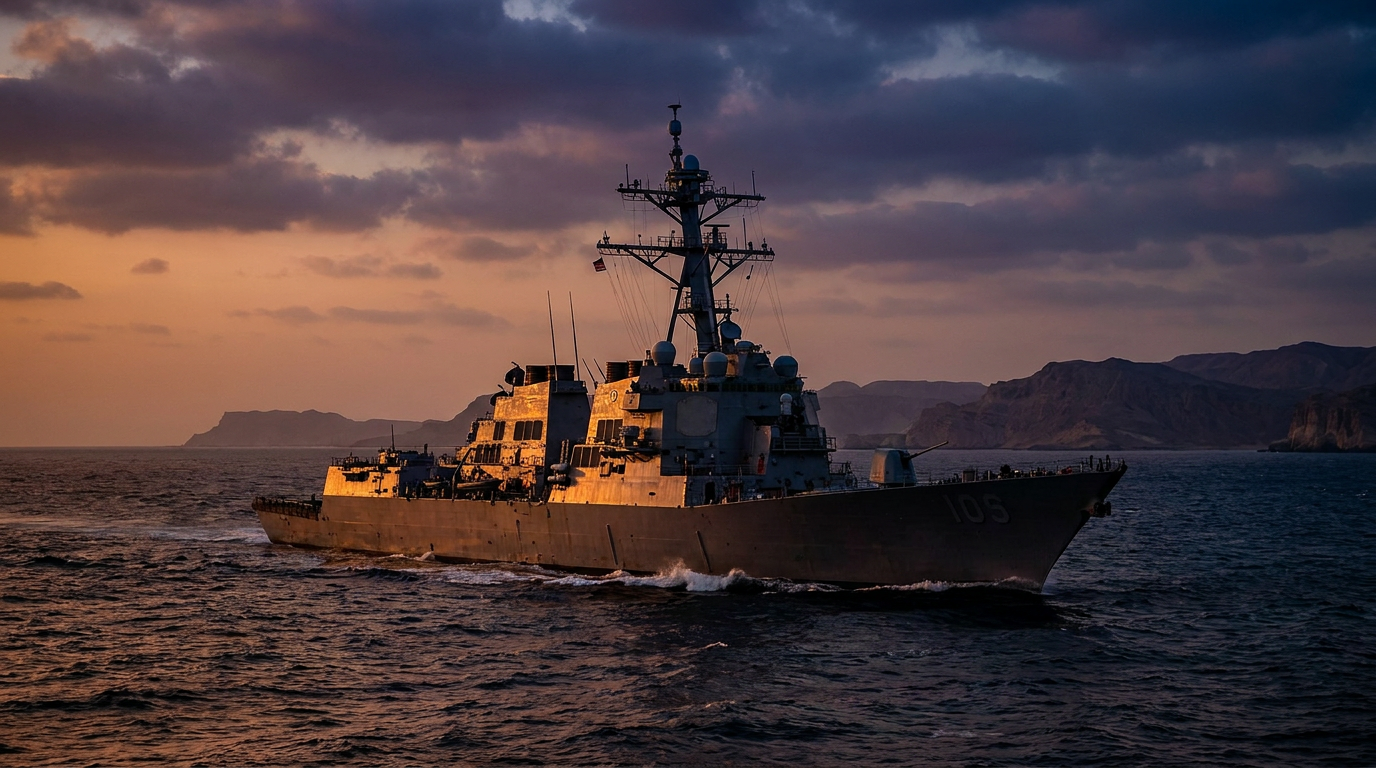
- U.S. Administration
- Believes that maximum economic pressure and the credible threat of military force have successfully driven Iran to accept a peace deal.
- Iranian Leadership
- Maintains that no final agreement has been reached, demanding upfront sanctions relief before making irreversible nuclear concessions.
- Gulf Allies
- Supports the U.S. economic blockade to contain Iran but fears being caught in the crossfire if military escalation resumes.
- Skeptical Diplomats
- Warns that the deal could easily collapse over the sequencing of asset releases and the specific details of nuclear enrichment limits.
What's not represented
- · Global shipping and logistics companies affected by the Strait of Hormuz blockade
- · Iranian civilians experiencing the impact of Operation Economic Fury
Why this matters
A finalized peace deal would end months of direct military conflict that has disrupted global shipping and spiked energy prices. However, if the agreement collapses, the region faces an immediate return to high-stakes warfare and a tightened naval blockade.
Key points
- President Trump abruptly canceled scheduled military strikes against Iran, claiming a peace deal is imminent.
- The proposed framework includes a 15-to-20-year ban on Iranian uranium enrichment and the reopening of the Strait of Hormuz.
- Iran's foreign ministry contradicted Trump's claims, stating that no final decision has been reached.
- A major sticking point is Iran's demand for an upfront release of $24 billion in frozen assets.
- U.S. Gulf allies support the ongoing economic blockade but fear the consequences of renewed military escalation.
- The U.S. naval blockade remains in full effect until a final transaction is signed.
In a sudden reversal that whipsawed global markets, President Donald Trump announced late Thursday that he had canceled scheduled military strikes against Iran, claiming that a comprehensive peace agreement is on the verge of being signed. The announcement came just hours after the president publicly threatened to hit the Islamic Republic "VERY HARD" and suggested the U.S. might seize Kharg Island, Iran's most critical oil export terminal.[1][3][6]
Writing on his Truth Social platform, Trump stated that he called off the bombings because discussions had reached the "highest level of Iranian leadership and approved." He asserted that the final points of the deal had been agreed upon by all parties involved, listing a coalition of Middle Eastern nations, though notably omitting Iran from that specific list of approvers.[3][5]
The whiplash is the latest development in a volatile conflict that began on February 28, when the U.S. and Israel launched a war against Iran. A fragile ceasefire has largely held since early April, but tensions flared dramatically this week. Following Iranian drone and missile attacks on U.S. bases in Jordan, Kuwait, and Bahrain, the U.S. military retaliated by striking Iranian radar installations, air defense sites, and communication systems.[3][4][6]
If finalized, the emerging diplomatic framework would begin with a Memorandum of Understanding (MoU) signed by both nations. This document would not immediately solve all disputes but would kick off a 60-day negotiation window to hammer out the granular details of an enduring treaty. The immediate first step under the MoU would be ensuring "freedom of trade" by demining and fully reopening the Strait of Hormuz, a critical maritime choke point.[7]
The core of the proposed U.S.-Iran agreement revolves around a massive trade-off: severe nuclear restrictions in exchange for economic lifelines. According to diplomatic sources, the U.S. is demanding a 15-to-20-year moratorium during which Iran would be barred from enriching uranium. Furthermore, the framework requires Iran to dismantle specific nuclear sites and agree to the extraction or disposal of its existing stockpiles of highly enriched uranium.[7]

However, the sequencing of these concessions remains a massive sticking point. Tehran, deeply skeptical that the U.S. will honor its end of the bargain, is demanding upfront financial relief. Specifically, Iran wants an initial $24 billion tranche of its estimated $100 billion in frozen global assets released before it lifts its blockade on the Strait of Hormuz. The Trump administration, scarred by domestic criticism of the Obama-era cash transfers to Iran, insists that sanctions relief must be staggered and strictly tied to verified compliance.[4][7]
However, the sequencing of these concessions remains a massive sticking point.
Vice President JD Vance recently reinforced this stance, stating publicly that funds would not be released simply for signing a document or attending a meeting. The economic pressure on Iran has been severe; a coordinated U.S. Treasury effort dubbed "Operation Economic Fury" has worked in tandem with a naval blockade to squeeze the Iranian economy, a strategy the administration credits with forcing Tehran to the negotiating table.[2][5]
Despite Trump's optimism, Iranian officials have thrown cold water on the idea that a deal is already done. Iranian Foreign Ministry spokesman Esmaeil Baqaei stated clearly that Tehran "has not yet reached a final conclusion on the agreement." State media in Iran reiterated that the country will not compromise on its "red lines," specifically regarding its right to maintain a civilian nuclear program.[3][4]
Diplomats briefed on the negotiations suggest that while a draft has been largely agreed upon by Qatari mediators and Iranian negotiators, Iranian Supreme Leader Mojtaba Khamenei has not yet given his final authorization. One diplomat noted that while the text is close, there remains a significant chance the deal could collapse due to "potential spoilers" and the vague nature of the nuclear commitments currently outlined in the draft.[4][5]

Regional allies are watching the developments with a mix of support and deep anxiety. U.S. Ambassador to the United Nations Mike Waltz recently returned from a trip to Bahrain and the United Arab Emirates, reporting that Gulf partners are in "zero daylight" with the U.S. regarding the economic blockade. Waltz noted that leaders in the UAE believe credible, sustained pressure is the only language Tehran understands.[2]
Yet, those same Gulf nations are acutely aware of their vulnerability. Iran has explicitly threatened sweeping strikes against Emirati interests if the UAE becomes a "plaything of Israel" or takes any unwise actions. For nations heavily dependent on the safe passage of oil through the Strait of Hormuz, the prospect of renewed, full-scale warfare on their doorstep is a worst-case scenario.[2][7]

Israel, a central player in the initial outbreak of the war, also appears to have been sidelined in the latest diplomatic sprint. Following Trump's announcement, senior Israeli officials told local media that Prime Minister Benjamin Netanyahu was not given advance notice of the canceled strikes or the supposedly finalized deal, raising questions about how the U.S. will manage its closest Middle Eastern ally if an agreement is signed.[5]
For now, the U.S. naval blockade remains in full effect. Trump has indicated that the time and place for a signing ceremony will be announced shortly, potentially aligning with his upcoming trip to Europe. Until ink meets paper, however, the region remains suspended between the promise of a historic diplomatic breakthrough and the immediate threat of devastating military escalation.[1][3][5]
How we got here
Feb 28, 2026
The U.S. and Israel begin military operations against Iran.
Early April 2026
A fragile, temporary ceasefire goes into effect between the warring parties.
Early June 2026
Tensions flare as Iran attacks U.S. bases and the U.S. retaliates against Iranian radar and oil infrastructure.
June 11, 2026
Trump threatens to hit Iran 'VERY HARD' and suggests seizing Kharg Island.
June 11, 2026 (Evening)
Trump abruptly cancels the strikes, announcing that a peace deal has been approved.
Viewpoints in depth
U.S. Administration's view
The White House argues that its strategy of maximum military and economic pressure has successfully cornered Iran.
U.S. officials, including President Trump and UN Ambassador Mike Waltz, maintain that the combination of a naval blockade, targeted military strikes, and 'Operation Economic Fury' has left Tehran with no choice but to negotiate. They point to the proposed 15-to-20-year moratorium on uranium enrichment as proof that the strategy is yielding historic concessions. The administration insists that any sanctions relief will be strictly sequenced and tied to verified Iranian compliance, rejecting any upfront cash transfers.
Iranian Leadership's view
Tehran insists it will not surrender its core nuclear rights and demands immediate financial relief as a prerequisite for peace.
Iranian officials view the U.S. announcements of an 'imminent' deal as premature public pressure tactics. The foreign ministry has explicitly stated that no final agreement has been reached. Deeply distrustful of U.S. promises following years of broken agreements, Tehran is demanding the upfront release of a $24 billion tranche of frozen assets before it will lift its blockade of the Strait of Hormuz. Furthermore, state media emphasizes that Iran will not negotiate away its fundamental right to a civilian nuclear program.
Gulf Allies' view
Neighboring Arab states support the containment of Iran but are terrified of a full-scale regional war.
Nations like the UAE and Bahrain find themselves in a precarious position. According to U.S. diplomats, these Gulf allies fully support the economic blockade, believing that financial strangulation is the only effective way to curb Iranian aggression. However, they are also geographically on the front lines. With Iran explicitly threatening to target Emirati infrastructure if the UAE assists U.S. or Israeli military efforts, these nations are desperate for a diplomatic off-ramp that neutralizes the Iranian threat without triggering a devastating regional conflict.
What we don't know
- Whether Iranian Supreme Leader Mojtaba Khamenei will actually authorize the final signing of the Memorandum of Understanding.
- How the U.S. and Iran will bridge the gap over the sequencing of the $24 billion frozen asset release.
- Whether Israel will support or attempt to undermine a deal that it was reportedly not consulted on.
Key terms
- Memorandum of Understanding (MoU)
- A formal agreement between two or more parties that establishes a framework for future, more detailed negotiations, rather than serving as a final, legally binding treaty.
- Operation Economic Fury
- A coordinated campaign by the U.S. Treasury Department designed to severely restrict Iran's economy and force its leadership into diplomatic concessions.
- Kharg Island
- Iran's primary oil export terminal located in the Persian Gulf, which handles the vast majority of the country's crude oil exports.
- Highly Enriched Uranium
- Uranium that has been processed to contain a high concentration of the U-235 isotope, making it capable of being used in nuclear weapons.
Frequently asked
Why did Trump cancel the strikes?
President Trump stated he canceled the military strikes because a peace agreement had been approved by all parties, including the highest levels of Iranian leadership.
What are the terms of the proposed deal?
The framework includes a 15-to-20-year moratorium on Iranian uranium enrichment and the demining of the Strait of Hormuz, in exchange for staggered relief from U.S. economic sanctions.
Has Iran agreed to the deal?
Iranian officials state that no final conclusion has been reached and that they are still demanding upfront financial relief before lifting their maritime blockade.
What is the Strait of Hormuz?
It is a narrow waterway between the Persian Gulf and the Gulf of Oman through which roughly 20% of the world's crude oil passes, making it a critical choke point for the global economy.
Sources
Source coverage
7 outlets
4 viewpoints surfaced







[1]NPRSkeptical Diplomats
Trump says he has canceled planned strikes on Iran and peace deal is near — again
Read on NPR →[2]Fox NewsGulf Allies
Mike Waltz says Gulf allies back Trump’s Iran pressure campaign after regional trip: ‘Zero daylight’
Read on Fox News →[3]The Washington PostIranian Leadership
Trump cancels strikes on Iran, says peace deal is close
Read on The Washington Post →[4]The GuardianIranian Leadership
Trump claims US and Iran on verge of signing peace agreement, but Tehran says no final decision made
Read on The Guardian →[5]Times of IsraelSkeptical Diplomats
Trump calls off Iran strikes, claims peace deal imminent; Israel says it wasn't informed
Read on Times of Israel →[6]ForbesU.S. Administration
Trump Cancels Iran Strikes, Claims Peace Deal Will Be Signed 'Shortly'
Read on Forbes →[7]CBS NewsSkeptical Diplomats
U.S., Iran near agreement to open Strait of Hormuz, curb nuclear program
Read on CBS News →
More in news politics
See all 145 stories →Media Literacy
Fact-Checking the 'Prebunking' Strategy: Can Psychological Inoculation Stop Misinformation?
7 sources

AI Export Controls
U.S. Blocks Foreign Access to Anthropic's Advanced AI Models Over Security Concerns
7 sources

AI Policy
Trump Administration Blocks Foreign Access to Anthropic's Most Advanced AI Models
8 sources
AI Policy
Trump Administration Blocks Foreign Access to Anthropic's Advanced AI Models
8 sources
Every angle. Every day.
Get news politics stories with full source coverage and perspective breakdowns delivered to your inbox.