
US and Iran Near Breakthrough Peace Deal to End War and Reopen Strait of Hormuz
President Trump called off planned military strikes against Iran, announcing a tentative agreement to extend a ceasefire, reopen the Strait of Hormuz, and initiate nuclear negotiations. While the US claims the deal could be signed this weekend, Iranian officials say the draft still awaits final approval from the Supreme Leader.
By Factlen Editorial Team
- US Administration
- Confident that a deal is imminent, claiming it secures the Strait of Hormuz and prevents a nuclear-armed Iran.
- Iranian Leadership
- Cautiously optimistic but maintaining that the draft is still under review and no final decision has been made.
- Israeli Government
- Skeptical of the memorandum, clarifying Israel is not a party to the deal and demanding the total dismantling of Iran's nuclear infrastructure.
- Global Markets
- Relieved by the prospect of de-escalation, reacting with a surge in equities and a sharp drop in energy prices.
What's not represented
- · Lebanese Government
- · European Union Mediators
- · Gulf Arab States
Why this matters
A finalized peace deal would end a devastating three-month war that has destabilized the Middle East and threatened global security. Reopening the Strait of Hormuz would immediately lower global energy prices and ease inflation pressures on consumers worldwide.
Key points
- President Trump canceled planned military strikes on Iran, citing a diplomatic breakthrough.
- A proposed memorandum of understanding could be signed in Europe as early as this weekend.
- The deal would extend a ceasefire for 60 days and reopen the Strait of Hormuz within 30 days.
- Iran would receive sanctions relief and the release of $24 billion in frozen assets.
- Iranian officials confirm the text is mostly finalized but say the Supreme Leader has not yet approved it.
- Israel clarified it is not a party to the agreement and continues to demand the dismantling of Iran's nuclear program.
US President Donald Trump abruptly called off planned military strikes against Iran on Thursday evening, announcing a diplomatic breakthrough that could end the three-month-old war between Washington and Tehran. Speaking from the Oval Office, Trump declared that a "great settlement" had been reached and that a formal memorandum of understanding could be signed in Europe as early as this weekend. The sudden pivot from the brink of full-scale regional conflict to the precipice of a peace agreement caught international observers and close allies off guard, sending immediate shockwaves through global energy markets.[1][2]
The proposed agreement, if finalized, represents the most significant de-escalation since hostilities erupted earlier this year. According to diplomatic sources, the framework centers on a 60-day ceasefire extension that would halt the direct exchange of missile and drone strikes. Crucially for the global economy, the deal requires Iran to fully reopen the Strait of Hormuz to international shipping within 30 days, ending a blockade that has severely disrupted global supply chains. In exchange, the United States would lift its naval blockade of Iranian ports and release an estimated $24 billion in frozen Iranian assets.[3][5]
Despite the optimism emanating from the White House, officials in Tehran offered a more measured assessment of the negotiations. Iran's Foreign Ministry confirmed that the text of the agreement is "mostly finalized" after intense mediation efforts, reportedly involving Qatari diplomats. However, Iranian spokesperson Esmaeil Baghaei emphasized that no final decision has been made, noting that the draft still requires the explicit approval of Supreme Leader Ayatollah Mojtaba Khamenei. "So far, Iran has not reached a final conclusion on the agreement," Baghaei stated, pushing back against the narrative that the deal is already a certainty.[3][7]

The announcement marked a dizzying reversal in US posture. Just hours before declaring the breakthrough, Trump had taken to social media to threaten that the US military would hit Iran "very hard" and seize Kharg Island, the vital terminal that handles roughly 90% of Iran's crude oil exports. The threat of an American occupation of Iran's primary economic lifeline had pushed the region to the absolute brink. Trump later explained that he canceled the strikes after being informed that the terms of the peace deal had been brought to the highest levels of Iranian leadership and approved.[2][7]
While Trump claimed that Khamenei had personally greenlit the framework, Iranian state media insisted that the Supreme Leader is still reviewing the terms. The discrepancy highlights the fragile nature of the current diplomatic window. Both sides have repeatedly approached the threshold of an agreement in recent weeks, only for talks to stall over the sequencing of sanctions relief and the exact mechanisms for verifying compliance.[4][7]
A central pillar of the proposed memorandum is the containment of Iran's nuclear ambitions, which served as the primary justification for the initial military confrontation. Trump assured reporters that the deal guarantees Iran will "never have a nuclear weapon." However, the current text is not a comprehensive nuclear treaty. Instead, it establishes a 60-day window during which detailed, substantive negotiations regarding Iran's enriched uranium stockpile and nuclear infrastructure will take place.[4][5]
Trump assured reporters that the deal guarantees Iran will "never have a nuclear weapon." However, the current text is not a comprehensive nuclear treaty.
The prospect of a US-Iran accommodation was met with immediate skepticism in Israel. Prime Minister Benjamin Netanyahu, who was reportedly convening a security cabinet meeting regarding the Iranian threat when Trump made his announcement, was caught off guard by the sudden diplomatic pivot. Netanyahu's office quickly released a statement clarifying that Israel is not a party to the emerging memorandum of understanding and remains unbound by its terms.[4][6]
Israeli officials reiterated their baseline demands for any permanent settlement, insisting that it must include the complete removal of enriched nuclear material, the dismantling of enrichment facilities, strict limits on ballistic missile production, and an end to Tehran's financial and military support for regional proxy groups. The stark divergence between Washington's eagerness to sign a ceasefire and Jerusalem's demand for structural capitulation raises questions about whether Israel might take unilateral military action if it views the final deal as insufficient.[4]
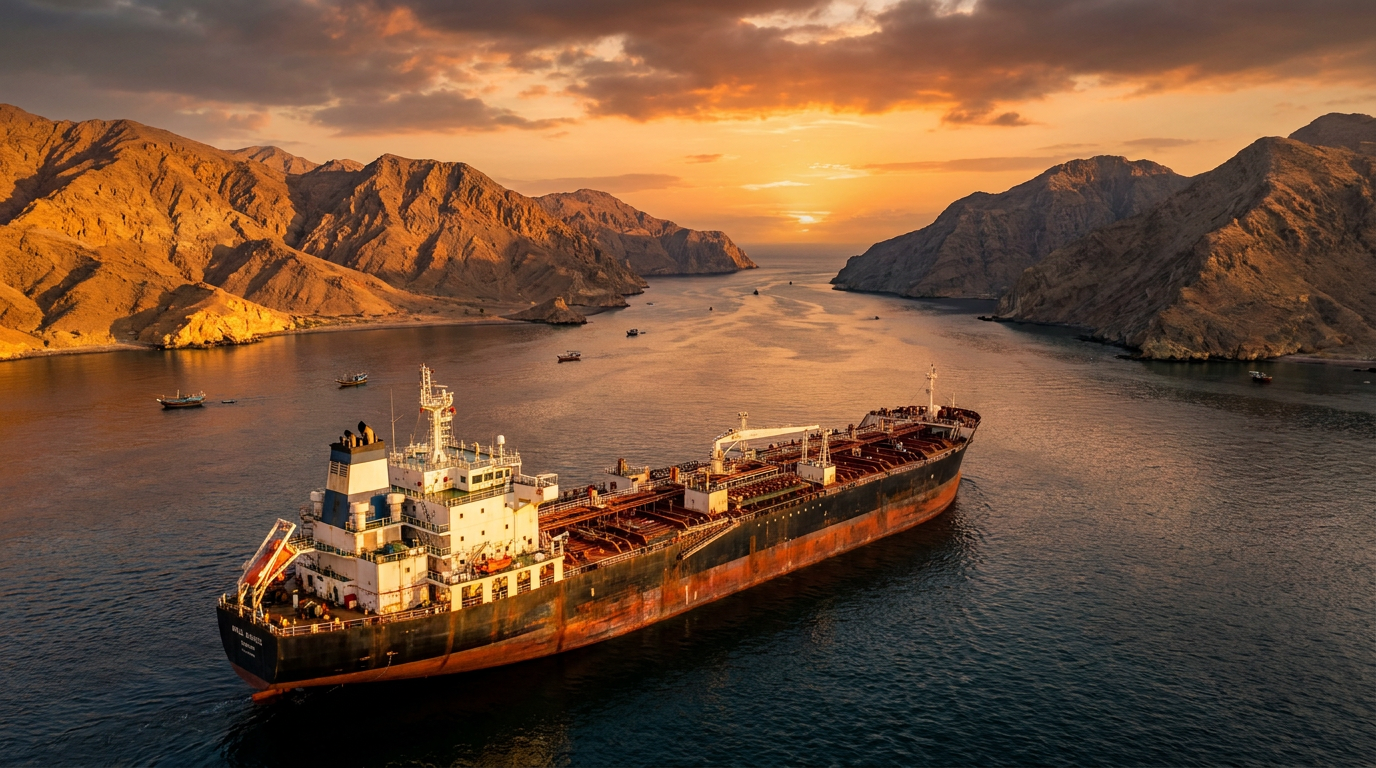
The economic ramifications of the potential breakthrough were instantaneous. Global financial markets, which had been battered by the uncertainty of a widening Middle East war, surged on the news. Brent crude oil futures plummeted by more than 4%, dropping to $86.57 a barrel, as traders priced in the imminent reopening of the Strait of Hormuz. A fifth of the world's energy shipments normally transit the narrow waterway, and its closure had forced shipping companies to reroute vessels, driving up costs and stoking fears of global inflation.[6]

The diplomatic progress comes against a backdrop of escalating violence that threatened to engulf neighboring states. In the 48 hours preceding the announcement, US and Iranian forces had exchanged a fierce volley of strikes. Iranian missiles reportedly targeted US military installations in Kuwait and Bahrain, while the US military conducted defensive strikes against infrastructure in southern Iran. The rapid deterioration of the security environment appears to have served as a catalyst, forcing negotiators to finalize the draft text before the conflict spiraled beyond control.[2][7]
One of the most complex unresolved issues is how the US-Iran ceasefire will impact the parallel conflict between Israel and Hezbollah in Lebanon. Tehran has historically linked the Lebanese front to its broader strategic posture, and some reports suggest the draft agreement envisions a halt to hostilities across the region. However, the Israeli government has maintained that it will not cease its campaign against Hezbollah until the militant group withdraws from the border, complicating efforts to achieve a comprehensive regional peace.[3][4]
The logistics of the potential signing ceremony remain fluid. Trump indicated that Vice President JD Vance, along with special envoys Steve Witkoff and Jared Kushner, would likely travel to Europe to represent the United States if the documents are finalized this weekend. The choice of a European venue underscores the international dimensions of the crisis, as European allies have long pushed for a diplomatic off-ramp to avoid a catastrophic disruption to global energy supplies.[1][4]

Despite the momentum, the threat of renewed military action continues to hang over the negotiations. When asked by reporters if the plan to seize Kharg Island was permanently off the table, Trump warned that the military option would only be discarded once the agreement is officially signed. This lingering ultimatum serves as a high-stakes pressure tactic aimed at forcing Tehran to formally commit to the draft text without demanding last-minute concessions.[4][7]
As the weekend approaches, the Middle East remains suspended between the promise of a historic diplomatic settlement and the peril of a devastating regional war. The coming days will test whether the tentative understandings reached by mediators can survive the intense domestic political pressures facing both the White House and the Iranian leadership.[5][6]
How we got here
Early April 2026
A temporary ceasefire between the US and Iran goes into effect.
June 10-11, 2026
US and Iranian forces exchange missile and drone strikes, pushing the region closer to full-scale war.
June 11, 2026
President Trump threatens to seize Iran's Kharg Island oil infrastructure.
June 11, 2026 (Evening)
Trump abruptly cancels the strikes, announcing a breakthrough in peace talks.
June 12, 2026
Iranian officials confirm the text is mostly finalized but await final approval from Supreme Leader Khamenei.
Viewpoints in depth
US Administration's view
The White House projects confidence that the deal secures American interests without further bloodshed.
The US administration views the memorandum as a massive diplomatic victory that achieves its primary objectives without the cost of a protracted ground war. By securing a commitment to reopen the Strait of Hormuz, the administration can claim credit for stabilizing global energy markets and preventing an inflation spike. Furthermore, officials argue that the 60-day ceasefire window provides the necessary leverage to force Iran into a permanent, verifiable agreement that permanently dismantles its nuclear weapons capabilities.
Iranian Leadership's view
Tehran approaches the deal with cautious optimism, prioritizing economic relief while guarding its sovereignty.
For Iran, the primary motivation for the agreement is the immediate lifting of the US naval blockade and the release of $24 billion in frozen assets, which are desperately needed to stabilize a battered domestic economy. However, Iranian officials are highly sensitive to domestic optics and refuse to appear as though they are capitulating to US threats. By insisting that the Supreme Leader is still reviewing the text, Tehran maintains negotiating leverage and ensures that any final agreement is framed as a mutual compromise rather than a surrender.
Israeli Government's view
Israel remains deeply skeptical of the ceasefire, fearing it gives Iran time to regroup without dismantling its nuclear program.
The Israeli government views the US-Iran memorandum as a temporary pause that fails to address the root causes of regional instability. Prime Minister Benjamin Netanyahu's administration insists that any agreement that leaves Iran's uranium enrichment infrastructure intact is inherently flawed. Israeli officials worry that the 60-day ceasefire will simply allow Tehran to rebuild its proxy networks in Lebanon and Gaza, and they have explicitly reserved the right to take unilateral military action if they determine Iran is using the diplomatic window to advance its nuclear ambitions.
What we don't know
- Whether Iran's Supreme Leader Ayatollah Mojtaba Khamenei will ultimately sign off on the finalized text.
- How the 60-day ceasefire will impact the ongoing conflict between Israel and Hezbollah in Lebanon.
- What specific mechanisms will be used to verify Iran's compliance regarding the Strait of Hormuz and its nuclear stockpile.
Key terms
- Strait of Hormuz
- A vital, narrow waterway between the Persian Gulf and the Gulf of Oman through which a fifth of the world's oil supply passes.
- Memorandum of Understanding (MOU)
- A formal agreement between two or more parties that establishes a framework for future negotiations, though often not legally binding.
- Kharg Island
- Iran's main oil export terminal in the Persian Gulf, handling roughly 90% of the country's crude exports.
Frequently asked
Is the war between the US and Iran officially over?
Not yet. While President Trump announced a breakthrough, Iranian officials say a final decision has not been made, and the proposed agreement is an initial memorandum of understanding.
What happens to the Strait of Hormuz under this deal?
The draft agreement reportedly requires Iran to fully reopen the vital shipping lane within 30 days, which would ease global energy markets.
How does this affect Iran's nuclear program?
The current deal is not a comprehensive nuclear treaty. Instead, it establishes a 60-day ceasefire window during which detailed nuclear negotiations will take place.
Is Israel part of this agreement?
No. Prime Minister Benjamin Netanyahu's office explicitly stated that Israel is not a party to the US-Iran memorandum, though Israel continues to demand the dismantling of Iran's nuclear infrastructure.
Sources
Source coverage
7 outlets
4 viewpoints surfaced







[1]Fox NewsUS Administration
Trump says Iran deal is nearly complete and could be signed in Europe within days
Read on Fox News →[2]CBS NewsUS Administration
Trump says he's canceled tonight's strikes, citing progress on a potential deal
Read on CBS News →[3]Al JazeeraIranian Leadership
US-Iran war live updates: Tehran shares key details of proposed peace deal
Read on Al Jazeera →[4]The Times of IsraelIsraeli Government
Iran says no final decision made following latest US claim that accord is at hand
Read on The Times of Israel →[5]AxiosUS Administration
What's in the Iran deal Trump says he's ready to sign
Read on Axios →[6]The Straits TimesGlobal Markets
Trump announces 'great' Iran settlement that will trigger opening of Hormuz strait
Read on The Straits Times →[7]Associated PressGlobal Markets
President Trump calls off latest threats to strike Iran, citing a breakthrough in talks to end the war
Read on Associated Press →
More in news politics
See all 146 stories →AI Regulation
U.S. Blocks Foreign Access to Anthropic's Advanced AI Models in Escalating National Security Dispute
6 sources
Media Literacy
Fact-Checking the 'Prebunking' Strategy: Can Psychological Inoculation Stop Misinformation?
7 sources

AI Export Controls
U.S. Blocks Foreign Access to Anthropic's Advanced AI Models Over Security Concerns
7 sources

AI Policy
Trump Administration Blocks Foreign Access to Anthropic's Most Advanced AI Models
8 sources
Every angle. Every day.
Get news politics stories with full source coverage and perspective breakdowns delivered to your inbox.