
U.S. and Iran Near 'Islamabad Agreement' to Extend Ceasefire and Reopen Strait of Hormuz
A proposed memorandum of understanding would extend the U.S.-Iran ceasefire by 60 days, reopen global shipping lanes, and initiate a framework for nuclear negotiations.
By Factlen Editorial Team
- U.S. Administration
- Views the deal as a diplomatic victory achieved through military leverage, securing shipping lanes and capping nuclear ambitions.
- Iranian Leadership
- Frames the agreement as a necessary step to relieve economic pressure while deferring core nuclear concessions.
- Israeli Government
- Remains highly skeptical of interim deals, demanding the complete and permanent dismantling of Iran's nuclear infrastructure.
- Regional Mediators
- Focuses on de-escalation and regional stability, viewing the agreement as a critical off-ramp from all-out war.
What's not represented
- · European Union diplomats
- · Global shipping companies
Why this matters
The reopening of the Strait of Hormuz would immediately lower global energy costs and restore supply chains disrupted by the three-month conflict. Furthermore, a formalized ceasefire reduces the immediate risk of a broader Middle Eastern war that could draw in neighboring nations and further destabilize the global economy.
Key points
- The U.S. and Iran are finalizing a memorandum of understanding, dubbed the 'Islamabad Agreement,' to extend their ceasefire by 60 days.
- The deal requires Iran to immediately reopen the Strait of Hormuz without transit fees in exchange for a 60-day waiver on oil sanctions.
- A conceptual framework is included to address Iran's enriched uranium, potentially involving in-country downblending under UN supervision.
- President Trump claims the deal is nearly complete and could be signed in Europe within days.
- Iranian officials caution that no final decision has been made, and detailed nuclear talks will only occur during the ceasefire period.
- Israeli Prime Minister Benjamin Netanyahu was reportedly caught off guard and considers the deal merely an entry into negotiations.
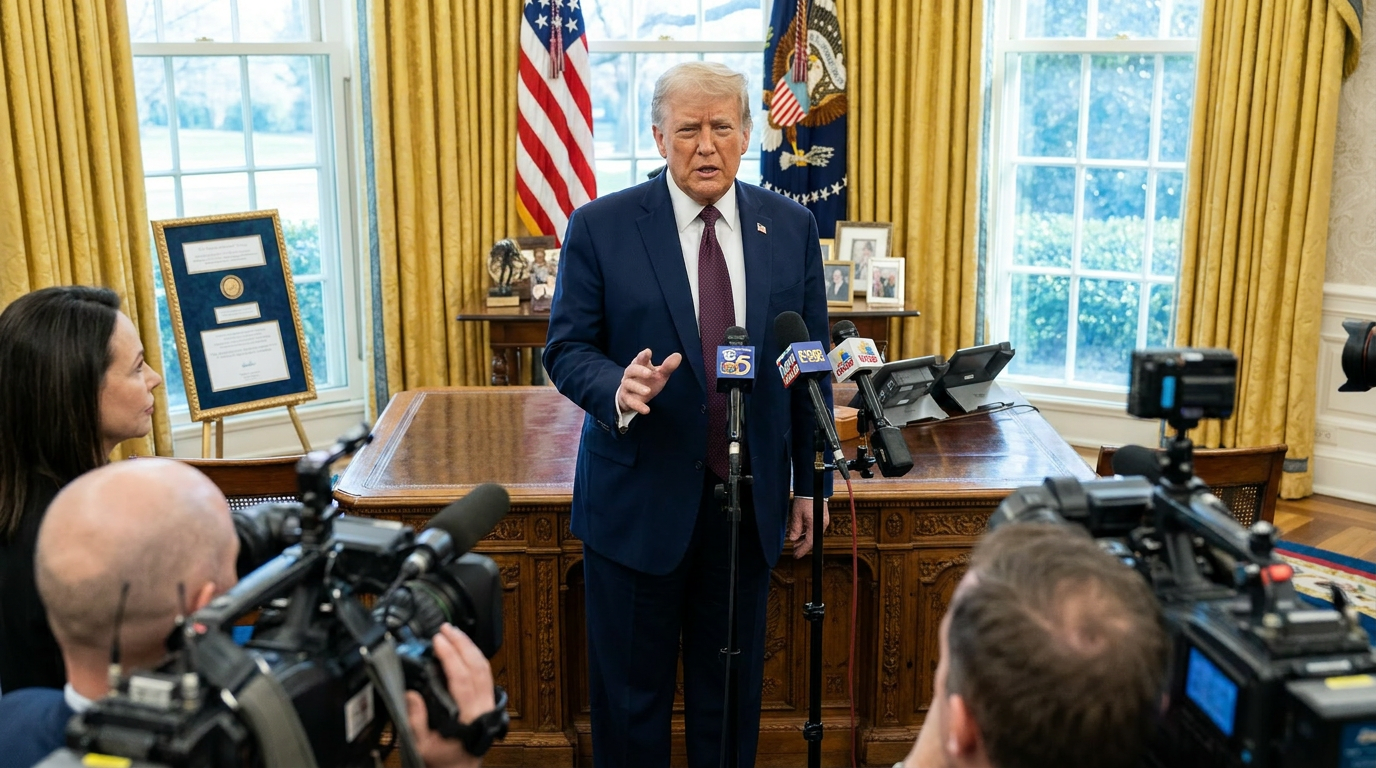
The United States and Iran are on the precipice of signing a landmark memorandum of understanding that would extend a fragile ceasefire, reopen the critical Strait of Hormuz, and temporarily lift select economic sanctions on Tehran. Mediated by diplomats from Qatar and Pakistan over weeks of intense back-channel discussions, the proposed framework—dubbed the "Islamabad Agreement"—aims to halt a devastating three-month conflict that has rattled global energy markets and fundamentally reshaped the security architecture of the Middle East. Speaking to reporters from the Oval Office, President Donald Trump announced that the diplomatic breakthrough is nearly complete, suggesting that negotiators are merely finalizing the paperwork and that a formal signing ceremony could take place in Europe within a matter of days. The sudden announcement marks a dramatic pivot from the brink of all-out war, offering a potential off-ramp for two nations that have spent the spring locked in a cycle of unprecedented direct military confrontation.[1][2][3]
However, the final ink has not yet dried, and significant hurdles remain before the memorandum can be formally implemented. Iranian officials have publicly cautioned that no final decision has been made, pushing back against the narrative that the deal is a foregone conclusion. Behind the scenes, the agreement reportedly awaits the crucial approval of Iran's new Supreme Leader, Mojtaba Khamenei, who assumed power following the death of his predecessor during the initial wave of allied strikes earlier this year. Rather than serving as an immediate, comprehensive peace treaty, the mechanism of the Islamabad Agreement relies on a phased, compliance-based approach designed to build trust incrementally. This structure reflects the deep-seated suspicion between Washington and Tehran, acknowledging that a permanent resolution to the conflict will require months of painstaking negotiation.[1][4]
The first major pillar of the proposed agreement is a 60-day extension of the current, frequently violated ceasefire across all regional fronts. Crucially, this cessation of hostilities would explicitly include Lebanon, where Israeli forces and the Iranian-backed militant group Hezbollah have been engaged in heavy, sustained fighting. The second, and perhaps most globally consequential, pillar addresses the economic chokepoint of the Strait of Hormuz. Under the terms of the draft, Iran would agree to immediately reopen the vital waterway to international shipping without imposing any transit tolls or fees. The ambitious goal outlined in the text is to return maritime traffic to pre-war volumes within 30 days, effectively ending a crippling blockade that has forced hundreds of commercial vessels to reroute around the Cape of Good Hope, severely disrupting global supply chains and spiking international energy costs.[1][3]

In exchange for these significant strategic and economic concessions, the United States would lift its naval blockade of the Iranian coast and grant Tehran a highly sought-after temporary sanctions waiver. This waiver is the economic linchpin of the deal for Iran, as it would legally permit the country to sell its oil on the open market for the duration of the 60-day ceasefire period. For a heavily battered Iranian economy that has endured years of "maximum pressure" sanctions—compounded by the recent destruction of domestic infrastructure during the war—this 60-day window represents a critical, life-saving infusion of foreign revenue. U.S. officials have stressed that any further sanctions relief beyond this initial window would be strictly tied to Iran's continued compliance with the agreement and its demonstration of good faith in subsequent, more complex negotiations.[1]
The most contentious and technically complex element of the framework involves the future of Iran's nuclear program, which served as a primary catalyst for the initial U.S. and Israeli military strikes that ignited the war. The draft memorandum includes a conceptual framework for addressing Iran's growing stockpile of highly enriched uranium, a stockpile that Western intelligence agencies have long viewed as an unacceptable proliferation risk. According to U.S. officials familiar with the text, one of the leading options proposed for resolving this standoff involves "downblending" the highly enriched uranium inside Iranian territory. This process would chemically reduce the purity of the fissile material so that it can no longer be utilized for the development of nuclear weapons, and it would be conducted under the strict, continuous supervision of inspectors from the United Nations' nuclear watchdog.[1][5][6]
Despite the optimism radiating from Washington, Iranian state media has offered a notably different framing of the nuclear provisions, emphasizing that detailed negotiations regarding the country's atomic infrastructure will only occur during the 60-day ceasefire period. Tehran continues to insist that it will not compromise on its sovereign "right" to civilian uranium enrichment, setting the stage for highly fraught discussions in the second phase of the diplomatic process. This diplomatic breakthrough follows a highly volatile period of brinkmanship that nearly derailed the talks entirely. Just days prior to the Oval Office announcement, President Trump had publicly threatened to launch "very hard" military strikes and suggested the U.S. might seize control of Iran's Kharg Island oil facilities following a series of tit-for-tat military exchanges that threatened to shatter the fragile April truce.[4][5][6]

This diplomatic breakthrough follows a highly volatile period of brinkmanship that nearly derailed the talks entirely.
The sudden pivot from military escalation to imminent diplomacy caught several key U.S. allies off guard, most notably Israeli Prime Minister Benjamin Netanyahu. Netanyahu, who had convened his elite security cabinet amid the escalating threats of the past week, was reportedly unaware of the finalized memorandum until he received a direct phone call from President Trump informing him of the impending deal. The Israeli Prime Minister's office has since publicly downplayed the significance of the agreement, characterizing the Islamabad text merely as an "emerging MoU regarding entry into negotiations" rather than a binding or comprehensive peace treaty. This cautious rhetoric reflects deep anxiety in Jerusalem that an interim deal might relieve economic pressure on Tehran without permanently neutralizing its military capabilities.[1][4]
Israel, which is notably not a party to the Islamabad Agreement, maintains a hardline stance that any final, permanent settlement must include the complete and irreversible dismantling of Iran's nuclear infrastructure, as well as the total cessation of its financial and military support for regional proxy militias like Hezbollah and Hamas. As diplomatic teams from the U.S., Iran, Qatar, and Pakistan race to finalize the exact wording of the text, the global community watches with bated breath. The success or failure of this 60-day memorandum of understanding will likely determine whether the Middle East can successfully step back from the brink of a catastrophic, all-out regional war, or whether the current pause is merely a brief interlude before the region plunges into a prolonged and grinding conflict.[1][3][4]
The economic stakes of the Islamabad Agreement cannot be overstated, as the three-month blockade of the Strait of Hormuz has sent shockwaves through the global economy. Prior to the conflict, the strait accommodated roughly a fifth of the world's daily oil consumption, making it the most critical energy chokepoint on the planet. The recent hostilities and the subsequent naval standoff forced major shipping conglomerates to absorb massive insurance premiums or undertake the costly, weeks-long detour around the African continent. News of the impending diplomatic breakthrough immediately cooled overheated energy markets, with the price of international benchmark Brent crude oil dropping nearly six percent to hover around $97 a barrel. Financial analysts note that while the temporary reopening provides immediate relief, long-term market stability will require a permanent treaty that guarantees the unhindered flow of maritime commerce.[1][3]

Beyond the geopolitical and economic ramifications, the proposed ceasefire carries significant domestic political implications for both the U.S. and Iranian administrations. For President Trump, securing a deal that reopens global shipping lanes and halts the march toward a protracted Middle Eastern war offers a major foreign policy victory to present to the American electorate. It allows his administration to claim that its "maximum pressure" military campaign successfully forced Tehran to the negotiating table without requiring a massive deployment of U.S. ground troops. Conversely, for Iran's newly installed Supreme Leader Mojtaba Khamenei, the agreement presents a delicate balancing act. He must secure the desperately needed sanctions relief to stabilize a cratering domestic economy, while simultaneously projecting strength to hardline factions within the Islamic Revolutionary Guard Corps who view any compromise with Washington as a capitulation.[1][6]
How we got here
Feb/March 2026
U.S. and Israeli strikes target Iran's nuclear and ballistic missile programs, leading to the death of Supreme Leader Ali Khamenei.
April 8, 2026
The U.S. and Iran agree to a temporary two-week ceasefire mediated by Pakistan.
May 2026
The ceasefire is violated multiple times with limited strikes, but both sides avoid full-scale escalation.
June 11, 2026
President Trump cancels planned military strikes and announces a final agreement is near.
June 12, 2026
Details of the 'Islamabad Agreement' emerge, though Iran states no final decision has been made.
Viewpoints in depth
U.S. Administration's view
Believes the maximum pressure campaign and recent military strikes have forced Iran to the table.
U.S. officials argue that the combination of severe economic sanctions and targeted military strikes successfully degraded Iran's capabilities, leaving Tehran with no choice but to negotiate. They view the Islamabad Agreement as a vindication of this strategy, securing the reopening of global shipping lanes and capping nuclear ambitions without committing the United States to a prolonged, large-scale ground war in the Middle East.
Iranian Leadership's view
Frames the negotiations as a tactical pause to relieve crippling economic sanctions.
For Tehran, the 60-day ceasefire represents a necessary tactical maneuver to secure a vital infusion of oil revenue and rebuild domestic infrastructure. Iranian officials emphasize that they have not surrendered their sovereign right to civilian nuclear enrichment, framing the upcoming negotiations as a separate phase where their core 'red lines' will remain strictly enforced against Western demands.
Israeli Government's view
Deeply skeptical of interim agreements that leave Iran's nuclear infrastructure partially intact.
Jerusalem views the memorandum with profound suspicion, fearing that temporary sanctions relief will allow Iran to rebuild its proxy networks and military capabilities. Israeli officials, who were largely sidelined during the final stages of mediation, demand that any permanent treaty must include the complete, irreversible dismantling of Iran's nuclear program and an end to its support for groups like Hezbollah and Hamas.
What we don't know
- Whether Iran's new Supreme Leader, Mojtaba Khamenei, will formally approve the memorandum of understanding.
- How the verification mechanisms for downblending Iran's enriched uranium will be enforced by UN inspectors.
- Whether the 60-day ceasefire will hold, given the history of localized skirmishes and proxy attacks over the past month.
- If the temporary sanctions relief will be extended if nuclear negotiations stall during the 60-day window.
Key terms
- Islamabad Agreement
- The working title for the U.S.-Iran memorandum of understanding, mediated by Pakistan and Qatar.
- Strait of Hormuz
- A critical maritime chokepoint between the Persian Gulf and the Gulf of Oman, through which a significant portion of the world's oil passes.
- Downblending
- The process of reducing the concentration of fissile isotopes in enriched uranium, rendering it unusable for nuclear weapons.
- Sanctions Waiver
- A temporary suspension of economic penalties, allowing a sanctioned country to engage in specific restricted activities, such as selling oil.
Frequently asked
Has the war officially ended?
Not yet. The proposed agreement is a memorandum of understanding that extends the ceasefire for 60 days while a permanent peace treaty is negotiated.
Will the Strait of Hormuz reopen?
Yes, under the draft agreement, the Strait would reopen immediately without transit fees, aiming to return to pre-war shipping volumes within 30 days.
What happens to Iran's nuclear program?
The interim deal includes a framework for addressing Iran's enriched uranium, potentially through downblending under UN supervision, but detailed nuclear negotiations are deferred to a second phase.
Does Israel support the deal?
Israel is not a party to the agreement. Prime Minister Benjamin Netanyahu considers it merely an entry into negotiations, demanding a complete dismantling of Iran's nuclear infrastructure.
Sources
Source coverage
6 outlets
4 viewpoints surfaced






[1]AxiosIsraeli Government
Trump's pending Iran deal is bitter pill for Netanyahu
Read on Axios →[2]Fox NewsU.S. Administration
Trump says Iran deal is nearly complete and could be signed in Europe within days
Read on Fox News →[3]The GuardianRegional Mediators
Donald Trump spoke to Benjamin Netanyahu about latest efforts to reach deal with Iran
Read on The Guardian →[4]The Times of IsraelIranian Leadership
Iran says no final decision made following latest US claim that accord is at hand
Read on The Times of Israel →[5]CBS NewsIranian Leadership
Iranian state news agency says nuclear program would be negotiated during 60-day ceasefire period in deal with U.S.
Read on CBS News →[6]PBSU.S. Administration
Trump calls off threatened strikes, says deal with Iran is close
Read on PBS →
More in news politics
See all 146 stories →AI Regulation
U.S. Blocks Foreign Access to Anthropic's Advanced AI Models in Escalating National Security Dispute
6 sources
Media Literacy
Fact-Checking the 'Prebunking' Strategy: Can Psychological Inoculation Stop Misinformation?
7 sources

AI Export Controls
U.S. Blocks Foreign Access to Anthropic's Advanced AI Models Over Security Concerns
7 sources

AI Policy
Trump Administration Blocks Foreign Access to Anthropic's Most Advanced AI Models
8 sources
Every angle. Every day.
Get news politics stories with full source coverage and perspective breakdowns delivered to your inbox.