
US-Iran Peace Talks Stumble in Switzerland as Trump Issues Threats and Tehran Claims Hormuz Closure
High-stakes negotiations between the US and Iran over a permanent ceasefire faced immediate hurdles as President Trump threatened military action and Iran claimed to shut down the Strait of Hormuz.
By Factlen Editorial Team
- US Administration
- The White House seeks to leverage military threats to force a comprehensive deal.
- Iranian Leadership
- Tehran demands immediate economic relief and an end to Israeli strikes before making nuclear concessions.
- Global Shipping Industry
- Maritime operators are prioritizing vessel safety over geopolitical declarations.
- Domestic Deal Skeptics
- Bipartisan critics in the US fear the agreement gives up too much for too little.
What's not represented
- · Lebanese Civilians
- · European Energy Consumers
Why this matters
The fragile 60-day ceasefire between the US and Iran holds massive implications for the global economy, as the Strait of Hormuz facilitates roughly a fifth of the world's oil trade. A collapse in talks could trigger a resumption of direct military conflict and send global energy prices soaring.
Key points
- US and Iranian delegations opened direct peace talks in Switzerland to solidify a 60-day ceasefire agreement.
- President Trump threatened to resume military strikes if Iran does not halt Hezbollah operations in Lebanon.
- The Iranian delegation temporarily walked out of the negotiations in protest of the US president's remarks.
- Iran's Revolutionary Guard claims to have closed the Strait of Hormuz, causing a massive drop in commercial shipping traffic.
- Negotiators are attempting to resolve disputes over billions in frozen Iranian assets and limits on Tehran's nuclear program.
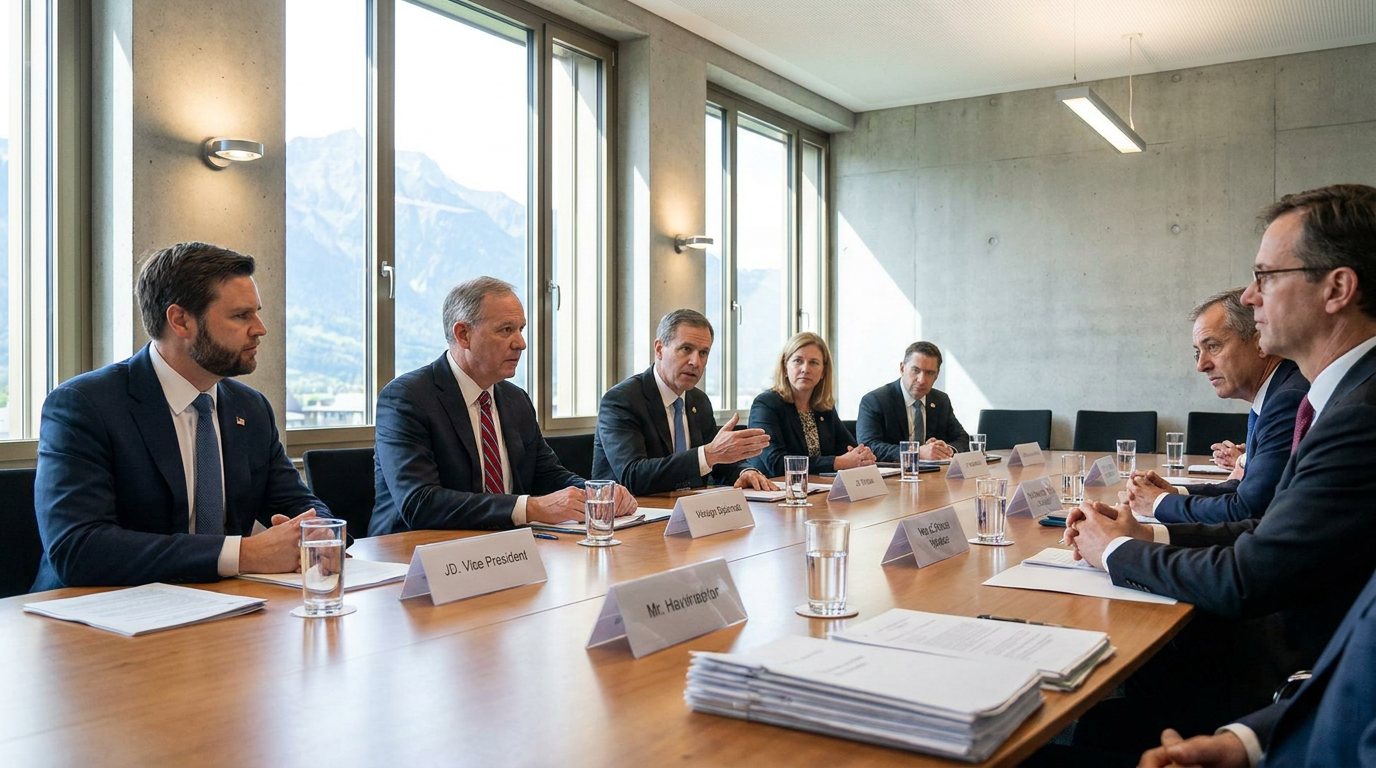
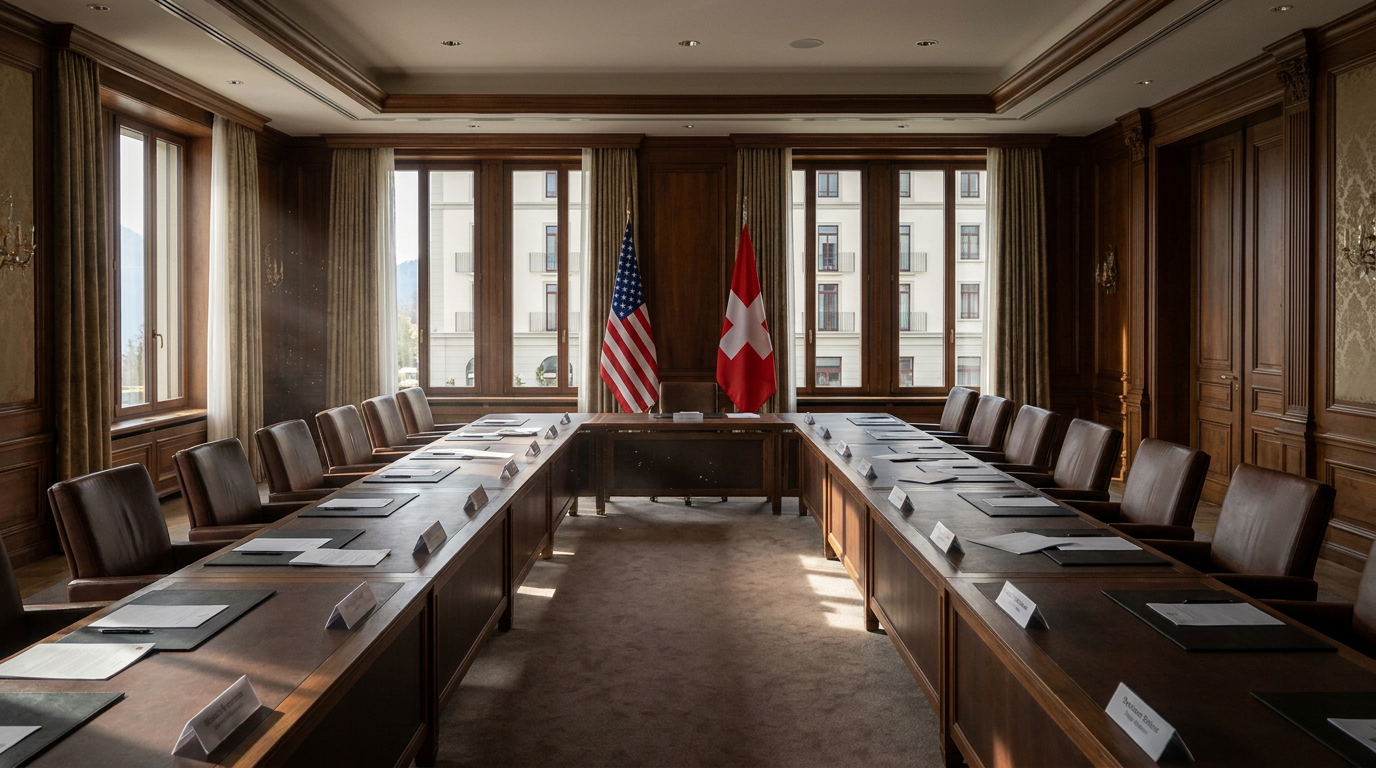
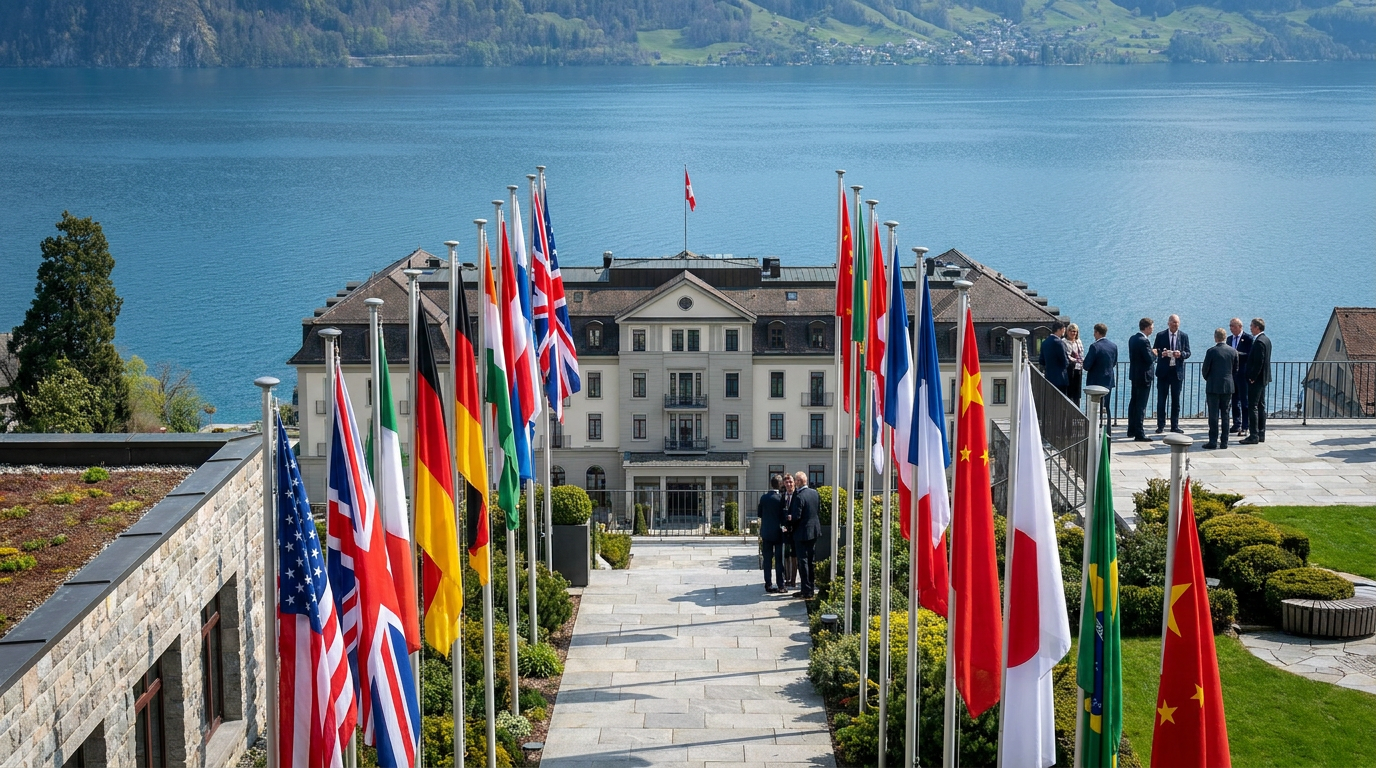
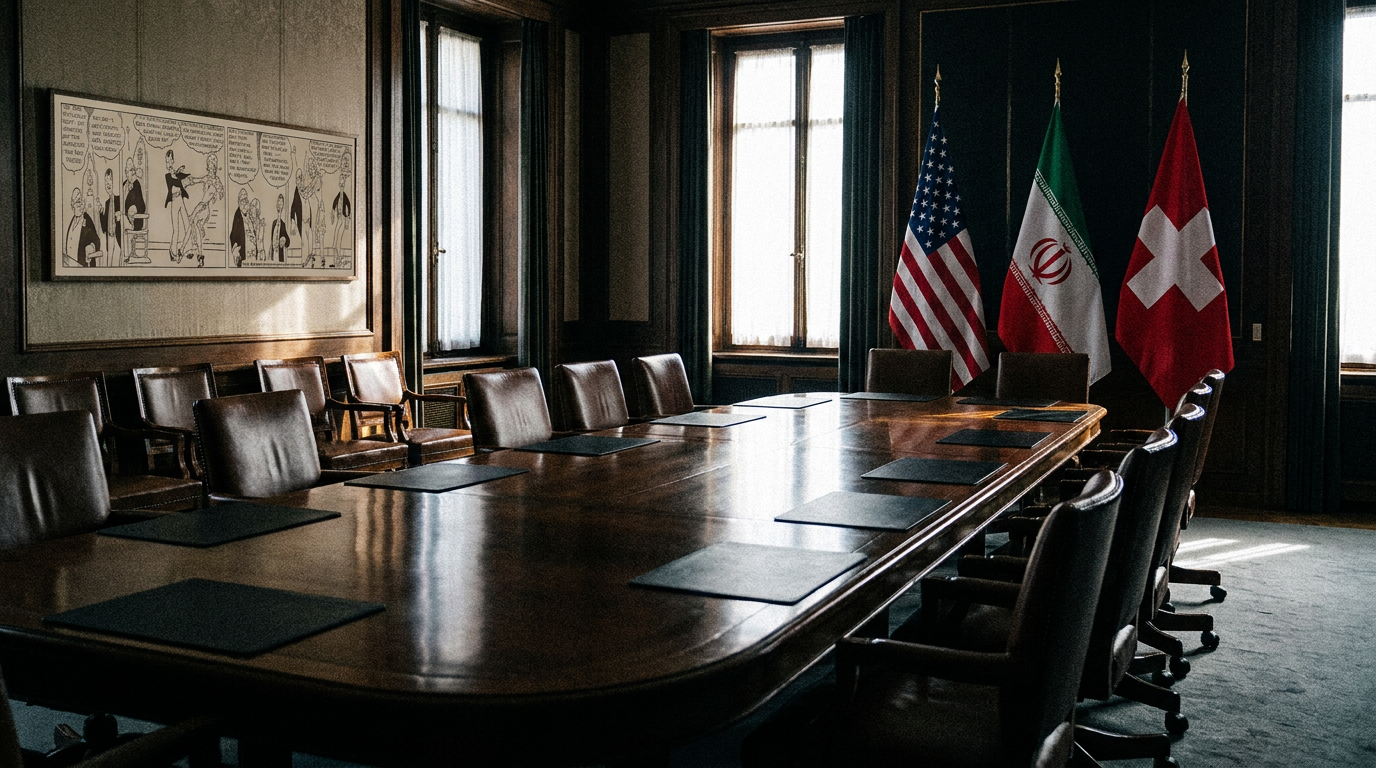
The United States and Iran have opened direct negotiations in Switzerland to solidify a fragile 60-day ceasefire, but the talks immediately stumbled over renewed military threats and a crisis in the world's most critical oil chokepoint. Vice President JD Vance arrived at the Bürgenstock resort on Sunday hoping to "turn over a new leaf" with Tehran, leading an American delegation that includes envoys Jared Kushner and Steve Witkoff.[1][2]
However, the diplomatic effort was quickly overshadowed by President Donald Trump, who issued severe warnings from Washington. In a social media post and a subsequent Fox News interview, Trump threatened to resume military strikes against Iran if it did not force Hezbollah militants to halt operations in Lebanon. "If they don't, we'll hit Iran very hard again, just like we did last week, only harder," Trump declared, adding that the US would take over the Strait of Hormuz if Tehran interfered with maritime traffic.[1][2]
The aggressive rhetoric triggered an immediate backlash from the Iranian delegation, led by Parliament Speaker Mohammad Bagher Ghalibaf and Foreign Minister Abbas Araghchi. Ghalibaf warned the US against making threats, stating that Iran's armed forces were prepared to respond in kind. Iranian state media reported that the talks entered a "difficult phase," culminating in the Iranian delegation temporarily walking out of the negotiating room in protest of the "insulting message" from the US president.[1][2][6]

The diplomatic friction in Switzerland mirrors a rapidly deteriorating situation on the ground, specifically concerning the Strait of Hormuz. On Saturday, Iran's Islamic Revolutionary Guard Corps (IRGC) announced that it had closed the vital waterway to maritime traffic. Tehran cited ongoing Israeli military strikes in southern Lebanon as a direct violation of the US-Iran memorandum of understanding signed last week, framing the strait's closure as a retaliatory measure.[1][7]
The actual status of the Strait of Hormuz remains heavily contested. The US military insists that commercial vessels are still operating freely, and the recently established Persian Gulf Strait Authority has published a permitting system for ships to apply for passage. However, maritime security experts warn that the waterway is not open in any meaningful capacity, as ship owners are unwilling to risk their vessels and crews amid the threat of Iranian boarding or naval mines.[5][7]
The actual status of the Strait of Hormuz remains heavily contested.
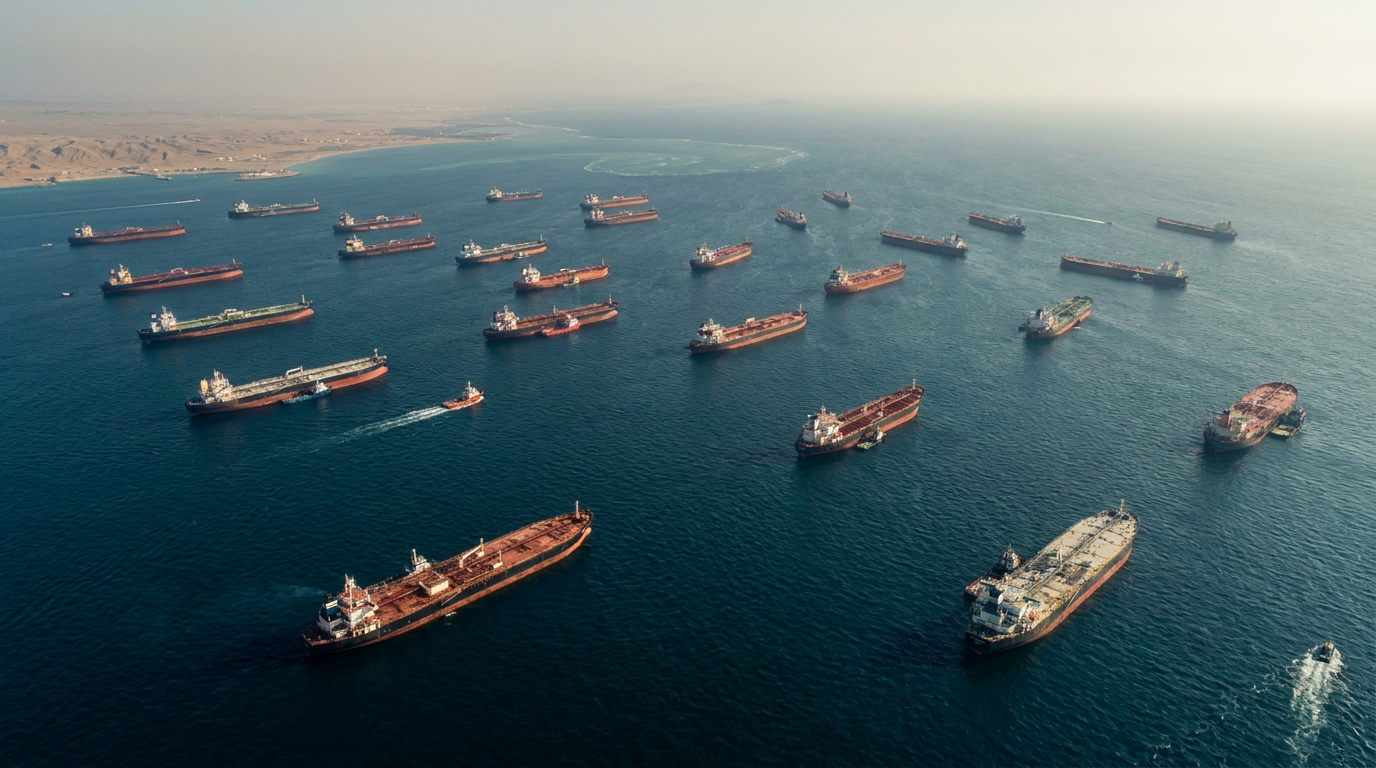
Real-time shipping data underscores the chilling effect of Iran's declaration. According to analytics firm Kpler, the number of ships passing through the strait plummeted from 26 vessels on Saturday to just five on Sunday. The few ships that did transit included Very Large Crude Carriers (VLCCs) carrying millions of barrels of Saudi crude and fuel oil, but dozens of other vessels have reportedly anchored outside the strait to avoid the escalating risk.[3][4][8]

The economic stakes of a sustained closure are monumental. Roughly 20 percent of the world's liquefied natural gas and a quarter of global seaborne oil trade pass through the Strait of Hormuz. A prolonged blockade could trigger a global energy crisis, upending the Trump administration's efforts to stabilize global markets and lower domestic gasoline prices ahead of the peak summer travel season.[5][8]
Beyond the immediate maritime crisis, the Swiss negotiations are tasked with resolving deeply entrenched disputes over frozen assets and nuclear proliferation. The Iranian delegation, which includes the head of Iran's central bank and the chief executive of the National Iranian Oil Company, is heavily focused on the mechanics of lifting US oil sanctions and unfreezing billions of dollars in Iranian funds held abroad.[2][9]
In exchange for economic relief, the US is demanding strict, verifiable limits on Iran's nuclear program. The interim agreement reportedly requires Iran to dilute its stockpile of highly enriched uranium, which is currently stored in underground facilities targeted by US strikes earlier this year. US negotiators are pushing for renewed United Nations inspections to ensure compliance, a demand that has historically faced fierce resistance from Tehran.[1][6]

The memorandum of understanding has also ignited a political firestorm within the United States. Bipartisan critics argue that the deal makes too many concessions to Tehran without permanently dismantling its nuclear capabilities or curbing its regional proxy network. Republican hardliners have unfavorably compared the arrangement to the Obama-era nuclear deal, while Democrats have criticized the unrestricted nature of the unfrozen funds, warning they could be used to finance further militant operations.[2][9]
Despite the chaotic start and the walkout, mediators from Qatar and Pakistan managed to keep the two sides engaged, and the talks stretched into a second day. Negotiators are now racing against a 60-day clock to convert the fragile memorandum into a permanent treaty. Whether Vance can successfully navigate the chasm between Trump's public ultimatums and Iran's hardline demands will likely determine if the region steps back from the brink of a wider war or plunges back into direct conflict.[1][2][6]
How we got here
February 2026
The US and Israel launch an air war against Iran following regional escalations.
April 2026
A fragile interim ceasefire is established, temporarily halting direct military confrontation.
June 17, 2026
The US and Iran sign a memorandum of understanding to extend the ceasefire for 60 days.
June 20, 2026
Iran declares the Strait of Hormuz closed in retaliation for Israeli strikes in Lebanon.
June 21, 2026
Direct peace talks begin in Switzerland but are disrupted by threats and walkouts.
Viewpoints in depth
The US Administration's View
The White House seeks to leverage military threats to force a comprehensive deal.
President Trump and Vice President Vance are employing a 'good cop, bad cop' dynamic. While Vance attempts to build diplomatic rapport in Switzerland, Trump is using public ultimatums to maintain maximum pressure. The administration's primary goal is to secure a permanent end to Iran's nuclear ambitions and halt its support for regional proxy groups like Hezbollah, using the promise of unfrozen assets as leverage.
The Iranian Leadership's View
Tehran demands immediate economic relief and an end to Israeli strikes before making nuclear concessions.
Iranian officials view the US and Israel as fundamentally untrustworthy partners who are violating the spirit of the ceasefire by continuing operations in Lebanon. By threatening the Strait of Hormuz, Iran is demonstrating its ability to inflict severe economic pain on the West. Their negotiators are prioritizing the unfreezing of billions in foreign assets and the lifting of oil sanctions to stabilize their domestic economy.
The Global Shipping Industry's View
Maritime operators are prioritizing vessel safety over geopolitical declarations.
For shipping companies, the technical debate over whether the Strait of Hormuz is legally 'open' or 'closed' is irrelevant compared to the physical risk of navigating it. With the IRGC threatening to board or attack unauthorized vessels, insurers are hiking premiums and owners are anchoring their fleets. The industry is demanding clear, guaranteed security protocols before resuming normal transit of the world's most vital energy corridor.
Domestic Deal Skeptics
Bipartisan critics in the US fear the agreement gives up too much for too little.
Skeptics across the US political spectrum argue that the current memorandum of understanding repeats the mistakes of past negotiations. They warn that unfreezing billions of dollars without strict, enforceable restrictions will simply allow Iran to fund its military and proxy networks. Hardliners are particularly concerned that the administration is eager for a foreign policy win ahead of the summer, potentially sacrificing long-term security for short-term economic stability.
What we don't know
- Whether the Iranian delegation will remain at the negotiating table for the full duration of the planned talks.
- How long global shipping companies will avoid the Strait of Hormuz, and what impact this will have on summer energy prices.
- If the US administration can secure enough domestic political support to finalize a treaty that unfreezes Iranian assets.
Key terms
- Strait of Hormuz
- A narrow, strategically critical waterway between the Persian Gulf and the Gulf of Oman, through which a fifth of the world's oil passes.
- VLCC
- Very Large Crude Carrier, a massive class of oil tanker capable of transporting up to 2 million barrels of crude oil.
- IRGC
- The Islamic Revolutionary Guard Corps, a major branch of the Iranian Armed Forces that controls the country's maritime operations in the Persian Gulf.
- Memorandum of Understanding (MOU)
- A preliminary agreement outlining the terms of the 60-day ceasefire and the framework for ongoing peace negotiations.
Frequently asked
Why did Iran close the Strait of Hormuz?
Iran claims the closure is a retaliatory measure against ongoing Israeli military strikes in Lebanon, which Tehran views as a violation of the recent ceasefire agreement.
Is the Strait of Hormuz actually closed?
The US military says commercial vessels can still pass, but shipping data shows a massive drop in traffic as companies avoid the risk of Iranian interception.
What are the US and Iran negotiating in Switzerland?
The two nations are trying to finalize a permanent end to the 2026 war, focusing on unfreezing Iranian assets, lifting oil sanctions, and limiting Iran's nuclear program.
Who is leading the US delegation?
Vice President JD Vance is leading the US team, accompanied by envoys Jared Kushner and Steve Witkoff.
Sources
Source coverage
9 outlets
4 viewpoints surfaced








[1]The Washington PostUS Administration
JD Vance holds peace talks with Iran as Trump threatens strikes over Hormuz
Read on The Washington Post →[2]The GuardianDomestic Deal Skeptics
US-Iran talks strained as Trump threats spark Iranian walkout
Read on The Guardian →[3]The Times of IsraelGlobal Shipping Industry
Shipping slows after Iran says it has again shut the Strait of Hormuz
Read on The Times of Israel →[4]ReutersGlobal Shipping Industry
Shipping slows after Iran says it has again shut the Strait of Hormuz
Read on Reuters →[5]CBCGlobal Shipping Industry
Is the Strait of Hormuz open or closed?
Read on CBC →[6]The HinduIranian Leadership
Iran-U.S. peace talks in Switzerland stretched into their second day
Read on The Hindu →[7]Seatrade Maritime NewsGlobal Shipping Industry
Iran declares the Strait of Hormuz closed
Read on Seatrade Maritime News →[8]Al JazeeraIranian Leadership
Shipping stalls in Strait of Hormuz after Iran declares key waterway shut
Read on Al Jazeera →[9]Fox NewsDomestic Deal Skeptics
Major dispute to threaten Trump's Iran deal over billions in frozen Tehran funds: expert
Read on Fox News →

More in news politics
See all 11 stories →Strait of Hormuz
Global Shipping Halts in Strait of Hormuz as U.S. and Iran Open High-Stakes Peace Talks
8 sources
US-Iran Relations
U.S. and Iran Open Ceasefire Talks in Switzerland as Strait of Hormuz Closure Halts Shipping
7 sources
Strait of Hormuz
US and Iran Reach Preliminary Agreements in Switzerland Despite Threats and Strait Closure
7 sources
Middle East Diplomacy
U.S. and Iran Hold Ceasefire Talks in Switzerland as Tehran Closes Strait of Hormuz
8 sources
Every angle. Every day.
Get news politics stories with full source coverage and perspective breakdowns delivered to your inbox.