
The Twin Pillars of Longevity: How VO2 Max and Muscle Mass Predict Healthspan
Emerging consensus in longevity science points to cardiovascular fitness and skeletal muscle mass as the two most powerful, modifiable predictors of a long, healthy life. Here is the evidence behind the shift from simply extending lifespan to optimizing healthspan.
By Factlen Editorial Team
- Clinical Geroscience Researchers
- Argue that aging is a biological process that can be treated, focusing on cellular mechanisms like mitochondrial dysfunction and using VO2 max as a primary biomarker.
- Sports Medicine Physicians
- Focus on the practical application of exercise as medicine, advocating for prescribing specific doses of cardio and resistance training to patients.
- Public Health Advocates
- Emphasize the accessibility of these interventions, advocating for urban design and policies that encourage daily movement over expensive biohacking.
What's not represented
- · Individuals with physical disabilities who cannot perform standard aerobic or resistance protocols.
- · Socioeconomic barriers to accessing quality nutrition and safe exercise environments.
Why this matters
While genetics play a role in how long you live, your daily physical capacity—specifically how efficiently your body uses oxygen and how much force your muscles can generate—dictates the quality of those later years. Understanding these metrics allows anyone to start building a 'pension fund' of physical health to prevent frailty and cognitive decline.
Key points
- Healthspan, the period of life free from disease, is replacing lifespan as the primary goal of longevity science.
- VO2 max is one of the strongest predictors of all-cause mortality, with low fitness posing a greater risk than smoking.
- Skeletal muscle acts as an endocrine organ, regulating glucose and preventing metabolic syndrome.
- Combining aerobic exercise with just 30-60 minutes of weekly resistance training reduces mortality risk by up to 40%.
- Skeletal muscle remains highly responsive to strength training even in a person's 80s and 90s.
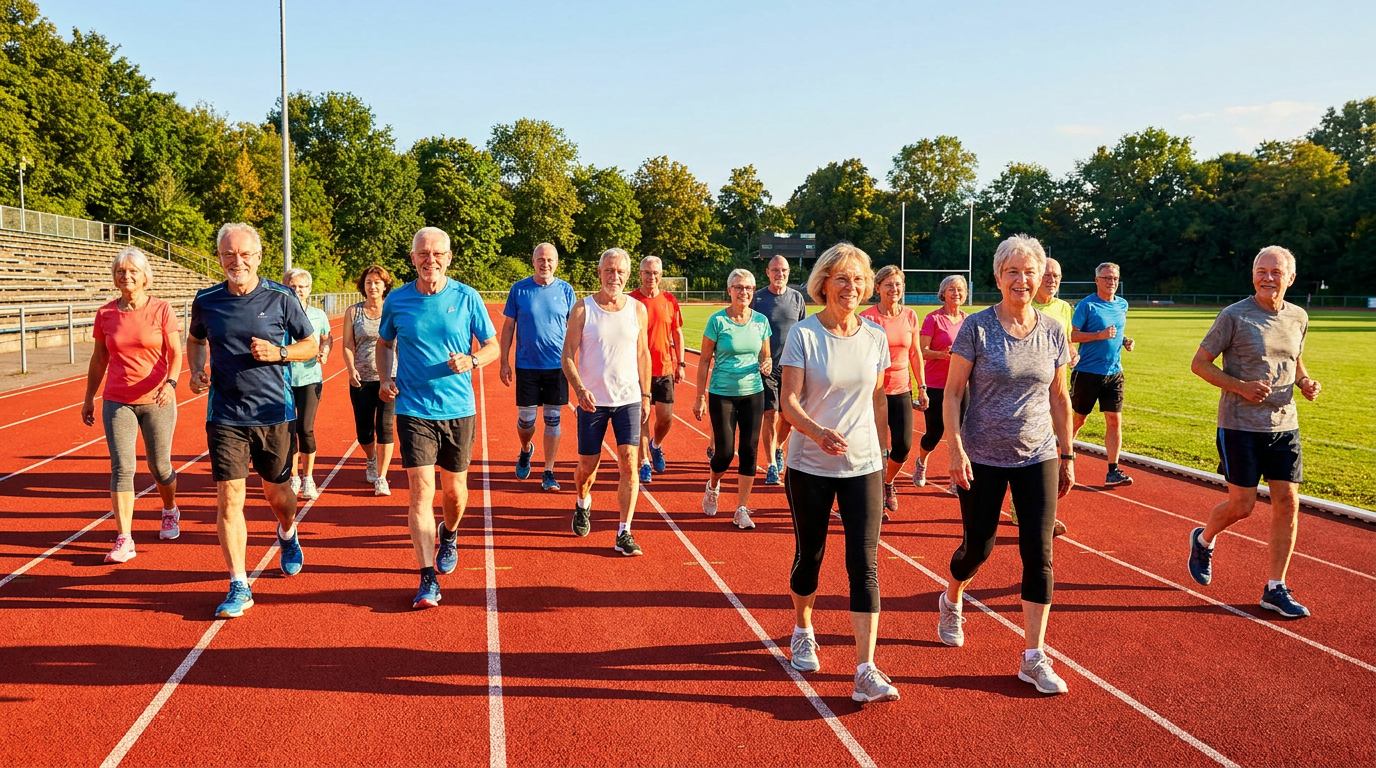
The quest for longevity has historically focused on extending the absolute number of years lived, often searching for pharmaceutical silver bullets or extreme dietary interventions. But modern geroscience has decisively pivoted. The new frontier is "healthspan"—the period of life spent free from chronic disease, cognitive decline, and physical disability. Researchers and clinicians are increasingly aligning around a more empowering, actionable paradigm that places physical capacity at the center of the aging process.[1][5]
We are moving away from searching for a magic pill and toward quantifiable, modifiable physical biomarkers. Among the noise of supplements, cold plunges, and biohacks, two metrics stand head and shoulders above the rest in the clinical literature: VO2 max and skeletal muscle mass. These two pillars form the foundation of what some longevity experts call the "centenarian decathlon"—the physical requirements needed to thrive in the final decades of life.[1][5]
VO2 max is often considered the ultimate vital sign. It measures the maximum amount of oxygen your body can utilize during intense exercise, serving as a direct proxy for mitochondrial efficiency and cardiovascular health. The higher your VO2 max, the more efficiently your heart can pump blood and your muscles can extract oxygen to generate energy.[7]
The evidence supporting VO2 max as a longevity predictor is staggering. A landmark retrospective study published in JAMA Network Open, which analyzed over 120,000 patients, found that cardiorespiratory fitness is inversely associated with long-term mortality with no observed upper limit of benefit. In other words, when it comes to aerobic fitness, there is no point of diminishing returns for survival.[2]
To contextualize the data, researchers noted that the risk of dying from all causes was roughly 500 percent higher for those in the lowest performing fitness group compared to elite performers. This risk factor is comparable to, or even exceeds, the mortality risks associated with smoking, diabetes, and end-stage heart disease. Moving from the bottom 25 percent of fitness to the 50th percentile yields a massive reduction in mortality risk.[2][7]

Why is oxygen utilization so critical to aging? As we age, mitochondrial function naturally declines, leading to metabolic inflexibility. High cardiorespiratory fitness preserves the body's ability to switch seamlessly between burning fats and carbohydrates, a hallmark of metabolic health. This efficiency delays the onset of metabolic syndrome, type 2 diabetes, and even neurodegenerative diseases.[6]
If VO2 max is the engine of longevity, skeletal muscle is the chassis and the metabolic sink. Muscle is not merely a tissue for locomotion; it is the largest endocrine organ in the human body. It secretes myokines that regulate inflammation and plays a critical role in glucose disposal.[3]
The National Institutes of Health highlights that muscle mass is crucial for metabolic regulation. Roughly 80 percent of post-meal glucose is absorbed by skeletal muscle. When muscle mass declines—a condition known as sarcopenia, which typically begins in the 30s—insulin resistance and metabolic syndrome often follow in its wake.[3][6]
The National Institutes of Health highlights that muscle mass is crucial for metabolic regulation.
Beyond metabolism, muscle strength is the primary defense against the "frailty cascade." Falls are a leading cause of accidental death and loss of independence in adults over 65. Grip strength and leg power are direct predictors of a person's ability to survive a fall, or better yet, possess the balance and reactive force to avoid one entirely.[5]

The clinical evidence for resistance training is robust. A comprehensive meta-analysis in the British Journal of Sports Medicine found that just 30 to 60 minutes of muscle-strengthening activities per week is associated with a 10 to 17 percent reduction in all-cause mortality, cardiovascular disease, and cancer.[4]
The most profound longevity benefits occur when aerobic capacity and resistance training are combined. The same BMJ study noted that combining both modalities reduces all-cause mortality risk by up to 40 percent compared to doing neither. They are not mutually exclusive; they are synergistic systems that protect the body in different ways.[4]

A common and dangerous misconception is that these physical metrics are fixed by middle age, leading many to believe it is "too late" to start. However, clinical evidence consistently shows that skeletal muscle remains highly responsive to mechanical tension and resistance training well into a person's 80s and 90s. The body never loses its ability to adapt to a stimulus.[3]
To optimize VO2 max, sports scientists and longevity physicians recommend a polarized training model. This typically involves spending about 80 percent of exercise time at a low, conversational intensity—often called Zone 2—to build mitochondrial density. The remaining 20 percent is spent at very high intensity to push the upper limits of cardiac output.[1][7]
For preserving muscle mass, the focus shifts from pure aesthetics to functional strength. Heavy, compound movements that load the axial skeleton—such as squats, deadlifts, and loaded carries—are particularly effective. These movements not only build muscle tissue but also preserve bone mineral density, staving off osteoporosis.[4]

Despite the robust correlations, some uncertainty remains in the field. Causation is notoriously difficult to prove in longevity studies. Does a high VO2 max directly cause a longer life, or are naturally healthier, disease-free people simply more capable of achieving a high VO2 max? The consensus leans heavily toward the former, but the exact mechanisms are still being mapped.[1][5]
Furthermore, an individual's genetic baseline plays a significant role in how quickly they can improve their VO2 max or build muscle. "Non-responders" to certain standardized exercise protocols exist, highlighting the need for personalized longevity prescriptions rather than blanket public health advice.[5]
As the global population ages, shifting the medical paradigm from reactive disease treatment to proactive physical capacity building could alleviate immense strain on healthcare systems. Treating exercise as a prescribed, dosed intervention could fundamentally alter the trajectory of global aging.[1][5]
Ultimately, the evidence suggests that the most effective "anti-aging" interventions are not found in a syringe or a supplement bottle. They are found in the deliberate, consistent effort to build an aerobic base and maintain physical strength, ensuring that the final decades of life are characterized by vitality rather than decline.[1][2][3]
How we got here
1990s
Longevity research heavily focuses on caloric restriction and genetic manipulation in animal models.
2018
A landmark JAMA Network Open study of 120,000 patients firmly establishes cardiorespiratory fitness as a leading predictor of survival.
2022
The British Journal of Sports Medicine publishes meta-analyses quantifying the mortality benefits of resistance training.
2026
Optimizing 'healthspan' and functional physical capacity become central pillars in preventative clinical medicine.
Viewpoints in depth
Clinical Geroscience Researchers
View aging as a modifiable biological process driven by cellular decline.
This camp focuses on the cellular and molecular mechanisms of aging, such as mitochondrial dysfunction, cellular senescence, and genomic instability. They view metrics like VO2 max not just as fitness indicators, but as systemic biomarkers of how well a patient's cells are functioning. Their research aims to prove that by treating the underlying causes of aging through targeted exercise protocols, we can delay the onset of multiple age-related diseases simultaneously.
Sports Medicine Physicians
Advocate for the precise prescription of exercise as a medical intervention.
Sports medicine professionals emphasize the practical, clinical application of longevity science. They argue that doctors should prescribe specific 'doses' of exercise—such as 150 minutes of Zone 2 cardio and two sessions of heavy resistance training—just as they would prescribe a statin or blood pressure medication. They focus on overcoming patient non-compliance and tailoring training protocols to individual biomechanics to prevent injury while maximizing healthspan.
Public Health Advocates
Focus on population-level interventions and the accessibility of healthspan improvements.
Public health experts caution against the over-medicalization and commercialization of longevity, often critiquing expensive 'biohacking' trends. They argue that the most significant gains in global healthspan will come from urban design that encourages daily walking and cycling, community access to safe strength-training facilities, and public education that demystifies fitness. Their goal is to raise the baseline physical capacity of the entire population, rather than just optimizing the elite.
What we don't know
- The exact degree to which genetics dictate the ceiling of an individual's VO2 max improvements.
- Whether the extreme exercise volumes seen in elite endurance athletes offer diminishing returns or potential cardiac risks late in life.
- The precise molecular mechanisms by which mechanical tension on muscle fibers translates into systemic anti-aging benefits.
Key terms
- Healthspan
- The portion of a person's life during which they are generally in good health, free from serious chronic diseases or disabilities.
- VO2 Max
- The maximum rate at which the heart, lungs, and muscles can effectively use oxygen during intense exercise.
- Sarcopenia
- The age-related, involuntary loss of skeletal muscle mass and strength.
- Mitochondrial Efficiency
- The ability of the cells' powerhouses to generate energy, which naturally declines with age but can be preserved through exercise.
- Metabolic Flexibility
- The body's ability to efficiently switch between burning carbohydrates and fats for fuel.
Frequently asked
Is it ever too late to start building muscle?
No. Clinical studies consistently show that individuals in their 80s and 90s can still significantly increase muscle mass and strength through progressive resistance training.
How much resistance training is needed for longevity benefits?
Research indicates that just 30 to 60 minutes of muscle-strengthening activities per week provides substantial reductions in all-cause mortality.
What is the best way to improve VO2 max?
Sports scientists recommend a combination of high-volume, low-intensity 'Zone 2' cardio to build an aerobic base, supplemented with shorter sessions of high-intensity interval training (HIIT).
Sources
Source coverage
7 outlets
3 viewpoints surfaced




[1]Factlen Editorial TeamPublic Health Advocates
Synthesis by Factlen editorial team
Read on Factlen Editorial Team →[2]JAMA Network OpenClinical Geroscience Researchers
Association of Cardiorespiratory Fitness With Long-term Mortality Among Adults Undergoing Exercise Treadmill Testing
Read on JAMA Network Open →[3]National Institutes of HealthPublic Health Advocates
Skeletal Muscle Mass and Architecture in Adult Longevity
Read on National Institutes of Health →[4]British Journal of Sports MedicineSports Medicine Physicians
Muscle-strengthening activities and risk of cardiovascular disease, type 2 diabetes, cancer and mortality
Read on British Journal of Sports Medicine →[5]The Lancet Healthy LongevityClinical Geroscience Researchers
Biomarkers of healthy ageing and functional decline
Read on The Lancet Healthy Longevity →[6]Cell MetabolismClinical Geroscience Researchers
Metabolic flexibility in health and disease
Read on Cell Metabolism →[7]American Heart AssociationSports Medicine Physicians
Cardiorespiratory Fitness as a Quantitative Predictor of All-Cause Mortality
Read on American Heart Association →

More in health
See all 7 stories →Nutritional Psychiatry
Nutritional Psychiatry: How the Gut Microbiome Shapes Mental Health
6 sources
Paternal Health
How Fatherhood Rewires the Brain: The New Science of Paternal Neuroplasticity
6 sources

Menstrual Health
Why Millions Are Buying the Wrong Pain Relief for Period Cramps
8 sources

Paternal Neuroscience
The Paternal Brain: How Fatherhood Physically Rewires Men's Minds
6 sources
Every angle. Every day.
Get health stories with full source coverage and perspective breakdowns delivered to your inbox.