
US and Iran Open Direct Peace Talks in Switzerland Amid Renewed Strait of Hormuz Blockade
Vice President JD Vance and Iranian officials have begun high-level negotiations to secure a regional ceasefire, even as President Trump threatens military strikes over Iran's closure of a critical shipping lane.
By Factlen Editorial Team
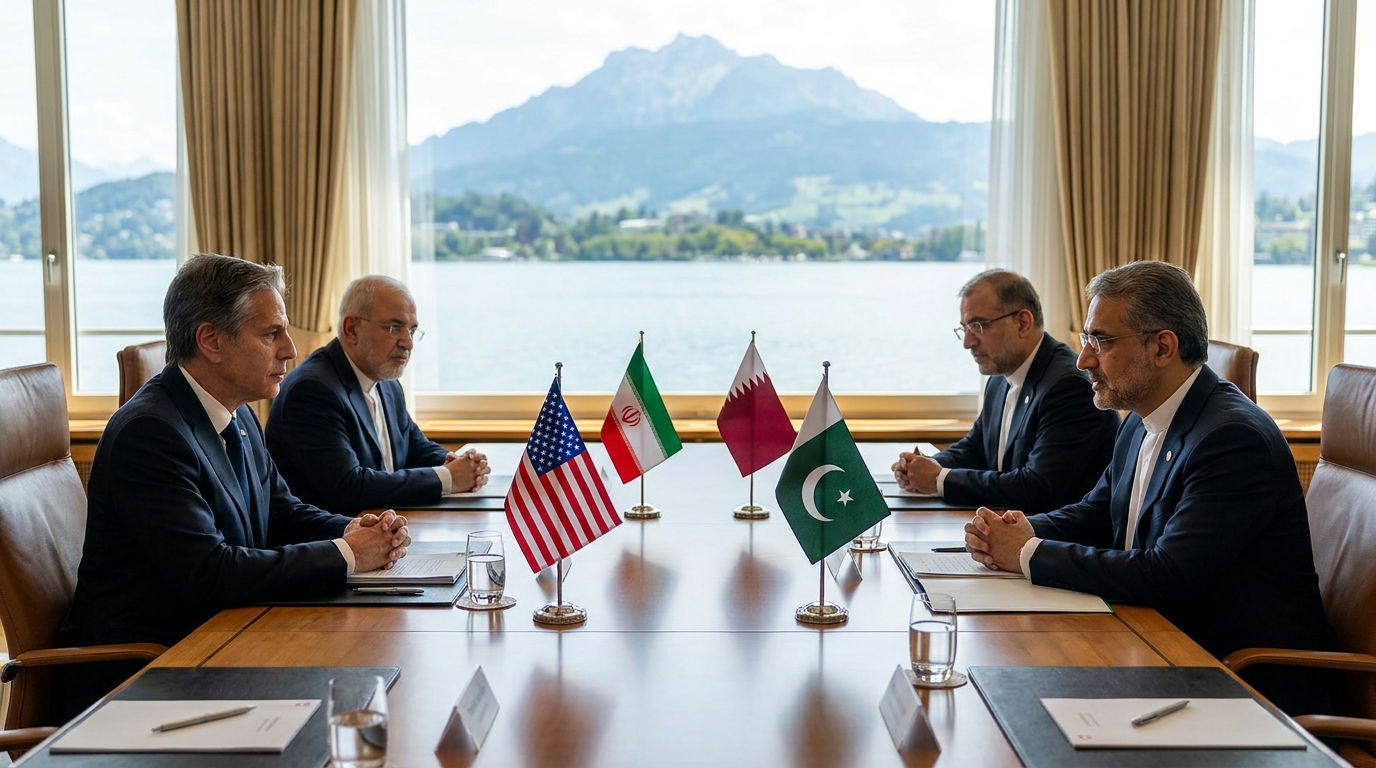
- US Negotiators & Mediators
- Focus on the diplomatic opportunity at the Lake Lucerne Summit to secure a nuclear deal and regional ceasefire.
- Iranian Delegation
- Focus on unfreezing assets, demanding an end to Israeli strikes in Lebanon, and leveraging the Strait of Hormuz closure.
- US Hawkish Wing
- Advocates for threatening military force and demanding an immediate cessation of proxy activities.
- Global Trade & Energy Sectors
- Focused on the severe economic fallout of the Strait of Hormuz blockade and soaring oil prices.
What's not represented
- · Lebanese Civilians
- · European Energy Consumers
Why this matters
The outcome of these talks will directly determine whether the global economy faces a prolonged energy crisis. With 20 percent of the world's oil supply choked off by the Strait of Hormuz blockade, failure to reach a diplomatic agreement could trigger massive spikes in fuel prices and consumer inflation.
Key points
- Vice President JD Vance and Iranian officials have opened direct peace talks in Switzerland to negotiate a 60-day nuclear framework.
- President Trump threatened to resume military strikes if Iran does not reopen the Strait of Hormuz and stop proxy attacks in Lebanon.
- Iran's Revolutionary Guard announced the renewed closure of the Strait of Hormuz, which handles 20 percent of global seaborne oil.
- The diplomatic summit is being mediated by the Prime Ministers of Qatar and Pakistan.
The United States and Iran have opened their first direct, high-level peace talks in months, even as military threats and a renewed blockade of the world's most critical oil chokepoint threaten to derail the fragile diplomatic effort. Vice President JD Vance arrived at the Bürgenstock resort in Switzerland on Sunday, expressing hope that Washington and Tehran could "turn over a new leaf" in their historically adversarial relationship.[1][4][5]
But the diplomatic optimism inside the Lake Lucerne Summit contrasted sharply with the rhetoric emanating from Washington. President Donald Trump issued a stark warning online, threatening to resume military strikes against Iran if Tehran did not immediately rein in its proxy forces in Lebanon and reopen the Strait of Hormuz to commercial shipping.[1][5]
The Iranian delegation, led by Parliament Speaker Mohammad Bagher Ghalibaf and Foreign Minister Abbas Araghchi, publicly dismissed the threats. Ghalibaf warned that the United States should "be careful with their statements," asserting that Tehran would not be intimidated by American posturing as the talks entered a highly sensitive phase.[4][5]
The backdrop to the summit is a rapidly escalating economic crisis. Over the weekend, Iran's Islamic Revolutionary Guard Corps announced it was once again closing the Strait of Hormuz, accusing Israel of violating ceasefire terms with intensified strikes in Lebanon.[3]

The closure of the 21-mile-wide waterway has sent shockwaves through global energy and freight markets. Approximately 20 percent of the world's seaborne crude oil and liquefied natural gas passes through the strait. Shipping analytics firms report that transits have plummeted, leaving thousands of mariners stranded and forcing major carriers to reroute vessels around the Cape of Good Hope.[3][7]
The closure of the 21-mile-wide waterway has sent shockwaves through global energy and freight markets.
Mediated by Qatari Prime Minister Mohammed Abdulrahman Al Thani and Pakistani Prime Minister Shehbaz Sharif, the Swiss talks are designed to establish a 60-day framework. The primary objectives are to solidify a permanent end to the US-Israel war on Iran that began in February and to impose strict new limits on Tehran's nuclear program.[4][5][6]
The current crisis stems from the unprecedented escalation on February 28, 2026, when coordinated US and Israeli airstrikes targeted Iranian military and nuclear facilities, resulting in the death of Supreme Leader Ali Khamenei. The ensuing conflict saw Iranian missile barrages on US bases and the initial shutdown of Middle Eastern shipping lanes.[7]

Beyond the immediate military posturing, negotiators face immense technical hurdles. A major sticking point is the fate of billions of dollars in frozen Iranian assets. Tehran is demanding immediate access to the funds as a precondition for broader concessions, while US negotiators are seeking ironclad guarantees regarding Iran's nuclear enrichment activities.[2]
The summit also highlights a complex dynamic within the US administration. While Vance, alongside special envoys Jared Kushner and Steve Witkoff, attempts to forge a historic diplomatic breakthrough at the negotiating table, Trump is maintaining a maximum-pressure public stance, using the threat of overwhelming military force as leverage.[1][3][5]

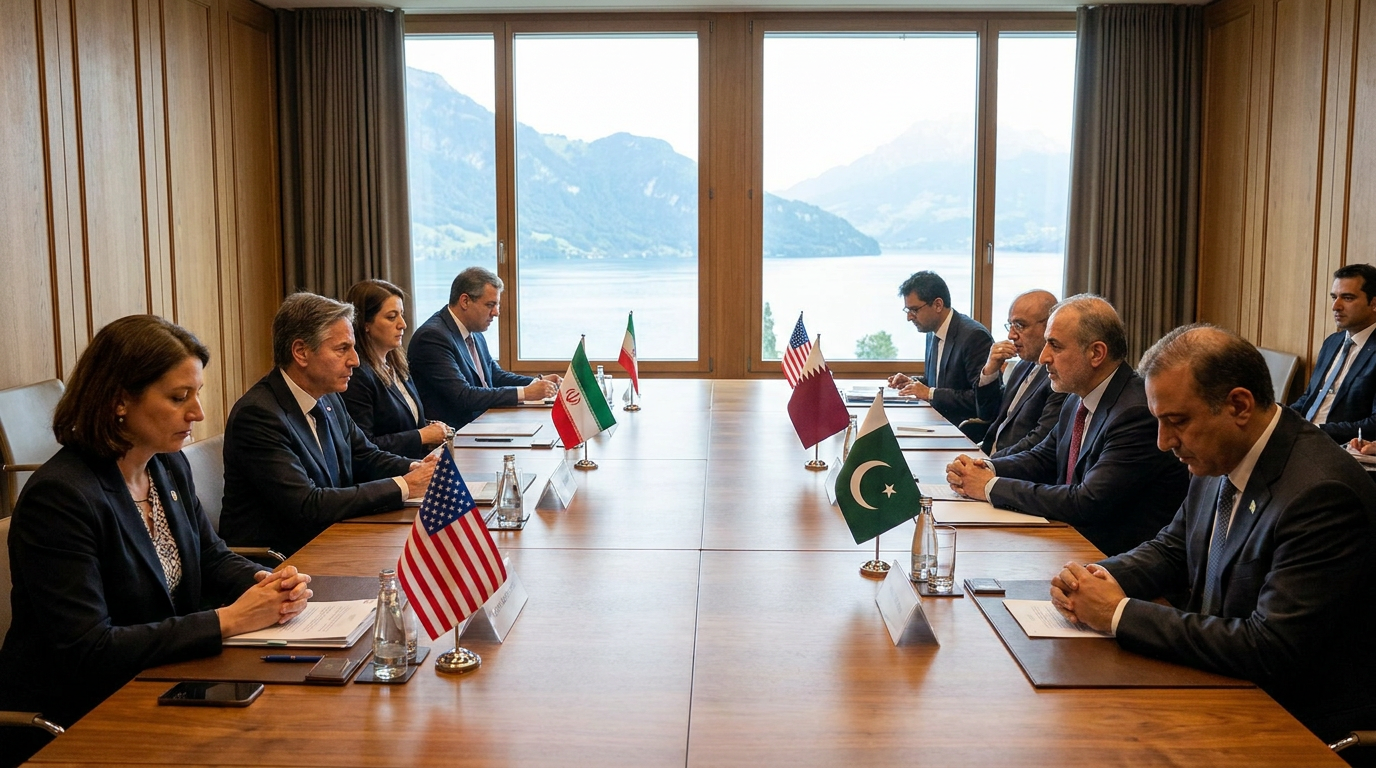
The two sides sat for an initial 80-minute direct session on Sunday, a rare face-to-face encounter that mediators hope will yield a tangible roadmap. However, with oil prices highly volatile and the Strait of Hormuz effectively paralyzed, the window to prevent a wider regional conflagration remains perilously narrow.[3][4]
How we got here
Feb 28, 2026
US and Israeli forces launch coordinated strikes on Iran, resulting in the death of Supreme Leader Ali Khamenei and triggering the initial shipping crisis.
April 2026
A fragile ceasefire is established following talks in Islamabad, temporarily easing regional tensions.
June 20, 2026
Iran announces the renewed closure of the Strait of Hormuz in retaliation for Israeli military strikes in Lebanon.
June 21, 2026
Direct US-Iran peace talks begin at the Lake Lucerne Summit in Switzerland.
Viewpoints in depth
The US Diplomatic Strategy
The negotiating team views the summit as a rare window to secure long-term nuclear limits and regional stability.
Vice President JD Vance and the US delegation are operating on the premise that a 60-day framework can fundamentally alter the Middle East's security architecture. By engaging directly with Iranian officials, they hope to lock in verifiable constraints on Tehran's nuclear program and establish a durable ceasefire. This camp argues that despite the hostile rhetoric, the economic toll of the war has created genuine leverage to 'turn over a new leaf' and avoid a perpetual cycle of military escalation.
Iran's Leverage Play
Tehran is using its control over global shipping lanes to force concessions on frozen assets and regional military posture.
For the Iranian delegation, the renewed closure of the Strait of Hormuz is a calculated pressure tactic. Iranian officials argue that they cannot be expected to make nuclear concessions while Israeli strikes continue against their allies in Lebanon. By choking off 20 percent of the world's oil supply, Tehran aims to inflict enough economic pain on Western markets to force the unfreezing of billions in sanctioned assets and compel the US to restrain Israeli military operations.
The Maximum Pressure Wing
Hawkish voices, led by President Trump, believe only the credible threat of overwhelming force will yield results.
Contrasting with the diplomatic overtures in Switzerland, President Trump and allied defense hawks maintain that Iran only responds to strength. This perspective views the Strait of Hormuz blockade not as a negotiating tactic to be accommodated, but as an act of economic terrorism that must be met with military ultimatums. They argue that offering sanctions relief or unfreezing assets before Iran completely halts its proxy activities in Lebanon will only fund further regional instability.
What we don't know
- Whether the US administration's dual approach of diplomatic engagement and military threats will force concessions or trigger further escalation.
- How long global shipping companies can sustain the costly rerouting of vessels around the Cape of Good Hope.
- If Israel will agree to halt its strikes in Lebanon, which Iran has cited as the primary reason for closing the Strait of Hormuz.
Key terms
- Strait of Hormuz
- A narrow 21-mile-wide waterway between Iran and Oman that serves as the primary exit route for Middle Eastern oil.
- Lake Lucerne Summit
- The Swiss-hosted diplomatic negotiations aimed at securing a 60-day framework for US-Iran peace and nuclear limits.
- Cape of Good Hope route
- An extended shipping detour around the southern tip of Africa used by vessels avoiding the blocked Middle Eastern waterways.
Frequently asked
Why did Iran close the Strait of Hormuz again?
Iran's Islamic Revolutionary Guard Corps announced the closure in retaliation for recent Israeli military strikes against Hezbollah in Lebanon.
Who is representing the US at the talks?
Vice President JD Vance is leading the delegation, accompanied by special envoys Jared Kushner and Steve Witkoff.
How is this affecting global oil prices?
The blockade has caused massive disruptions, with Brent crude oil prices previously surging past $126 per barrel and global shipping rates skyrocketing.
Sources
Source coverage
7 outlets
4 viewpoints surfaced







[1]The GuardianUS Hawkish Wing
Trump news at a glance: President threatens to restart attacks on Iran even as Vance cites progress in talks
Read on The Guardian →[2]Fox NewsUS Hawkish Wing
Major dispute to threaten Trump's Iran deal over billions in frozen Tehran funds: expert
Read on Fox News →[3]Al JazeeraIranian Delegation
Shipping stalls in Strait of Hormuz after Iran declares key waterway shut
Read on Al Jazeera →[4]The Washington PostUS Negotiators & Mediators
JD Vance holds peace talks with Iran as Trump threatens strikes over Hormuz
Read on The Washington Post →[5]Channel News AsiaUS Negotiators & Mediators
Vance hopes US, Iran can turn the page at 'historic' talks
Read on Channel News Asia →[6]AxiosUS Negotiators & Mediators
US, Iran start talks on peace deal in Switzerland
Read on Axios →[7]Project44Global Trade & Energy Sectors
Diversions around the Strait of Hormuz surge
Read on Project44 →
More in news politics
See all 5 stories →US-Iran Talks
US and Iran Agree to 60-Day Roadmap for Final Deal After Tense Switzerland Talks
7 sources
Diplomatic Roadmap
US and Iran Agree to 60-Day Roadmap for Final Peace Deal Following Tense Switzerland Talks
8 sources
US-Iran Talks
US and Iran Agree to 60-Day Roadmap for Final Deal After Tense Opening in Switzerland
8 sources
Every angle. Every day.
Get news politics stories with full source coverage and perspective breakdowns delivered to your inbox.