
US and Iran Agree to 60-Day Roadmap to Cement Ceasefire in High-Stakes Swiss Talks
Following a tense opening round of negotiations in Switzerland, the US and Iran have established a 60-day roadmap to finalize a peace agreement, backed by a new de-confliction mechanism for Lebanon and the Strait of Hormuz.
By Factlen Editorial Team
- US Administration
- Prioritizes immediate de-escalation, maritime security, and capping Iran's nuclear capabilities.
- Iranian Government
- Frames the roadmap as a victory that secures vital economic relief and international recognition.
- Iranian Opposition
- Criticizes the agreement for abandoning human rights and strengthening the Islamic Republic.
- Mediating Nations
- Focuses on regional stability and the institutionalization of diplomatic channels.
Why this matters
If successful, this 60-day roadmap will formally end the brief but highly disruptive 2026 military conflict between the US and Iran, stabilizing global energy markets and halting the proxy war in Lebanon. If it fails, both sides have threatened an immediate return to direct military strikes.
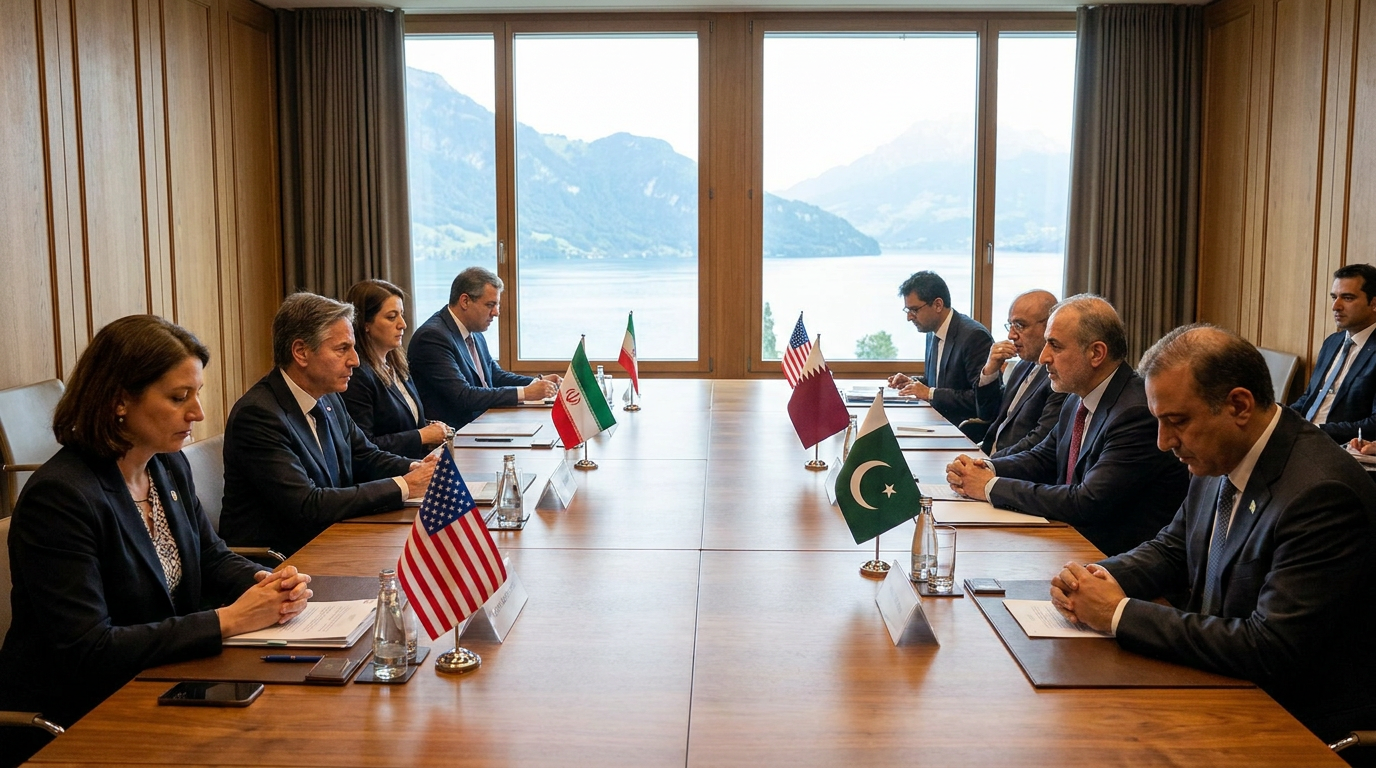
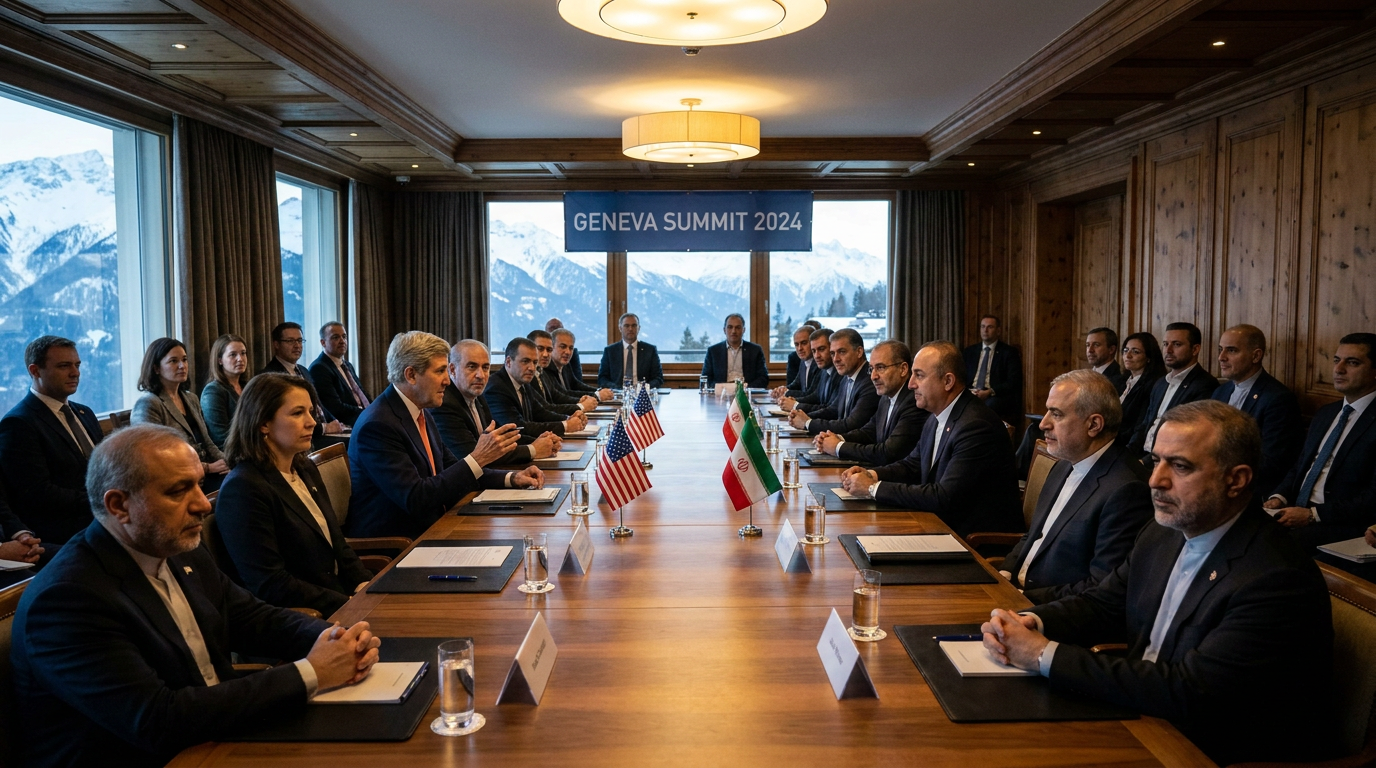
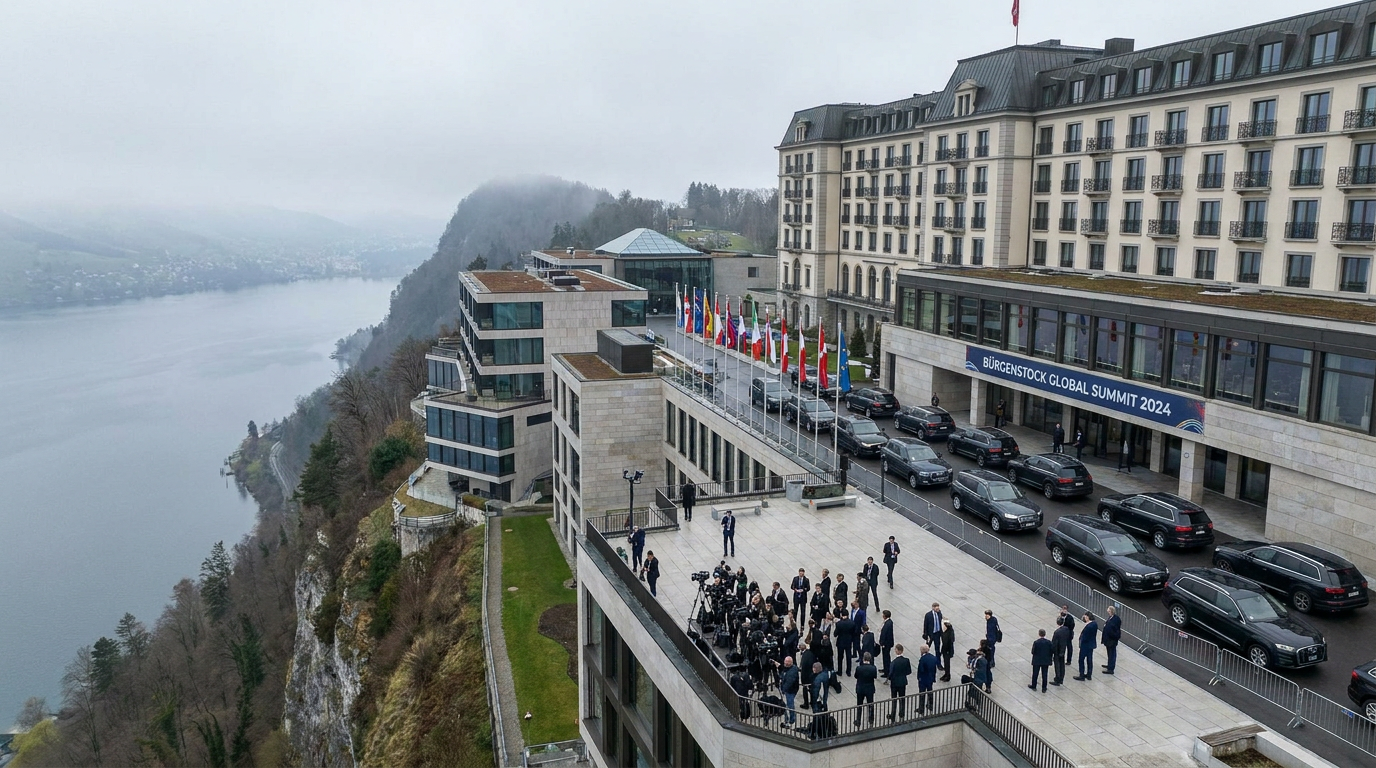
After nearly 18 hours of high-stakes diplomacy at the Bürgenstock resort overlooking Lake Lucerne, the United States and Iran have agreed to a 60-day roadmap aimed at converting a fragile ceasefire into a permanent peace agreement. The talks, mediated heavily by Qatar and Pakistan, represent the first direct implementation of the Memorandum of Understanding (MOU) signed by Washington and Tehran last week.[4][5][7]
The negotiations mark a critical pivot point in the Middle East following the outbreak of direct military hostilities earlier in 2026. The US delegation, led by Vice President JD Vance and Special Envoy Steve Witkoff, met with an Iranian team headed by Foreign Minister Abbas Araghchi and Parliament Speaker Mohammad Bagher Ghalibaf. Despite deep mutual distrust, mediators confirmed that the initial round concluded in a "positive and constructive atmosphere."[2][3][5]
However, the diplomatic breakthrough almost collapsed before it began. Just as the delegations arrived in Switzerland, US President Donald Trump issued a stark threat on social media, warning that the US would "hit Iran very hard again" if Tehran did not immediately stop its proxy forces in Lebanon from "causing trouble." The rhetoric prompted the Iranian delegation to temporarily refuse to enter the negotiating room with the media present, forcing Qatari and Pakistani officials into an urgent round of shuttle diplomacy to keep the summit alive.[1][4]
The core achievement of the Bürgenstock summit is the establishment of two immediate, technical mechanisms designed to prevent accidental escalation while the broader 60-day negotiations proceed. The first is a "de-confliction cell" focused entirely on Lebanon. Fighting between Israel and Iran-backed Hezbollah has repeatedly threatened to derail the broader US-Iran ceasefire. By integrating the Lebanese government into this cell, Washington and Tehran hope to ensure strict adherence to the termination of military operations on the ground.[1][2][6]

Iranian Foreign Minister Abbas Araghchi publicly identified the Lebanon de-confliction cell as the "first real test" of the new diplomatic framework. If the mechanism holds, it will provide the necessary geopolitical quiet for technical teams to tackle the far more complex issues of nuclear enrichment and long-term sanctions relief.[1][6]
Iranian Foreign Minister Abbas Araghchi publicly identified the Lebanon de-confliction cell as the "first real test" of the new diplomatic framework.
The second mechanism is a direct "communication line" established to secure the Strait of Hormuz. Following the military strikes earlier this year, Iran had briefly reinstated a blockade on the vital maritime chokepoint, sending shockwaves through global energy markets. The new communication channel is designed to prevent maritime incidents and guarantee the safe passage of commercial shipping, a critical priority for the US and its European allies.[1][5]
In exchange for these security guarantees, Iran is already seeing tangible economic relief. Araghchi confirmed that waivers for Iranian oil and petrochemical exports have been granted, and certain frozen assets are being released. Independent tracking data from TankerTrackers indicates that Iran exported roughly 36 million barrels of oil in the six days following the initial MOU, signaling a rapid relaxation of the US "maximum pressure" enforcement.[5][6]

While the immediate security and economic mechanisms are now in place, the 60-day roadmap leaves the most intractable issue—Iran's nuclear program—for the technical working groups. Vice President Vance stated that the US negotiating team will use the two-month window to seek a comprehensive agreement that permanently caps Tehran's highly enriched uranium stockpile. The MOU requires Iran to dilute its existing stockpile, but Tehran's long-term right to enrich uranium for civilian purposes remains a fiercely contested unresolved issue.[1][2]
Beyond the geopolitical chess match, the MOU has sparked intense domestic controversy, particularly among the Iranian diaspora and opposition groups. Paragraph 2 of the agreement reportedly commits both the US and Iran to "refrain from interfering in each other's internal affairs." For years, the US administration had actively encouraged Iranian protesters to push for regime change, with President Trump frequently expressing solidarity with anti-government demonstrations.[5]
Critics argue that the non-interference clause effectively abandons the Iranian opposition in exchange for regional stability. Analysts note that the agreement provides the Islamic Republic with significant economic lifelines and diplomatic legitimacy at a time when it faced severe internal pressure. The Iranian government, conversely, has framed the diplomatic progress as a victory for national dignity, with Araghchi describing the negotiations as part of a broader struggle to defend the Iranian people.[5][6]

The role of Qatar and Pakistan in brokering the deal cannot be overstated. Both nations have leveraged their unique relationships with Washington and Tehran to bridge seemingly insurmountable gaps. The Swiss government, acting as the formal facilitator, provided the secure environment necessary for the high-level delegations to meet face-to-face, underscoring Switzerland's historic role as a neutral diplomatic hub.[4][7]
As the high-level officials depart Bürgenstock, lower-ranked technical teams will remain in Switzerland for the rest of the week to operationalize the de-confliction cell and the maritime communication line. The clock on the 60-day roadmap is now ticking. Both sides have demonstrated a willingness to step back from the brink of a wider war, but the path to a final, comprehensive deal remains littered with political landmines in Washington, Tehran, and across the Middle East.[1][2][4]
Viewpoints in depth
US Administration's view
Focuses on immediate de-escalation, maritime security, and capping Iran's nuclear capabilities.
For the US delegation, the primary objective is to permanently halt the cycle of direct military strikes that erupted earlier in the year. By securing the Strait of Hormuz and establishing a de-confliction cell for Lebanon, Washington aims to stabilize global energy markets and protect its regional allies. The administration views the 60-day window as a necessary cooling-off period to force Iran into binding commitments regarding its highly enriched uranium stockpile, prioritizing hard security over regime change.
Iranian Government's view
Frames the roadmap as a victory that secures vital economic relief and international recognition.
Tehran views the Bürgenstock talks as a successful leverage of its regional influence. By demonstrating its capacity to disrupt the Strait of Hormuz and project power through Hezbollah, Iran forced the US to the negotiating table on more favorable terms. The immediate lifting of oil export bans and the release of frozen assets are seen as critical victories that will stabilize the domestic economy. Furthermore, the non-interference clause is viewed as a major diplomatic win that delegitimizes foreign support for domestic opposition.
Iranian Opposition's view
Criticizes the agreement for abandoning human rights and strengthening the Islamic Republic.
Iranian diaspora groups and domestic critics argue that the Memorandum of Understanding is a betrayal of the Iranian people. They point specifically to the mutual non-interference clause, which they interpret as Washington formally withdrawing its rhetorical and political support for anti-government protesters. Critics argue that the influx of oil revenue and un-frozen assets will be used to strengthen the state's security apparatus rather than benefit the civilian population, effectively entrenching the current government.
The Mediators' view
Qatar and Pakistan prioritize regional stability and the institutionalization of diplomatic channels.
For Doha and Islamabad, the successful facilitation of the talks elevates their status as indispensable geopolitical brokers. Both nations are highly vulnerable to a wider Middle Eastern war—Qatar due to its shared gas fields with Iran and reliance on the Strait of Hormuz, and Pakistan due to its shared border and complex sectarian dynamics. Their primary goal is to institutionalize communication between Washington and Tehran, ensuring that future crises are managed through diplomatic cells rather than military escalation.
What we don't know
- Whether the Lebanon de-confliction cell can actually restrain Hezbollah and Israeli forces on the ground.
- If Iran will agree to permanently dilute its stockpile of highly enriched uranium during the 60-day window.
- How the US administration will balance the non-interference clause with domestic political pressure to support Iranian human rights.
Sources
Source coverage
7 outlets
4 viewpoints surfaced





[1]The GuardianUS Administration
Iran hails ‘progress’ as first day of talks with US conclude after shaky start
Read on The Guardian →[2]The HinduMediating Nations
Iran and U.S. agree on roadmap towards final deal within 60 days, say mediators
Read on The Hindu →[3]Al JazeeraIranian Government
‘Encouraging progress’ made as first round US-Iran talks end
Read on Al Jazeera →[4]Channel News AsiaUS Administration
US and Iran conclude high-level talks in Switzerland, mediators say
Read on Channel News Asia →[5]Iran InternationalIranian Opposition
Qatar and Pakistan cite 'encouraging progress' after US-Iran talks
Read on Iran International →[6]Yeni SafakIranian Government
Iranian FM cites 'major progress' in US talks on Lebanon, sanctions relief
Read on Yeni Safak →[7]Swiss FDFAMediating Nations
Switzerland provides a discreet and reliable setting to facilitate talks at Bürgenstock
Read on Swiss FDFA →
More in news politics
See all 6 stories →US-Iran Relations
US and Iran Agree to 60-Day Roadmap for Final Deal in Switzerland Talks
7 sources
Supreme Court
Supreme Court Unanimously Strikes Down Federal Gun Ban for Marijuana Users
9 sources
US-Iran Peace Deal
US and Iran Agree to 60-Day Roadmap in Switzerland Peace Talks
8 sources
Deepfake Defense
How Deepfake Detection and Digital Provenance Finally Caught Up to AI in 2026
6 sources

Every angle. Every day.
Get news politics stories with full source coverage and perspective breakdowns delivered to your inbox.