
US and Iran Agree to 60-Day Roadmap for Final Deal in Switzerland Talks
Following mediation by Qatar and Pakistan, US and Iranian delegations have established a framework to negotiate a final agreement on nuclear issues, sanctions, and regional conflicts within 60 days.
By Factlen Editorial Team
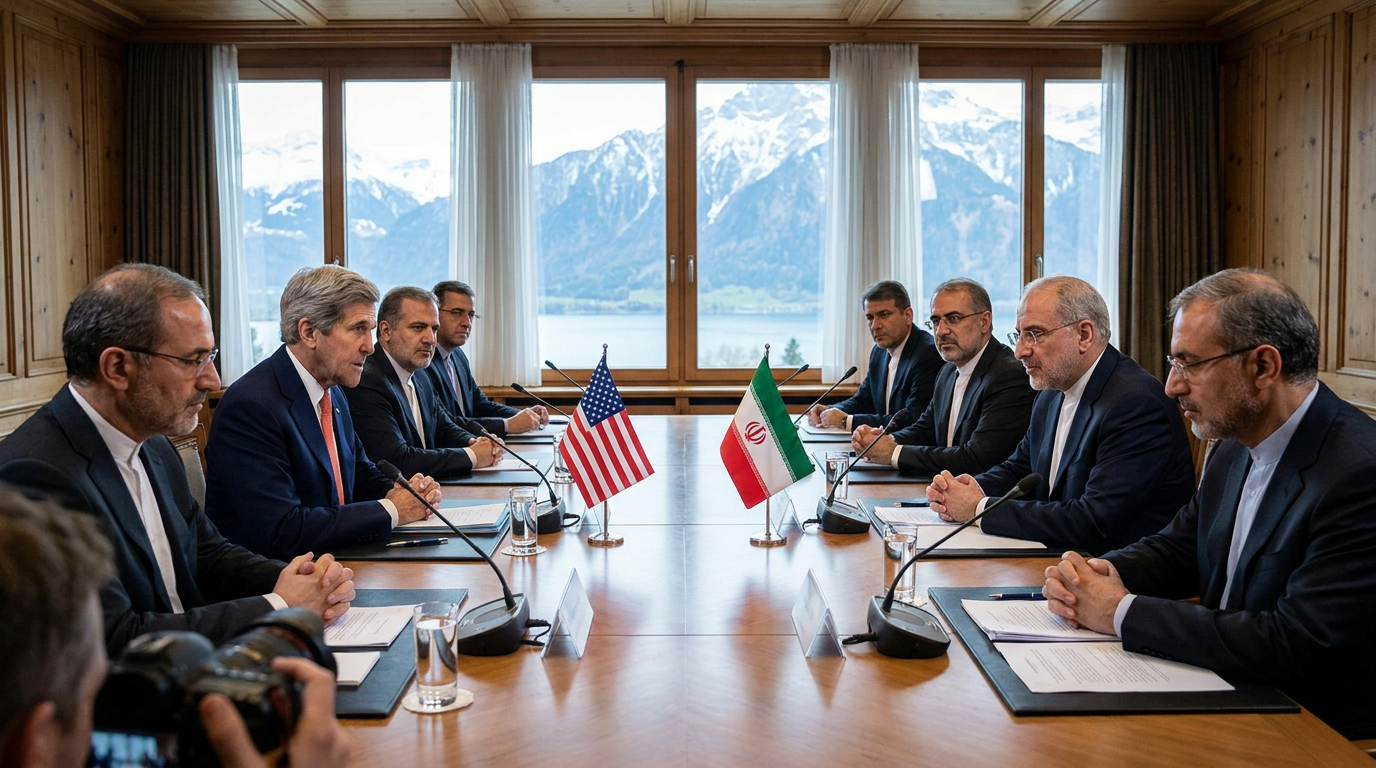
- US Administration & Allies
- Focuses on containing Iran's nuclear capabilities, securing the Strait of Hormuz, and halting support for proxy groups like Hezbollah.
- Iranian Leadership
- Prioritizes immediate sanctions relief, unfreezing of foreign assets, and maintaining regional deterrence against Israeli military actions.
- International Mediators
- Emphasizes the necessity of keeping diplomatic channels open to prevent a broader Middle Eastern war and stabilize global energy markets.
What's not represented
- · Lebanese Government
- · Israeli Leadership
- · European Union Observers
Why this matters
A successful 60-day roadmap could de-escalate multiple active conflicts in the Middle East, stabilize global oil prices by securing the Strait of Hormuz, and prevent a direct military confrontation between the U.S. and Iran. Conversely, a collapse of these fragile talks risks triggering a wider regional war.
Key points
- The US and Iran agreed to a 60-day roadmap to reach a final deal on nuclear and regional security issues.
- Qatar and Pakistan successfully mediated the talks after an early disruption caused by US threats.
- A de-confliction cell will be established to help terminate military operations in Lebanon.
- A direct communication line was formed to ensure safe commercial passage through the Strait of Hormuz.
In a significant diplomatic breakthrough aimed at averting a broader Middle Eastern conflict, the United States and Iran have agreed to a 60-day roadmap toward a comprehensive final deal. The agreement, brokered during high-level talks at the Bürgenstock resort in Switzerland, establishes a framework to address decades of hostility, nuclear proliferation concerns, and immediate regional flashpoints. Mediators from Qatar and Pakistan, who facilitated the negotiations, announced the consensus early Monday, signaling a fragile but tangible step away from military escalation.[1][2][4]
The summit brought together senior figures from both nations for a rare 100-minute direct session. The United States delegation was led by Vice President JD Vance, alongside special envoy Steve Witkoff and presidential adviser Jared Kushner. Iran’s negotiating team was headed by Parliament Speaker Mohammad Baqer Qalibaf and Foreign Minister Abbas Araghchi. The presence of such high-ranking officials underscored the gravity of the talks, which seek to build upon an initial memorandum of understanding signed earlier in the month in Islamabad.[3][4]
A central pillar of the new roadmap is the immediate establishment of specialized mechanisms to defuse active military zones. The parties agreed to create a "de-confliction cell" involving the Lebanese Republic, facilitated by the mediators, to ensure the termination of military operations in Lebanon. Additionally, a direct communication line has been formed to prevent miscalculations and guarantee the safe passage of commercial vessels through the heavily contested Strait of Hormuz, a critical artery for global energy supplies.[1][4]

Despite the eventual progress, the negotiations nearly collapsed before they began. The current round of talks got off to a rocky start when the Iranian delegation temporarily walked out of the venue. The abrupt departure was triggered by social media posts from U.S. President Donald Trump, who threatened to strike Iran "very hard again" if Tehran did not immediately rein in its heavily armed proxies in Lebanon.[1][5][7]
The crisis was averted through frantic shuttle diplomacy by Qatari Prime Minister Sheikh Mohammed bin Abdulrahman Al Thani and Pakistani Prime Minister Shehbaz Sharif. Mediators managed to keep the diplomatic track alive, convincing the Iranian representatives to continue trading messages even after they initially refused to return to the main negotiating room. This intervention ultimately salvaged the summit, allowing the high-level committee to formally adopt the 60-day timeline.[2][4][5]
The crisis was averted through frantic shuttle diplomacy by Qatari Prime Minister Sheikh Mohammed bin Abdulrahman Al Thani and Pakistani Prime Minister Shehbaz Sharif.
Beyond immediate regional de-escalation, the talks are heavily focused on Iran's nuclear program and the crippling economic sanctions imposed by Washington. Iranian officials have insisted that any progress on nuclear oversight must be met with tangible economic relief. Foreign Minister Araghchi indicated that Tehran is seeking specific waivers to permit oil and petrochemical exports, alongside the unfreezing of billions in foreign assets to fund a domestic reconstruction plan.[1][5]
On the nuclear front, the United States is demanding that Iran dilute its stockpile of highly enriched uranium and submit to rigorous monitoring. However, fundamental disagreements remain over Tehran’s long-term right to enrich uranium for civilian purposes. The newly formed high-level committee will provide political oversight over specialized working groups tasked with hammering out these deeply technical and historically intractable issues.[1][4][6]
The situation in Lebanon remains the most immediate threat to the fragile diplomatic process. While the U.S. and Iran have agreed to the de-confliction cell, neither Israel nor Hezbollah is a formal signatory to the Bürgenstock roadmap. Israeli leadership has previously vowed to maintain military pressure in southern Lebanon until all security threats are neutralized, complicating efforts to enforce a lasting ceasefire on the ground.[1][3]

For global markets, the establishment of the Strait of Hormuz communication line offers a temporary sigh of relief. Over the weekend, prior to the summit, Iran had threatened to reinstate a maritime blockade in response to what it viewed as U.S. failures to halt Israeli strikes. Ensuring the uninterrupted flow of commercial shipping through the strait is a paramount priority for the U.S. delegation and international energy consumers alike.[3][6]
Domestically, the U.S. administration faces intense scrutiny over the negotiations. Vice President Vance sought to project confidence, acknowledging that the diplomatic process is "always a little bit messy" but emphasizing the necessity of the talks. The administration must balance its "maximum pressure" rhetoric with the pragmatic need to secure a foreign policy victory and stabilize the Middle East.[1][3][7]
In Tehran, the Iranian leadership is navigating its own complex political landscape. Hardline factions within the government are deeply skeptical of American commitments, frequently citing past U.S. withdrawals from international agreements. Yet, the severe domestic economic crisis, exacerbated by years of stringent sanctions, has provided a powerful incentive for the Iranian delegation to secure immediate financial relief, even if it requires difficult compromises on regional influence.[5]

As the high-level officials depart Switzerland, the burden now shifts to the technical negotiators who will remain at the Bürgenstock resort for the rest of the week. These working groups have exactly 60 days to translate the broad political consensus into a binding, enforceable treaty. While mediators have praised the "encouraging progress," the path to a final deal remains fraught with geopolitical landmines, leaving the international community watching closely.[2][4][6]
How we got here
April 2026
A fragile initial ceasefire is brokered between the US and Iran to halt escalating regional strikes.
June 17, 2026
The Islamabad Memorandum of Understanding is signed, setting the stage for direct high-level negotiations.
June 21, 2026
High-level talks begin at the Bürgenstock resort in Switzerland, marred by a temporary Iranian walkout over US threats.
June 22, 2026
Mediators announce the successful adoption of a 60-day roadmap for a final deal, transitioning the summit to technical working groups.
Viewpoints in depth
US Administration & Allies
Focuses on the necessity of containing Iran's nuclear ambitions and halting its financial support for proxy militias.
The US delegation views the 60-day window as a strict probationary period. From Washington's perspective, any permanent sanctions relief or unfreezing of assets must be preceded by verifiable steps from Tehran to dilute its highly enriched uranium stockpile and cease military coordination with Hezbollah. The administration faces intense domestic pressure to project strength, leading to a dual strategy of engaging in technical diplomacy while publicly threatening military retaliation if Iran's proxies continue their operations.
Iranian Leadership
Demands immediate economic relief as a prerequisite for any concessions on their nuclear program or regional military posture.
Tehran approaches the negotiations with deep skepticism, frequently citing past U.S. withdrawals from international agreements as evidence of unreliability. Iranian officials argue that the crippling economic sanctions are an act of hostility that must be reversed immediately. They are specifically demanding waivers for oil exports and the release of frozen foreign assets to fund domestic reconstruction. For Iran, maintaining influence in Lebanon is seen as a vital deterrent against Israeli military actions, making the de-confliction cell a highly sensitive concession.
International Mediators
Views their role as essential to preventing a catastrophic regional war and stabilizing global energy markets.
Qatar and Pakistan emphasize the importance of incremental, technical progress over immediate grand bargains. They argue that maintaining open lines of communication—even a flawed or fragile diplomatic process—is vastly preferable to military escalation. By facilitating the de-confliction cell and the Strait of Hormuz communication line, the mediators aim to compartmentalize the most explosive regional flashpoints, buying time for the technical working groups to address the more intractable nuclear and economic disputes.
What we don't know
- Whether Israel and Hezbollah will respect the de-confliction cell established by the US and Iran.
- The specific technical concessions Iran is willing to make regarding its highly enriched uranium stockpile.
- If the US administration will grant the requested oil export waivers before the 60-day deadline expires.
Key terms
- De-confliction cell
- A dedicated communication and coordination group designed to prevent accidental military clashes between opposing forces in a shared area.
- Strait of Hormuz
- A narrow, strategically critical waterway between the Persian Gulf and the Gulf of Oman through which a significant portion of the world's oil supply passes.
- Highly enriched uranium
- Uranium that has been processed to increase the concentration of the U-235 isotope, which can be used for civilian nuclear power or, at higher levels, nuclear weapons.
Frequently asked
What is the 60-day roadmap?
It is a framework agreed upon by the US and Iran to negotiate a final deal covering nuclear oversight, sanctions relief, and regional security within two months.
Why did the Iranian delegation temporarily leave the talks?
The Iranian team walked out in protest after US President Donald Trump posted threats on social media to strike Iran over its support for Hezbollah.
How are Qatar and Pakistan involved?
Both nations are acting as official mediators, facilitating communication between the US and Iranian delegations and helping to draft the roadmap.
What was decided regarding the Strait of Hormuz?
The parties agreed to establish a direct communication line to prevent military miscalculations and ensure the safe passage of commercial vessels.
Sources
Source coverage
7 outlets
3 viewpoints surfaced





[1]The GuardianInternational Mediators
Iran hails 'progress' as first day of talks with US conclude after shaky start
Read on The Guardian →[2]Al JazeeraInternational Mediators
'Encouraging progress' made as first round US-Iran talks end
Read on Al Jazeera →[3]Channel News AsiaInternational Mediators
US and Iran conclude high-level talks in Switzerland, mediators say
Read on Channel News Asia →[4]Anadolu AgencyInternational Mediators
Qatar, Pakistan announce 'encouraging progress' in US-Iran talks at Switzerland summit
Read on Anadolu Agency →[5]Tasnim News AgencyIranian Leadership
Iranian Delegation Pauses Talks Following Insulting Message by US President
Read on Tasnim News Agency →[6]ReutersUS Administration & Allies
US and Iranian officials conclude first round of talks in Switzerland
Read on Reuters →[7]Fox NewsUS Administration & Allies
Trump threatens Iran over Hezbollah proxies as peace talks begin in Switzerland
Read on Fox News →

More in news politics
See all 5 stories →Middle East Diplomacy
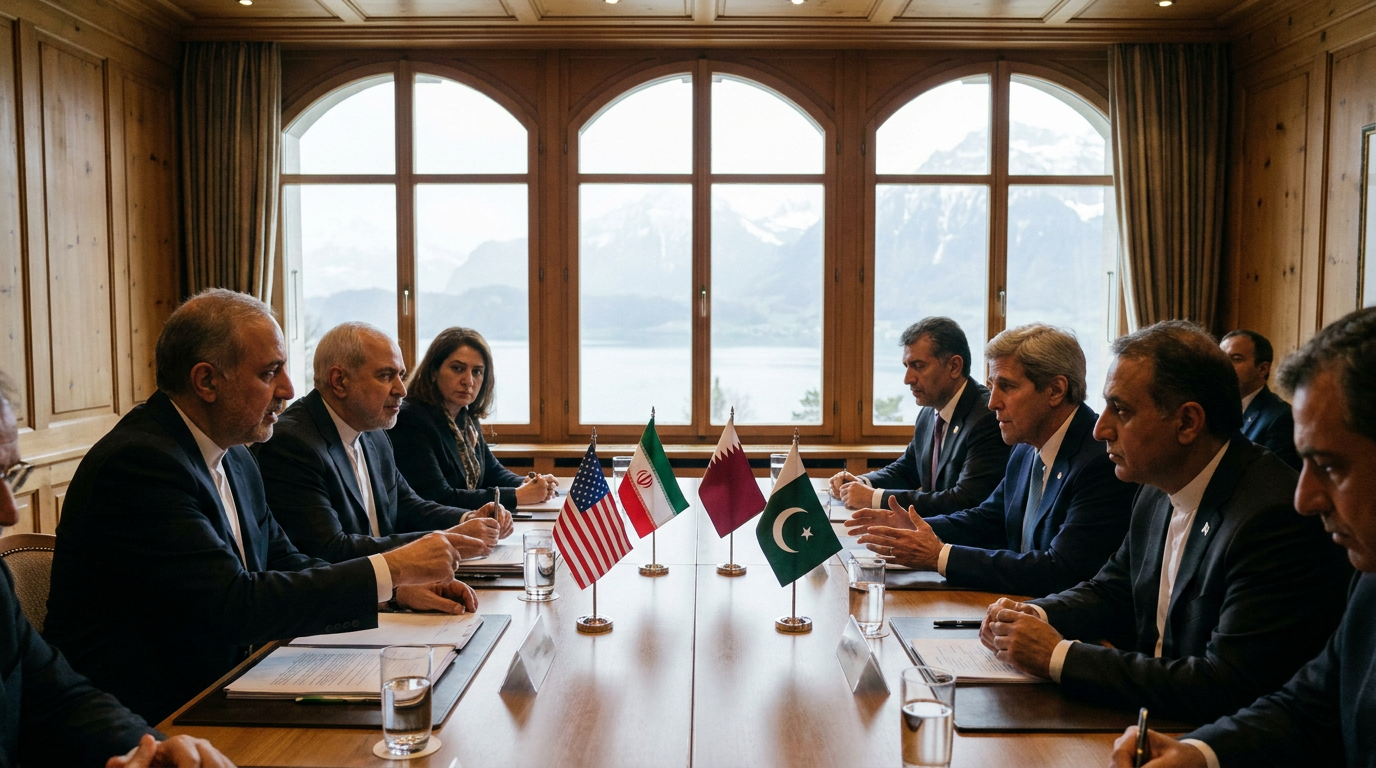
US and Iran Agree to 60-Day Roadmap in Swiss Talks Despite Tense Opening
6 sources
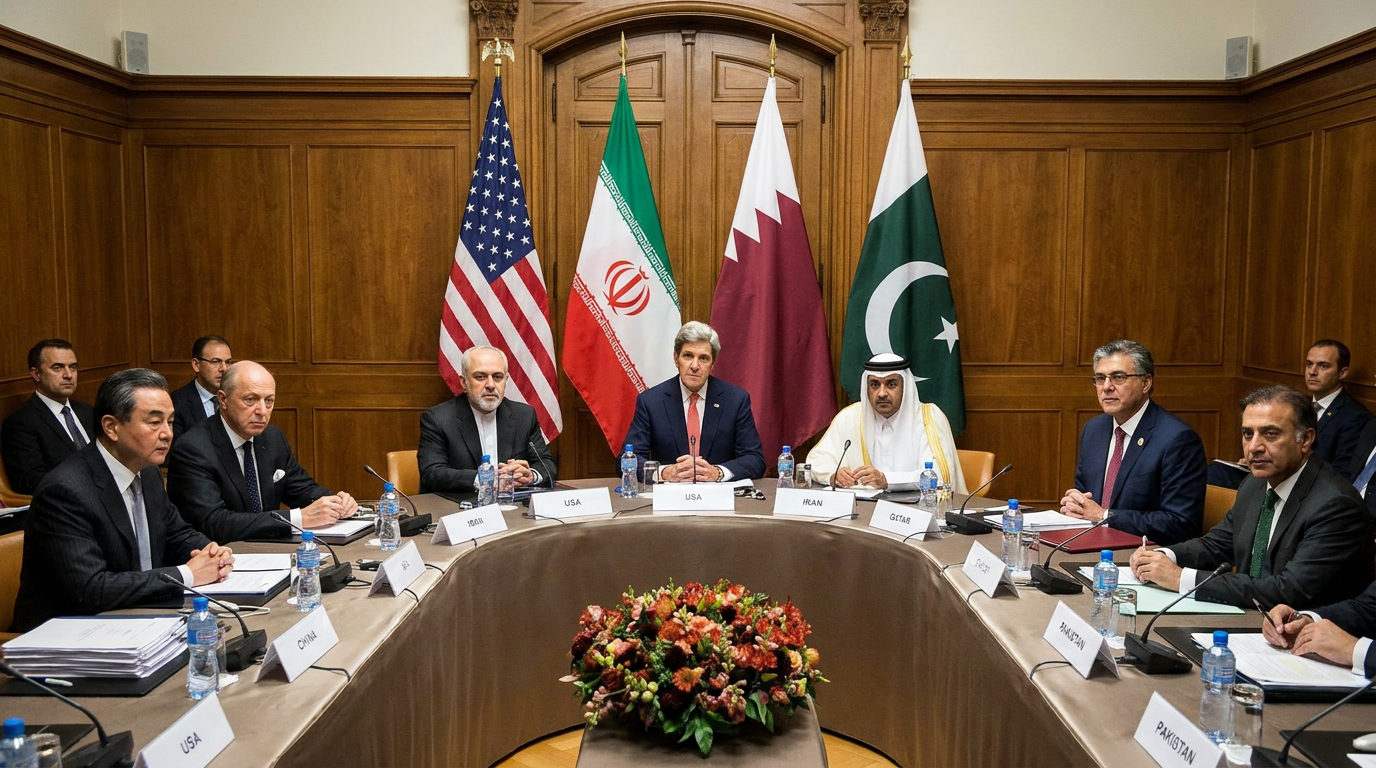
Middle East Peace
US and Iran Establish 60-Day Roadmap and De-confliction Mechanisms in Swiss Peace Talks
8 sources
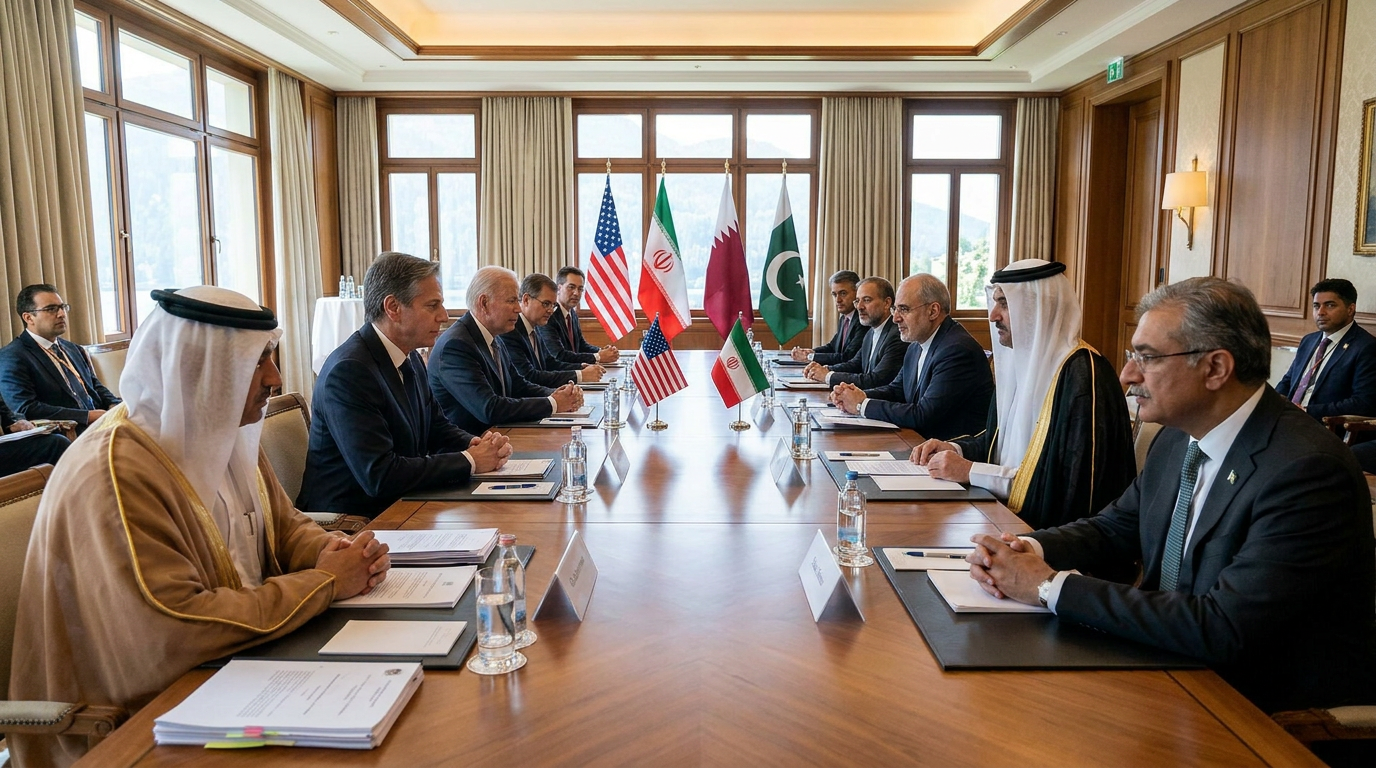
US-Iran Relations
US and Iran Agree to 60-Day Roadmap for Final Peace Deal Following Tense Switzerland Summit
7 sources
Every angle. Every day.
Get news politics stories with full source coverage and perspective breakdowns delivered to your inbox.