
Chile Recalibrates Its Green Hydrogen Strategy for a Pragmatic Energy Transition
Chile has updated its 2026–2030 National Green Hydrogen Strategy, shifting from aggressive export targets to a pragmatic focus on domestic industrial demand and infrastructure.
By Factlen Editorial Team
- Government & Policymakers
- Focus on establishing a long-term state policy to decarbonize domestic industries and position Chile as a future global clean energy supplier.
- Industry Skeptics & Analysts
- Emphasize the current technological bottlenecks, high production costs, and lack of infrastructure that make near-term export targets unrealistic.
- International Observers
- View Chile's transition as a critical test case and future investment hub for the global renewable energy market.
What's not represented
- · Local Indigenous communities near proposed mega-projects
- · Environmental NGOs concerned about water usage for electrolysis
Why this matters
As the world races to decarbonize heavy industry, Chile's policy pivot offers a realistic blueprint for how nations can transition from fossil fuels without destroying their economies. The success or failure of this recalibrated strategy will directly impact global supply chains for critical minerals like copper and lithium.
Key points
- Chile has officially updated its National Green Hydrogen Strategy for the 2026–2030 period, pivoting away from immediate export goals.
- The new roadmap prioritizes decarbonizing domestic heavy industries, particularly the copper and lithium mining sectors.
- Cost expectations have been adjusted to reflect market realities, abandoning the $1.50/kg target for a sub-$4/kg goal by 2030.
- Despite project delays, Chile's underlying renewable energy grid remains exceptionally strong, with renewables hitting 79% of generation in 2025.
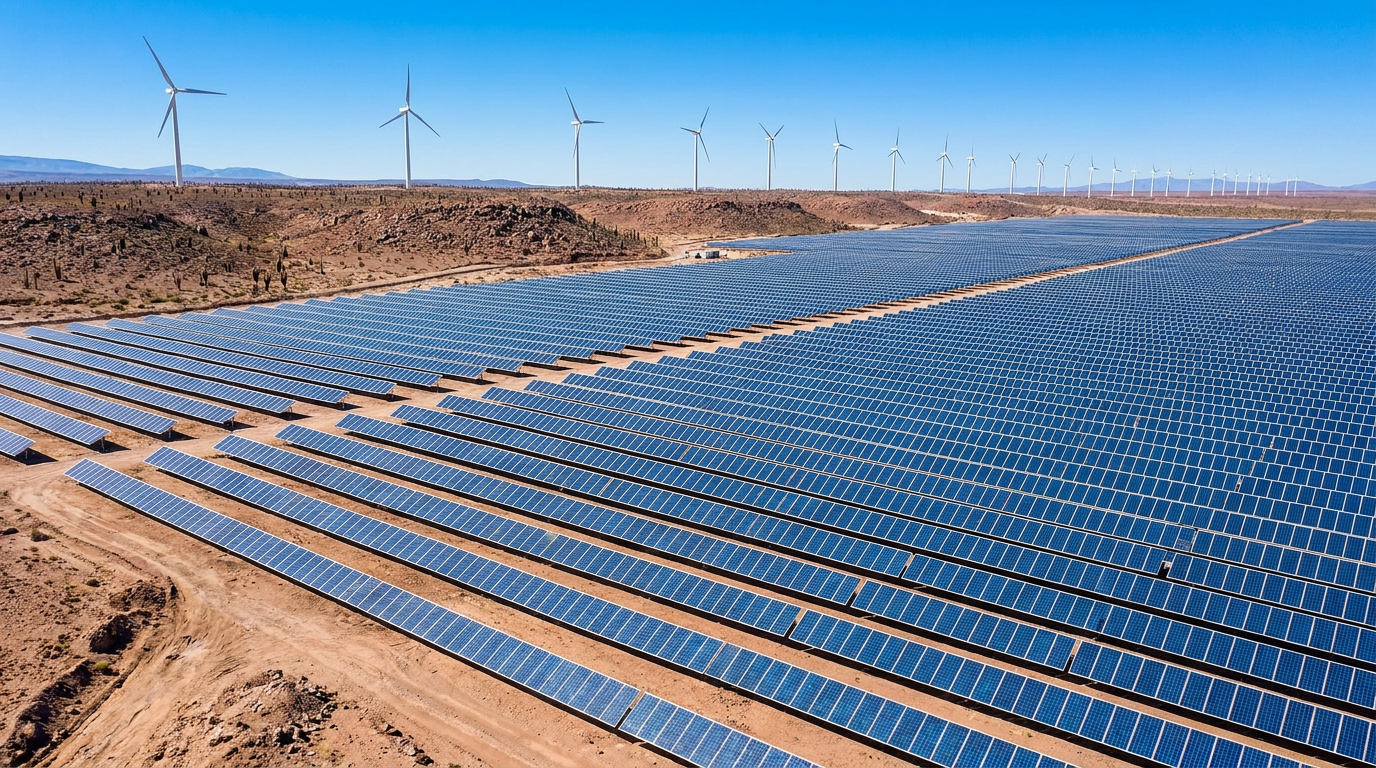
Geography has dealt Chile a uniquely advantageous hand for the 21st-century energy transition. With the sun-scorched Atacama Desert in the north and the relentless winds of Patagonia in the south, the country possesses renewable energy potential estimated at 70 times its current installed capacity. This immense natural wealth has positioned the South American nation as a critical player in the global race to decarbonize heavy industry and secure clean fuel supply chains.[4][6]
For years, successive Chilean governments have sought to harness this natural bounty to become the world's premier exporter of green hydrogen. In March 2026, the Ministry of Energy, backed by a cross-sectoral committee featuring former presidents and industry leaders, officially launched the updated National Green Hydrogen Strategy for the 2026–2030 period. The announcement marked a critical maturation point for a sector that has grappled with the friction between political ambition and economic reality.[2][7]
The revised roadmap represents a significant pivot from the initial hype of the early 2020s. Rather than focusing exclusively on massive, gigawatt-scale export targets, the new strategy emphasizes a pragmatic, step-by-step approach. It prioritizes consolidating domestic demand, building necessary infrastructure, and fostering local supply chains before aggressively pursuing international markets. Officials argue this recalibration is essential to build a sustainable, globally competitive industry over the coming decades.[2][8]

To understand the stakes of this policy shift, it is essential to understand the underlying mechanism. Green hydrogen is produced through a process called electrolysis, where renewable electricity—such as solar or wind power—is used to split water molecules into hydrogen and oxygen. Because the electricity powering the process comes from clean sources, the resulting fuel generates zero carbon emissions when burned or utilized in hydrogen fuel cells, making it a holy grail for hard-to-abate sectors.[4]
Chile’s updated strategy acknowledges the formidable economic realities of scaling this nascent technology. The original 2020 plan set a highly ambitious target of producing green hydrogen at $1.50 per kilogram by the end of the decade. The 2026 update abandons that figure, revising cost assumptions upwards to estimate production costs below $4 per kilogram by 2030, with the crucial sub-$2 threshold only expected to be reached by 2045.[1][8]
Production volume targets have undergone a similar reality check. Instead of aiming for 25 gigawatts of electrolysis capacity by 2030, the government now projects the production of 100,000 to 200,000 kilotonnes per year specifically earmarked for domestic consumption. The timeline for large-scale export production has been pushed back, with a new target of 300,000 to 700,000 kilotonnes slated for 2035, replacing the previous rush to supply foreign markets immediately.[8]

This domestic-first approach is strategically designed to use Chile's existing heavy industries as a testing and scaling platform. The country's massive copper and lithium mining sectors, which are deeply integrated into global supply chains and face increasing pressure to lower their carbon footprints, are prime candidates for early adoption. By securing these local industries as guaranteed buyers, developers can significantly de-risk the massive capital investments required for early-stage electrolyzer projects.[1][2]
This domestic-first approach is strategically designed to use Chile's existing heavy industries as a testing and scaling platform.
A prime example of this domestic integration involves the explosives manufacturer Enaex, a major supplier to the Chilean mining industry. The company currently imports hundreds of thousands of tonnes of fossil-based ammonia annually. Transitioning these operations to green ammonia—a derivative of green hydrogen that is easier to store and transport—would create a massive local offtaker, though executives note that current market conditions do not yet provide the competitiveness needed for full-scale local production.[1]
Indeed, industry analysts and market watchers have injected a necessary dose of skepticism into the national optimism. S&P Global Commodity Insights reports that several flagship hydrogen projects in Chile have faced significant delays over the past two years. Companies have been forced to scale back investments and extend timelines amid persistent technological bottlenecks, supply chain constraints, and stubbornly high capital costs that make immediate profitability elusive.[1]
"The technology to produce green hydrogen at a scale simply doesn't exist today," noted Bettina Horst, executive director of the Chilean think tank LYD and a member of the 2023 hydrogen strategy commission. Horst highlighted a broader macroeconomic challenge, pointing out that global investment capital is currently pivoting heavily toward artificial intelligence and data centers, forcing capital-intensive green energy projects to compete fiercely for funding.[1]
Infrastructure remains another critical hurdle that the 2026 strategy attempts to address. Chile currently lacks the specialized port facilities capable of handling large volumes of highly volatile liquid hydrogen or green ammonia for intercontinental export. Furthermore, the country's electrical transmission system requires a massive, multi-billion-dollar expansion to efficiently move renewable power from the remote northern deserts and southern plains to the industrial centers where it is needed most.[1][9]
Despite these formidable headwinds, Chile's underlying renewable energy fundamentals remain exceptionally strong and continue to attract global attention. By the end of 2025, the country achieved a remarkable milestone, with approximately 79% of its total electricity generation coming from renewable sources, including hydroelectric, solar photovoltaic, and wind power. This existing green grid provides a massive head start over competing nations that are still heavily reliant on coal and natural gas.[5]

The International Energy Agency (IEA) recently published the comprehensive "Chile 2050 Energy Transition Roadmap," affirming that the country is on a viable, albeit challenging, path to reach its legally binding goal of net-zero emissions by 2050. The IEA emphasized that Chile's unique combination of world-class renewable resources and critical mineral reserves positions it perfectly to move up the value chain in the global energy transition.[3]
To navigate the path forward, the updated 2026–2030 strategy is built on three central pillars: strengthening domestic demand, boosting exports for the long term, and improving governance while developing local value. By establishing clear regulatory frameworks and streamlining the permitting process, the government projects that the green hydrogen industry could attract up to $32 billion in investments by 2035, fundamentally transforming the national economy.[2][8]
Beyond the macroeconomic figures, the strategy places a strong, deliberate emphasis on regional development and social equity. The green hydrogen boom is expected to create between 36,000 and 85,000 direct jobs over the next decade. This growth is specifically targeted at driving productive diversification in regions like Magallanes in the south and Antofagasta in the north, which have historically relied on finite extractive industries and are eager for sustainable economic alternatives.[8]

International partners are watching Chile's recalibration closely. Countries like New Zealand, along with various European nations and Asian economic powers, view Chile not just as a future supplier of clean fuels, but as a crucial blueprint. The Chilean model demonstrates how an emerging economy can leverage its natural resources to attract foreign direct investment, build local technical capacity, and climb the value chain in the green transition without sacrificing economic stability.[6]
Ultimately, Chile's 2026 strategic pivot is a clear sign of a maturing industry. By moving past the initial phase of unrealistic targets and confronting the hard realities of infrastructure, capital costs, and technological readiness, the country is laying a much more resilient foundation. The road to becoming a global green hydrogen superpower will be longer and more expensive than initially hoped, but Chile's pragmatic recalibration ensures it remains firmly on the path.[2][3]
How we got here
Late 2020
Chile launches its first National Green Hydrogen Strategy, setting highly ambitious export and cost targets for 2030.
2023–2024
Global macroeconomic shifts and technological bottlenecks cause several flagship hydrogen projects in Chile to face delays.
Late 2025
Chile reaches a milestone of generating approximately 79% of its electricity from renewable sources.
March 2026
The Ministry of Energy officially presents the updated 2026–2030 strategy, recalibrating targets toward domestic demand and realistic cost curves.
Viewpoints in depth
The Government's Pragmatic Pivot
Policymakers argue that scaling back initial hype is necessary to build a sustainable, long-term industry.
Chilean officials, including the Ministry of Energy and cross-sectoral committees, view the 2026 strategy update as a sign of maturity rather than defeat. By shifting focus away from immediate, massive export volumes, the government aims to use domestic heavy industries—like copper and lithium mining—as a testing ground. They argue that securing local offtakers will de-risk early investments, build necessary supply chains, and create tens of thousands of regional jobs before the country takes on the logistical complexities of intercontinental export.
Market Analysts' Reality Check
Energy analysts warn that technological and financial hurdles remain severely underestimated.
Market watchers and risk consultants point to canceled flagship projects and stubbornly high production costs as evidence that the green hydrogen revolution is further off than politicians hope. With current costs hovering around $4.50 per kilogram, green hydrogen cannot yet compete with conventional fossil fuels. Analysts also highlight a severe lack of enabling infrastructure, noting that Chile currently lacks the specialized port facilities and expanded electrical transmission grids required to handle commercial-scale hydrogen and ammonia exports.
What we don't know
- Whether the global pivot of investment capital toward AI and data centers will permanently starve emerging green energy projects of necessary funding.
- How quickly Chile can build the specialized port infrastructure required to export liquid hydrogen and ammonia across oceans.
- The exact timeline for when green hydrogen production costs will achieve parity with conventional fossil fuels in the domestic mining sector.
Key terms
- Green Hydrogen
- Hydrogen fuel created using renewable energy to power the electrolysis of water, resulting in a zero-emission energy source.
- Electrolysis
- A process that uses electricity to split water molecules into hydrogen and oxygen gases.
- Offtaker
- A buyer who agrees to purchase a producer's future goods—in this case, green hydrogen—guaranteeing a market and reducing investment risk.
- Green Ammonia
- A derivative of green hydrogen used heavily in fertilizers and mining explosives, which is easier to transport and store than pure hydrogen gas.
Frequently asked
What is green hydrogen?
Green hydrogen is a clean fuel produced by using renewable electricity (like solar or wind) to split water into hydrogen and oxygen. It produces zero carbon emissions when used.
Why did Chile update its strategy in 2026?
The government realized that early targets set in 2020 were too ambitious given current high production costs and infrastructure bottlenecks, prompting a shift toward domestic use first.
How will Chile use green hydrogen domestically?
The fuel will primarily be used to decarbonize Chile's massive mining sector, replacing imported fossil-based ammonia used in explosives and powering heavy transport.
Is Chile still planning to export green hydrogen?
Yes, but the timeline has been pushed back. The country now aims to achieve large-scale exports of 300,000 to 700,000 kilotonnes per year by 2035.
Sources
Source coverage
9 outlets
3 viewpoints surfaced









[1]S&P Global Commodity InsightsIndustry Skeptics & Analysts
Chile's green hydrogen ambitions face skepticism amid delays and high costs
Read on S&P Global Commodity Insights →[2]CCarbonGovernment & Policymakers
Chile: Ministry Of Energy Presents The Update Of The National Green Hydrogen Strategy 2026–2030
Read on CCarbon →[3]International Energy AgencyInternational Observers
Chile 2050 Energy Transition Roadmap – Analysis
Read on International Energy Agency →[4]World Economic ForumGovernment & Policymakers
How Chile is becoming a leader in renewable energy
Read on World Economic Forum →[5]FastmarketsInternational Observers
Key talking points ahead of Chile Energy Transition 2025 Summit
Read on Fastmarkets →[6]New Zealand Ministry of Foreign Affairs and TradeInternational Observers
Market Intelligence Report: Chile and Green Hydrogen
Read on New Zealand Ministry of Foreign Affairs and Trade →[7]Hyvolution ChileGovernment & Policymakers
This was the presentation of the updated National Green Hydrogen Strategy 2026–2030
Read on Hyvolution Chile →[8]Hydrogen CentralIndustry Skeptics & Analysts
Chile resets its green hydrogen strategy: Lower targets, higher costs, new priorities
Read on Hydrogen Central →[9]Clyde & CoInternational Observers
Trends and developments in Chile: Embracing the Energy Transition through expanded electrical transmission
Read on Clyde & Co →
Every angle. Every day.
Get world stories with full source coverage and perspective breakdowns delivered to your inbox.