
US and Iran Agree to 60-Day Roadmap for Final Deal After Tense Opening in Switzerland
Mediators Qatar and Pakistan announced 'encouraging progress' as the US and Iran established mechanisms to secure the Strait of Hormuz and de-escalate in Lebanon. The high-level talks will transition to technical working groups for the remainder of the week, despite early disruptions caused by social media threats from the US president.
By Factlen Editorial Team
- US Negotiators
- Focused on securing global shipping lanes and limiting Iran's nuclear program, utilizing maximum pressure tactics alongside diplomacy.
- Iranian Negotiators
- Demanding immediate implementation of economic relief and an end to military operations in Lebanon before addressing the nuclear file.
- Regional Mediators
- Emphasizing the necessity of dialogue, incremental agreements, and practical de-confliction to avoid a broader regional war.
- Security Analysts
- Skeptical of the sequencing, noting that deep mistrust and domestic political pressures could easily derail the 60-day timeline.
What's not represented
- · Lebanese Government
- · Commercial Shipping Industry
Why this matters
These negotiations represent the most significant diplomatic effort to halt a broader Middle East conflict and stabilize global energy markets. A successful 60-day roadmap could reopen the Strait of Hormuz to commercial shipping and establish a lasting ceasefire in Lebanon, while failure risks a direct military confrontation.
Key points
- The US and Iran agreed to a 60-day roadmap for a final deal during talks in Switzerland.
- Qatar and Pakistan mediated the high-level summit at the Bürgenstock resort.
- A communication line was established to secure commercial shipping in the Strait of Hormuz.
- A de-confliction cell will coordinate with Lebanon to halt military operations.
- Talks briefly stalled after US President Donald Trump posted threats on social media.
- Technical working groups will continue negotiations for the rest of the week.
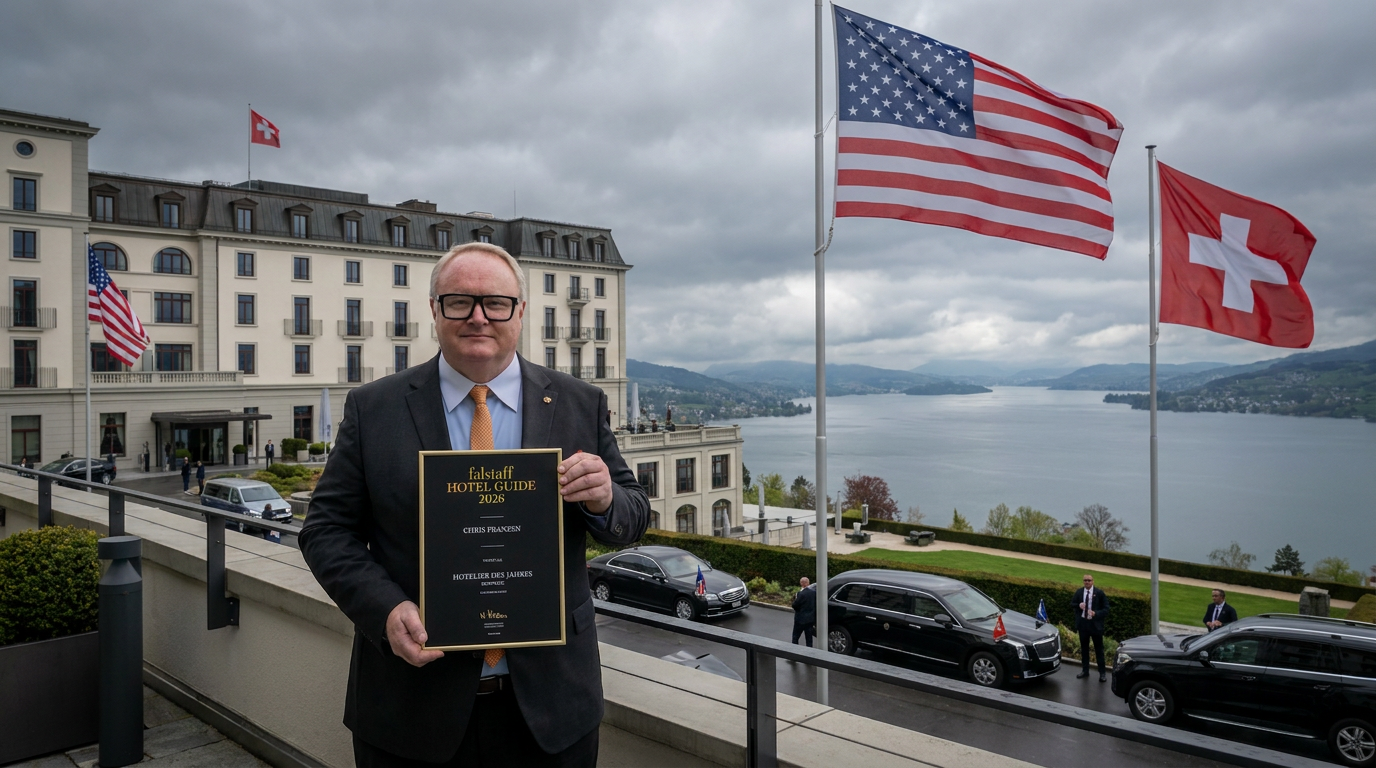
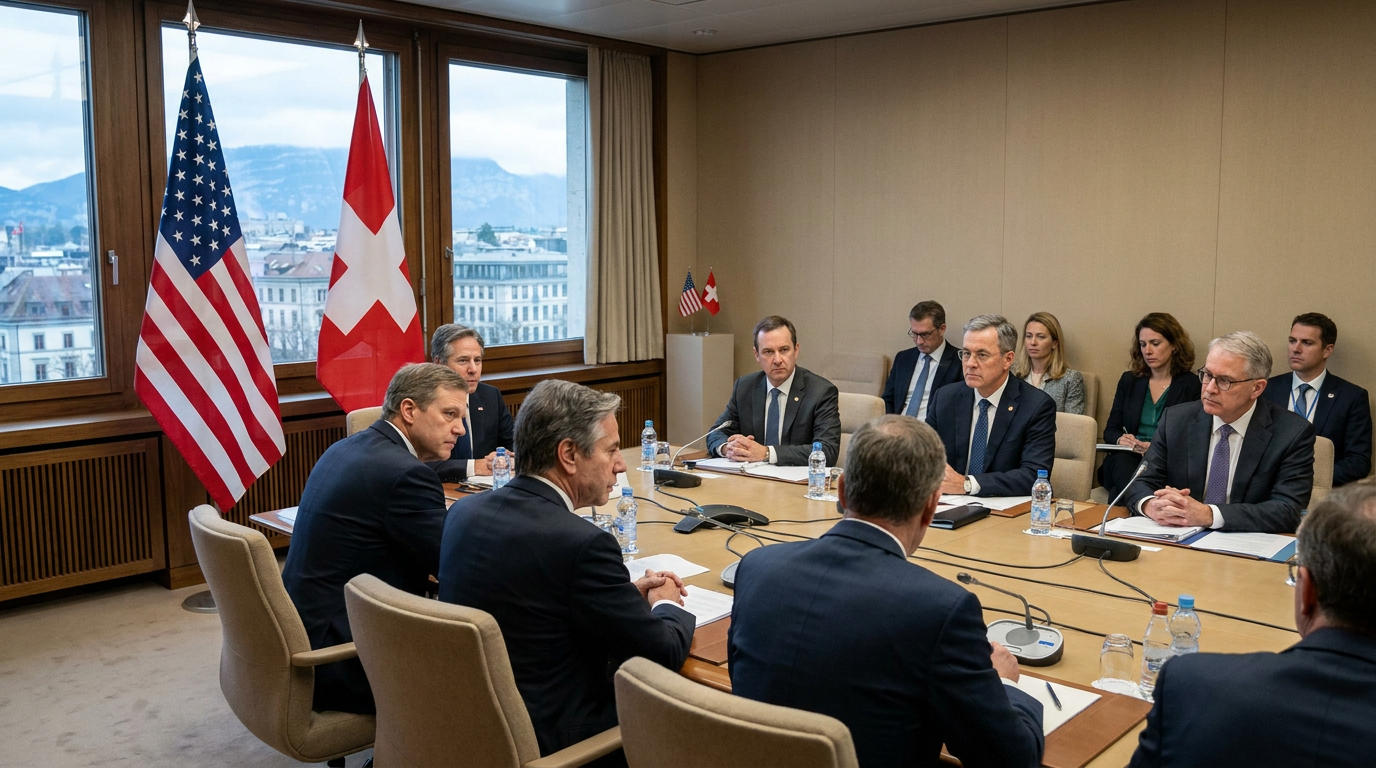
The United States and Iran have concluded the first day of high-stakes negotiations at the Bürgenstock resort in Switzerland, agreeing to a 60-day roadmap aimed at reaching a comprehensive final deal to end ongoing regional conflicts. Mediated jointly by Qatar and Pakistan, the talks represent the most significant diplomatic effort to date to stabilize the Middle East and secure global energy markets. According to a joint statement released by the mediators early Monday, the initial high-level meetings established a foundational framework that will allow specialized technical working groups to immediately commence detailed negotiations.[1][4]
The joint statement from the mediators highlighted that a "positive and constructive atmosphere" ultimately prevailed during the afternoon sessions, resulting in what they described as highly encouraging progress. To manage the complex, multi-front negotiations over the next two months, the parties agreed to form a high-level committee tasked with overseeing the political dimensions of the mediation process. This committee will receive regular reports from the lead negotiators and supervise specialized working groups focused on Iran's nuclear program, comprehensive sanctions relief, and dispute resolution mechanisms designed to ensure effective implementation of the broader agreement.[4][6]
Among the most immediate and tangible deliverables from the first day of talks is the establishment of a direct "communication line" between Washington and Tehran. This mechanism is specifically designed to prevent accidental military incidents and miscommunications, with the explicit goal of ensuring the safe passage of commercial vessels through the Strait of Hormuz. Additionally, the delegations agreed to set up a "de-confliction cell" coordinated with the Lebanese government to ensure adherence to the termination of military operations in southern Lebanon.[1][6][7]

The diplomatic breakthrough, however, nearly collapsed before the delegations even sat down at the negotiating table. The Iranian negotiating team temporarily walked out of the venue in protest after US President Donald Trump posted a series of aggressive threats on social media. The posts suggested that the United States would launch bombing campaigns against Iran and potentially kidnap the Iranian negotiators if the Strait of Hormuz was not immediately reopened to international shipping, forcing the Qatari and Pakistani mediators to scramble to salvage the summit.[1][5]
Iranian state media quickly reported that the talks had entered a "difficult phase" following the publication of what they termed an "insulting message" from the American president. The Iranian delegation, led by Foreign Minister Abbas Araghchi and Parliament Speaker Mohammad Bagher Ghalibaf, filed a formal protest with the Qatari and Pakistani mediators. They demanded that the public "bullying" tactics be brought under control, insisting that they needed to see genuine signs of commitment to the interim agreement before they would proceed with the scheduled agenda.[1]
Despite the intense friction, the mediators managed to keep the diplomatic track alive, conducting shuttle diplomacy in the background until the Iranians agreed to return. US Vice President JD Vance, who is leading the American delegation alongside Special Envoy Steve Witkoff and Jared Kushner, downplayed the disruption. Addressing the media in Switzerland, Vance noted that progress had been made toward ending hostilities and remarked that the logistics of such high-level negotiations are "always a little bit messy."[1][3][4]

US Vice President JD Vance, who is leading the American delegation alongside Special Envoy Steve Witkoff and Jared Kushner, downplayed the disruption.
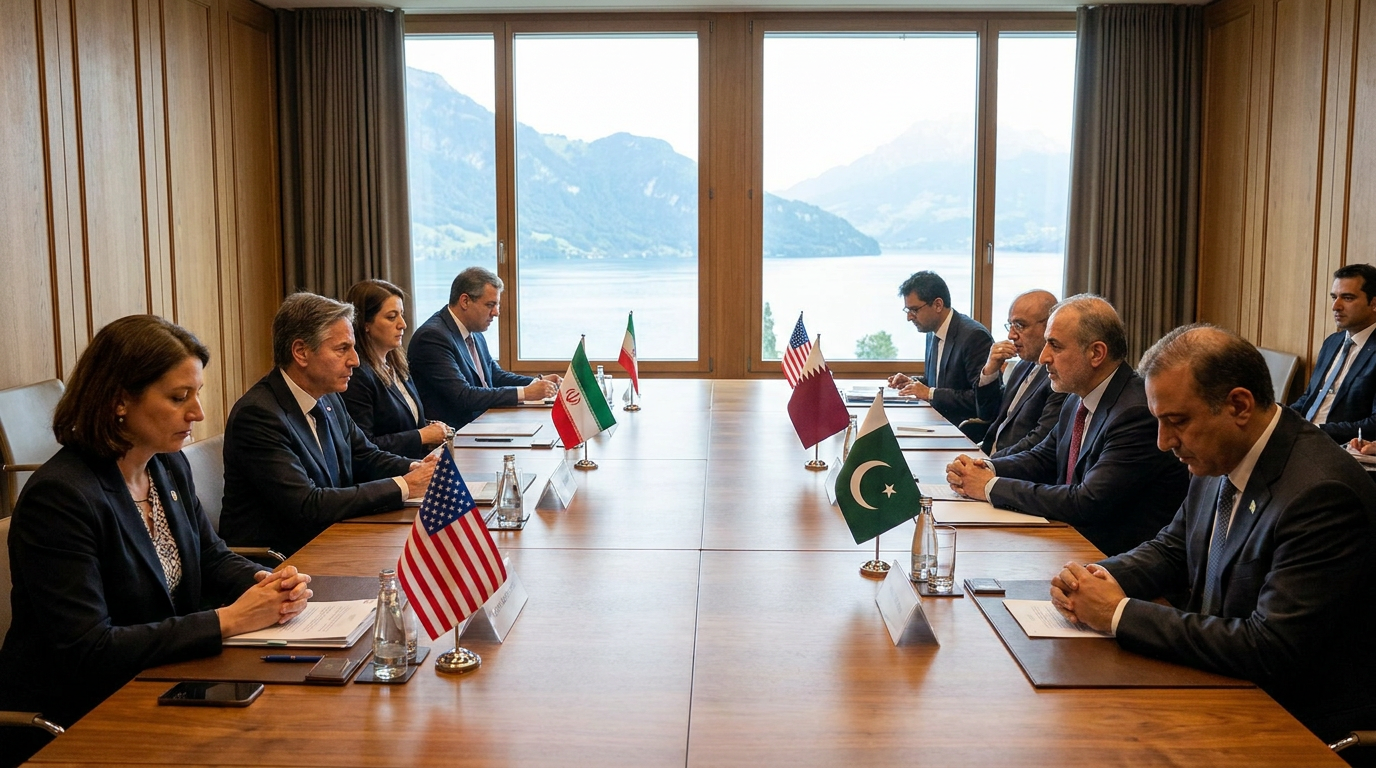
The deep-seated mistrust between the two nations was visually apparent throughout the summit. The Iranian delegation flatly refused to appear on camera alongside the American negotiators, though both sides were briefly present in the same room for quadrilateral discussions involving the Qatari and Pakistani mediators. Qatar's Prime Minister Sheikh Mohammed bin Abdulrahman Al-Thani emphasized the historic nature of the meeting, noting that the achievements required immense dedication from all parties involved to overcome the initial hurdles.[1][4]
The Bürgenstock summit builds directly upon a Memorandum of Understanding (MoU) signed by the United States and Iran just last week. That preliminary agreement officially initiated the 60-day negotiation window and included significant early concessions from Washington, most notably the US military lifting its naval blockade of Iranian ports to allow commercial traffic. In exchange, Iran agreed to participate in these framework talks, which are ultimately intended to address both its rapidly advancing civil nuclear program and its extensive financial and military support for regional proxy groups.[1][5]
Security analysts observing the talks suggest that Iran is strategically attempting to frontload the economic and regional benefits of the MoU. By prioritizing the cessation of Israeli military operations in Lebanon and demanding immediate sanctions relief, Tehran appears to be testing US commitments before making any binding concessions regarding its nuclear facilities. This sequencing strategy is designed to secure tangible gains early in the 60-day window, reducing American leverage in the later stages of the nuclear negotiations.[5]

With the high-level political framework now established, the summit will transition into a highly technical and granular phase. Lower-ranking officials, central bank representatives, and subject-matter experts from both countries will remain in Switzerland for the remainder of the week. These specialized working groups face the daunting task of translating the broad 60-day roadmap into actionable, verifiable policies. They will tackle the intricate details of phased sanctions removal, the operational mechanics of the de-confliction cell in Lebanon, and the highly sensitive protocols for future international nuclear inspections.[1][6][7]
The Swiss Federal Department of Foreign Affairs, acting as the host nation for the summit, reaffirmed its ongoing commitment to facilitating the delicate peace process. Emphasizing Switzerland's long-standing diplomatic tradition of providing good offices, the department stated it will continue to offer a discreet and reliable setting for the delegations. By maintaining a secure environment at the Bürgenstock resort, Swiss officials hope to create the practical conditions necessary to support genuine de-escalation, foster regional stability, and lay the groundwork for a lasting peace in the Middle East.[8]
How we got here
Last week
The US and Iran signed a Memorandum of Understanding, opening a 60-day negotiation window and lifting the US naval blockade on Iranian ports.
June 21, 2026
High-level delegations arrived at the Bürgenstock resort in Switzerland for the first round of direct talks.
June 21, 2026 (Afternoon)
Iranian negotiators staged a brief walkout over social media threats from the US president before mediators salvaged the meeting.
June 22, 2026
Mediators announced a 60-day roadmap and the establishment of technical working groups to continue talks.
Viewpoints in depth
US Administration's view
Seeking to leverage military and economic pressure to secure a comprehensive deal that limits Iran's nuclear program.
The US delegation approaches the talks with a strategy of maximum leverage, aiming to secure global shipping lanes and permanently cap Iran's nuclear ambitions. While American diplomats engage in the technical working groups, the administration maintains a hardline public posture, using the threat of military force and the reimposition of blockades as a stick to ensure Iranian compliance during the 60-day window.
Iranian Government's view
Prioritizing immediate sanctions relief and the cessation of Israeli military operations in Lebanon before making nuclear concessions.
Tehran views the sequencing of the Memorandum of Understanding as a critical test of American reliability. Iranian negotiators are demanding that the US prove its commitment by delivering tangible economic relief and reining in allied military operations in Lebanon first. They argue that without these upfront guarantees, any concessions on their nuclear program would be premature and politically untenable at home.
Mediators' view
Focused on keeping the fragile diplomatic channel open through incremental technical progress and practical de-confliction.
Qatar and Pakistan, alongside the Swiss hosts, are operating under the assumption that the alternative to these talks is a devastating regional war. Their primary goal is to insulate the technical negotiations from the volatile political rhetoric of both capitals. By establishing concrete mechanisms like the Strait of Hormuz communication line, the mediators hope to build enough baseline trust to sustain the 60-day roadmap.
What we don't know
- Whether the newly established communication line will immediately result in the resumption of normal commercial traffic through the Strait of Hormuz.
- How the de-confliction cell will enforce the cessation of hostilities between Israel and Hezbollah in southern Lebanon.
- Whether Iran will agree to new nuclear inspections before receiving comprehensive sanctions relief.
Key terms
- Strait of Hormuz
- A vital maritime chokepoint between the Persian Gulf and the Gulf of Oman, through which a significant portion of the world's oil supply passes.
- Memorandum of Understanding (MoU)
- A formal agreement outlining the broad terms and goals of a negotiation before a final, binding treaty is drafted.
- De-confliction cell
- A dedicated communication channel and coordination group designed to prevent accidental military clashes between opposing forces.
Frequently asked
Who is mediating the US-Iran talks?
Qatar and Pakistan are serving as the primary mediators, with Switzerland providing the diplomatic venue and logistical support.
Who is leading the respective delegations?
The US delegation is led by Vice President JD Vance, while the Iranian delegation is led by Foreign Minister Abbas Araghchi and Parliament Speaker Mohammad Bagher Ghalibaf.
What happens after the first day of talks?
Lower-level technical officials and subject-matter experts will remain in Switzerland for the rest of the week to negotiate the specifics of sanctions relief, nuclear limits, and regional security.
Sources
Source coverage
8 outlets
4 viewpoints surfaced








[1]The GuardianIranian Negotiators
Iran hails ‘progress’ as first day of talks with US conclude after shaky start
Read on The Guardian →[2]Al JazeeraRegional Mediators
‘Encouraging progress’ made as first round US-Iran talks end
Read on Al Jazeera →[3]AxiosUS Negotiators
US, Iran start talks on peace deal in Switzerland
Read on Axios →[4]Anadolu AgencyRegional Mediators
Qatar, Pakistan announce 'encouraging progress' in US-Iran talks at Switzerland summit
Read on Anadolu Agency →[5]Institute for the Study of WarSecurity Analysts
Iran Update Special Report, June 21, 2026
Read on Institute for the Study of War →[6]The Times of IsraelUS Negotiators
Iran, US agree on roadmap to reach final deal in 60 days, talks to go on all week, mediators say
Read on The Times of Israel →[7]The HinduIranian Negotiators
Iran and the United States agreed on a roadmap towards reaching a final deal
Read on The Hindu →[8]Swiss FDFARegional Mediators
Switzerland provides a discreet and reliable setting to facilitate talks at Bürgenstock
Read on Swiss FDFA →
More in news politics
See all 7 stories →US-Iran Peace Deal
US and Iran Agree to 60-Day Roadmap in Switzerland Peace Talks
8 sources
Deepfake Defense
How Deepfake Detection and Digital Provenance Finally Caught Up to AI in 2026
6 sources

US-Iran Relations
US and Iran Agree to 60-Day Roadmap to Cement Ceasefire in High-Stakes Swiss Talks
7 sources
US-Iran Talks
US and Iran Agree to 60-Day Roadmap for Final Deal After Tense Switzerland Talks
7 sources
Every angle. Every day.
Get news politics stories with full source coverage and perspective breakdowns delivered to your inbox.