
How Predictive AI and Biomechanics Are Eradicating the Soccer Injury Crisis
Advanced machine learning models and wearable sensors are transforming how soccer clubs manage player fitness, predicting muscle injuries before they happen and extending peak career windows.
By Factlen Editorial Team
- Sports Data Scientists
- Argue that objective, algorithmic analysis is vastly superior to subjective human intuition in preventing cumulative fatigue injuries.
- Player Unions
- Support the health benefits of the technology but demand strict regulations on who owns and profits from an athlete's biometric data.
- Traditional Coaching Staff
- Value the data as a supplementary tool but insist that tactical context and human communication must ultimately dictate lineup decisions.
What's not represented
- · Lower-league clubs lacking the budget for advanced AI infrastructure
Why this matters
For decades, catastrophic injuries and chronic muscle fatigue shortened the careers of top athletes and derailed club seasons. By shifting from reactive medicine to predictive analytics, players are staying healthier longer, fundamentally changing the economics and quality of the sport.
Key points
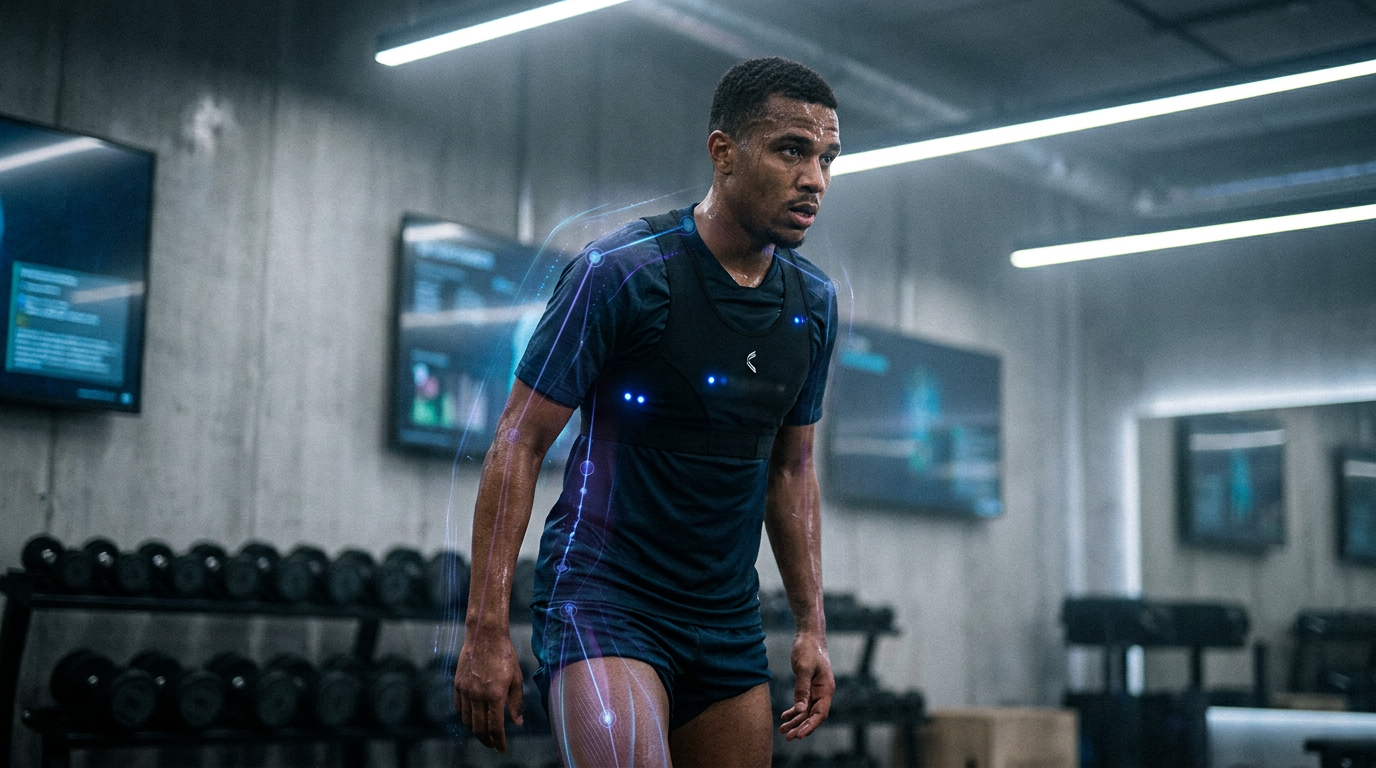
- Clubs are using wearable sensors and optical cameras to build real-time digital twins of their players.
- Machine learning algorithms detect microscopic changes in a player's stride to predict muscle fatigue before pain occurs.
- Early intervention based on this data has reduced non-contact soft-tissue injuries by up to 30%.
- Player unions are fighting to secure ownership rights over athletes' highly sensitive biometric data.
- The technology is extending the physical peaks of elite players well into their late thirties.
The modern club soccer calendar is notoriously unforgiving. With expanded domestic leagues, continental tournaments, and international breaks, elite players are routinely asked to play upwards of sixty matches a season. They are running further, sprinting faster, and changing direction more violently than any generation before them. Historically, this physical toll culminated in the dreaded "injury crisis"—a mid-season wave of hamstring tears, calf strains, and groin injuries that could derail a club's title hopes and shave years off a player's career. But over the last three years, the sport has quietly undergone a medical revolution. Clubs are no longer just treating injuries; they are forecasting them.[1][4]
The foundation of this shift lies in the massive proliferation of kinematic data. Walk onto any top-tier training ground today, and you will see players wearing specialized GPS tracking vests under their training kits. These devices do much more than track distance covered. Equipped with high-frequency accelerometers, gyroscopes, and heart-rate monitors, they capture over five hundred distinct data points per second. When combined with multi-angle optical tracking cameras installed around the pitch, sports scientists can map a player's entire skeletal structure in real-time, creating a highly precise digital twin of their biomechanical movements.[3][6]
Collecting the data is only the first step; the true breakthrough is how that data is processed. Machine learning models ingest millions of data points from every training session and match, establishing a unique baseline for every individual player. The algorithm learns exactly what a specific midfielder's optimal stride length looks like, how much force they typically absorb on their left leg when landing from a header, and their exact acceleration profile when sprinting down the wing. Once this baseline is established, the AI acts as an ever-vigilant sentinel, constantly scanning for microscopic deviations.[1][2]

The mechanism of injury prediction relies on spotting fatigue before it manifests as pain. When a player's muscles begin to tire, their body subconsciously compensates. A striker might shorten their stride by just a fraction of a centimeter, or shift slightly more weight onto their right leg to protect a fatigued left hamstring. These micro-adjustments are entirely invisible to the human eye, and the player themselves rarely feels any discomfort. However, to the predictive algorithm, these deviations are glaring red flags. The system instantly alerts the club's medical staff that the player has entered the "red zone," indicating a high statistical probability of a soft-tissue rupture within the next 48 hours.[2][4]
The evidence supporting these predictive models is striking. Recent presentations at the MIT Sloan Sports Analytics Conference revealed that clubs fully integrating these AI systems have seen up to a thirty percent reduction in non-contact soft-tissue injuries over a two-season span. By catching the warning signs early, managers can intervene proactively. An intervention might be as simple as pulling a player out of training twenty minutes early, prescribing a targeted recovery massage, or rotating them to the bench for an upcoming cup fixture. This micro-management of physical load is replacing the old-school mentality of playing through the pain.[2][7]

The evidence supporting these predictive models is striking.
This algorithmic approach has fundamentally changed the role of the sports scientist. Previously, medical staff relied heavily on subjective feedback—asking players how they felt on a scale of one to ten. But athletes are notoriously unreliable narrators; driven by competitive instinct, they frequently downplay fatigue to ensure they make the starting lineup. Now, the data provides an objective truth. As noted by industry analysts, the modern sports scientist acts as a translator between the raw algorithm and the head coach, turning complex kinematic risk percentages into actionable tactical advice.[4][6]
Despite its massive success, the technology has inherent limitations and areas of uncertainty. Predictive AI is highly effective at forecasting non-contact muscular injuries, which stem from cumulative fatigue and biomechanical stress. However, it cannot predict impact injuries. A poorly timed tackle, an awkward landing on a wet pitch, or a mid-air collision will still result in broken bones or torn ligaments, regardless of what the algorithm says. Furthermore, the models require massive amounts of clean, consistent data to function accurately; a newly transferred player without a historical data profile will not benefit from the system until a baseline is established over several weeks.[1][3]
The explosion of biometric tracking has also sparked complex debates regarding data privacy and worker rights. Player unions, most notably FIFPRO, have raised concerns about who actually owns this highly sensitive medical data. If an algorithm determines that a 29-year-old winger's acceleration profile is permanently degrading, that data could be used against them in contract negotiations or leaked to lower their transfer value. Unions are actively pushing for a "Charter of Player Data Rights" to ensure athletes retain ownership of their kinematic profiles and can port their data securely when moving between clubs.[5]

Coaches, too, are navigating the friction between data and intuition. While the algorithms provide invaluable risk assessments, traditional managers warn against becoming entirely beholden to the computer. Soccer remains a highly contextual, emotionally driven sport. There are moments—such as a cup final or a relegation decider—where a manager might choose to play a star athlete even if the AI flags them as a high injury risk. The challenge for modern coaching staffs is finding the delicate balance between respecting the medical data and trusting their tactical instincts.[6][7]
Looking ahead, the next frontier is the democratization of this technology. Currently, the most advanced predictive models are siloed within the wealthiest clubs in Europe, creating a significant competitive advantage. However, as sensor technology becomes cheaper and cloud computing more accessible, these tools are beginning to trickle down to lower leagues and youth academies. By tracking biomechanical data from adolescence, clubs hope to correct dangerous movement patterns before players even reach the professional level, potentially eradicating chronic injury issues at their root.[1][4]
The ultimate beneficiaries of this technological revolution are the fans and the players themselves. We are entering an era where the concept of a player's "physical peak" is being fundamentally redefined. Athletes who previously would have seen their careers decline at age thirty are now maintaining elite output well into their late thirties. By listening to the invisible signals of the body, predictive AI is ensuring that the world's best players spend less time on the treatment table and more time on the pitch.[1][7]

How we got here
Early 2010s
Basic GPS tracking vests are introduced to elite training grounds to measure total distance covered.
2018
Stadiums begin installing multi-angle optical tracking cameras, allowing for deeper tactical and physical analysis.
2023
Machine learning models capable of processing kinematic data to predict injuries become standard at top European clubs.
2026
Player unions escalate demands for a formal charter protecting athletes' rights to their own biometric data.
Viewpoints in depth
Sports Data Scientists
Argue that objective, algorithmic analysis is vastly superior to subjective human intuition in preventing cumulative fatigue injuries.
For data scientists and biomechanical engineers, the human body is a complex but ultimately quantifiable machine. They argue that traditional methods of injury prevention—relying on a player's self-reported fatigue or a coach's 'eye test'—are fundamentally flawed because athletes are incentivized to hide weakness. By removing human bias and relying strictly on kinematic deviations, algorithms can spot the microscopic precursors to a torn hamstring days before the muscle actually gives way. To this camp, the 30% reduction in soft-tissue injuries is proof that the math works, saving clubs millions in lost wages and protecting the long-term health of the athletes.
Player Unions
Support the health benefits of the technology but demand strict regulations on who owns and profits from an athlete's biometric data.
Organizations like FIFPRO recognize that predictive AI extends careers, but they view the unchecked collection of biometric data as a massive labor rights issue. Their primary concern is weaponization: if a club's algorithm determines a player's physical peak is permanently degrading, that proprietary data could be used to justify lower contract offers or force a transfer. Unions argue that an athlete's kinematic profile is personal medical data, not club property. They are actively lobbying for frameworks that allow players to own their data, access it freely, and take it with them when they change employers.
Traditional Coaching Staff
Value the data as a supplementary tool but insist that tactical context and human communication must ultimately dictate lineup decisions.
Veteran managers and traditional coaching staffs often view the influx of AI with cautious pragmatism. While they welcome any tool that keeps their star players out of the medical room, they push back against the idea that an algorithm should dictate the starting lineup. Coaches argue that data lacks emotional and tactical context. In a crucial cup final, a manager might accept the statistical risk of a player suffering a muscle strain if that player's presence on the pitch is the difference between winning a trophy and going home empty-handed. For this camp, data is an advisor, not the ultimate decision-maker.
What we don't know
- Whether the predictive models can be adapted to accurately forecast injuries in youth academies where bodies are still growing.
- How international courts will ultimately rule on the ownership and portability of an athlete's biometric data.
- If the technology will become cheap enough to benefit lower-league clubs, or if it will permanently widen the gap between rich and poor teams.
Key terms
- Kinematic data
- Information relating to the geometry of movement, including stride length, acceleration, and the physical force absorbed by the body during motion.
- Soft-tissue injury
- Damage to muscles, ligaments, or tendons, commonly occurring in soccer as non-contact strains or tears due to overexertion.
- Digital twin
- A highly detailed virtual model of a player's physical and biomechanical profile, updated in real-time using sensor data.
- Workload management
- The strategic monitoring and adjustment of a player's training and match minutes to prevent fatigue and optimize peak performance.
Frequently asked
Can AI predict all types of soccer injuries?
No. Predictive models are highly effective at forecasting non-contact soft-tissue injuries (like hamstring tears) caused by fatigue, but they cannot predict impact injuries resulting from tackles or collisions.
How does the algorithm know a player is getting tired?
The AI establishes a baseline for a player's normal movement. When fatigue sets in, the body subconsciously compensates—such as shortening a stride or shifting weight—which the algorithm flags as a warning sign.
Who owns the biometric data collected by the clubs?
This is currently a major legal battleground. Clubs claim ownership as employers, while player unions argue that highly sensitive medical and kinematic data belongs to the individual athlete.
Sources
Source coverage
7 outlets
3 viewpoints surfaced







[1]Factlen Editorial TeamTraditional Coaching Staff
Synthesis by Factlen editorial team
Read on Factlen Editorial Team →[2]MIT Sloan Sports Analytics ConferenceSports Data Scientists
Machine Learning for Injury Prediction in Elite Soccer
Read on MIT Sloan Sports Analytics Conference →[3]Journal of Sports SciencesSports Data Scientists
Biomechanical load monitoring using wearable sensors in elite football
Read on Journal of Sports Sciences →[4]The AthleticPlayer Unions
How Premier League clubs are using AI to stop muscle injuries
Read on The Athletic →[5]FIFPROPlayer Unions
Charter of Player Data Rights: Protecting Biometric Information
Read on FIFPRO →[6]Training Ground GuruSports Data Scientists
The rise of the algorithmic sports scientist
Read on Training Ground Guru →[7]ESPNTraditional Coaching Staff
Inside the tech extending soccer stars' careers
Read on ESPN →
More in sports
See all 5 stories →Women's Soccer
NWSL Cements Global Dominance with Record 138 International Call-Ups During June Break
6 sources

WNBA Evolution
From 1997 to 2026: How the WNBA Built a Blueprint for Women's Sports Growth
9 sources
Serena Williams
Serena Williams Accepts Wimbledon Wild Card, Confirming Grand Slam Singles Comeback
6 sources

Every angle. Every day.
Get sports stories with full source coverage and perspective breakdowns delivered to your inbox.