
What the EU's Landmark 'Right to Repair' Law Means for Your Next Smartphone
A sweeping European Union directive requiring smartphone manufacturers to provide five years of software updates and seven years of spare parts takes effect in July 2026. The new rules aim to drastically reduce electronic waste and save consumers money by making device repairs cheaper and more accessible.
By Factlen Editorial Team
- Consumer Protection Advocates
- Argue that affordable, accessible repair is a fundamental property right that saves users money.
- Tech Industry & Analysts
- Balance the push for repairability with the logistical realities of global manufacturing and device security.
- Environmental & Legal Watchdogs
- Focus on the massive ecological footprint of disposable consumer electronics and the need to curb e-waste.
What's not represented
- · Independent repair shop owners facing the immediate logistical transition to the new rules.
- · Consumers outside the EU who may or may not receive the exact same software support guarantees.
Why this matters
Instead of being forced to buy a new $1,000 smartphone every two to three years when the battery degrades or the screen cracks, consumers will have the legal right and practical ability to keep their devices running smoothly for up to seven years. This shift will save users significant money while drastically reducing global electronic waste.
Key points
- The EU Right to Repair directive must be transposed into national law by all 27 member states by July 31, 2026.
- Smartphone manufacturers will be legally required to provide security updates for at least five years.
- Spare parts must remain available to independent repairers for up to seven years after a device is discontinued.
- The law strictly prohibits 'parts pairing' software locks that disable third-party components without a valid security reason.
- A subsequent regulation taking effect in February 2027 will mandate user-replaceable batteries for all portable devices.
The era of the disposable smartphone is officially drawing to a close in Europe. By July 31, 2026, all 27 European Union member states must transpose the sweeping Right to Repair directive into national law, fundamentally altering how consumer electronics are designed, sold, and maintained. For years, the global tech industry has operated on a high-turnover business model, heavily encouraging consumers to upgrade their expensive devices every two to three years. The new EU legislative framework dismantles the systemic barriers that made this cycle inevitable, shifting the balance of power away from multinational manufacturers and back to everyday device owners and independent repair shops.[1][4][6]
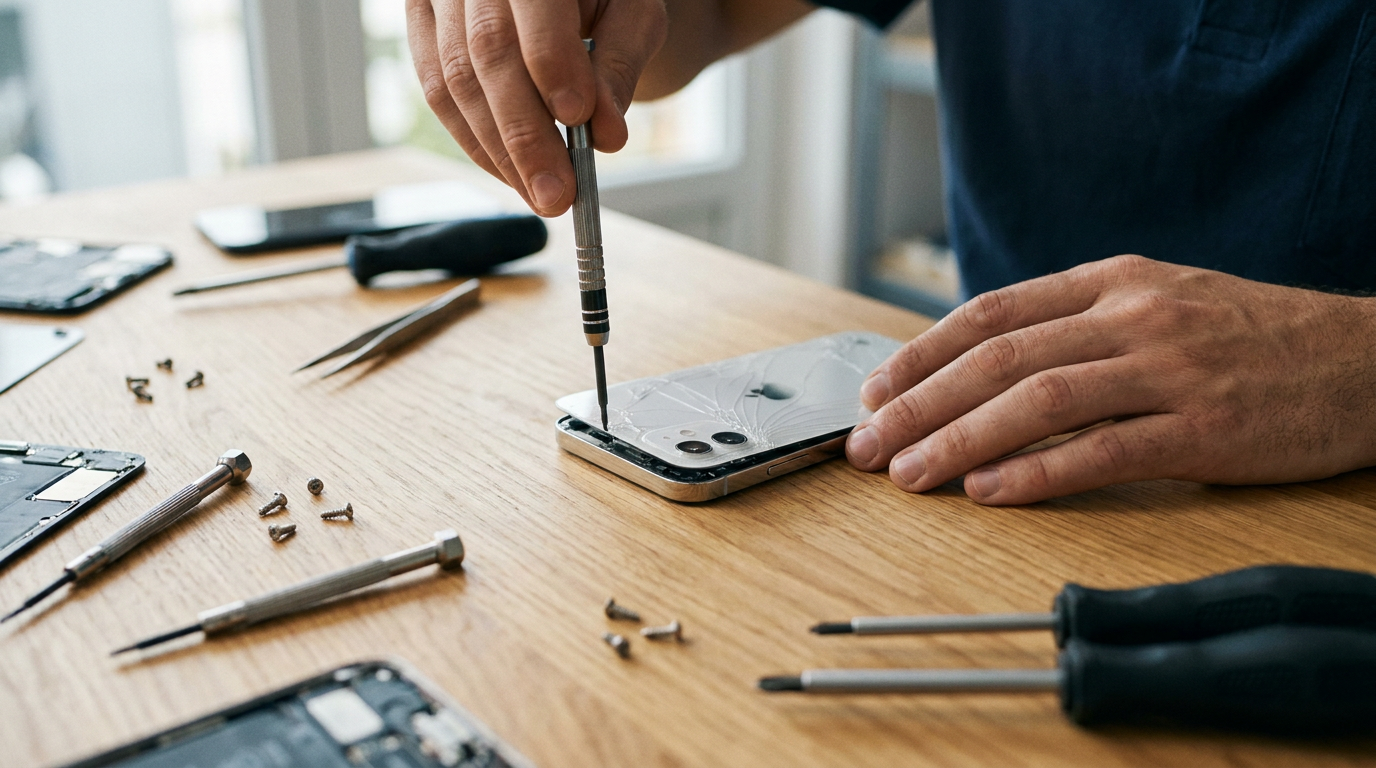
The modern smartphone has evolved into a tightly sealed sandwich of glass and metal, held together by strong industrial adhesives that make DIY repairs incredibly daunting. A cracked screen or a degraded battery often meant abandoning an otherwise fully functional device because official manufacturer repairs were prohibitively expensive, while third-party fixes risked breaking the phone entirely. Consumer advocates have long argued that this design philosophy prioritizes sleek aesthetics and forced upgrades over practical longevity, leaving users with few affordable options when inevitable accidents occur in their daily lives.[5][6]
Under the new rules, manufacturers selling smartphones and tablets in the EU must guarantee the availability of essential spare parts to independent repairers for five to seven years after a product is officially discontinued. This ensures that the secondary market for older devices remains viable, allowing a phone purchased in 2026 to be easily serviced well into the 2030s. The mandate covers high-failure components like batteries, displays, charging ports, and camera modules, which are the most common reasons consumers prematurely discard their electronics.[2][4][7]

Crucially, the directive also addresses the logistics of the repair process. Manufacturers are now required to deliver these spare parts within five to ten working days. This provision ensures that consumers aren't left stranded without their primary communication and banking tools for weeks on end while waiting for a simple component to ship from overseas. By guaranteeing a reliable supply chain, the EU aims to foster a robust, competitive local repair market where neighborhood shops can quickly source the parts they need to fix devices at a fraction of the cost of a manufacturer's official service center.[1][4]
Hardware longevity, however, is only half the battle; software obsolescence has historically been the hidden killer of older phones. Once a manufacturer stops issuing security patches, a device becomes fundamentally unsafe for mobile banking, payment systems, and personal data storage, regardless of its pristine physical condition. To combat this invisible expiration date, the directive mandates a minimum of five years of software security updates for all new smartphones placed on the market, ensuring that the digital lifespan matches the newly extended physical lifespan.[5]
Hardware longevity, however, is only half the battle; software obsolescence has historically been the hidden killer of older phones.
This software requirement will have a profound impact on the budget smartphone sector. While premium flagship devices from companies like Apple and Google already offer five to seven years of software support, budget Android devices have historically been abandoned by their manufacturers after just two or three years. The new EU baseline elevates the lifespan of these affordable devices, ensuring that lower-income consumers are not disproportionately forced into the upgrade cycle simply because their operating systems have become vulnerable to hackers and malicious software.[5]

The legislation also takes direct aim at "parts pairing"—a highly controversial practice where manufacturers use cryptographic software locks to tie specific hardware components to a device's motherboard. In recent years, this practice has been used to disable third-party components or restrict functionality if a repair is performed outside of a brand's authorized network. Unless technically justified by legitimate security concerns, these artificial software locks are now strictly prohibited under the new directive, removing one of the largest hurdles for third-party technicians.[1][2][5]
The ban on parts pairing is a massive victory for independent repair technicians. Previously, if a consumer replaced a cracked screen or a failing battery with a high-quality aftermarket part, or even a salvaged original part from an identical phone, the device's operating system might trigger persistent warning messages or disable features like biometric authentication. By outlawing these arbitrary restrictions, the EU is opening the door for a truly competitive, affordable independent repair market where parts can be swapped freely without manufacturer interference or digital penalties.[1][2][6]
Environmental advocates and consumer protection groups have hailed the directive as a cornerstone of the circular economy. The European Consumer Centre notes that 77 percent of EU citizens would prefer to repair their appliances rather than replace them, but have been routinely deterred by high costs and logistical hurdles. By extending the practical lifespan of smartphones, the EU hopes to drastically reduce electronic waste, which is currently the world's fastest-growing waste stream. Because smartphone manufacturing accounts for up to 95 percent of a device's lifetime greenhouse gas emissions, extending service lives globally is viewed as a critical climate objective.[3][4]

The ripple effects of this legislation are expected to extend far beyond Europe's borders in a phenomenon often referred to as the "Brussels Effect." While the United States has seen a patchwork of state-level right-to-repair laws—such as California's sweeping 2024 act and narrower bills in New York and Minnesota—the EU's unified market standard is likely to force global manufacturers to adopt these repairable designs universally. It is highly inefficient for multinational tech giants to design one easily repairable smartphone for the European market and a separate, sealed device for North America or Asia.[3][6]
Faced with this inevitable regulatory shift, the tech industry's lobbying stance has begun to fracture. Companies that historically spent millions fighting right-to-repair legislation have started to pivot, recognizing that repairability is becoming both a legal requirement and a mainstream consumer demand. Some major manufacturers have already launched self-repair programs and redesigned their internal chassis to make battery swaps less destructive, attempting to get ahead of the compliance curve before the July 2026 deadline forces their hand across the entire European continent.[1][5][7]

Looking ahead, the European Union is already preparing its next phase of hardware regulation to further empower consumers. By February 2027, a separate law will require portable devices to feature user-replaceable batteries that can be swapped without specialized tools, heat guns, or chemical solvents. Together, these comprehensive frameworks signal a definitive end to planned obsolescence, ensuring that the smartphones of the future are built to last, easy to fix, and designed to respect both the consumer's wallet and the planet's finite resources.[2][4]
How we got here
2023
The European Union approves a new battery law requiring user-replaceable batteries in portable devices by 2027.
July 2024
The sweeping Right to Repair directive is officially adopted at the European level.
June 2025
New EU ecodesign rules introduce mandatory repairability labels for smartphones and tablets.
July 31, 2026
The final deadline for all EU member states to transpose the Right to Repair directive into enforceable national law.
February 2027
The upcoming deadline requiring all new portable devices to feature batteries that can be replaced without specialized tools.
Viewpoints in depth
Consumer Rights Advocates
Argue that affordable, accessible repair is a fundamental property right.
Consumer protection groups and right-to-repair coalitions emphasize that once a user purchases a device, they should have total control over how it is maintained. They argue that artificial software locks and restricted parts supply chains are anti-competitive tactics designed solely to force premature upgrades. For these advocates, the EU directive is a long-overdue correction that restores basic ownership rights and protects lower-income consumers from being priced out of the digital economy.
Environmental Organizations
Focus on the massive ecological footprint of disposable consumer electronics.
Environmentalists point to the staggering carbon emissions generated during the manufacturing of new smartphones, which account for up to 95% of a device's total lifetime climate impact. They argue that recycling is insufficient to handle the world's fastest-growing waste stream, and that extending the operational life of existing devices is the only viable strategy to curb the mining of rare earth metals and reduce global e-waste.
Tech Manufacturers
Balance the push for repairability with concerns over device security and intellectual property.
While many manufacturers are adapting to the new regulations, industry lobbying groups have historically cautioned against unrestricted third-party repairs. They argue that tightly integrated designs and parts pairing are necessary to ensure user safety, protect biometric data, and maintain water-resistance standards. However, as the regulatory tide turns, most brands are now pivoting to highlight their own authorized self-repair programs and modular design innovations.
What we don't know
- How strictly individual EU member states will enforce the ban on parts pairing, and what exceptions will be granted for 'legitimate security concerns'.
- Whether major manufacturers will raise the upfront retail price of smartphones to offset the loss of revenue from frequent device upgrades.
- Exactly how the 2027 removable battery mandate will impact the water and dust resistance (IP ratings) of flagship smartphones.
Key terms
- Planned Obsolescence
- The business strategy of designing products with an artificially limited useful life so they will become obsolete and require replacement.
- Parts Pairing
- A manufacturer practice that uses software locks to restrict device functionality if a component is replaced by an unauthorized third party.
- Circular Economy
- An economic model focused on minimizing waste and making the most of resources by repairing, reusing, and recycling products.
- Brussels Effect
- The process by which the European Union's stringent market regulations end up setting the standard for global corporate behavior.
Frequently asked
When does the EU Right to Repair law take effect?
All 27 EU member states must transpose the directive into their national laws by July 31, 2026, at which point the new rules become fully enforceable.
Will this law force major brands to change their phones globally?
Yes. Because it is highly inefficient for multinational companies to design different hardware for different regions, these repairable designs are expected to roll out worldwide.
What is parts pairing?
Parts pairing is a practice where manufacturers use software locks to tie specific hardware components to a device. The new EU law prohibits this, allowing independent shops to use third-party parts.
Does this mean phones will have removable batteries again?
A separate EU law taking effect in February 2027 will require portable devices to have batteries that users can replace without specialized tools or heat-activated adhesives.
Sources
Source coverage
7 outlets
3 viewpoints surfaced







[1]CybernewsTech Industry & Analysts
Right to Repair: EU will make it easier and cheaper to repair a smartphone this year
Read on Cybernews →[2]CyberShackTech Industry & Analysts
EU Right to Repair rules are coming to save your phone battery in 2027
Read on CyberShack →[3]The Regulatory ReviewEnvironmental & Legal Watchdogs
The Right to Repair Movement Gains Ground
Read on The Regulatory Review →[4]European Consumer Centre GermanyConsumer Protection Advocates
Repair, don't throw away: All you need to know about the right to repair
Read on European Consumer Centre Germany →[5]RepairScore.euConsumer Protection Advocates
What does the EU Right to Repair Directive mean for my phone?
Read on RepairScore.eu →[6]Right to Repair EuropeConsumer Protection Advocates
The state of Right to Repair in 2026
Read on Right to Repair Europe →[7]Emporia MobileTech Industry & Analysts
Why repairability is crucial for smartphones
Read on Emporia Mobile →

More in technology
See all 8 stories →AI Forecasting
How AI is Rewriting the Rules of Global Weather Forecasting
6 sources

Apple Leadership
Apple Restructures Hardware and Design Leadership Ahead of CEO Transition
9 sources

Python Ecosystem
Python 3.14 Officially Supports Free-Threading, Ending the 35-Year Reign of the GIL
7 sources

Smart Home Tech
The End of the Walled Garden: How Matter 1.6 and Edge AI Are Rewiring the Smart Home
6 sources

Every angle. Every day.
Get technology stories with full source coverage and perspective breakdowns delivered to your inbox.