
US, Iran Open Tense Peace Talks in Switzerland Amid Strait of Hormuz Closure Threats
Vice President JD Vance and Iranian officials began high-stakes negotiations to cement a fragile ceasefire, even as President Trump threatened military retaliation over Tehran's claims of closing the Strait of Hormuz.
By Factlen Editorial Team
- US Administration
- Focuses on leveraging military threats and economic pressure to force Iran into abandoning its nuclear program and securing the Strait of Hormuz.
- Iranian Leadership
- Demands the unfreezing of billions in assets and an end to Israeli strikes in Lebanon, maintaining its right to enrich uranium while using the Strait as leverage.
- Global Markets & Shippers
- Primarily concerned with the safe passage of commercial vessels through the Strait of Hormuz and the stabilization of global oil prices.
- Regional Mediators
- Pakistan and Qatar emphasize diplomacy and technical negotiations to achieve a sustainable, comprehensive ceasefire across the Middle East.
What's not represented
- · Lebanese civilians affected by the ongoing Israeli-Hezbollah strikes
- · European nations highly dependent on stable Middle Eastern energy exports
Why this matters
The 60-day interim agreement aims to end a four-month conflict that has severely disrupted global shipping and spiked oil prices. Failure to secure a permanent deal could reignite a regional war, trigger a massive energy crisis, and severely impact the global economy.
Key points
- U.S. and Iranian officials opened high-level peace talks in Switzerland to solidify a 60-day interim ceasefire.
- The negotiations were immediately strained by Iran's declaration that it had closed the Strait of Hormuz to commercial shipping.
- President Trump threatened to resume military strikes and impose tolls on the strait if Iran blocks maritime traffic.
- Shipping data indicates a sharp drop in vessel transits through the strait, despite U.S. military assurances that the waterway remains open.
- Iranian negotiators are demanding the unfreezing of billions in assets and an end to Israeli strikes in Lebanon.
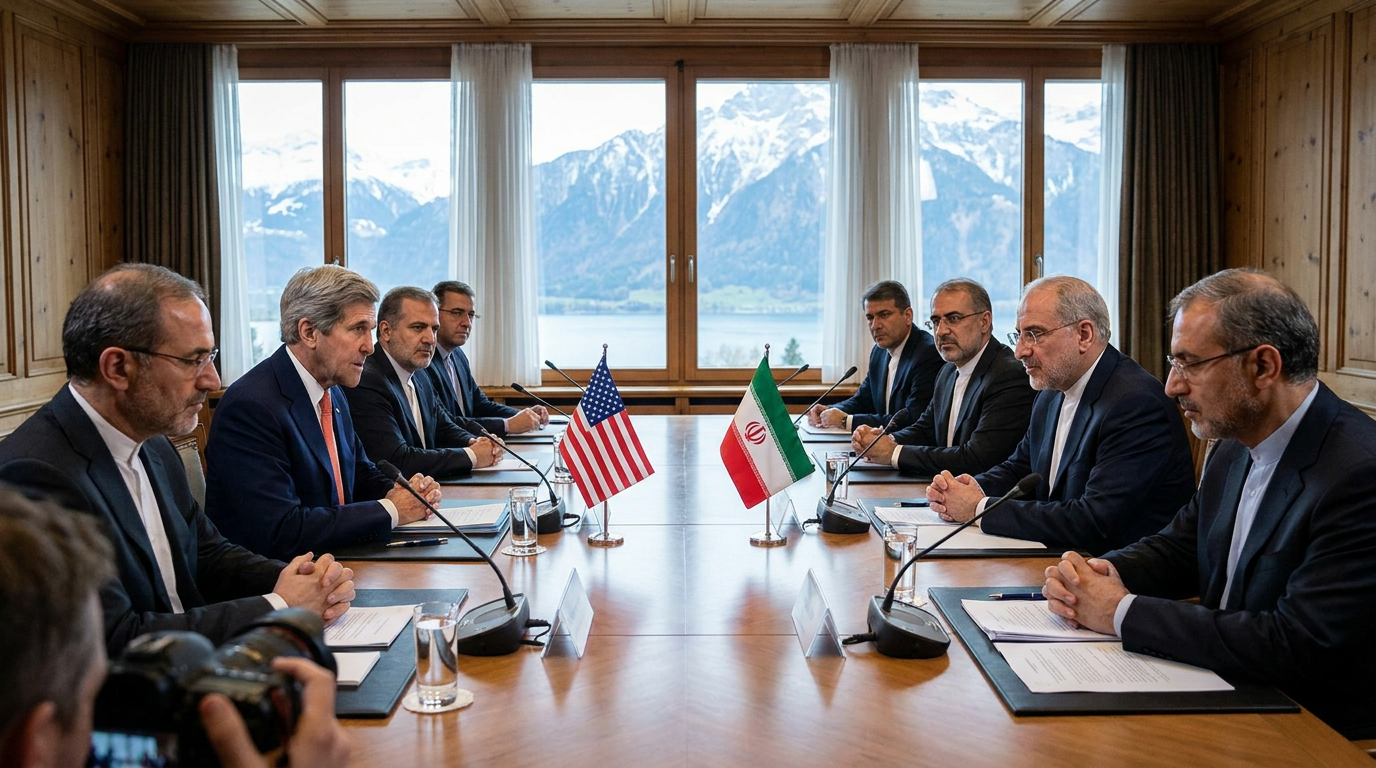
High-stakes diplomatic negotiations between the United States and Iran formally opened at the Bürgenstock resort in Switzerland on Sunday, aiming to cement a fragile interim ceasefire and end a devastating four-month conflict. Vice President JD Vance, leading the American delegation alongside special envoys Jared Kushner and Steve Witkoff, expressed optimism at the start of the Lake Lucerne Summit, asking if the two nations could "turn over a new leaf" [1][2]. However, the diplomatic overtures in the Swiss Alps were immediately overshadowed by bellicose rhetoric from Washington. President Donald Trump publicly threatened to resume military strikes against Tehran if it followed through on threats to blockade the Strait of Hormuz, creating a volatile backdrop for the technical discussions [4][6]. The talks, mediated by Pakistani Prime Minister Shehbaz Sharif and Qatari officials, represent the highest-level direct engagement between the two adversaries since the war began in late February [3][8].[1][2][3][4][6][8]
The summit is the first major test of a 60-day memorandum of understanding signed last week by President Trump and Iranian President Masoud Pezeshkian [7]. The interim framework was designed to halt hostilities on all fronts, including the ongoing clashes between Israel and the Iran-backed Hezbollah militia in southern Lebanon [1][2]. In exchange for peace, the agreement outlines a pathway for Iran to freely export its oil and access billions of dollars in frozen international assets [7][8]. Crucially, the deal also requires Tehran to dilute its stockpile of highly enriched uranium and guarantees toll-free commercial transit through the Strait of Hormuz for the duration of the 60-day window [2][8]. Negotiators are now in a sprint to convert these broad strokes into a permanent, binding treaty before the clock expires [7].[1][2][7][8]
But the fragile truce faced an immediate crisis over the weekend when Iran's Islamic Revolutionary Guard Corps declared the Strait of Hormuz closed to maritime traffic [5]. Tehran justified the blockade by pointing to a wave of deadly Israeli airstrikes in Lebanon, which Iranian officials condemned as a direct violation of the ceasefire's regional commitments [3][5]. Iranian parliamentary speaker Mohammad Bagher Ghalibaf, who is leading Tehran's delegation in Switzerland alongside Foreign Minister Abbas Araghchi, insisted that the United States must force its ally to halt the Lebanon campaign before comprehensive peace can be achieved [2][8]. The sudden escalation threatened to derail the Bürgenstock summit before the delegations even sat down at the negotiating table [6].[2][3][5][6][8]
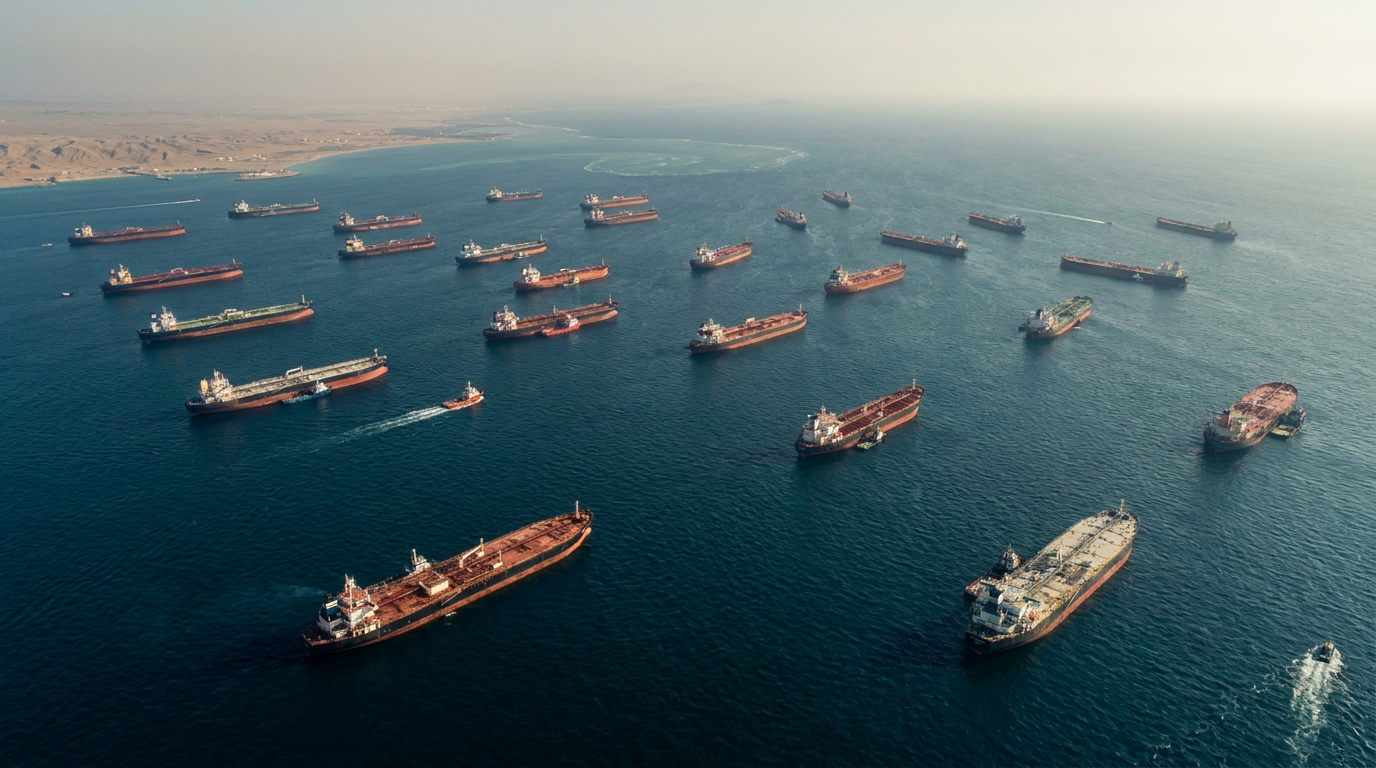
The actual status of the vital waterway remains fiercely contested. U.S. Central Command pushed back against Tehran's claims, stating that commercial vessels were still operating and that safe passage "remained intact" under the protection of American naval forces [1][5]. However, independent maritime tracking data suggests the Iranian threats have severely chilled global shipping. Analytics firm Kpler reported that only five vessels passed through the strait on Sunday, a precipitous drop from the 26 ships recorded just a day earlier [3]. The vessels that did transit included Very Large Crude Carriers carrying millions of barrels of Saudi crude, highlighting the immense economic risk [3]. Prior to the conflict, roughly 25 percent of the world's seaborne oil trade flowed through the narrow chokepoint [5].[1][3][5]

The actual status of the vital waterway remains fiercely contested.
Infuriated by the blockade announcement, President Trump unleashed a barrage of threats aimed at the Iranian leadership. In a telephone interview with Fox News, Trump warned that if Tehran interfered with maritime passage, the U.S. would seize control of the strait [4]. "You close [the Strait of Hormuz] and you won't have a country," the president stated [4]. He followed up with a post on Truth Social, demanding that Iran rein in Hezbollah militants and warning that failure to do so would result in the U.S. hitting Iran "very hard again, just like we did last week, only harder" [1][6]. Trump also floated the idea of imposing American tolls on vessels using the strait if a final agreement is not reached within the 60-day timeframe, framing the fees as compensation for U.S. military protection [2][7].[1][2][4][6][7]
The Iranian delegation responded to the American threats with defiance, setting a tense tone inside the Swiss negotiating rooms. Ghalibaf dismissed Trump's rhetoric, posting on social media that Tehran does not "count on the threats of the Americans" and warning Washington to be careful with its statements [1]. Meanwhile, in Tehran, President Pezeshkian drew a hard line on the nuclear issue, declaring that Iran "will never back down from the right to enrich uranium, and the other side is also forced to accept it" [7]. Iranian state media characterized the quadrilateral talks as entering a "difficult phase," noting that Tehran's negotiators were demanding tangible proof of sanctions relief and unfrozen assets before making further concessions [1][8].[1][7][8]
Despite the public posturing, technical negotiations proceeded behind closed doors. Vice President Vance emphasized that the political leadership was present primarily to establish a structure for the technical teams to systematically work through the disagreements [8]. Pakistani and Qatari mediators shuttled between the American and Iranian camps, attempting to compartmentalize the immediate crisis in the Strait of Hormuz from the broader, long-term nuclear and economic issues [2][8]. Pakistan's Army Chief, Field Marshal Asim Munir, who played a pivotal role in brokering the initial ceasefire, was also present to help navigate the military de-escalation protocols [2].[2][8]

The outcome of the Lake Lucerne Summit carries profound implications for the global economy. The four-month war has already inflicted severe damage on international supply chains and driven up energy costs [5]. Following the weekend's uncertainty over the Strait of Hormuz, the price of Brent crude inched upward to $81.70 per barrel [7]. The Trump administration is acutely aware that surging gasoline prices could damage its domestic standing, making the swift reopening of the strait a top priority [1][7]. If the 60-day window closes without a permanent resolution, the resumption of full-scale hostilities could trigger an unprecedented energy crisis and draw neighboring Gulf states deeper into the conflict [5][7].[1][5][7]
How we got here
Feb 28, 2026
The United States and Israel launch an air war against Iran, sparking a four-month regional conflict.
Mid-June 2026
President Trump and Iranian President Pezeshkian sign a 60-day interim ceasefire agreement.
June 20, 2026
Iran announces the closure of the Strait of Hormuz, citing Israeli strikes in Lebanon.
June 21, 2026
Vice President JD Vance and Iranian officials begin technical peace negotiations in Switzerland.
Viewpoints in depth
The U.S. Administration's View
Washington is utilizing a maximum-pressure strategy, combining diplomatic outreach with severe military threats to force Iranian concessions.
The Trump administration views the 60-day interim agreement as a mechanism to permanently dismantle Iran's nuclear ambitions and secure global energy markets. Vice President JD Vance is leading the diplomatic effort to 'turn over a new leaf,' offering the unfreezing of billions in assets as a carrot. However, President Trump's public threats to resume the war and impose tolls on the Strait of Hormuz serve as the stick, designed to deter Tehran from using the waterway as leverage and to force Iran to rein in its regional proxy, Hezbollah.
Iran's View
Tehran views the negotiations as a transactional process to lift crippling economic blockades while maintaining its regional influence and nuclear rights.
For the Iranian leadership, the primary goal of the Lake Lucerne Summit is to secure the immediate release of frozen international assets and the unrestricted sale of its oil. Hardliners in Tehran, led by parliamentary speaker Mohammad Bagher Ghalibaf, remain deeply skeptical of American promises and are using the closure of the Strait of Hormuz to protest ongoing Israeli military operations in Lebanon. Furthermore, President Masoud Pezeshkian has drawn a red line on the nuclear issue, insisting that Iran retains the sovereign right to enrich uranium regardless of any final treaty.
The Global Economic View
Energy markets and international shippers are bracing for severe disruptions if the diplomatic talks collapse.
The shipping industry and global commodities markets are caught in the crossfire of the geopolitical standoff. With 25 percent of the world's seaborne oil trade historically passing through the Strait of Hormuz, any prolonged closure threatens to trigger a massive spike in energy prices. Analytics firms like Kpler are already tracking a precipitous drop in vessel traffic as shipping companies reroute or anchor their fleets to avoid potential attacks. For the global economy, the success of the Swiss talks is paramount to preventing a resurgence of inflation driven by soaring fuel costs.
What we don't know
- Whether the U.S. will actually impose tolls on the Strait of Hormuz if the 60-day negotiation window expires without a deal.
- The exact number of commercial vessels currently anchored or rerouting to avoid the Strait of Hormuz.
- How Israel's ongoing military operations in Lebanon will impact Tehran's willingness to finalize the nuclear aspects of the treaty.
Key terms
- Strait of Hormuz
- A narrow, strategically vital waterway between the Persian Gulf and the Gulf of Oman, through which roughly a quarter of the world's seaborne oil passes.
- Hezbollah
- An Iran-backed militant group and political party based in Lebanon, currently engaged in conflict with Israel.
- Highly Enriched Uranium
- Uranium that has been processed to increase the concentration of the U-235 isotope, a critical step in developing nuclear weapons.
- Very Large Crude Carrier (VLCC)
- Massive oil tankers capable of carrying up to 2 million barrels of crude oil, frequently used to transport Middle Eastern oil to global markets.
Frequently asked
What is the Lake Lucerne Summit?
It is a high-level diplomatic meeting in Switzerland between the U.S. and Iran, mediated by Pakistan and Qatar, aimed at negotiating a permanent end to the recent four-month war.
Why did Iran threaten to close the Strait of Hormuz?
Iran claims that ongoing Israeli military strikes against Hezbollah in Lebanon violate the terms of the regional ceasefire, prompting Tehran to use the vital shipping lane as leverage.
What are the terms of the 60-day interim agreement?
The framework pauses hostilities, guarantees toll-free transit through the Strait of Hormuz, and paves the way for Iran to access frozen assets in exchange for diluting its highly enriched uranium.
Are ships still passing through the Strait of Hormuz?
The situation is disputed. The U.S. military says commercial vessels are still transiting safely, but independent tracking data shows a severe drop in traffic as shipping companies avoid the area.
Sources
Source coverage
8 outlets
4 viewpoints surfaced








[1]The Washington PostUS Administration
Vance begins Iran talks in Switzerland as Trump threatens new attacks
Read on The Washington Post →[2]Associated PressRegional Mediators
U.S. and Iranian negotiators in Switzerland for talks on interim agreement
Read on Associated Press →[3]ReutersGlobal Markets & Shippers
Strait of Hormuz shipping falls sharply after Iran declares waterway shut
Read on Reuters →[4]Fox NewsUS Administration
Trump threatens to attack Iran, take over Strait of Hormuz if passage blocked
Read on Fox News →[5]Al JazeeraIranian Leadership
Shipping stalls in Strait of Hormuz after Iran declares key waterway shut
Read on Al Jazeera →[6]The GuardianUS Administration
Trump threatens to restart attacks on Iran even as Vance cites progress in talks
Read on The Guardian →[7]PBSRegional Mediators
High-level U.S.-Iran talks have tense start in Switzerland as Trump threatens Tehran
Read on PBS →[8]Arab NewsIranian Leadership
US Vice President JD Vance and senior Iranian officials formally launch negotiations
Read on Arab News →

More in news politics
See all 10 stories →Strait of Hormuz
US and Iran Open Direct Peace Talks in Switzerland Amid Renewed Strait of Hormuz Blockade
7 sources
Public Health Guidelines
Fact Check: Do 'Weekend Warrior' Workouts Actually Provide the Same Benefits as Daily Exercise?
7 sources

Strait of Hormuz
Global Shipping Halts in Strait of Hormuz as U.S. and Iran Open High-Stakes Peace Talks
8 sources
US-Iran Relations
U.S. and Iran Open Ceasefire Talks in Switzerland as Strait of Hormuz Closure Halts Shipping
7 sources
Every angle. Every day.
Get news politics stories with full source coverage and perspective breakdowns delivered to your inbox.