
The Sub-10 Minute Charge: How Shell's New Thermal Fluid Concept Rewrites EV Efficiency and Range
Shell's Triple 10 Challenge concept car demonstrates a single-circuit immersion cooling system that allows electric vehicles to charge in under ten minutes on standard chargers. By replacing traditional water-glycol systems with a specialized dielectric fluid, the design forces a reevaluation of how automakers manage battery heat, weight, and efficiency.
By Factlen Editorial Team
- Thermal Innovators
- Prioritize advanced fluid engineering to reduce battery size and weight.
- Industry Pragmatists
- Weigh the performance gains against the manufacturing and sealing complexities.
- Infrastructure Advocates
- Focus on maximizing the throughput of existing 175kW charging networks.
What's not represented
- · Independent automotive repair shops facing new servicing requirements
- · Environmental groups assessing the recyclability of gas-to-liquid synthetic fluids
Why this matters
For consumers, this technology means adding 24 kilometers of range per minute using existing public chargers, effectively eliminating the wait times that deter EV adoption. For the auto industry, it offers a pathway to build lighter, cheaper vehicles with smaller batteries rather than relying on massive, resource-heavy packs to achieve long ranges.
Key points
- Shell's Triple 10 Challenge concept car charges from 10% to 80% in under 10 minutes.
- The vehicle uses a single-circuit immersion cooling system with proprietary dielectric fluid.
- Direct fluid contact eliminates hotspots and allows for 24 kilometers of range added per minute.
- The design achieves a 30% efficiency improvement by stripping out heavy traditional cooling pipes.
- Adoption requires automakers to completely redesign battery packs to seal the low-viscosity fluid.
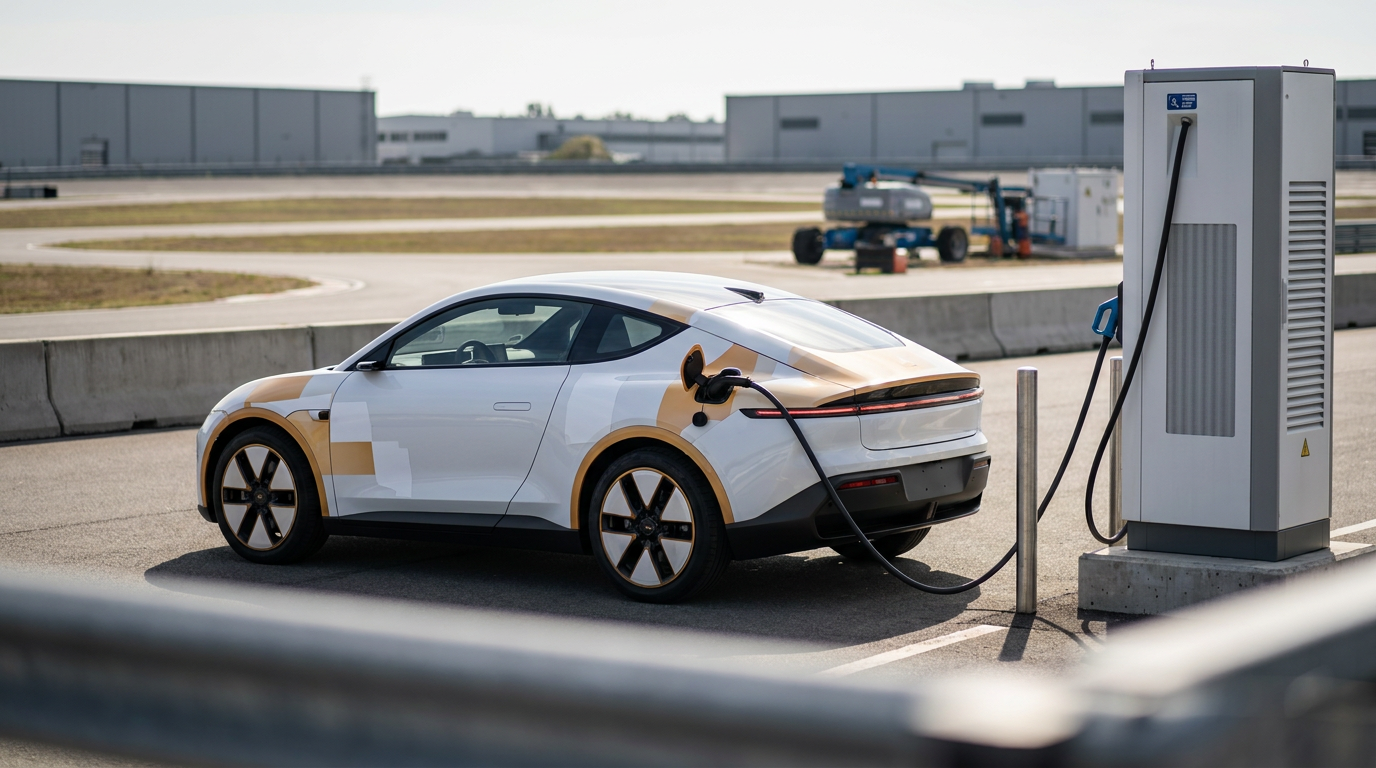
Energy giant Shell has unveiled the Triple 10 Challenge concept car, a fully driveable prototype that challenges the automotive industry's reliance on massive battery packs. Developed in collaboration with British engineering firms RML Group and Empel Systems, the vehicle targets three ambitious benchmarks: a sub-10-minute charge time, an efficiency of 10 kilometers per kilowatt-hour, and a lifecycle carbon footprint of just 10 tonnes. At the heart of this achievement is a fundamental rethinking of how electric vehicles manage heat.[1][6][7]
The core bottleneck in modern EV design is thermal management. When batteries charge or discharge rapidly, they generate immense heat. If not dissipated quickly, this heat can degrade the cells or, in extreme cases, trigger thermal runaway. To prevent this, current electric vehicles throttle their charging speeds, forcing consumers to wait. The industry currently faces a crossroads between two distinct thermal paradigms: the traditional water-glycol indirect cooling systems, and the emerging dielectric immersion cooling approach championed by Shell.[4][6]
The case for the traditional water-glycol architecture is rooted in manufacturing pragmatism. This system pumps a mixture of water and antifreeze through complex networks of aluminum cold plates and piping that sit adjacent to the battery cells. It is the undisputed industry standard. Automakers understand how to build it at scale, the coolant itself is incredibly cheap, and the supply chains for the necessary pumps and hoses are deeply entrenched. For legacy manufacturers, sticking with water-glycol means avoiding the massive capital expenditure required to retool production lines for entirely new battery pack designs.[6][8]
However, the case against traditional water-glycol systems is mounting as consumers demand faster charging. Because the coolant cannot touch the electrical components directly, heat must transfer through the cell wall, thermal paste, and the metal cooling plate before reaching the fluid. This indirect transfer is slow and creates localized hotspots. Furthermore, the extensive plumbing required for separate cooling loops—one for the battery, another for the motor—adds significant weight and complexity to the vehicle chassis, inherently limiting the car's overall efficiency.[3][6]

Shell's alternative paradigm is single-circuit immersion cooling, utilizing its proprietary EV-Plus Thermal Fluid. Derived from natural gas using Gas-to-Liquid technology, this fluid is 99.5 percent pure and entirely dielectric, meaning it does not conduct electricity. Instead of pumping coolant through adjacent pipes, the immersion architecture bathes the battery cells, electric motor, and power electronics directly in the fluid.[1][5]
The case for immersion cooling centers on unprecedented thermal efficiency and weight reduction. By filling all the interstitial spaces within the battery pack, the fluid maximizes direct contact with every cell. This eliminates hotspots and maintains a precise temperature tolerance across the entire powertrain. Furthermore, by transitioning to a single-fluid system, engineers can strip out the heavy, intricate piping of traditional cooling systems. This allows for a much more compact battery pack and significantly reduces the vehicle's overall mass.[5][8]
The case for immersion cooling centers on unprecedented thermal efficiency and weight reduction.
The evidence supporting the immersion approach is quantified in the Triple 10 concept's charging performance. During testing validated by HORIBA MIRA, the vehicle's 34-kilowatt-hour battery pack successfully charged from 10 percent to 80 percent in just 9 minutes and 54 seconds. Crucially, it achieved this on a standard 175-kilowatt DC fast-charger—the type already widely deployed on public networks—rather than relying on rare 350-kilowatt ultra-fast infrastructure.[1][7]
This translates to a tangible consumer benefit: the immersion-cooled system adds 24 kilometers of range per minute of charging. In comparison, a typical battery electric vehicle on the exact same 175-kilowatt hardware adds only about 13 kilometers per minute. By preventing the battery from overheating, the dielectric fluid allows the cells to accept a high rate of charge for a sustained period without the system needing to throttle the current to protect the battery's lifespan.[1][6][7]

Further evidence emerges in the vehicle's driving economy. The concept achieves 10 kilometers per kilowatt-hour, representing a roughly 30 percent improvement in overall energy efficiency compared to many current-generation electric vehicles. By utilizing a smaller battery and a simplified, lightweight cooling circuit, the vehicle requires less energy to move its own mass, proving that extreme range can be achieved through efficiency rather than simply adding more lithium-ion cells.[2][7]
Despite these breakthroughs, the case against immediate mass adoption of immersion cooling involves significant engineering hurdles. Transitioning to this architecture requires a complete redesign of the battery pack housing. Sealing a pack to hold a low-viscosity fluid securely over a 15-year vehicle lifespan, while enduring constant vibrations and temperature fluctuations, presents a formidable manufacturing challenge. A leak in a traditional system might cause localized overheating; a leak in an immersion system could drain the pack entirely.[6][8]
Additionally, the economics of the fluid itself present a barrier. Highly refined, proprietary gas-to-liquid synthetic fluids are inherently more expensive to produce than standard water-ethylene-glycol mixtures. While the overall vehicle cost might drop due to smaller batteries and fewer components, the upfront cost of the thermal fluid itself remains a premium line item for procurement departments.[8]

The transition also forces a paradigm shift in the automotive aftermarket. Servicing an immersion-cooled powertrain requires new equipment, specialized technician training, and entirely new protocols for handling and recycling the dielectric fluids during routine maintenance or collision repair. This creates friction for a global repair industry that has only just begun to adapt to standard electric vehicles.[8]
Ultimately, the traditional water-glycol system fits well when automakers are iterating on existing, proven vehicle platforms where minimizing upfront manufacturing disruption is the primary goal. It remains the logical choice for ultra-budget electric vehicle segments where the premium cost of specialized dielectric fluids and advanced sealing techniques would outweigh the benefits of faster charging.[6][8]
Conversely, Shell's single-circuit immersion cooling fits well when manufacturers are designing next-generation, clean-sheet architectures aimed at the mass market. It is particularly suited for high-utilization fleet vehicles and compact cars where space and weight are at a premium, and where maximizing the throughput of existing 175-kilowatt public charging infrastructure is critical to overcoming consumer range anxiety.[1][7]
How we got here
September 2025
Shell and RML Group demonstrate a 34 kWh battery pack capable of sub-10-minute charging using EV-Plus Thermal Fluid.
March 2026
Extensive testing at HORIBA MIRA validates the fluid's effectiveness as a universal thermal management solution across extreme temperatures.
June 2026
Shell officially unveils the Triple 10 Challenge concept car, integrating the single-circuit immersion cooling system into a road-worthy vehicle.
Viewpoints in depth
Automotive Innovators
Advocates for redesigning EV architectures around thermal efficiency rather than battery size.
Engineering firms like RML Group and Empel Systems argue that the industry's reliance on increasingly massive battery packs is a dead end. They point to immersion cooling as the key to breaking the cycle, allowing for smaller, lighter batteries that charge fast enough to eliminate range anxiety. By stripping out the heavy piping of traditional cooling, they believe OEMs can achieve a 30% leap in overall vehicle efficiency while dramatically lowering lifecycle emissions.
Legacy Manufacturers
Cautious about the transition costs and engineering hurdles of adopting immersion cooling.
While acknowledging the performance benefits, traditional automakers highlight the immense capital required to retool production lines for immersion-cooled packs. Sealing a battery pack to hold fluid over a 15-year lifespan presents significant manufacturing challenges. Furthermore, transitioning to a single-circuit dielectric system requires retraining the global aftermarket service industry, making some OEMs hesitant to abandon the well-understood, cheaper water-glycol systems currently in use.
Charging Infrastructure Providers
Focused on maximizing the utility of existing public charging networks.
Network operators view advanced thermal management as a critical lifeline. Currently, achieving sub-10-minute charge times requires ultra-fast 350kW chargers, which are expensive to install and strain local grids. Because the Triple 10 concept achieves these speeds on standard 175kW chargers, infrastructure providers argue that vehicle-side thermal innovations are far more scalable than constantly upgrading grid hardware.
What we don't know
- How the long-term sealing of immersion-cooled battery packs will hold up over a 10-to-15-year vehicle lifespan.
- The exact cost premium of outfitting a mass-market EV with specialized gas-to-liquid dielectric fluids.
- Which major automaker will be the first to adopt a single-circuit immersion cooling architecture for a high-volume production vehicle.
Key terms
- Dielectric Fluid
- A liquid that does not conduct electricity, allowing it to be used in direct contact with high-voltage electrical components for cooling.
- Water-Glycol System
- The traditional cooling method for EVs, which pumps a mixture of water and antifreeze through metal plates or pipes adjacent to the battery cells.
- Thermal Runaway
- A dangerous chain reaction where a battery cell overheats and catches fire, spreading to adjacent cells—a risk mitigated by effective cooling.
- Single-Circuit Architecture
- A simplified vehicle design where one continuous loop of fluid cools the battery, motor, and power electronics simultaneously.
Frequently asked
What is immersion cooling in an EV?
Immersion cooling involves bathing the battery cells and powertrain components directly in a specialized, electrically non-conductive fluid, rather than pumping coolant through separate pipes.
How fast does the Shell concept car charge?
The Triple 10 Challenge concept can charge from 10% to 80% in 9 minutes and 54 seconds using a standard 175kW public charger.
Why is a dielectric fluid necessary?
Because the fluid comes into direct contact with high-voltage battery cells and electronics, it must be dielectric (electrically non-conductive) to prevent short circuits while still absorbing heat.
Does this require special charging stations?
No. One of the main advantages of the system is that it achieves ultra-fast charging speeds on widely available 175kW chargers, rather than requiring rare 350kW+ infrastructure.
Sources
Source coverage
8 outlets
3 viewpoints surfaced








[1]ShellThermal Innovators
Shell unveils Triple 10 Challenge concept car
Read on Shell →[2]CarScoopsInfrastructure Advocates
Oil Giant Shell Unveils Efficient New EV Concept
Read on CarScoops →[3]EV Infrastructure NewsInfrastructure Advocates
Shell unveils thermal fluid to unlock sub-ten-minute EV charging
Read on EV Infrastructure News →[4]WardsAutoIndustry Pragmatists
Shell unveils thermal fluid that could cut EV charging times to under 10 minutes
Read on WardsAuto →[5]ElectriveInfrastructure Advocates
Shell develops EV thermal fluid enabling sub-10-minute charging
Read on Electrive →[6]Brief GlanceThermal Innovators
Shell's Triple 10 EV Challenges the Battery-First Orthodoxy
Read on Brief Glance →[7]Fairs OnlineThermal Innovators
Shell's Triple 10 EV Concept Aims for 10-Minute Charge, 10 km/kWh Efficiency
Read on Fairs Online →[8]Maximize Market ResearchIndustry Pragmatists
Shell's Dielectric Breakthrough: Redefining BEV Powertrain Design
Read on Maximize Market Research →

Every angle. Every day.
Get automotive stories with full source coverage and perspective breakdowns delivered to your inbox.