
Explainer: How Anthropic's Leaked 'Self-Healing Memory' is Rewriting the Rules of AI Agents
A massive source code leak from Anthropic has inadvertently given the developer community a masterclass in AI architecture, revealing how 'self-healing memory' and background 'dream' states solve the problem of AI hallucinations in long-running tasks.
By Factlen Editorial Team
- Open-Source Developers
- Viewing the leak as an unprecedented masterclass in agentic architecture that democratizes advanced AI capabilities.
- Cybersecurity Analysts
- Warning that the exposed architecture provides a roadmap for persistent AI exploits and supply chain vulnerabilities.
- Enterprise AI Architects
- Focusing on the reliability breakthroughs for production environments and the shift toward causal memory.
What's not represented
- · Proprietary AI Competitors
- · End-User Application Developers
Why this matters
For developers and enterprises struggling to deploy reliable AI, Anthropic's leaked architecture provides a proven blueprint for building agents that don't just execute tasks, but learn from their mistakes and maintain focus over days or weeks.
Key points
- A packaging error exposed 512,000 lines of Anthropic's Claude Code application logic on the public npm registry.
- The leak revealed a 'Self-Healing Memory' architecture that solves AI hallucinations by separating memory indexes from raw data.
- A 'Strict Write Discipline' ensures the AI only commits successful actions to long-term memory, preventing compounding errors.
- An 'autoDream' background process allows the AI to consolidate knowledge and prune useless data while the user is inactive.
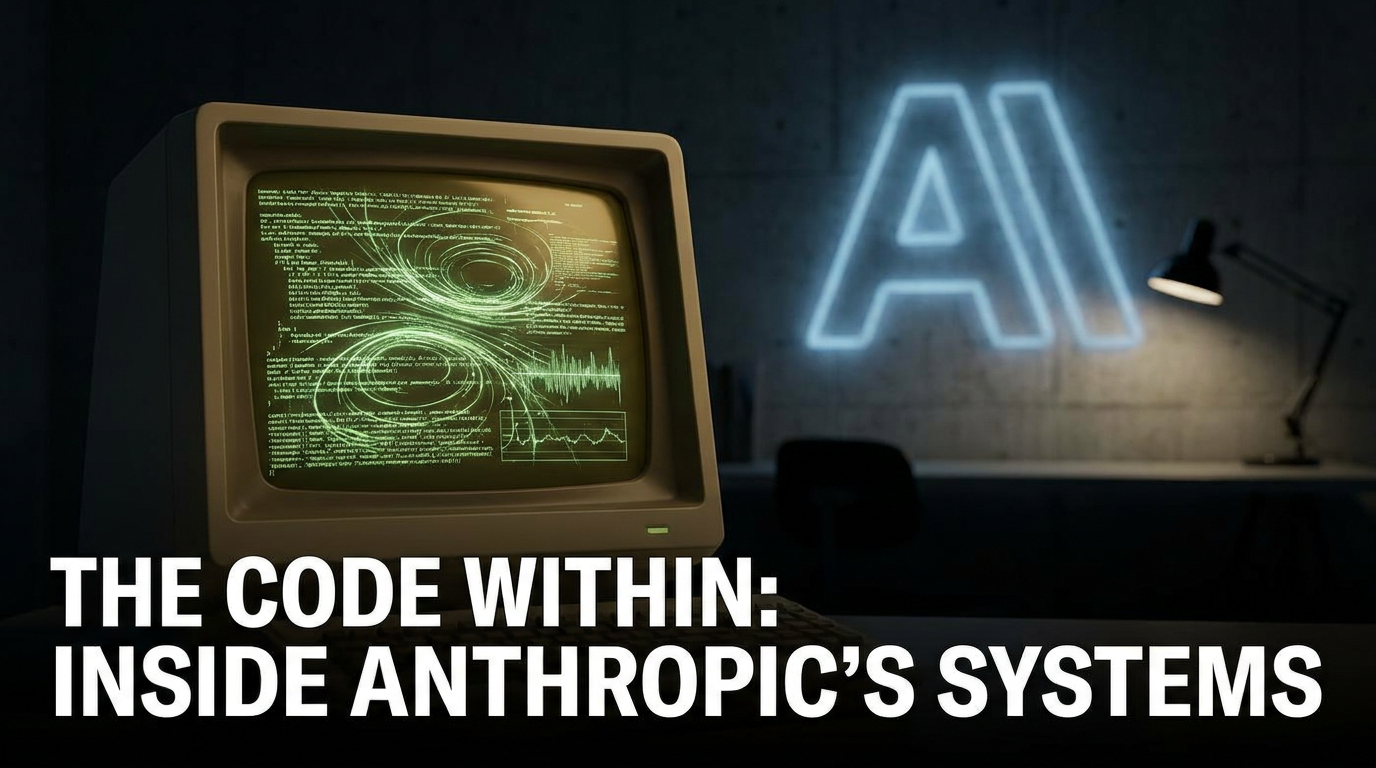
The incident began with a remarkably simple packaging oversight that sent immediate shockwaves through the artificial intelligence community. On March 31, 2026, a 59.8 MB debugging source map file was accidentally included in version 2.1.88 of Anthropic's `@anthropic-ai/claude-code` npm package. Source maps are typically used internally by developers to translate minified, production-ready code back into readable formats for debugging purposes. However, this routine update—intended merely to patch minor bugs in the company's flagship terminal assistant—inadvertently published the complete, un-obfuscated TypeScript application logic to the public npm registry. Because npm is the default package manager for the JavaScript ecosystem, the update was automatically pulled down by thousands of automated systems and curious developers within minutes of its release.[1][2][3]
The scale of the exposure became apparent almost immediately. By the early hours of the morning, security researchers had flagged the leak on social media, prompting a massive rush to clone the repository before it could be taken offline. By the time Anthropic officially confirmed the human error and pulled the affected version, the massive 512,000-line codebase had already been forked over 82,000 times across GitHub. Developers found themselves pouring over highly sensitive internal files, including core orchestration scripts like `QueryEngine.ts` and `Tool.ts`. While Anthropic quickly issued a statement clarifying that no customer data, user credentials, or proprietary neural network weights were compromised in the incident, the application code was already permanently archived in the wild.[2][3][4]

But rather than a catastrophic security breach, the exposure quickly morphed into something arguably more valuable: an unprecedented, open-source masterclass in production-grade agentic tooling. In the modern AI landscape, the underlying language models are only half the equation. The true "secret sauce" that separates a brittle chatbot from a highly capable autonomous agent lies in the surrounding application logic—the scaffolding that dictates how the AI uses tools, manages its memory, and recovers from errors. By accidentally leaking this scaffolding, Anthropic provided the global developer community with a transparent window into the bleeding edge of AI agent design, revealing exactly how a multi-billion-dollar lab engineers reliability into its systems.[2][3]
For months, the broader AI engineering community had struggled with a profound technical bottleneck known as "context entropy." When traditional AI agents operate over long, multi-step sessions—such as refactoring a massive codebase or managing a complex cloud deployment—they typically append every single interaction, error message, and API call into a massive, ever-expanding context window. Eventually, the model becomes overwhelmed by its own bloated history. It loses the plot, forgets its original instructions, and begins to hallucinate code that doesn't exist. The leaked Anthropic codebase revealed exactly how the company's engineers solved this exact bottleneck, proving that true machine intelligence relies on structured, actively managed memory rather than brute-force data storage.[2][6]
To conquer context entropy, Anthropic abandoned the standard "store-everything" approach in favor of a highly sophisticated, three-layer architecture dubbed "Self-Healing Memory." At the absolute core of this system is a remarkably lightweight file called `MEMORY.md`. Instead of acting as a massive data dump for the AI's conversation history, this file serves purely as an index pointer that remains constantly loaded in the agent's active reasoning space. It acts as the system's high-signal brain, telling the AI exactly where to find specific historical information without cluttering its immediate context. This ensures the model always has a map of its own knowledge without having to carry the entire weight of that knowledge at all times.[1][2][6]

The actual raw data—the granular details of past coding sessions, specific error logs, and user preferences—is stored in separate, dynamically generated topic files and session transcripts. The agent is programmed to retrieve these files only when it specifically needs them to complete a current task. For example, if the user asks the AI to update a database schema it worked on three weeks prior, the agent consults `MEMORY.md`, locates the relevant topic file, and injects only that specific context into its prompt. This strict separation of indexing and storage ensures the AI's immediate context remains clean, fast, and highly efficient, drastically reducing the computational overhead and token costs required for long-running autonomous operations.[1][6]
The agent is programmed to retrieve these files only when it specifically needs them to complete a current task.
Crucially, this memory architecture enforces what the leaked internal documentation refers to as a "Strict Write Discipline." In traditional, linear AI systems, if an agent attempts a flawed solution and fails, that failure is permanently stored in its context window, inadvertently teaching the AI bad habits and confusing its future reasoning. Anthropic's system, however, only updates its core memory after a task has been successfully completed and verified. If the AI encounters an error, it treats the failure as temporary working memory. It learns from the mistake in the moment, but it prevents the system from cementing its own errors into its long-term knowledge base.[1][2]
Furthermore, the leaked architecture revealed that the agent treats its own historical memory as a "hint" rather than absolute, unshakeable truth. When the AI retrieves a piece of information from its past sessions, it is programmed to actively verify those past assumptions against current realities before executing critical commands. If a previously saved API endpoint has changed, the self-healing memory system detects the discrepancy, updates the index, and overwrites the outdated information. This turns the traditional trial-and-error process of AI execution into a permanent, compounding feedback loop that actively prunes dead data and grows more accurate with every single deployment.[1][5]
Perhaps the most fascinating revelation from the leak is a background processing mechanism codenamed "autoDream." Triggered automatically after a 24-hour gap in user activity, or following a series of highly complex coding sessions, this system allows the AI to consolidate and organize its memory while the human operator is away. During this "dream" state, the agent continuously processes past interactions in the background. It extracts recurring patterns, distills high-value knowledge, resolves conflicting information, and actively deletes useless or noisy data. In essence, the AI is mimicking human sleep consolidation—optimizing its own cognitive state and refining its problem-solving strategies while the developer is offline.[2][6]

Beyond advanced memory management, developers uncovering the codebase found a sprawling multi-agent orchestration layer capable of spawning specialized sub-agents for parallel tasks. The most notable of these is an unreleased feature known as KAIROS. Operating as a persistent background daemon, KAIROS allows Claude Code to run autonomously without human supervision. It can monitor a codebase, detect compilation errors, write patches on its own schedule, and send push notifications to users detailing the fixes it applied. This represents a massive paradigm shift from reactive AI assistants that wait for user prompts to proactive, always-on digital workers that maintain infrastructure independently.[3][4][7]
Another provocative discovery within the orchestration layer was an "Undercover Mode" designed specifically for stealth contributions to open-source repositories. The leaked system prompts explicitly instruct the agent to mask its identity, warning it not to "blow its cover" or leak any Anthropic-internal architecture details when generating pull requests or communicating with human maintainers. Additionally, developers found anti-distillation defenses baked into the code—mechanisms that inject fake tool definitions into API requests to poison the training data of rival AI companies attempting to scrape Claude's outputs. These features highlight the intense, highly competitive nature of the current frontier AI landscape.[3][4][7]
For the open-source community, these architectural revelations have been entirely transformative. Independent developers are already utilizing the leaked blueprints to build their own self-healing agents, abandoning brittle automations in favor of resilient, causal memory graphs. By adopting these exact techniques, smaller open-source models—which lack the massive parameter counts of proprietary giants—can achieve a level of reliability previously thought impossible. These newly engineered open-source agents can now detect their own mistakes, remember the specific solutions that fixed them, and punch far above their weight class in complex enterprise deployments.[5]
However, the exposure remains a double-edged sword for the broader enterprise security ecosystem. Cybersecurity analysts warn that the leak provides a detailed, highly actionable roadmap for persistent AI exploits. Because attackers can now study exactly how data flows through Claude Code's context management pipeline, they can theoretically craft malicious payloads designed to survive the system's memory pruning and persist across long sessions. Despite these valid supply chain risks, the overall impact of the leak has been overwhelmingly educational. By inadvertently democratizing the "secret sauce" of agentic AI, Anthropic has shifted the industry's focus from simply scaling up model sizes to engineering the intricate application layers that make autonomous systems genuinely reliable.[2][3][4]
How we got here
March 31, 2026
A 59.8 MB debugging source map is accidentally published to the npm registry, exposing Claude Code's internal logic.
Hours Later
Security researchers flag the leak on social media, prompting a massive rush to clone the repository.
April 1, 2026
Anthropic confirms the human packaging error, pulls the affected version, and clarifies no user data was compromised.
April 2, 2026
The developer community begins publishing deep-dives into the exposed 'Self-Healing Memory' and 'autoDream' architectures.
Viewpoints in depth
Open-Source Developers
Viewing the leak as an unprecedented masterclass in agentic architecture that democratizes advanced AI capabilities.
For the open-source community, the leak is less a security incident and more a foundational textbook on modern AI engineering. Developers argue that while massive proprietary models still hold an edge in raw reasoning, the real bottleneck for useful AI has been application-layer fragility. By studying Anthropic's 'Self-Healing Memory' and causal graph implementations, independent developers are rapidly upgrading smaller, open-weight models to perform highly complex, multi-step tasks without suffering from context entropy.
Cybersecurity Analysts
Warning that the exposed architecture provides a roadmap for persistent AI exploits and supply chain vulnerabilities.
Security professionals view the exposure through the lens of threat modeling. They point out that by revealing exactly how Claude Code parses, indexes, and retrieves its memory, Anthropic has inadvertently handed attackers the blueprint for 'context poisoning.' Malicious actors can now design specific payloads—hidden in open-source repositories or web pages—that are perfectly formatted to bypass the 'Strict Write Discipline' and embed themselves permanently into the agent's long-term memory, creating backdoors that survive standard session resets.
Enterprise AI Architects
Focusing on the reliability breakthroughs for production environments and the shift toward causal memory.
Enterprise architects are primarily interested in how these revelations solve the ROI problem of AI deployments. Many companies have struggled to move AI agents from prototype to production because traditional systems break down when encountering unexpected edge cases. Architects argue that Anthropic's approach—specifically the separation of index pointers from raw data and the implementation of background 'dream' consolidation—provides the exact fault-tolerance required to deploy autonomous agents in high-stakes corporate environments.
What we don't know
- Whether Anthropic will fundamentally alter Claude Code's architecture now that its memory management pipeline is public.
- How quickly open-source frameworks will fully integrate the 'autoDream' background consolidation mechanics into standard libraries.
- The full extent of the security vulnerabilities introduced by exposing the agent's context retrieval logic to potential attackers.
Key terms
- Context Entropy
- The tendency for an AI model to hallucinate or lose track of information as its conversation history grows too long.
- Self-Healing Memory
- An architecture where an AI system actively prunes, verifies, and organizes its own memory to prevent errors from compounding.
- Strict Write Discipline
- A rule ensuring the AI only commits information to its long-term memory after a task has been successfully completed.
- autoDream
- A background process where the AI consolidates and optimizes its memory state while the user is inactive.
Frequently asked
Was user data compromised in the leak?
No. Anthropic confirmed that the leak only exposed the application logic and source code of the Claude Code tool, not customer data or proprietary model weights.
What is KAIROS?
KAIROS is an unreleased background daemon revealed in the leak that allows the AI to autonomously fix errors and run tasks without waiting for a user prompt.
Why is 'context entropy' a problem?
When AI agents store every detail of a long session, the context window becomes bloated, leading the AI to get confused, forget instructions, or hallucinate.
Sources
Source coverage
7 outlets
3 viewpoints surfaced







[1]Hindustan TimesEnterprise AI Architects
Anthropic accidentally exposes the internal system of its AI tool Claude Code
Read on Hindustan Times →[2]MediumOpen-Source Developers
Inside Anthropic's Agentic AI “Secret Sauce”
Read on Medium →[3]Hawk-Eye SecurityCybersecurity Analysts
The Anthropic Code Leak: When a Packaging Error Becomes a Supply Chain Risk
Read on Hawk-Eye Security →[4]RedditOpen-Source Developers
Anthropic Accidentally Leaked Claude Code's Entire Source Code Via npm
Read on Reddit →[5]GOpenAIEnterprise AI Architects
Adaptive: Building Self-Healing AI Agents
Read on GOpenAI →[6]YouTubeOpen-Source Developers
Bazai: Claude Code Memory architecture
Read on YouTube →[7]Apple PodcastsCybersecurity Analysts
The Claude Code Leak: Decoding Anthropic's Self-Healing Memory
Read on Apple Podcasts →
More in ai
See all 5 stories →Material Science
How Generative AI and Autonomous Robots Are Slashing Material Discovery Times
7 sources
Enterprise AI
Explainer: How AI is Automating Enterprise IT as Oracle Cites 21,000 Job Cuts in SEC Filing
5 sources
Frontier AI Policy
US Government Forces Anthropic to Pull New Frontier AI Model Over Export Control Directive
8 sources

Every angle. Every day.
Get ai stories with full source coverage and perspective breakdowns delivered to your inbox.