
How Verge Motorcycles Beat the Auto Industry to Solid-State Batteries
Finnish startup Verge Motorcycles has launched the world's first production vehicle powered by a solid-state battery, claiming a 370-mile range and 10-minute fast charging.
By Factlen Editorial Team
- Electric Mobility Optimists
- View this as a historic breakthrough that proves solid-state tech is ready now, skipping the legacy auto bottlenecks.
- Industry Skeptics
- Question how a boutique startup achieved what multi-billion-dollar R&D labs haven't, demanding independent real-world testing.
- Legacy Battery Developers
- Taking a slower, scaled approach to solid-state tech, focusing on pilot lines and mass-market automotive applications.
What's not represented
- · Independent third-party range testers
- · Legacy motorcycle manufacturers
Why this matters
Solid-state batteries have long been considered the 'holy grail' of electric vehicles, promising to eliminate range anxiety and fire risks while drastically cutting charge times. By bringing this technology to market years ahead of major automakers, Verge is proving that next-generation EV performance is no longer a distant concept.
Key points
- Verge Motorcycles unveiled the TS Pro at CES 2026, the first production vehicle to use a solid-state battery.
- The flagship model boasts a 370-mile range and can add 186 miles of charge in just 10 minutes.
- Solid-state technology eliminates the flammable liquid electrolyte, drastically improving safety and energy density.
- The motorcycle features a unique hubless rear-wheel motor generating 737 lb-ft of torque.
For years, the electric vehicle industry has chased a single, elusive breakthrough: the solid-state battery. Major automakers like Toyota, Volkswagen, and Honda have poured billions into research, teasing timelines that perpetually slip into the next decade. Yet, the first production vehicle to actually deliver this highly anticipated technology did not come from a legacy automotive giant. It came from a boutique Finnish motorcycle startup.[1][3][8]
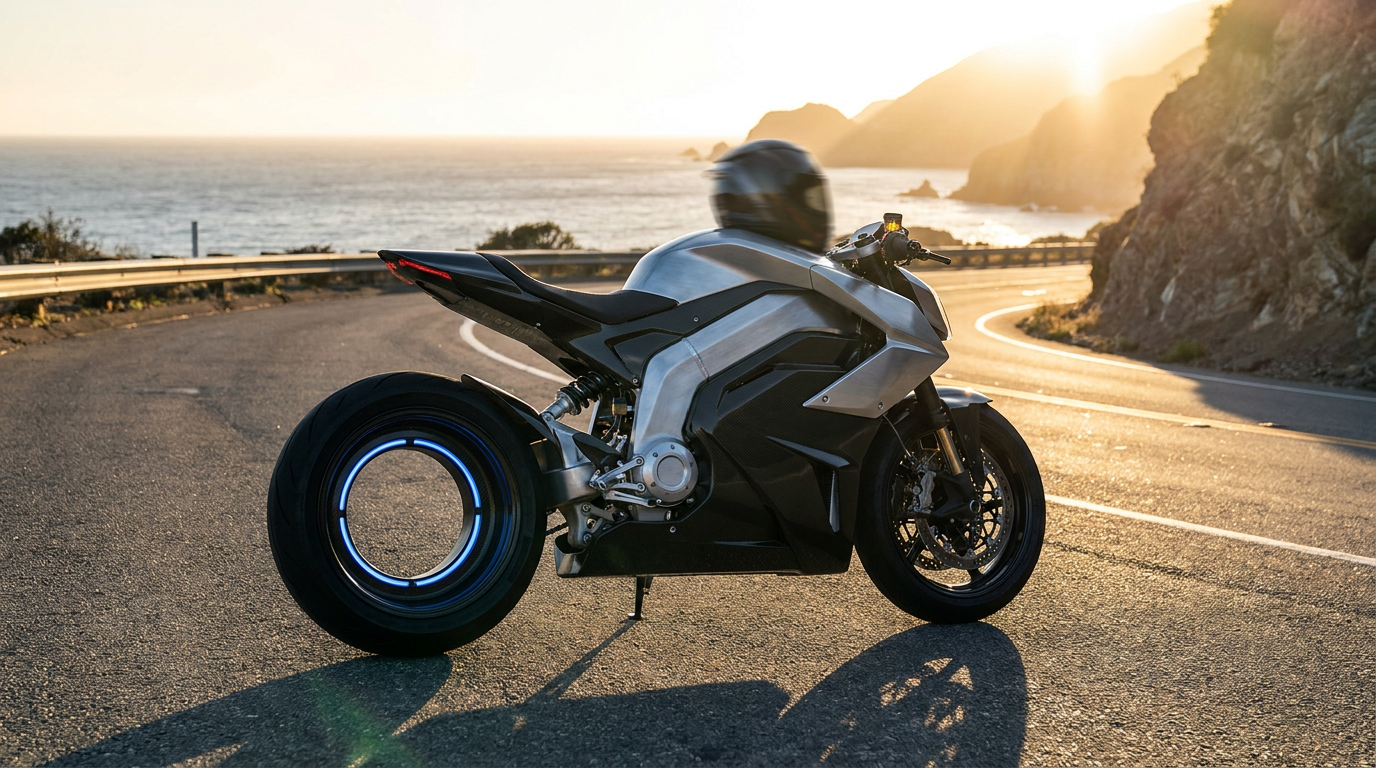
At the 2026 Consumer Electronics Show (CES) in Las Vegas, Verge Motorcycles unveiled the second generation of its TS Pro electric superbike. While the motorcycle retained the brand's signature futuristic design, the true revelation was hidden inside its chassis. Verge announced that the new TS Pro is powered entirely by an all-solid-state battery, making it the first mass-produced vehicle of any kind to bring the technology to public roads.[2][4][5][6]
The specifications attached to this announcement immediately sent ripples through the EV sector. According to Verge, the flagship 33.3-kilowatt-hour battery pack delivers an unprecedented 370 miles (600 kilometers) of range on a single charge. For context, most premium electric motorcycles struggle to break the 150-mile barrier in real-world highway riding.[1][6]
Range is only half of the solid-state equation; the other half is charging speed. Verge claims that the TS Pro can add 186 miles of range in just ten minutes when connected to a DC fast charger via its North American Charging Standard (NACS) port. This effectively reduces charging from a lengthy logistical hurdle to a brief rest stop, fundamentally altering the touring viability of electric two-wheelers.[4][6]

To understand why this is a historic milestone, it helps to look at the mechanics of battery technology. Conventional lithium-ion batteries—the kind found in everything from smartphones to Tesla sedans—rely on a liquid or gel electrolyte to shuttle ions between the anode and cathode. While effective, this liquid is inherently flammable and highly sensitive to temperature extremes, which limits how densely energy can be packed and how fast it can be charged without risking thermal runaway.[1][5]
A solid-state battery replaces that volatile liquid with a solid conductive material, such as ceramics or specialized polymers. This structural change yields massive dividends. Without the need for heavy cooling systems and safety buffers required by liquid electrolytes, solid-state cells can achieve significantly higher energy density. They store more power in a smaller, lighter footprint while virtually eliminating the risk of battery fires.[4][5]

Verge achieved this leap through its technology partner and subsidiary, Donut Lab. According to Donut Lab executives, their proprietary solid-state pouch cells boast an energy density of 400 watt-hours per kilogram. This allows Verge to cram 33.3 kWh of capacity into the motorcycle's lower frame without making the bike unrideably heavy or wide.[7]
Verge achieved this leap through its technology partner and subsidiary, Donut Lab.
The durability claims surrounding the Donut Lab battery are equally staggering. Traditional lithium-ion packs typically begin to degrade noticeably after a few thousand charge cycles. Verge states that its solid-state architecture is rated for up to 100,000 cycles with minimal capacity fade. In practical terms, the battery is designed to outlast the mechanical lifespan of the motorcycle itself.[4][7]
Furthermore, the solid electrolyte is remarkably resilient to environmental extremes. Donut Lab data indicates the battery retains 99 percent of its capacity in temperatures plunging to -22 degrees Fahrenheit (-30 Celsius) and operates safely up to 212 degrees Fahrenheit (100 Celsius). For riders, this means the dreaded 'winter range drop' that plagues current EVs is effectively engineered out of existence.[4]
The battery is paired with another piece of radical engineering: Verge's patented hubless in-wheel motor. Rather than placing a motor in the frame and connecting it to the rear wheel via a chain or belt, the motor is the rear wheel. Electromagnets hidden inside the rim interact with permanent magnets on the outer edge, generating rotation without a central axle.[5]

For the 2026 TS Pro, Verge introduced the 'Donut 2.0' iteration of this motor. Engineers managed to shave 19 kilograms (about 42 pounds) off the design while maintaining its jaw-dropping output. The motor delivers 136.8 horsepower and an asphalt-ripping 737 pound-feet (1,000 Newton-meters) of torque directly to the road. This propels the 518-pound machine from zero to 60 mph in just 3.5 seconds.[4][5][6]
Given the sheer magnitude of these claims, industry skepticism was immediate and vocal. Automotive journalists and EV analysts questioned how a small Nordic startup could solve manufacturing hurdles that have stymied companies with infinitely larger R&D budgets. Outlets covering the CES reveal noted that the specifications sounded 'too good to be true,' demanding independent real-world testing before declaring the solid-state race won.[1][2]
The skepticism is rooted in the broader industry's struggles. Companies like QuantumScape, backed heavily by Volkswagen, are only just beginning to ship 'B-sample' solid-state cells to automakers for pilot testing in 2026. Scaling solid-state manufacturing from laboratory prototypes to reliable, mass-produced automotive packs has proven notoriously difficult, plagued by issues with cell expansion and manufacturing yields.[8]

However, Verge is moving aggressively to silence the doubters. Unlike the concept bikes and vaporware that often populate technology expos, the TS Pro is a tangible product. In late March 2026, the company released footage of the first Gen 2 TS Pro units rolling off its assembly lines in Estonia, confirming that mass production is actively underway.[3]
The economics of the TS Pro reflect its bleeding-edge status, though it remains surprisingly competitive within the premium motorcycle market. The standard 20.2 kWh model, which offers 217 miles of range, starts at $29,900. The extended-range 33.3 kWh version commands $34,900. While undeniably expensive, these figures align with high-end internal combustion touring bikes from legacy brands like Harley-Davidson and BMW.[3][4]
The launch of the TS Pro suggests that the transition to solid-state EVs might not begin with passenger cars, but with two-wheelers. Motorcycles, with their smaller battery packs and premium price-to-weight ratios, offer an ideal proving ground for expensive new cell technologies before they achieve the economies of scale required for budget sedans.[8]
As the first customer deliveries commence in the spring of 2026, the electric mobility sector is watching closely. If Verge's solid-state packs deliver on their promises of 370-mile ranges, 10-minute charge times, and absolute thermal stability in the hands of everyday riders, it will mark one of the most significant technological leaps in the history of transportation.[3][7]
How we got here
2018
Verge Motorcycles is founded in Northern Europe with the goal of building electric superbikes.
Fall 2022
Verge introduces the first generation of the TS Pro electric motorcycle.
January 2025
Donut Lab unveils its hubless in-wheel motor technology at the Consumer Electronics Show.
January 2026
Verge unveils the Gen 2 TS Pro with a solid-state battery at CES, claiming a 370-mile range.
March 2026
The first solid-state TS Pro units begin rolling off the assembly line in Estonia.
Viewpoints in depth
The Startup Innovators' View
Agile startups argue they can implement breakthroughs faster than legacy giants.
Executives at Verge and Donut Lab argue that their ground-up, modular approach allowed them to integrate solid-state technology without the bureaucratic drag of legacy automakers. By designing a motorcycle specifically around electric architecture—rather than adapting an internal combustion frame—they claim they could pivot rapidly to accommodate the new pouch cells and bring them to market years ahead of the competition.
The Skeptics' View
Veteran analysts caution that spec-sheet claims must be verified by independent testing.
Motorcycle journalists and EV analysts note the historical difficulty of scaling solid-state manufacturing. While acknowledging Verge's impressive prototype displays, skeptics argue that delivering a handful of premium $35,000 motorcycles is vastly different from proving the technology's long-term reliability. They are withholding final judgment until independent reviewers can verify the 370-mile range and 100,000-cycle lifespan in real-world conditions.
The Legacy Automakers' View
Major manufacturers maintain that true solid-state success requires gigawatt-hour scale.
Giants like Volkswagen, Toyota, and Honda are taking a more measured approach. They argue that while niche applications like premium motorcycles are excellent testbeds, the true finish line for solid-state technology is mass-market automotive production. These companies are currently focused on rigorous automotive-grade validation and building pilot lines capable of churning out millions of cells, a process that inherently takes years of careful scaling.
What we don't know
- How the solid-state battery will perform in independent, third-party highway range tests.
- Whether Verge can scale its manufacturing to meet global demand without production bottlenecks.
Key terms
- Solid-State Battery
- A next-generation battery technology that uses solid electrodes and a solid electrolyte, rather than the liquid or polymer gel electrolytes found in lithium-ion batteries.
- Hubless In-Wheel Motor
- A drivetrain design where the electric motor is integrated directly into the outer rim of the wheel, leaving the center completely hollow and eliminating the need for a chain or belt.
- Energy Density
- The amount of energy a battery can store relative to its weight, typically measured in watt-hours per kilogram (Wh/kg).
- NACS
- The North American Charging Standard, originally developed by Tesla, which allows vehicles to use high-speed DC fast chargers.
- Thermal Runaway
- A dangerous chain reaction within a battery cell where rising temperatures cause further heat generation, often leading to fires in traditional liquid-electrolyte batteries.
Frequently asked
What is a solid-state battery?
A solid-state battery replaces the liquid or gel electrolyte found in traditional lithium-ion batteries with a solid material. This makes the battery significantly safer, less prone to fire, and capable of holding more energy in a smaller space.
How long does it take to charge the Verge TS Pro?
Using a DC fast charger, the Verge TS Pro can add up to 186 miles (300 km) of range in under 10 minutes.
How does a hubless motorcycle motor work?
Instead of a central axle connected to a chain, the motor is built directly into the rim of the rear wheel. Electromagnets inside the rim interact with permanent magnets on the outer edge to spin the wheel.
Is the Verge TS Pro actually in production?
Yes. While many solid-state EVs are still concepts, Verge began rolling the first production units of the Gen 2 TS Pro off its assembly lines in Estonia in March 2026.
Sources
Source coverage
8 outlets
3 viewpoints surfaced








[1]ElectrekIndustry Skeptics
Verge unveils 370-mile electric motorcycle with solid state battery; sounds too good to be true?
Read on Electrek →[2]RevZillaIndustry Skeptics
CES 2026: Verge TS Pro solid-state battery
Read on RevZilla →[3]AutoEvolutionElectric Mobility Optimists
Verge's 2026 TS Pro Is Here, Becoming the First Production Vehicle Ever with a Solid-State Battery
Read on AutoEvolution →[4]HiConsumptionElectric Mobility Optimists
This $30K Electric Motorcycle Features Solid-State Batteries and 370 Miles of Range
Read on HiConsumption →[5]NDTV
Verge Motorcycles Unveils TS Pro With Solid-State Battery At CES 2026
Read on NDTV →[6]Verge MotorcyclesElectric Mobility Optimists
The First Solid-State Battery in Motorcycling
Read on Verge Motorcycles →[7]Donut LabElectric Mobility Optimists
Donut Lab Introduces The Future of Electrification at CES
Read on Donut Lab →[8]electriveLegacy Battery Developers
QuantumScape and Honda partner on solid-state batteries
Read on electrive →



Every angle. Every day.
Get shopping stories with full source coverage and perspective breakdowns delivered to your inbox.