
Sony Unveils LYTIA L910 Sensor, Bringing 16.6 Stops of Single-Exposure Dynamic Range to Smartphones
Sony's new 50-megapixel mobile sensor uses LOFIC technology to capture professional-grade dynamic range in a single shot, eliminating the motion blur associated with traditional smartphone HDR.
By Factlen Editorial Team
- Mobile Photography Enthusiasts
- Everyday shooters and tech reviewers who want better photos without the artificial look of heavy software processing.
- Professional Cinematographers
- Traditional camera users who evaluate sensors based on their raw latitude and noise performance.
- Industry Analysts
- Market watchers focused on smartphone manufacturing, component supply chains, and consumer upgrade cycles.
What's not represented
- · Computational Photography Software Engineers
- · Mid-Range Smartphone Consumers
Why this matters
For years, smartphone cameras have relied on software tricks to balance bright skies and dark shadows, often resulting in blurry subjects and artificial-looking photos. Sony's new sensor solves this at the hardware level, meaning upcoming flagship phones will be able to instantly capture natural, perfectly exposed photos and videos even in the most difficult lighting conditions.
Key points
- Sony has announced the LYTIA L910, a 50-megapixel smartphone sensor capable of 16.6 stops of dynamic range in a single exposure.
- The sensor uses LOFIC architecture, providing each pixel with a storage reservoir to prevent bright highlights from overexposing.
- By capturing HDR in a single shot, the sensor eliminates the motion blur and ghosting caused by traditional multi-frame stitching.
- The hardware supports 4K HDR video recording at 60 frames per second with significantly reduced power consumption.
- Mass production is scheduled for summer 2026, with the sensor expected to debut in premium flagship devices shortly after.
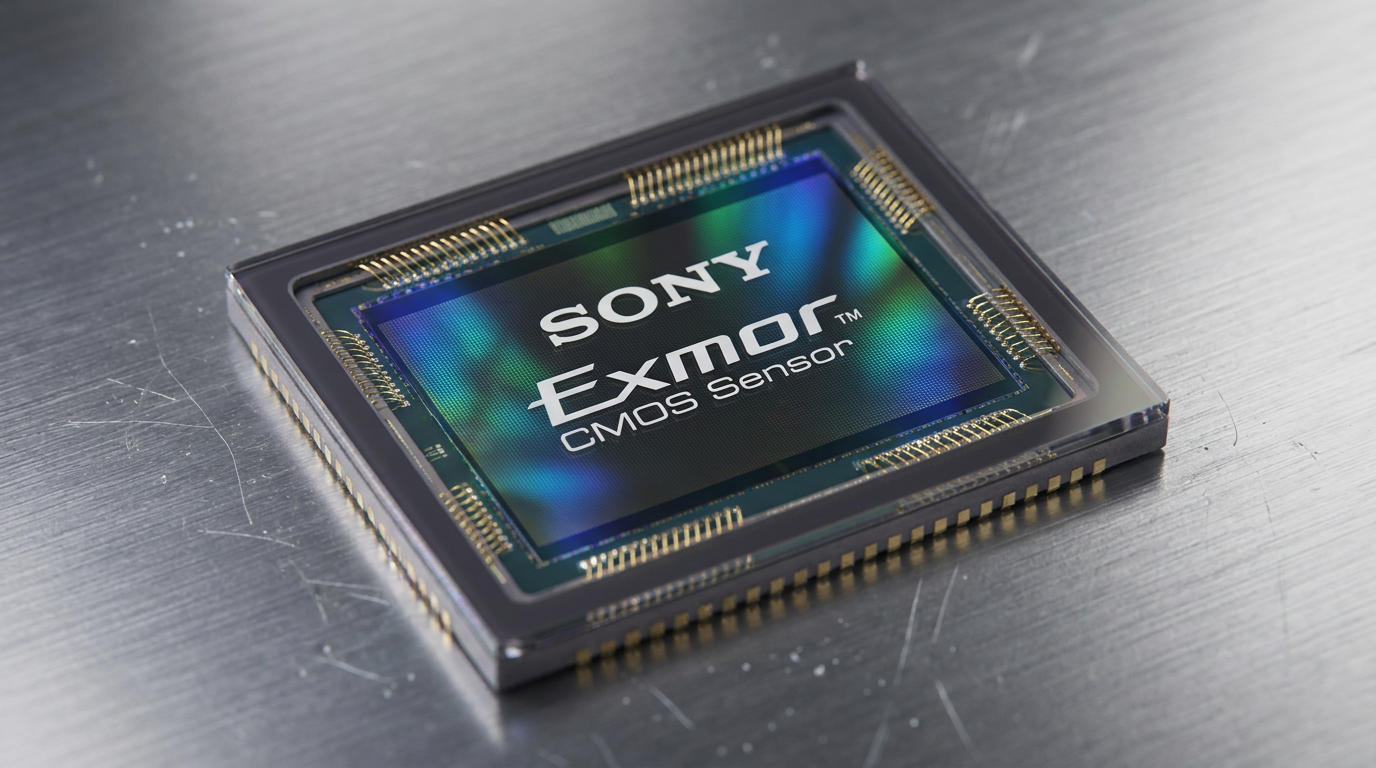
Sony has officially unveiled the LYTIA L910, a new 50-megapixel smartphone image sensor that promises to fundamentally change how mobile cameras handle high-contrast lighting. By capturing an unprecedented 16.6 stops of dynamic range in a single exposure, the hardware aims to eliminate the motion blur and artificial processing artifacts that have long plagued smartphone photography. For years, the mobile industry has relied on computational tricks to overcome the physical limitations of tiny camera modules, but Sony's latest release signals a pivot back to foundational hardware innovation. The sensor is designed to deliver professional-grade latitude in a form factor small enough to fit inside the next generation of flagship pocket devices.[1][5]
The announcement, made by Sony Semiconductor Solutions, targets a specific and stubborn failure in mobile imaging: the heavy reliance on multi-frame High Dynamic Range (HDR) synthesis. To compensate for their small sensor sizes, modern smartphones rapidly shoot several frames at different exposure levels—some dark to save highlights, some bright to reveal shadows—and digitally stitch them together. While this computational approach is highly effective for still landscapes, it breaks down immediately when subjects move or when artificial lights pulse. The result is often a ruined photo characterized by ghosting, unnatural edge halos, and flickering artifacts that software cannot reliably fix.[2][4]
The LYTIA L910 solves this multi-frame dilemma at the hardware level using a new pixel architecture called LOFIC, which stands for Lateral Overflow Integration Capacitor. In simple terms, LOFIC provides each microscopic pixel with its own dedicated storage reservoir. When a photodiode receives more light than it can physically hold—such as when a user points their phone directly at a bright window, a blazing sun, or a neon sign—the excess electrical charge spills into this adjacent capacitor instead of overflowing and being lost. By safely storing this highlight data, the sensor prevents bright areas from "clipping" into pure, unrecoverable white.[1][8]

To translate this expanded light-gathering capacity into practical performance, Sony paired the LOFIC structure with a technology called Triple Conversion Gain HDR (TCG-HDR). Instead of taking three separate photos over time, the sensor reads the light data from a single, instantaneous moment at three different amplification levels simultaneously. One readout is specifically tuned to protect the brightest highlights, another captures the mid-tones, and a third lifts the darkest shadows. Because all this data is pulled from the exact same fraction of a second, the camera can blend them into a perfect high-dynamic-range image without any risk of motion blur or subject ghosting.[4][5]
The resulting specification is a staggering 100 decibels of dynamic range captured in just one shot. In the language of professional photography and cinematography, that translates to roughly 16.6 stops of latitude. For context on how massive that figure is, most high-end full-frame mirrorless cameras used by professionals measure between 13 and 15 stops in rigorous laboratory tests. Top-tier Hollywood cinema cameras generally hover around 17 stops. While a mobile sensor's tiny pixels mean it won't directly replace a dedicated cinema rig, achieving 16.6 stops on a smartphone chip represents a monumental leap in mobile optical engineering.[2][6]

The resulting specification is a staggering 100 decibels of dynamic range captured in just one shot.
"For filmmakers, camera geeks, and creators, that number is the hook," notes Y.M.Cinema, a publication dedicated to professional imaging. The outlet emphasizes that the underlying goal of the LYTIA L910 is identical to what professional cinematographers chase on multi-million-dollar film sets: protect the highlights, keep the shadows clean, and avoid motion artifacts in scenes with brutal contrast. By moving the HDR process out of the software stitching realm and into the physical silicon, Sony is giving mobile creators a much cleaner, more reliable baseline image to work with, especially in unpredictable lighting environments.[2]
Despite the radical internal changes, the sensor's physical footprint remains familiar to the mobile supply chain. The L910 utilizes a 1/1.28-inch type stacked CMOS design with 1.22-micron pixels, matching the physical dimensions of Sony's previous premium mobile sensors. The resolution also remains at a standard 50 megapixels. This is a deliberate choice by Sony; rather than chasing higher megapixel counts—which often result in smaller, noisier pixels—or requiring thicker camera bumps to accommodate larger silicon, the company focused entirely on maximizing the light efficiency and dynamic range of the existing flagship footprint.[1][4]
Beyond still photography, the single-exposure approach significantly benefits mobile video production. The LYTIA L910 supports 4K HDR video recording at a smooth 60 frames per second. Because the sensor captures the full dynamic range natively in one frame, it doesn't need to synthesize multiple exposures on the fly for every single frame of video. This drastically reduces the heavy processing load on the smartphone's central chipset, lowering overall power consumption and preventing the device from overheating during extended recording sessions—a common pain point for mobile videographers.[5][8]

To further refine the image quality, Sony has integrated Ultra High Conversion Gain (UHCG) circuits into the sensor's design. According to the manufacturer, this specific circuitry improves the efficiency of converting electrical charge into voltage, reducing random digital noise by approximately 30 percent compared to its previous generation of LYTIA sensors. This noise reduction is particularly crucial for low-light environments, where smartphone cameras traditionally struggle to resolve clean, sharp details in deep shadows without introducing a grainy, speckled texture to the final image.[3][8]
The implications for everyday consumers are immediate and highly visible. Smartphone users can expect steadier, more natural-looking results when shooting in notoriously difficult environments, such as dark concert venues with flashing stage lights, city streets illuminated by bright neon, or heavily backlit portraits against a sunset. Furthermore, the single-exposure method allows for a true, real-time HDR preview on the phone's screen before the shutter is even pressed, finally bridging the frustrating gap between what the user sees on their display and what the camera actually captures.[2][6]
While Sony has not officially confirmed which specific handset manufacturers will be the first to debut the LYTIA L910, the company remains the dominant supplier for the global smartphone industry, providing imaging hardware for giants like Apple, Xiaomi, Vivo, and OnePlus. Industry watchers anticipate that the new sensor will become a staple component in the next wave of premium flagship devices, with rumors already circulating about its inclusion in upcoming high-end releases from major Chinese manufacturers later this year.[1][7]
Mass production of the LYTIA L910 is officially scheduled to begin in the summer of 2026. As computational photography reaches a point of diminishing returns—often criticized by purists for producing over-processed, artificial-looking images with plastic skin tones and radioactive skies—Sony's pivot back to foundational hardware improvements signals a refreshing new era for mobile imaging. By ensuring the sensor does the heavy lifting to capture the full spectrum of light, the software can finally take a step back, resulting in photographs that look much closer to what the human eye actually sees.[2][6]
How we got here
Early 2020s
Smartphone manufacturers increasingly rely on multi-frame computational HDR to overcome the physical limitations of small camera sensors.
2024–2025
Early iterations of LOFIC technology begin appearing in a select few niche smartphones, proving the concept of hardware-level highlight retention.
June 17, 2026
Sony Semiconductor Solutions officially announces the LYTIA L910, bringing 16.6 stops of single-exposure dynamic range to the mainstream flagship market.
Summer 2026
Mass production of the LYTIA L910 sensor begins, shipping to major global smartphone manufacturers.
Viewpoints in depth
Mobile Photography Enthusiasts
Everyday shooters and tech reviewers who want better photos without the artificial look of heavy software processing.
For years, mobile photographers have complained about the "computational look"—images where the sky is unnaturally blue, shadows are artificially brightened, and moving subjects are blurred because the phone had to stitch multiple frames together. This camp views the LYTIA L910 as a massive win because it solves these issues at the hardware level. By capturing all the necessary light data in a single fraction of a second, the sensor eliminates the need for aggressive software intervention, promising photos that look more like natural optical captures and less like AI-generated composites.
Professional Cinematographers
Traditional camera users who evaluate sensors based on their raw latitude and noise performance.
While professionals are quick to point out that a tiny smartphone sensor won't replace a dedicated ARRI or RED cinema camera, they are deeply impressed by the engineering. Achieving 16.6 stops of dynamic range—a figure that rivals top-tier Hollywood equipment—on a mobile chip validates the LOFIC architecture. This camp is particularly excited about the sensor's ability to shoot 4K video at 60 frames per second without multi-frame HDR artifacts, as video is where computational photography usually fails. They see this as a preview of the technology that will eventually scale up to full-frame professional cameras.
Industry Analysts
Market watchers focused on smartphone manufacturing, component supply chains, and consumer upgrade cycles.
From a market perspective, analysts see the LYTIA L910 as Sony's strategic move to maintain its dominance in the mobile component sector against rivals like Samsung. Because the sensor maintains the standard 1/1.28-inch footprint and 50-megapixel resolution, smartphone manufacturers can integrate it into their upcoming flagship designs without needing to re-engineer their camera bumps or chassis. Furthermore, the sensor's reduced power consumption during 4K recording is a major selling point for hardware brands looking to market their devices to vloggers and content creators without suffering from battery drain or overheating issues.
What we don't know
- Which specific smartphone models will be the first to feature the LYTIA L910 sensor when it ships later this year.
- How heavily smartphone manufacturers will still apply their own computational color science and tone mapping on top of the sensor's raw hardware data.
Key terms
- Dynamic Range
- The ratio between the brightest and darkest parts of an image that a camera can capture simultaneously without losing detail.
- LOFIC
- Lateral Overflow Integration Capacitor; a hardware architecture that provides pixels with an extra storage area to hold excess light, preventing bright areas from overexposing.
- Multi-frame HDR
- A software technique where a camera rapidly takes several photos at different brightness levels and merges them to create one balanced image.
- CMOS Sensor
- The standard type of digital image sensor used in smartphones and digital cameras to convert light into electronic signals.
- Conversion Gain
- The ratio that determines how efficiently an image sensor converts the electrical charge collected by a pixel into a readable voltage signal.
Frequently asked
What does 16.6 stops of dynamic range mean?
Dynamic range measures a camera's ability to capture detail in both the brightest highlights and the darkest shadows simultaneously. 16.6 stops is an exceptionally high measurement, rivaling professional cinema cameras, meaning the sensor can look at a bright sky and a dark alley at the same time without losing detail in either.
How does LOFIC technology work?
LOFIC (Lateral Overflow Integration Capacitor) gives each microscopic pixel on the sensor a tiny storage reservoir. If a pixel receives too much light and is about to overexpose, the excess energy spills into this reservoir instead of being lost, preserving the bright details.
Will this eliminate motion blur in HDR photos?
Yes. Traditional smartphone HDR takes multiple photos in a row and merges them, which causes blur if the subject is moving. The LYTIA L910 captures all the high-contrast light data in a single, instantaneous shot, freezing motion perfectly.
When will phones with this sensor be available?
Sony plans to begin mass production of the LYTIA L910 in the summer of 2026. It is expected to debut in premium flagship smartphones released in the fall and winter of 2026.
Sources
Source coverage
8 outlets
3 viewpoints surfaced








[1]PetaPixelMobile Photography Enthusiasts
Sony's First LOFIC Image Sensor, the Lytia L910, is Arriving in Flagship Smartphones
Read on PetaPixel →[2]Y.M.CinemaProfessional Cinematographers
Sony's New LOFIC High-End 50MP Sensor Brings 16.6 Stops of Dynamic Range to Flagship Smartphones
Read on Y.M.Cinema →[3]Digital Camera WorldProfessional Cinematographers
How does 16.6 stops of dynamic range from ONE exposure sound?
Read on Digital Camera World →[4]Sony Semiconductor SolutionsIndustry Analysts
Sony Announces LYTIA L910 CMOS Image Sensor
Read on Sony Semiconductor Solutions →[5]GizmochinaMobile Photography Enthusiasts
Sony unveils LYTIA L910 mobile camera sensor with LOFIC architecture
Read on Gizmochina →[6]PhotographyTalkProfessional Cinematographers
Dynamic Range in Photography: Why Sony's 16.6-Stop Sensor Matters
Read on PhotographyTalk →[7]ChannelNewsIndustry Analysts
Sony is ramping up its push into premium smartphone imaging
Read on ChannelNews →[8]Hi-Tech.uaMobile Photography Enthusiasts
Sony LYTIA L910 can change mobile photography: artifact-free HDR and 100 dB range
Read on Hi-Tech.ua →

Every angle. Every day.
Get technology stories with full source coverage and perspective breakdowns delivered to your inbox.