
Buildings and EVs Become Power Plants: 'Everything-to-Grid' Energy System Tops Global Tech List
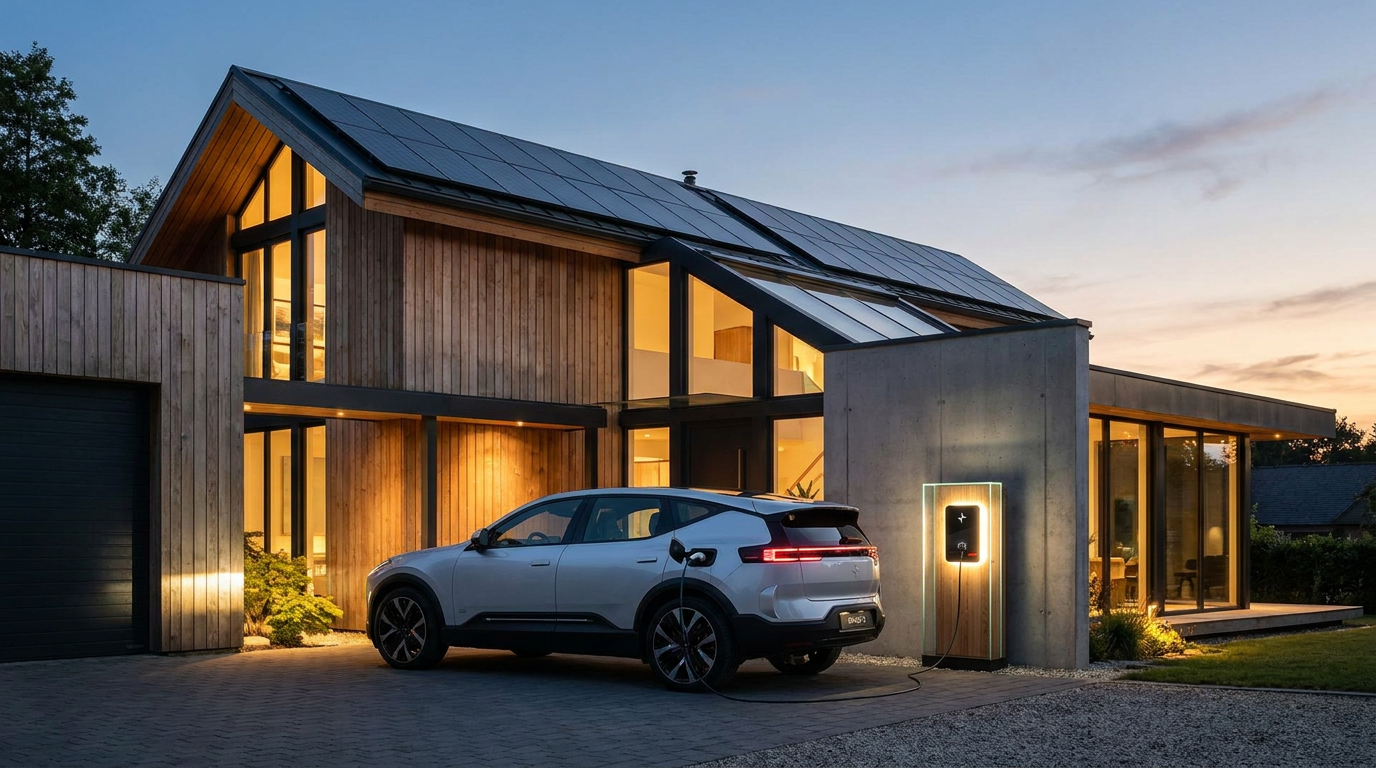
The World Economic Forum has named 'everything-to-grid' energy the top emerging technology of 2026, highlighting a rapid shift toward decentralized virtual power plants that use electric vehicles and buildings to stabilize the grid.
By Factlen Editorial Team
- Global Economic Analysts
- Views virtual power plants as a macroeconomic shift toward decentralized, resilient infrastructure that reduces reliance on centralized geography.
- Clean Energy & Grid Advocates
- Focuses on the environmental and economic benefits of replacing fossil-fuel peaker plants and lowering ratepayer costs.
- E-Mobility Industry
- Sees bidirectional charging as a major value-add for electric vehicle owners, turning cars into revenue-generating assets.
What's not represented
- · Renters without home charging
- · Rural utility cooperatives
Why this matters
By transforming idle electric vehicles and home batteries into active grid suppliers, this technology could eliminate the need for costly fossil-fuel 'peaker' plants, lowering utility bills and preventing blackouts during extreme weather.
Key points
- The World Economic Forum named 'everything-to-grid' energy the top emerging technology of 2026.
- Virtual power plants network EVs and home batteries to supply power during peak evening hours.
- A 2025 California test successfully dispatched 535 megawatts of battery power, proving utility-scale viability.
- The U.S. Department of Energy projects VPPs could provide 160 gigawatts of capacity by 2030.
- Widespread adoption could eliminate the need for costly, polluting fossil-fuel peaker plants.
- Automakers like Volkswagen are rapidly equipping hundreds of thousands of vehicles with bidirectional charging capabilities.
The World Economic Forum (WEF) has officially declared that the next era of technological innovation will move off our screens and into the physical infrastructure that powers our lives. In its highly anticipated "Top 10 Emerging Technologies of 2026" report, released at the Summer Davos in Dalian, China, the WEF ranked "everything-to-grid" energy systems as the number one breakthrough poised to reshape the global economy. After years dominated by software-first artificial intelligence, the focus has violently shifted toward tangible, decentralized systems that can solve immediate real-world crises.[1][6]
The concept of everything-to-grid—often referred to as Vehicle-to-Grid (V2G) or Virtual Power Plants (VPPs)—represents a fundamental rewiring of how society handles electricity. Instead of relying exclusively on massive, centralized power stations, this model transforms millions of distributed nodes into active energy suppliers. Electric vehicles, home battery walls, smart thermostats, and commercial data centers are networked together via intelligent software. When the grid requires more power, these idle assets collectively discharge their stored energy, acting as a single, massive, and highly responsive power plant.[1][2]
This decentralized approach directly targets the most stubborn vulnerability in modern renewable energy networks: the evening peak. As the sun sets and solar generation plummets, people return home from work, turn on air conditioners, and plug in appliances, causing a massive spike in electricity demand. Traditionally, grid operators have been forced to cover this shortfall by firing up expensive, highly polluting natural gas "peaker" plants. Everything-to-grid technology offers a clean, instant alternative by tapping into the gigawatt-hours of energy already sitting unused in residential garages.[1][5]

The mechanism relies on bidirectional charging, an engineering leap that allows electricity to flow both into and out of a battery. During the day, when solar power is abundant and cheap, electric vehicles and home batteries absorb the excess generation. Then, during the critical 6 PM to 9 PM window, smart software signals those same batteries to push a fraction of their stored power back into the grid. Owners can set strict parameters, ensuring their vehicles always retain enough charge for their morning commute.[3][4]
The evidence that this system works at scale is no longer theoretical. In California, the state's Demand Side Grid Support (DSGS) program has provided a rigorous real-world proving ground. During a severe heatwave in 2024, more than 16,000 solar-equipped homes linked into a distributed network pushed 51 megawatts of electricity back to the grid during an evening demand peak. This coordinated discharge exceeded the capacity of several traditional fossil-fuel peaker plants, helping the state avoid rolling blackouts without generating a single ounce of emissions.[1][5]
By the following summer, the scale of California's virtual power plants had grown exponentially. In a landmark 2025 test coordinated by major utilities and clean energy providers like Sunrun and Tesla, the network successfully dispatched 535 megawatts of battery power over a two-hour window. This staggering output—equivalent to a medium-sized nuclear reactor—proved that decentralized residential batteries could operate with the reliability and volume required by utility-scale grid operators.[2][7]

By the following summer, the scale of California's virtual power plants had grown exponentially.
European pilot programs are providing equally compelling evidence for the viability of mobile batteries. In the Netherlands, the "Utrecht Energized" project deployed a fleet of 50 shared Renault electric vehicles equipped with bidirectional charging hardware. Over its first five months of operation, the fleet discharged more than 65,000 kilowatt-hours of electricity back into the local distribution network. Researchers concluded that the project offered concrete proof that V2G technology can simultaneously ease grid congestion, integrate renewable energy, and provide affordable mobility.[4]
Recognizing the immense potential, the global automotive industry is rapidly transitioning from small-scale pilots to mass-market deployment. Volkswagen and its energy subsidiary, Elli, recently announced the rollout of a comprehensive V2G package in Germany. The automaker revealed that approximately 360,000 of its MEB-platform vehicles currently on European roads are already technically equipped for bidirectional charging. By unlocking this dormant capacity, automakers are turning depreciating assets into revenue-generating tools for their customers.[3]
The economic implications of scaling virtual power plants are profound. A comprehensive analysis by the Brattle Group examined the long-term financial impact of California's decentralized grid programs. The researchers concluded that virtual power plants could provide more than 15 percent of the state's peak grid demand by 2035. By avoiding the construction and maintenance of new centralized power plants, this distributed model is projected to deliver $550 million in annual savings directly to utility ratepayers.[2][5]

On a national level, the projections are even more staggering. The U.S. Department of Energy estimates that virtual power plant capacity could reach up to 160 gigawatts by 2030. Achieving this target would essentially negate the need to build dozens of new fossil fuel power plants over the next decade. It represents a rare alignment of environmental and economic incentives, offering a pathway to decarbonize the grid while simultaneously lowering the cost of electricity for everyday consumers.[7]
Despite the overwhelming momentum, skeptics have raised valid concerns regarding battery degradation. The primary fear is that constantly cycling an electric vehicle's battery to support the grid will accelerate wear and void expensive warranties. However, early operational data from projects like Utrecht Energized suggests that the shallow, software-managed discharges required for grid stabilization have a negligible impact on long-term battery health, especially as advanced battery chemistries continue to improve.[3][4]
The most significant hurdle to the "everything-to-grid" revolution is not technological, but regulatory. The United States electricity market is a patchwork of thousands of local utilities, many of which operate on outdated software and antiquated regulatory frameworks. To unlock the full potential of virtual power plants, public utility commissions must mandate standardized tariff structures that fairly and transparently compensate homeowners and fleet operators for the energy they provide to the grid.[2][6]

Hardware standardization also remains a critical bottleneck. While the software to manage distributed energy resources is highly advanced, the physical bidirectional chargers required to move power from a car back to a house remain expensive and relatively scarce. Industry consortiums are currently racing to finalize universal communication protocols, such as ISO 15118, which will allow any electric vehicle to seamlessly interface with any utility network, regardless of the manufacturer.[3][4]
Ultimately, the World Economic Forum's designation of everything-to-grid energy as the defining technology of 2026 signals a permanent shift in how humanity manages power. By transforming passive consumers into active, compensated participants, virtual power plants democratize the energy landscape. As extreme weather events increasingly strain aging infrastructure, the ability to crowdsource resilience from millions of driveways and basements offers a deeply hopeful vision for a stable, clean energy future.[1][6]
How we got here
August 2022
California launches the Demand Side Grid Support (DSGS) program to incentivize decentralized energy storage.
September 2024
16,000 solar-equipped homes in California successfully push 51 megawatts back to the grid during an evening peak.
Summer 2025
A massive virtual power plant test in California dispatches 535 megawatts, proving utility-scale viability.
June 2026
The World Economic Forum names 'everything-to-grid' energy the number one emerging technology of the year.
Viewpoints in depth
Global Economic Analysts
Viewing VPPs as a macroeconomic shift toward decentralized, resilient infrastructure.
Organizations like the World Economic Forum view the transition to everything-to-grid energy as a necessary evolution away from centralized geographic constraints. By turning every building and vehicle into a power source, economies can build inherent resilience against extreme weather and supply chain shocks. This perspective emphasizes that the future of infrastructure is distributed, personalized, and highly efficient.
Clean Energy & Grid Advocates
Focusing on the environmental and economic benefits of replacing fossil-fuel peaker plants.
For environmental advocates and grid planners, virtual power plants represent the holy grail of decarbonization. Because solar and wind generation fluctuate, grids have historically relied on dirty natural gas plants to cover the evening demand peak. By leveraging the batteries already sitting in residential garages, VPPs can provide that same peak power with zero emissions, while simultaneously lowering utility bills for the consumers who participate.
E-Mobility Industry
Seeing bidirectional charging as a major value-add for electric vehicle owners.
Automakers and charging hardware providers view vehicle-to-grid technology as a way to fundamentally change the economics of car ownership. Instead of a vehicle being a depreciating asset that sits idle 90 percent of the day, bidirectional charging turns it into a revenue-generating tool. By equipping fleets with this capability, manufacturers are creating new business models that blur the line between the transportation and energy sectors.
What we don't know
- How quickly fragmented local utility regulations can be updated to fairly compensate consumers for bidirectional power.
- Whether the supply chain for specialized bidirectional chargers can scale fast enough to meet the projected 2030 demand.
- How the widespread adoption of virtual power plants will alter the long-term business models of traditional centralized utility companies.
Key terms
- Virtual Power Plant (VPP)
- A decentralized network of home batteries, electric vehicles, and smart appliances that collectively supply power to the grid.
- Bidirectional Charging (V2G)
- Technology that allows an electric vehicle not only to draw power from the grid to charge its battery, but also to send stored power back to the grid.
- Peaker Plant
- A traditional power plant, usually powered by natural gas, that only runs during times of high electricity demand.
- Demand Side Grid Support (DSGS)
- A California program that pays residents and businesses to reduce energy use or discharge battery power during grid emergencies.
Frequently asked
Can sending power back to the grid drain my car battery?
No. Smart software allows owners to set minimum charge limits, ensuring the vehicle always retains enough range for daily driving.
Does bidirectional charging degrade an EV battery faster?
Early evidence suggests that the shallow, software-managed discharges used for grid support have a negligible impact on long-term battery health.
Do I get paid for sharing my electricity?
Yes. In established programs, participants are compensated for the energy they provide, which can significantly lower their overall utility bills.
Sources
Source coverage
7 outlets
3 viewpoints surfaced







[1]World Economic ForumGlobal Economic Analysts
Top 10 Emerging Technologies of 2026
Read on World Economic Forum →[2]Canary MediaClean Energy & Grid Advocates
Home batteries enrolled in the program can provide 700 MW of cost-effective grid support
Read on Canary Media →[3]ElectriveE-Mobility Industry
Volkswagen and Elli launch V2G offering in Germany
Read on Electrive →[4]The DrivenE-Mobility Industry
First large scale vehicle-to-grid system deemed a success
Read on The Driven →[5]California Energy CommissionClean Energy & Grid Advocates
CEC's Demand Side Grid Support Program Successfully Enrolled 515 Megawatts
Read on California Energy Commission →[6]Engineering NewsGlobal Economic Analysts
WEF names 10 emerging technologies for 2026
Read on Engineering News →[7]SlashdotClean Energy & Grid Advocates
California's Biggest Electric Utilities Pulled Off a Record-Breaking Test
Read on Slashdot →
Every angle. Every day.
Get science stories with full source coverage and perspective breakdowns delivered to your inbox.