
Scientists Successfully Block Aging Protein to Regrow Cartilage, Opening New Era for Sports Medicine
Researchers have demonstrated that inhibiting a specific aging-related protein can stimulate stem cells to regrow healthy articular cartilage in joints. The breakthrough offers a potential biological cure for osteoarthritis, promising to extend athletic careers and restore mobility for millions.
By Factlen Editorial Team
- Regenerative Medicine Researchers
- Focus on the biological mechanism, viewing the targeted protein blockade as a definitive proof-of-concept for reversing tissue senescence.
- Sports Orthopedists
- Prioritize the biomechanical properties of the regrown tissue and its ability to withstand the extreme sheer forces of professional athletics.
- Clinical Trial Monitors
- Maintain cautious optimism while emphasizing the historical difficulty of translating animal joint therapies into successful human treatments.
What's not represented
- · Health Insurance Providers
- · Professional Athletes' Unions
Why this matters
Osteoarthritis ends countless athletic careers and afflicts over 500 million people globally with chronic pain. A treatment that actually regrows durable cartilage—rather than just masking pain or requiring invasive joint replacement—would fundamentally transform orthopedics, human longevity, and the economics of professional sports.
Key points
- Researchers have successfully regrown articular cartilage by blocking the aging-related protein 15-PGDH.
- The protein normally acts as a biological stop sign, preventing resident stem cells from repairing joint damage.
- Unlike microfracture surgery, the new treatment produces highly durable hyaline cartilage, not brittle fibrocartilage.
- The therapy is delivered via a localized joint injection, minimizing systemic side effects.
- Phase 1/2a human clinical trials are currently underway to test safety and efficacy.
- If successful, the treatment could effectively cure osteoarthritis and extend professional athletic careers.
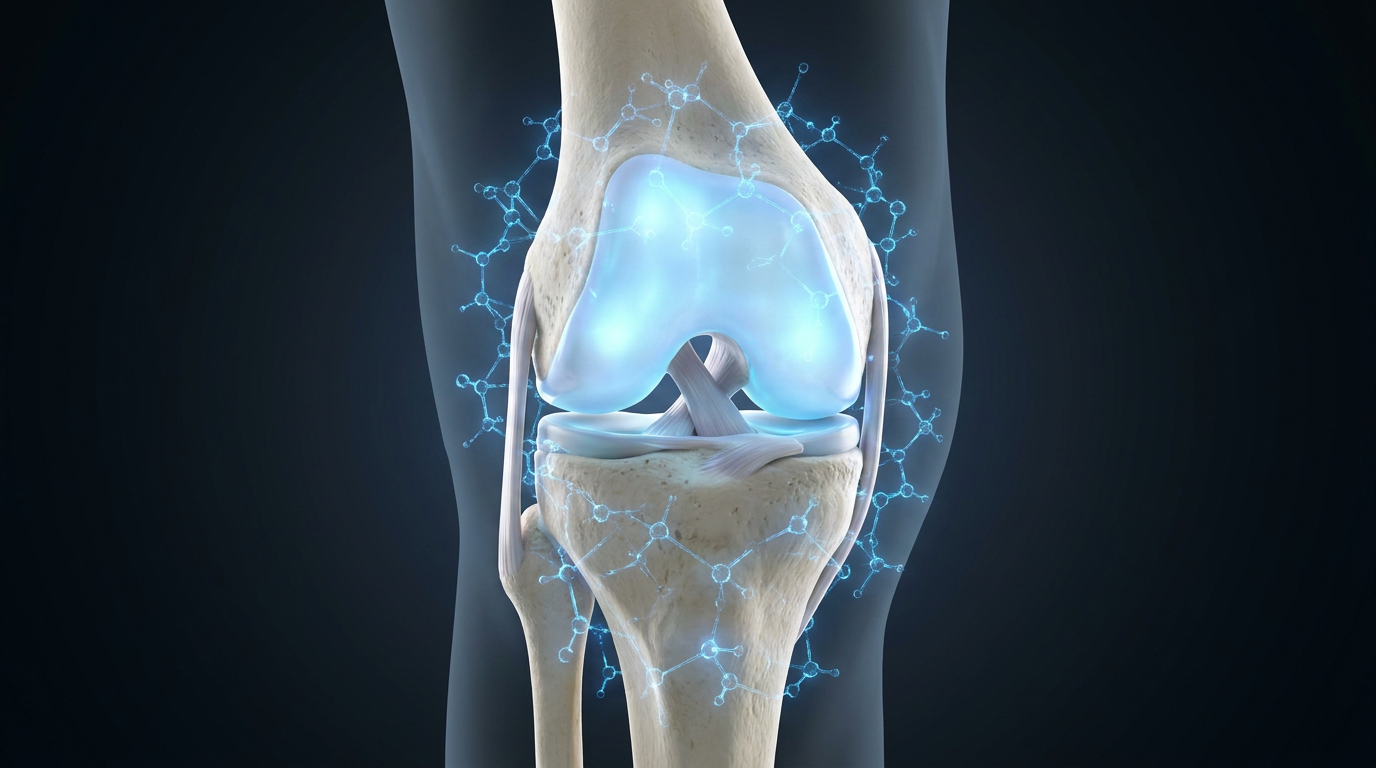
For decades, the fundamental tragedy of sports medicine has been a simple biological reality: articular cartilage does not possess a blood supply, and therefore, it cannot heal itself. When an athlete tears a meniscus or grinds down the smooth tissue cushioning their knee, the damage has historically been permanent.[7]
This progressive degradation eventually leads to the dreaded "bone-on-bone" diagnosis, a condition that forces early retirements in professional sports and consigns millions of aging adults to chronic pain and eventual joint replacement surgery. Current treatments—ranging from corticosteroid injections to microfracture surgery—only manage the symptoms or create inferior scar tissue.[6][7]
Now, a landmark breakthrough in regenerative medicine is poised to rewrite those biological rules. Researchers have successfully identified and blocked a specific aging-related protein that prevents joint tissue from healing, effectively tricking the body into growing fresh, healthy cartilage.[1][2]
The target of this breakthrough is a protein known as 15-PGDH (15-hydroxyprostaglandin dehydrogenase). According to researchers at Stanford Medicine, this protein accumulates in joints as we age and in response to acute mechanical trauma, such as an ACL tear or repetitive high-impact loading.[2][4]
When 15-PGDH levels rise, the protein acts as a biological stop sign. It degrades prostaglandin E2 (PGE2), a crucial molecule that normally stimulates resident stem cells to repair tissue. By starving the joint of PGE2, the aging protein effectively locks the cartilage in a state of permanent decay.[1][4]

The breakthrough, detailed in Nature Medicine, involved developing a highly targeted small-molecule inhibitor that blocks 15-PGDH. When this inhibitor was injected directly into the degraded joints of mammalian models, the biological stop sign was removed. Resident stem cells woke up, proliferated, and began laying down new tissue.[1][2]
The results were unprecedented in orthopedic research. Within weeks, the animal models regenerated between 0.5 and 1.5 millimeters of new cartilage, filling in the degraded potholes that characterize osteoarthritis and restoring a smooth gliding surface to the joint.[1]
Crucially, the new tissue is not the brittle "fibrocartilage" produced by traditional microfracture surgeries. Biomechanical analysis confirmed that the regenerated tissue is true hyaline cartilage—the exact same slick, highly durable, shock-absorbing material that humans are born with.[3][7]
Crucially, the new tissue is not the brittle "fibrocartilage" produced by traditional microfracture surgeries.
This distinction is the holy grail for sports orthopedists. Fibrocartilage often breaks down within a few years under the immense torque and sheer forces generated by professional athletes. True hyaline cartilage, however, can withstand the explosive cutting of a basketball player or the heavy load-bearing of a weightlifter.[3]

The delivery mechanism also bypasses many of the risks associated with systemic anti-aging drugs. Because the 15-PGDH inhibitor is delivered via a localized intra-articular injection directly into the knee capsule, it does not circulate widely through the bloodstream, minimizing the risk of off-target side effects.[4][5]
The implications for professional sports are staggering. Currently, when an athlete suffers a severe cartilage defect, teams face a grim calculus of load management, painkilling injections, and inevitable decline. A regenerative injection could theoretically extend elite athletic windows by five to ten years.[7]
Beyond the stadium, the societal impact is even larger. Osteoarthritis is one of the leading causes of global disability, costing healthcare systems billions annually in joint replacement surgeries and lost productivity. The Arthritis Foundation notes that a biological cure would represent the most significant leap in musculoskeletal health in a century.[6]
However, the evidence pack carries transparent uncertainties. The "mouse-to-man" translational gap is notoriously difficult to cross in joint therapies. Human knees bear significantly different biomechanical loads and inflammatory profiles than quadrupedal animal models.[1][5]
Furthermore, any therapy that stimulates cellular proliferation carries theoretical risks. While localized injection mitigates systemic dangers, researchers must ensure that the stem cells stop dividing once the cartilage defect is filled, preventing the formation of benign tumors or bone spurs within the joint capsule.[4][7]

The science is now moving rapidly from the laboratory to the clinic. Phase 1/2a human clinical trials are currently underway, evaluating the safety and preliminary efficacy of the intra-articular injections in patients with moderate knee osteoarthritis.[5]
How we got here
Early 2000s
Microfracture surgery becomes the standard of care for athletes, though it only produces inferior fibrocartilage.
2015
Researchers identify the role of prostaglandin E2 (PGE2) in stimulating tissue regeneration.
2021
The 15-PGDH protein is isolated as the primary mechanism that degrades PGE2 and halts joint repair.
2024
Preclinical animal models demonstrate successful regrowth of hyaline cartilage following targeted protein inhibition.
2025
Biomechanical testing confirms the regrown cartilage can withstand athletic load-bearing forces.
2026
Phase 1/2a human clinical trials commence to evaluate the safety of intra-articular injections.
Viewpoints in depth
Regenerative Medicine Researchers
Scientists view this as a definitive proof-of-concept for reversing tissue senescence.
For molecular biologists and aging researchers, the joint is merely the proving ground for a much larger theory. By successfully identifying a specific protein (15-PGDH) that acts as a biological lock on stem cell activity, researchers have proven that the body's innate ability to heal itself isn't lost with age—it is simply suppressed. They argue that this targeted blockade approach could eventually be mapped to other non-regenerating tissues in the body, fundamentally altering how we treat the physical decline associated with aging.
Sports Orthopedists
Clinicians prioritize the biomechanical properties of the regrown tissue and its clinical application.
Orthopedic surgeons are primarily focused on the mechanical reality of the joint. For decades, they have been forced to rely on salvage procedures—like microfracture or meniscectomy—that ultimately accelerate the joint's demise by creating brittle fibrocartilage or altering load distribution. For this camp, the breakthrough isn't just that tissue regrew; it's that the tissue was true hyaline cartilage. If the structural integrity holds up in human trials, orthopedists anticipate a complete overhaul of return-to-play protocols, shifting from surgical repair to biological regeneration.
Clinical Trial Monitors
Regulatory and safety experts emphasize the historical difficulty of translating animal joint therapies to humans.
While acknowledging the unprecedented preclinical results, clinical trial monitors and arthritis advocates maintain a stance of cautious optimism. They point out that the "mouse-to-man" translational gap is littered with failed therapies. Human knees bear bipedal loads that are entirely different from quadrupedal animal models, and human inflammatory responses are highly complex. This camp is closely watching the Phase 1/2a trials not just for efficacy, but to ensure that waking up dormant stem cells doesn't lead to unchecked cellular proliferation or joint calcification.
What we don't know
- Whether the robust cartilage regeneration seen in animal models will translate perfectly to the complex biomechanics of bipedal human joints.
- How long the regenerated cartilage will last under the extreme, repetitive sheer forces generated by elite professional athletes.
- If the treatment will be effective for late-stage, severe osteoarthritis where the underlying bone structure has already deformed.
- The exact timeline for FDA approval and commercial availability, which depends heavily on the ongoing Phase 1/2a trial results.
Key terms
- Articular Cartilage
- The smooth, white tissue that covers the ends of bones where they come together to form joints, allowing them to glide over each other with very little friction.
- Hyaline Cartilage
- The most abundant and durable type of cartilage in the body, found in joints. It is highly resistant to wear and tear.
- Fibrocartilage
- A tough, dense, and less flexible scar-like cartilage that often forms after traditional joint surgeries; it lacks the smooth gliding properties of hyaline cartilage.
- 15-PGDH
- An aging-related protein that degrades tissue-repair molecules in the body, effectively halting the natural regeneration of cartilage.
- Senescence
- The biological process of aging at the cellular level, where cells stop dividing and lose their ability to repair surrounding tissue.
Frequently asked
Does this treatment require surgery?
No. The treatment is designed as a localized intra-articular injection directly into the joint capsule, similar to how cortisone or PRP injections are currently administered.
Is the regrown cartilage as strong as the original?
Preclinical biomechanical testing indicates that the regenerated tissue is true hyaline cartilage, which possesses the same shock-absorbing and load-bearing properties as native cartilage.
When will this be available for human patients?
The treatment is currently in Phase 1/2a human clinical trials. If successful through all regulatory phases, it could reach the commercial market by the end of the decade.
Can this fix a torn meniscus or ACL?
The current breakthrough specifically targets the regeneration of articular cartilage (the smooth coating on the bone ends). While related pathways may eventually help other tissues, this specific therapy is aimed at osteoarthritis and cartilage defects.
Sources
Source coverage
7 outlets
3 viewpoints surfaced







[1]Nature MedicineRegenerative Medicine Researchers
Inhibition of 15-PGDH promotes articular cartilage regeneration and prevents osteoarthritis progression in mammalian models
Read on Nature Medicine →[2]Stanford MedicineRegenerative Medicine Researchers
Researchers discover protein blockade that regrows joint tissue, reversing osteoarthritis
Read on Stanford Medicine →[3]American Journal of Sports MedicineSports Orthopedists
Biomechanical properties and load-bearing capacity of induced hyaline cartilage following targeted protein inhibition
Read on American Journal of Sports Medicine →[4]National Institutes of HealthRegenerative Medicine Researchers
Osteoarthritis and the aging joint: Cellular senescence pathways and emerging regenerative therapies
Read on National Institutes of Health →[5]ClinicalTrials.govClinical Trial Monitors
Safety and Efficacy of Intra-articular 15-PGDH Inhibitor in Knee Osteoarthritis (Phase 1/2a)
Read on ClinicalTrials.gov →[6]Arthritis FoundationClinical Trial Monitors
The future of osteoarthritis treatment: Moving beyond joint replacement to biological restoration
Read on Arthritis Foundation →[7]Factlen Editorial TeamSports Orthopedists
Synthesis by Factlen editorial team
Read on Factlen Editorial Team →

More in sports
See all 5 stories →Snowboard Biomechanics
The Evidence Pack: How the 1980 and Triple Cork Are Rewriting the Biomechanics of Snowboarding
6 sources

PGA Tour Overhaul
PGA Tour Ratifies Sweeping Two-Series Model With Promotion and Relegation Starting in 2028
6 sources

Lakers Roster
Lakers Sign Austin Reaves to Four-Year, $185 Million Max Contract
8 sources
Every angle. Every day.
Get sports stories with full source coverage and perspective breakdowns delivered to your inbox.