
NLRB Judge Orders Amazon to Bargain with Teamsters, Setting Up Showdown Over Key Labor Precedent
A federal labor judge has ordered Amazon to recognize and bargain with a Teamsters-backed union at a San Francisco warehouse. The ruling relies on a Biden-era labor precedent that Amazon is now appealing to a newly conservative NLRB board, setting the stage for a major legal battle over union organizing rules.
By Factlen Editorial Team
- Organized Labor
- Argues that the Cemex precedent holds corporations accountable and prevents them from using endless delay tactics to crush union drives.
- Corporate Employers
- Argues that secret-ballot elections are the only fair way to gauge worker sentiment, and that the Cemex framework unlawfully bypasses this process.
- Legal Analysts
- Focuses on the vulnerability of the Cemex precedent under a conservative NLRB board, viewing Amazon's appeal as the likely catalyst for its reversal.
What's not represented
- · Non-unionized Amazon workers who oppose collective bargaining
- · Small business owners affected by shifting NLRB precedents
Why this matters
The outcome of Amazon's appeal could determine the fate of the "Cemex" precedent, a landmark rule that made it significantly easier for American workers to unionize without going through lengthy formal elections. If overturned, the burden of organizing will shift heavily back onto workers across all industries.
Key points
- An NLRB judge ordered Amazon to bargain with the Teamsters at a San Francisco delivery center.
- The ruling is based on the 2023 Cemex precedent, which requires employers to request an election if they doubt a union's majority support.
- Amazon ignored the union's demand and did not file for an election, prompting the bargaining order.
- Amazon plans to appeal the decision to the full NLRB board in Washington, D.C.
- The Trump-appointed NLRB board is widely expected to use the appeal to overturn the Cemex precedent entirely.
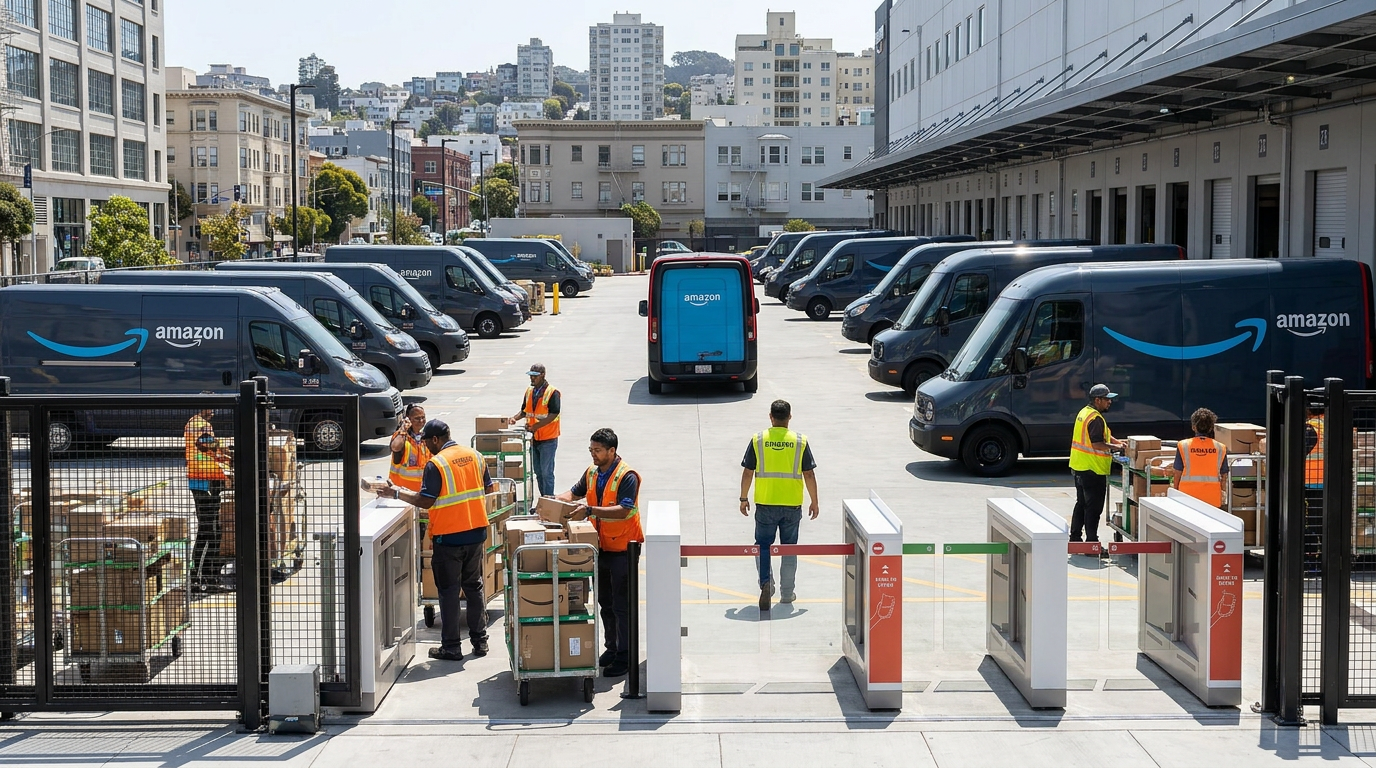
Administrative Law Judge Michael Silverstein ordered Amazon to bargain with the International Brotherhood of Teamsters representing roughly 120 "sortation associates" at the company's DCK6 delivery center in San Francisco. The decision, issued late Monday, marks the second time in three months that the e-commerce giant has been hit with a federal bargaining order.[1][2]
The ruling hinges entirely on a controversial 2023 labor law precedent known as the Cemex decision. Under the Biden-era framework, if a union presents evidence—such as signed authorization cards—that a majority of workers support unionizing, the employer must either voluntarily recognize the union or promptly file a petition with the National Labor Relations Board (NLRB) to hold a formal election.[3][5]
According to the judge's findings, the Teamsters informed Amazon in late 2023 that roughly 66 percent of the San Francisco facility's workers had signed union cards. Amazon neither recognized the union nor petitioned the NLRB for an election to test that support. Because the company simply ignored the demand, Silverstein ruled that Amazon forfeited its right to an election and must proceed directly to collective bargaining.[2][5]

The decision represents the first time an administrative law judge has issued a bargaining order based solely on an employer's failure to respond to a recognition demand under the Cemex framework, without accompanying allegations of severe union-busting tactics.[5]
Amazon immediately vowed to appeal the decision. Company spokesperson Sam Stephenson stated that the e-commerce giant fundamentally disagrees with the ruling and remains confident that a higher authority will overrule it. "Despite their claims to the contrary, the Teamsters don't represent any Amazon employees or partners—at this site or at any Amazon facility," Stephenson said, noting that the legal process is far from over.[2][4]
For the Teamsters, the ruling is a validation of their aggressive organizing strategy targeting Amazon's massive logistics network. Randy Korgan, director of the Teamsters' Amazon division, celebrated the decision, arguing that Amazon's long-standing strategy has been to "delay, delay, delay." Korgan stated that the ruling proves the company "cannot forever dodge its legal obligations" to meet workers at the negotiating table.[3][4]

For the Teamsters, the ruling is a validation of their aggressive organizing strategy targeting Amazon's massive logistics network.
However, labor law experts and corporate analysts view the San Francisco order as a temporary setback for Amazon that actually tees up exactly the legal showdown the company wants. Amazon is appealing the decision to the full NLRB board in Washington, D.C., which is undergoing a significant ideological shift under the Trump administration.[2][6]
The NLRB board currently holds a 2-1 Republican majority, and President Trump has nominated a conservative labor lawyer to fill the vacant third seat. The newly constituted board is widely expected to use Amazon's appeal as the perfect vehicle to strike down the Cemex precedent entirely, returning to the decades-old standard where the burden of seeking an election falls squarely on the union.[5][6]
Amazon has consistently argued that the Cemex framework is unlawful because it bypasses the secret-ballot election process, which the company views as the only legitimate measure of worker sentiment. If the Trump-appointed board agrees, it would erase one of the most powerful organizing tools granted to American labor unions in the last fifty years.[3][5]
The impending board review is further complicated by recent federal court rulings challenging the NLRB's authority. The Sixth Circuit Court of Appeals recently dealt a blow to the agency, ruling in a separate case that the NLRB cannot enact sweeping policy changes like Cemex through individual case adjudications, but must instead use formal notice-and-comment rulemaking.[6]

While the legal maneuvering plays out in Washington, Amazon continues to fight unionization efforts on multiple fronts. The company is currently challenging an April NLRB order requiring it to bargain with the independent Amazon Labor Union—which recently affiliated with the Teamsters—at its JFK8 warehouse in Staten Island, New York.[1][2]
Ultimately, the San Francisco ruling places Amazon at the center of a defining battle over the future of American labor law. Whether the Cemex precedent survives the coming months will dictate how millions of workers across the country can organize, and how aggressively corporations can push back against union demands.[3][6]
How we got here
August 2023
The Biden-era NLRB establishes the Cemex precedent, altering how unions can demand recognition.
Late 2023
The Teamsters inform Amazon that 66% of workers at the DCK6 facility signed union cards; Amazon does not respond.
April 2026
The NLRB orders Amazon to bargain with workers at its JFK8 warehouse in Staten Island.
June 22, 2026
An administrative law judge orders Amazon to bargain with the Teamsters at the San Francisco facility.
Viewpoints in depth
Organized Labor's View
Union advocates argue the Cemex precedent is essential for holding corporations accountable to worker demands.
Labor organizers, including the Teamsters, view the Cemex framework as a necessary corrective to decades of corporate union-busting. They argue that under the old rules, companies like Amazon could simply ignore overwhelming evidence of worker support and use the lengthy formal election process to intimidate employees and delay votes. By shifting the burden to the employer to file for an election, unions believe the law finally forces companies to respect the legitimate, documented desires of their workforce.
Amazon & Corporate Employers' View
Business groups argue that secret-ballot elections are the only fair way to gauge worker sentiment.
Amazon and broader corporate advocacy groups maintain that the Cemex precedent is fundamentally unlawful. They argue that union authorization cards are often signed under peer pressure or without a full understanding of the consequences, making them an unreliable metric of true majority support. From this perspective, the traditional secret-ballot election conducted by the NLRB is the only democratic way to ensure workers are making a free and informed choice about collective bargaining.
Legal Analysts' View
Legal experts are focused on the vulnerability of the Cemex precedent under a shifting NLRB board.
Labor law analysts note that the San Francisco ruling, while a victory for the Teamsters on paper, is likely a strategic setup for a much larger conservative legal victory. Because the NLRB board in Washington is shifting to a Republican majority under the Trump administration, experts widely expect the board to use Amazon's inevitable appeal to dismantle the Cemex framework entirely. Furthermore, recent federal appellate rulings restricting the NLRB's ability to make policy through individual cases suggest the agency's broader regulatory power is facing intense judicial scrutiny.
What we don't know
- Exactly when the full NLRB board will take up Amazon's appeal.
- Whether the Teamsters will attempt to force a strike or work stoppage at the San Francisco facility while the appeal is pending.
- How the Sixth Circuit's recent ruling on NLRB policy-making will affect the board's ability to formally overturn Cemex.
Key terms
- National Labor Relations Board (NLRB)
- An independent federal agency that protects the rights of private-sector employees to join together, with or without a union, to improve their wages and working conditions.
- Cemex Precedent
- A 2023 labor law standard that shifts the burden to employers to request a union election if they are presented with evidence of majority worker support.
- Administrative Law Judge (ALJ)
- A judge who presides over trials and adjudicates claims or disputes involving federal administrative agencies like the NLRB.
- Authorization Cards
- Forms signed by employees indicating their desire to be represented by a specific labor union for collective bargaining purposes.
- RM Petition
- A formal request filed by an employer with the NLRB asking the agency to conduct a secret-ballot election to determine if a union actually has majority support.
Frequently asked
What is the Cemex precedent?
A 2023 NLRB ruling that requires an employer to either voluntarily recognize a union or file for a formal election if a majority of workers sign union authorization cards. If the employer does neither, the NLRB can order them to bargain.
Why didn't the San Francisco workers hold a formal union vote?
The Teamsters presented evidence that 66% of the workers had signed authorization cards. Under the Cemex rules, it was Amazon's responsibility to request an election to test that support, which the company did not do.
What happens if the NLRB board overturns Cemex?
The rules would likely revert to the pre-2023 standard, meaning the burden would fall entirely on the union to petition the NLRB for a formal secret-ballot election, a process employers can often delay.
Does this mean Amazon has to negotiate a contract immediately?
No. Amazon is appealing the judge's decision to the full NLRB board in Washington, D.C., and the legal process could take months or years to resolve.
Sources
Source coverage
6 outlets
3 viewpoints surfaced






[1]MorningstarCorporate Employers
NLRB Orders Amazon to Bargain With Teamsters at San Francisco Facility
Read on Morningstar →[2]ReutersLegal Analysts
Amazon ordered to bargain with Teamsters at San Francisco warehouse
Read on Reuters →[3]EngadgetCorporate Employers
Amazon ordered to bargain with Teamsters in case that could set back union progress
Read on Engadget →[4]International Brotherhood of TeamstersOrganized Labor
NLRB Orders Amazon to Bargain with Teamsters on Eve of Prime Day
Read on International Brotherhood of Teamsters →[5]Duane MorrisLegal Analysts
The Cemex Rules May Be Coming to an End, as Amazon Openly Challenges Current Election Requirements
Read on Duane Morris →[6]OnLaborLegal Analysts
Amazon union's recognition may lead to ultimate Cemex challenge
Read on OnLabor →
More in news politics
See all 5 stories →Global Governance
China Releases White Paper Outlining Vision for 'Multipolar' Global Order and Greater Global South Influence
6 sources
Economic Data
Trump Fires BLS Commissioner, Accusing Agency of Manipulating Jobs Report Data
8 sources
Social Security
FACT CHECK: Social Security Is Not 'Running Out of Money,' But a 23% Benefit Cut Looms by 2033
8 sources

Every angle. Every day.
Get news politics stories with full source coverage and perspective breakdowns delivered to your inbox.