
The Science of Passive Home Cooling: How to Keep Your House Cold Without Blasting the AC
By leveraging building science, thermal mass, and strategic airflow, homeowners can drastically reduce indoor temperatures and cut cooling costs by up to 50%.
By Factlen Editorial Team
- Passive Design Advocates
- Focus on structural integration to drastically reduce or eliminate reliance on mechanical cooling.
- Energy Conservationists
- Emphasize behavioral changes to reduce grid strain and cut utility bills.
- HVAC Integration Specialists
- Argue that passive techniques are best utilized as a supplement to modern mechanical systems.
What's not represented
- · Renters without control over building exteriors
Why this matters
Air conditioning accounts for a massive portion of summer energy bills and places severe strain on the electrical grid. Mastering passive cooling techniques empowers you to stay comfortable during heatwaves while saving money and reducing your environmental footprint.
Key points
- Passive cooling uses airflow, shading, and thermal mass to lower indoor temperatures naturally.
- Night-flush ventilation draws in cool evening air and expels trapped daytime heat.
- Pointing a window fan outward creates a vacuum that pulls fresh air through the house.
- Closing blinds and windows during the day prevents solar heat gain and traps cool air.
- Combining passive techniques with mechanical AC can reduce cooling costs by up to 50 percent.
As summer temperatures climb, millions of households brace for the inevitable spike in electricity bills. The default modern response to a heatwave is to seal the doors and blast the air conditioning. But relying solely on mechanical cooling not only strains household budgets, it places immense pressure on the electrical grid during peak hours, increasing the risk of localized power outages.[3]
Long before the invention of the modern air conditioner, humans utilized building science and the laws of thermodynamics to stay comfortable in sweltering climates. Today, these techniques are collectively known as "passive cooling." By strategically managing airflow, shading, and thermal mass, homeowners can drastically reduce indoor temperatures without touching a thermostat.[7]
The science of passive cooling revolves around two foundational principles: preventing heat from entering the home—known as reducing heat gain—and efficiently expelling the heat that does accumulate, which increases heat dissipation. When executed correctly, these low-tech interventions can decrease a household's reliance on air conditioning by up to 50 percent, and in some moderate climates, eliminate the need for it entirely.[3][7]
The most powerful behavioral shift a homeowner can make is adopting a technique known in building science as "night-flush ventilation." In many regions, outdoor temperatures drop significantly after sunset. Night-flushing involves opening windows across the house to draw in this cool, dense evening air while pushing out the stale, hot air that accumulated indoors during the day.[1][2]

To maximize this effect, homeowners can utilize the "stack effect," a natural ventilation principle driven by temperature differences. Because hot air is less dense than cold air, it naturally rises. By opening lower-level windows on the cooler side of the house to let fresh air in, and opening upper-level windows or roof vents to let hot air escape, residents can create a continuous thermal chimney that flushes the home.[1]
For an even faster cooldown, mechanical assistance can be used to amplify passive airflow. Whole-house fans, typically installed in the attic, can exchange all the air in a home within minutes. By pulling air through open lower-floor windows and exhausting it through the roof, these systems can drop indoor temperatures by 10 to 20 degrees Fahrenheit in under an hour.[6]
For an even faster cooldown, mechanical assistance can be used to amplify passive airflow.
Even without a whole-house system, a simple box fan can work wonders if positioned correctly. A common mistake is pointing a fan inward to blow cool air into a hot room. Physics dictates a more efficient method: placing the fan in a window facing outward to blow hot air out. This creates a vacuum in the room, which forcefully draws cool outside air in through another open window, establishing a rapid cross-breeze.[5]

The benefits of a night-flush are entirely lost if the house isn't properly sealed the next morning. As soon as the sun rises and outdoor temperatures begin to climb, windows must be shut tight. This traps the cool air inside, effectively resetting the home's thermal baseline for the day and keeping the interior comfortable for hours.[2]
Once the house is sealed, the focus shifts to blocking solar radiation. Direct sunlight beaming through glass acts like a space heater. Closing blinds, shades, or light-colored blackout curtains during the sunniest hours is one of the cheapest and most effective ways to prevent solar heat gain. Exterior shading, such as awnings or pergolas over west-facing windows, is even more effective because it stops the solar energy before it ever touches the glass.[2][3]
The physical materials of the home also play a crucial role. High "thermal mass" materials, such as stone, solid brick, and concrete, are slow to heat up and slow to cool down. A stone floor in a shaded room will retain the ambient coolness of the night, acting as a natural thermal sponge that absorbs excess heat from the indoor air throughout the hot afternoon.[4]
Beyond the walls of the house, landscaping offers powerful cooling benefits through a process called evapotranspiration. Lush green gardens, shrubs, and shade trees draw moisture from the soil and release it into the air, naturally cooling the surrounding microclimate. Planting deciduous trees near south- and west-facing windows provides vital shade in the summer while allowing warming sunlight to pass through their bare branches in the winter.[4][7]

Internal heat generation is another major culprit of summer discomfort. Large appliances like ovens, dishwashers, and clothes dryers release significant amounts of thermal energy into the living space. Transitioning to outdoor grilling, running appliances late at night, and utilizing kitchen and bathroom exhaust fans to immediately vent heat and humidity can noticeably lower indoor temperatures.[2][6]
Passive cooling does not require homeowners to abandon their air conditioners or heat pumps entirely. Instead, these natural techniques are best used in tandem with modern HVAC systems. By utilizing night-flushing and smart shading, the mechanical cooling system only needs to run during the most extreme heat of the day, significantly reducing wear and tear on the equipment.[1][7]

Ultimately, mastering passive cooling is about working with the local climate rather than fighting it. By understanding the flow of heat and air, homeowners can transform their living spaces into comfortable, energy-efficient sanctuaries, proving that sometimes the best technology is simply good physics.[7]
Viewpoints in depth
Passive Design Advocates
Focus on structural integration to drastically reduce or eliminate reliance on mechanical cooling.
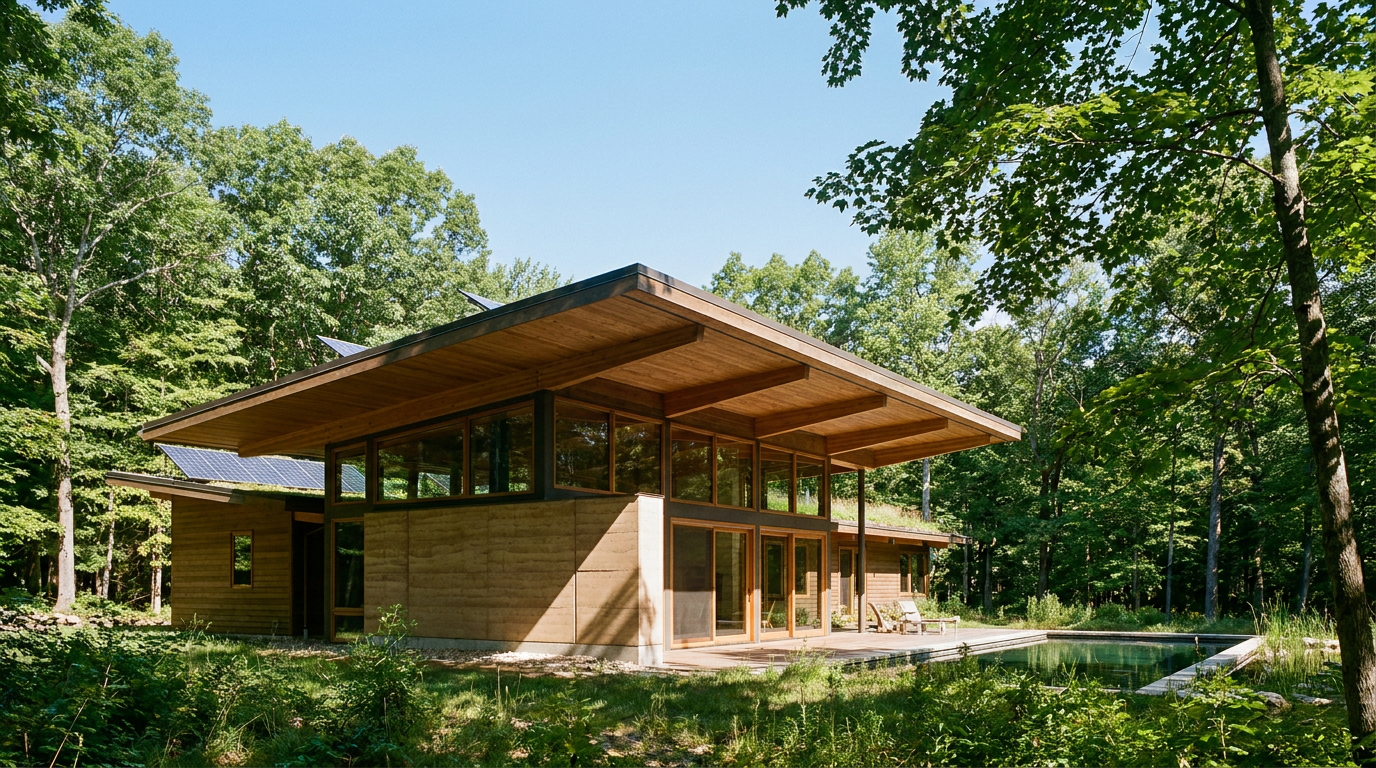
Architects and building scientists in this camp argue that modern reliance on air conditioning is a design failure. They advocate for building homes with high thermal mass, strategic orientation to the sun, and deep eaves that naturally block summer rays. In their view, a properly designed house should maintain a comfortable temperature year-round with minimal mechanical intervention, treating the building itself as the primary climate control system.
Energy Conservationists
Emphasize behavioral changes to reduce grid strain and cut utility bills.
This perspective focuses on the immediate, low-tech actions residents can take in existing homes. By diligently managing window coverings, utilizing night-flush ventilation, and avoiding heat-generating appliances during the day, conservationists highlight how behavioral shifts can slash energy bills by up to 50 percent. Their primary goal is reducing the collective strain on the electrical grid during peak summer heatwaves.
HVAC Integration Specialists
Argue that passive techniques are best utilized as a supplement to modern mechanical systems.
Heating and cooling professionals view passive techniques as a vital tool to optimize mechanical systems rather than replace them. They point out that in extreme heat or high humidity, passive cooling alone cannot maintain safe indoor conditions. Instead, they recommend using shading and ventilation to reduce the 'cooling load' on high-efficiency heat pumps and air conditioners, which extends the lifespan of the equipment and lowers operational costs.
What we don't know
- How rising global nighttime temperatures will impact the long-term viability of night-flush ventilation.
- The exact financial return on investment for retrofitting older homes with high thermal mass materials.
Key terms
- Passive Cooling
- A building design approach that naturally regulates indoor temperature without relying on mechanical systems like air conditioning.
- Night-Flush Ventilation
- The practice of opening windows at night to pull in cool air and flush out accumulated indoor heat, then sealing the house in the morning.
- Stack Effect
- A natural ventilation principle where hot air rises and escapes through high vents, drawing cooler air in through lower openings.
- Thermal Mass
- Materials like stone, brick, or concrete that absorb heat slowly during the day and release it at night, stabilizing indoor temperatures.
- Evapotranspiration
- The process by which plants release moisture into the air, naturally cooling the surrounding environment.
Frequently asked
Does leaving a ceiling fan on cool down an empty room?
No. Fans cool people, not rooms, by creating a wind-chill effect on your skin. Leaving a fan on in an empty room simply wastes electricity and can actually add heat from the motor.
Which direction should my ceiling fan spin in the summer?
In the summer, ceiling fans should rotate counterclockwise when you look up at them. This pushes air straight down, creating a cooling breeze.
How do I create a cross-breeze if my room only has one window?
Place a fan blowing outward in that window to create a vacuum, and open a window in a nearby room while keeping the connecting doors open. This will pull air through the space.
Should I open my windows during a hot summer day?
No. Once the outdoor temperature exceeds the indoor temperature, opening windows will only let hot air in. It is best to keep windows and blinds closed during the hottest parts of the day.
Sources
Source coverage
7 outlets
3 viewpoints surfaced







[1]Pacific Northwest National LaboratoryHVAC Integration Specialists
Airflow and Ventilation Cooling Strategies
Read on Pacific Northwest National Laboratory →[2]Efficiency VermontEnergy Conservationists
How to cool a house without AC
Read on Efficiency Vermont →[3]CieloEnergy Conservationists
Passive Cooling – All You Need to Know About Cooling Your Home Using Natural Resources
Read on Cielo →[4]Calm Living HomesPassive Design Advocates
Passive heating and cooling
Read on Calm Living Homes →[5]The Happy SleeperEnergy Conservationists
How to Cool a Room Without AC (The Science of Sleep)
Read on The Happy Sleeper →[6]WholeHouseFanEnergy Conservationists
9 Ways: How To Cool House Naturally In Summer Without AC
Read on WholeHouseFan →[7]Factlen Editorial TeamPassive Design Advocates
Synthesis by Factlen editorial team
Read on Factlen Editorial Team →
Every angle. Every day.
Get home stories with full source coverage and perspective breakdowns delivered to your inbox.