
The Science of Longevity Travel: How 'Blue Zones' are Redefining Culinary Tourism
Travelers are increasingly abandoning indulgence-heavy vacations in favor of regenerative retreats in the world's longevity hotspots, seeking to learn the dietary and lifestyle habits of centenarians.
By Factlen Editorial Team
- Wellness Travelers
- Seeking personal health optimization, digital detox, and returning home healthier than they left.
- Local Culinary Stewards
- Focused on preserving indigenous foodways, protecting heirloom crops, and preventing overtourism from diluting their culture.
- Hospitality Innovators
- Shifting from indulgence-based luxury to regenerative, purpose-driven retreats that support local agriculture.
What's not represented
- · Everyday residents of Blue Zones who are not involved in the tourism or hospitality industries.
- · Public health officials analyzing the impact of globalization and tourism on traditional indigenous diets.
Why this matters
As chronic diseases and burnout rise globally, this shift in travel offers a blueprint for sustainable health. By learning how the world's longest-lived people eat and socialize, travelers can bring life-extending habits back to their own kitchens.
Key points
- Travelers are shifting away from indulgence vacations toward 'longevity tourism' in the world's healthiest regions.
- Blue Zone diets are 95% plant-based, relying heavily on beans, whole grains, and seasonal vegetables.
- Cultural practices like stopping eating when 80% full and sharing communal meals actively lower stress and improve digestion.
- Luxury resorts are launching 'Blue Zone Retreats' focused on natural movement, foraging, and plant-based cooking classes.
- This trend aligns with regenerative tourism, providing economic support to preserve indigenous agricultural practices and heirloom crops.
The traditional luxury vacation was built on a foundation of deliberate excess. For decades, the ultimate escape meant all-you-can-eat buffets, bottomless poolside cocktails, and days spent entirely sedentary on a sun lounger, far removed from the stresses of daily life. But as the global wellness economy expands and travelers become more acutely aware of the toll that modern lifestyles take on their bodies, a profound shift is underway in how we choose to spend our leisure time. In 2026, the hospitality industry is witnessing a massive pivot away from indulgence-based itineraries. Instead, a growing demographic of health-conscious travelers is seeking out experiences that leave them fundamentally healthier, more educated, and more vibrant than when they first packed their bags.[2][5]
In this new era of travel, the most sought-after souvenir isn't a tan or a duty-free luxury good—it is the secret to a longer, healthier life. Travelers are increasingly abandoning standard resorts in favor of "longevity tourism," flocking to specific global destinations where the local population has seemingly cracked the code on aging. This movement represents a complete reimagining of the culinary vacation. Rather than traveling to Paris for heavy sauces and rich pastries, or to Napa Valley strictly for wine tasting, visitors are journeying to remote islands and rural peninsulas to study the daily rhythms, agricultural practices, and specific diets of the world's most resilient communities.[2][3]
At the center of this booming travel movement are the "Blue Zones"—a demographic term coined in the early 2000s by National Geographic fellow Dan Buettner, alongside researchers Gianni Pes and Michel Poulain. The team identified five distinct geographic regions characterized by exceptionally high concentrations of centenarians and remarkably low rates of chronic diseases like heart disease, obesity, and dementia. These original longevity hotspots include the islands of Okinawa in Japan and Sardinia in Italy; the Nicoya Peninsula in Costa Rica; the Aegean island of Ikaria in Greece; and the Seventh-day Adventist community in Loma Linda, California.[1][3]
What began as a niche anthropological study has rapidly transformed into a dominant sector of the luxury travel industry. Major industry voices, including Condé Nast Traveler and Forbes, have identified Blue Zone travel as one of the defining hospitality trends of the year. This surge is driven by travelers who want to immerse themselves in the environments that naturally foster longevity. They are not looking for clinical spas or sterile medical retreats; rather, they want to walk the same steep village paths, harvest the same heirloom vegetables, and sit at the same communal tables as the centenarians who have mastered the art of living well.[2][5]
The culinary philosophy of these regions stands in stark contrast to the restrictive, fad-driven diets that dominate Western wellness culture. In a Blue Zone, there is no obsessive calorie counting, no strict macronutrient tracking, and no rigid fasting windows. Instead, the dietary approach is characterized by what researchers call a "plant slant." Across all five regions, regardless of the specific local cuisine, approximately 95 percent of the traditional diet comes from whole, minimally processed plant-based foods. It is a diet of abundance rather than deprivation, focusing on seasonal vegetables, whole grains, nuts, and seeds, all grown locally and prepared simply.[1][6]

The undisputed cornerstone of this global longevity diet is the humble bean. Whether it is black beans in the Nicoya Peninsula, soybeans and tofu in Okinawa, or hearty lentils, chickpeas, and fava beans in the Mediterranean, legumes provide the primary and most vital source of protein. In these communities, meat is treated as a celebratory side dish or a minor flavor enhancer rather than the centerpiece of a meal. On average, residents consume small, three-to-four-ounce portions of meat—roughly the size of a deck of cards—only about five times a month, relying instead on the dense, fiber-rich nutrition provided by daily servings of beans.[1]
But longevity tourism teaches visitors that how people eat is just as critical to their health as what they eat. In Okinawa, travelers are introduced to the cultural practice of "hara hachi bu," a traditional Confucian mantra recited before meals. The phrase serves as a mindful reminder to stop eating when the stomach is 80 percent full. This built-in cultural mechanism naturally prevents the overeating that plagues modern societies, optimizing digestion and preventing the metabolic strain associated with processing excess calories. For travelers accustomed to oversized restaurant portions, learning this intuitive approach to satiety is often a transformative experience.[1][6]
But longevity tourism teaches visitors that how people eat is just as critical to their health as what they eat.
Similarly, Blue Zone food culture emphasizes the strategic front-loading of caloric intake throughout the day. In these communities, the largest and most substantial meal is typically consumed in the morning or early afternoon, providing the necessary energy for a day of physical labor or natural movement. The smallest meal is reserved for the late afternoon or early evening, and late-night snacking is virtually nonexistent. This eating pattern aligns perfectly with the body's natural circadian rhythms, allowing the digestive system to rest fully overnight, naturally regulating blood glucose levels, and promoting deeper, more restorative sleep.[1]

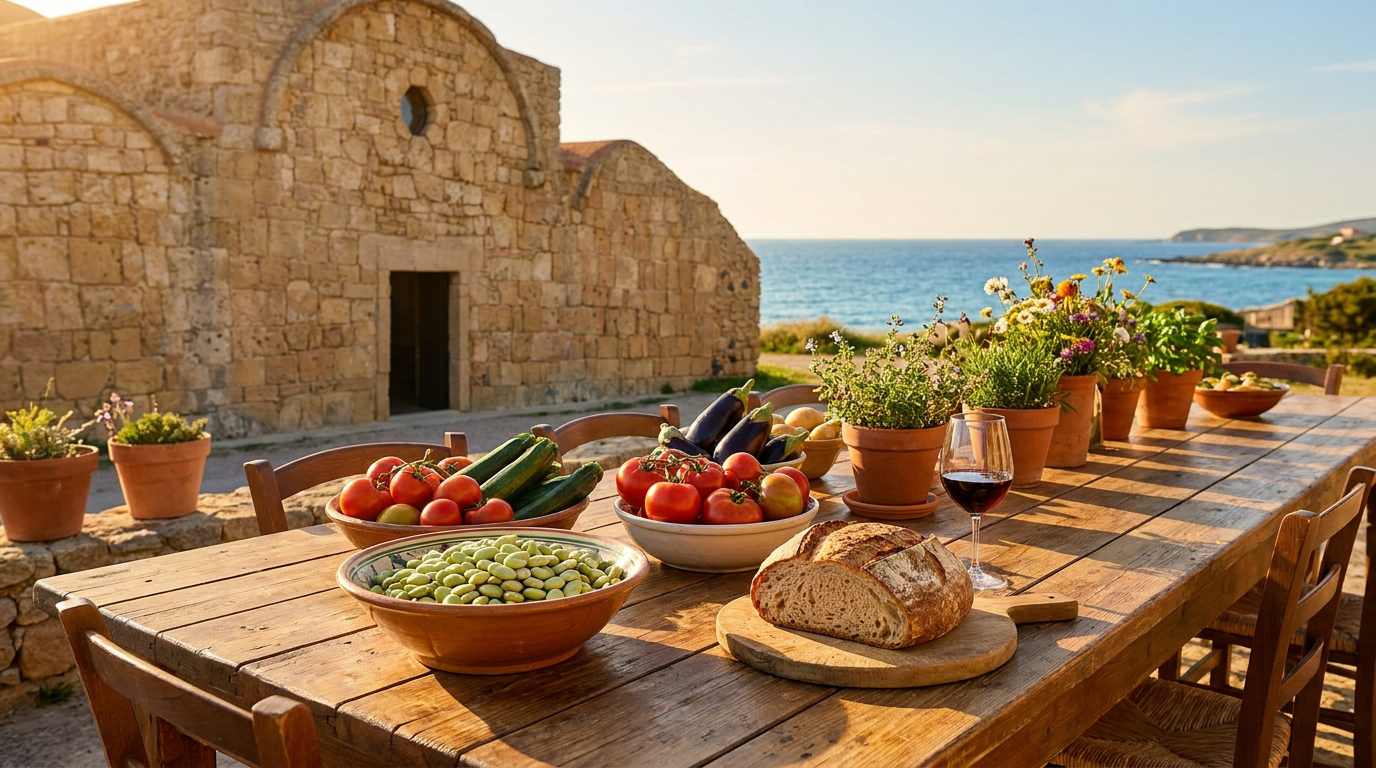
Beyond the biological mechanics of digestion, the social environment of the dining table is a crucial mechanism of longevity that travelers actively seek to experience. In Sardinia and Ikaria, meals are never rushed, and they are rarely eaten alone in front of a screen. Instead, dining is a prolonged, communal ritual of connection. Tables are filled with extended family and friends, and meals are often accompanied by a moderate glass of local wine. In Sardinia, locals favor Cannonau, a robust red wine that boasts exceptionally high levels of antioxidant polyphenols, which help protect the cardiovascular system.[1][3]
Medical researchers and longevity experts note that this deep social integration does much more than just foster a pleasant sense of community; it has measurable physiological benefits. The act of sharing meals, engaging in multi-generational conversation, and laughing with loved ones actively lowers cortisol levels and reduces the systemic inflammation that drives many age-related diseases. By participating in these communal dining rituals, residents of Blue Zones naturally combat the chronic stress, anxiety, and epidemic of loneliness that have become pervasive in fast-paced, hyper-connected Western societies.[2][6]
To meet the surging demand for these holistic experiences, the global hospitality industry is rapidly evolving its offerings. Luxury resorts, boutique hotels, and specialized tour operators are launching dedicated "Blue Zone Retreats" that formalize the longevity experience. In Costa Rica's Nicoya Peninsula, properties like the Andaz are designing comprehensive itineraries that replace traditional, punishing gym workouts with natural, purposeful movement. Guests might spend their mornings foraging for local ingredients, hiking through biodiverse tropical forests, or working alongside local farmers to harvest the squash and corn that will become their evening meal.[2][4]
In Okinawa, high-end wellness retreats have completely overhauled their programming to reflect indigenous longevity practices. Guests can begin their days with dawn yoga overlooking the Pacific Ocean, followed by immersive, plant-based cooking classes. Under the guidance of local chefs, travelers learn to prepare nutrient-dense regional staples, such as vibrant purple sweet potatoes, bitter melon, and fresh turmeric tea. These hands-on programs are explicitly designed not just as vacation activities, but as practical educational workshops, equipping travelers with the skills and knowledge needed to recreate the longevity lifestyle in their own kitchens back home.[2]

This culinary tourism boom intersects heavily with another major 2026 travel trend: the rise of "regenerative tourism." Moving beyond the baseline concept of sustainability—which simply aims to minimize a visitor's carbon footprint and leave no trace—regenerative tourism asks how a destination can be actively improved by a traveler's presence. By participating in local, traditional foodways, longevity tourists provide crucial economic support that helps preserve indigenous agricultural practices, protect heirloom crop varieties, and sustain family-run farms that might otherwise be lost to the pressures of globalization and industrial agriculture.[4][6]
In the Greek island of Ikaria, for example, visitors can join local guides to learn how to identify and forage some of the 75 varieties of wild, edible greens that grow naturally across the rugged landscape. These wild greens are a staple of the Ikarian diet and contain up to ten times the antioxidants found in a glass of red wine. This type of hands-on, educational tourism provides a powerful economic incentive for local communities to protect their natural, wild landscapes and traditional knowledge, rather than paving over them to build conventional tourist infrastructure.[1][4]
However, the rapid commercialization of these specific regions is not without its controversies and uncertainties. Anthropologists, sociologists, and local residents alike worry that a massive influx of wellness tourists could paradoxically disrupt the very environments they are coming to admire. The geographic isolation, slow-paced agrarian lifestyles, and tight-knit community structures that originally fostered these longevity hotspots are inherently fragile. There is a real concern that transforming these quiet villages into bustling hubs for international wellness retreats could dilute the local culture and introduce the very modern stressors the residents have historically avoided.[3][6]

Furthermore, health experts and longevity physicians caution travelers against adopting a "magic bullet" mindset. Spending a single week eating fava beans and drinking Cannonau wine in Sardinia will not instantly undo decades of a highly processed Western diet and a sedentary lifestyle. The true, lasting value of a Blue Zone retreat does not lie in the vacation itself, but in the traveler's willingness and ability to export these habits—mindful eating, natural daily movement, and intentional community connection—back to their everyday lives in bustling cities and demanding corporate environments.[6]
Ultimately, the meteoric rise of longevity culinary tourism represents a profound and necessary recalibration of what modern society considers a luxury vacation. It suggests a collective realization that the greatest privilege is no longer found in material excess, endless consumption, or total inactivity. Instead, the new luxury is vitality, time, and well-being. By looking to the past and studying the simple, time-tested rituals of eating well, moving naturally, and sharing a table with others, travelers are finding a sustainable blueprint for a healthier future.[6]
How we got here
2004
National Geographic explorer Dan Buettner and demographic researchers officially identify and coin the term 'Blue Zones' for five global longevity hotspots.
2023
The release of the hit documentary series 'Live to 100' sparks massive mainstream global interest in the diets and habits of centenarians.
2025
Luxury hospitality brands and boutique travel agencies begin launching dedicated 'Blue Zone Retreats' focused on natural movement and plant-based diets.
2026
Regenerative culinary tourism becomes a dominant travel trend, shifting the industry focus from vacation indulgence to holistic health optimization.
Viewpoints in depth
The Wellness Traveler's View
Vacations should serve as a reset for long-term health and vitality.
For this demographic, the traditional indulgence vacation has lost its appeal. They view travel as an investment in their 'healthspan'—the number of years lived without chronic disease. By visiting Blue Zones, they seek immersive education in mindful eating, stress reduction, and natural movement, aiming to bring these sustainable habits back to their daily lives.
The Local Steward's View
Tourism must protect, not dilute, the cultural isolation that created longevity.
Residents and anthropologists recognize a paradox: the very factors that created Blue Zones—geographic isolation, tight-knit communities, and slow-paced agrarian lifestyles—are threatened by mass tourism. Local stewards advocate for 'regenerative' travel models where visitors actively contribute to the preservation of heirloom crops and traditional cooking methods, ensuring the culture survives the influx of foreign interest.
The Hospitality Innovator's View
Hotels must evolve from providing excess to facilitating holistic well-being.
Industry leaders are redesigning the resort experience from the ground up. Instead of expansive buffets and sedentary poolside service, they are integrating on-site regenerative agriculture, plant-forward menus, and community-led foraging excursions. This shift not only meets consumer demand but also lowers the environmental footprint of the properties.
What we don't know
- Whether the influx of international wellness tourism will disrupt the quiet, isolated community structures that originally fostered these longevity hotspots.
- How effectively travelers can maintain Blue Zone habits once they return to fast-paced, highly processed Western environments.
- The long-term viability and authenticity of 'artificial' Blue Zone retreats located outside the original five geographic regions.
Key terms
- Blue Zone
- A specific geographic region where the population shares a lifestyle and environment that results in exceptionally long, healthy lives and a high rate of centenarians.
- Hara hachi bu
- A traditional Okinawan Confucian teaching that instructs people to eat only until they are 80 percent full.
- Regenerative Tourism
- A model of travel focused on leaving a destination better than it was found, actively supporting local ecosystems, agriculture, and cultural heritage.
- Polyphenols
- Powerful antioxidant compounds found abundantly in plant-based foods, wild greens, and certain wines, which help reduce inflammation and protect cardiovascular health.
- Healthspan
- The portion of a person's life during which they are generally healthy and free from serious or chronic disease, as opposed to just total lifespan.
Frequently asked
What are the five original Blue Zones?
The five recognized longevity hotspots are Okinawa, Japan; Sardinia, Italy; the Nicoya Peninsula, Costa Rica; Ikaria, Greece; and Loma Linda, California.
What is the '80% rule' in Blue Zone eating?
Known in Okinawa as 'hara hachi bu,' it is a cultural practice of stopping eating when you feel 80 percent full, which prevents overeating and aids digestion.
Do people in Blue Zones eat meat?
Yes, but very sparingly. Meat is typically consumed in small three-to-four-ounce portions about five times a month, with plant-based foods and beans making up 95% of the diet.
What is regenerative tourism?
It is a travel philosophy that goes beyond sustainability. Instead of just minimizing harm, regenerative tourism aims to actively restore and improve the local environment and community.
Sources
Source coverage
6 outlets
3 viewpoints surfaced






[1]Blue ZonesHospitality Innovators
Blue Zones Food Guidelines and the Power 9
Read on Blue Zones →[2]ForbesWellness Travelers
How Blue Zone Retreats Are Redefining The Wellness Vacation
Read on Forbes →[3]National GeographicLocal Culinary Stewards
Traveling for a longer life: The rise of longevity tourism
Read on National Geographic →[4]EHotelierHospitality Innovators
Agrobiodiversity and Regenerative Tourism in 2026
Read on EHotelier →[5]Condé Nast TravelerWellness Travelers
Why 'Blue Zone' Travel is the Ultimate Wellness Trip
Read on Condé Nast Traveler →[6]Factlen Editorial TeamLocal Culinary Stewards
Synthesis by Factlen editorial team
Read on Factlen Editorial Team →

Every angle. Every day.
Get travel stories with full source coverage and perspective breakdowns delivered to your inbox.