
The Evidence Behind the 2026 Right to Repair Mandates
As sweeping new repair laws take effect across the US and Europe in 2026, data suggests consumers could save hundreds annually while significantly reducing global e-waste.
By Factlen Editorial Team
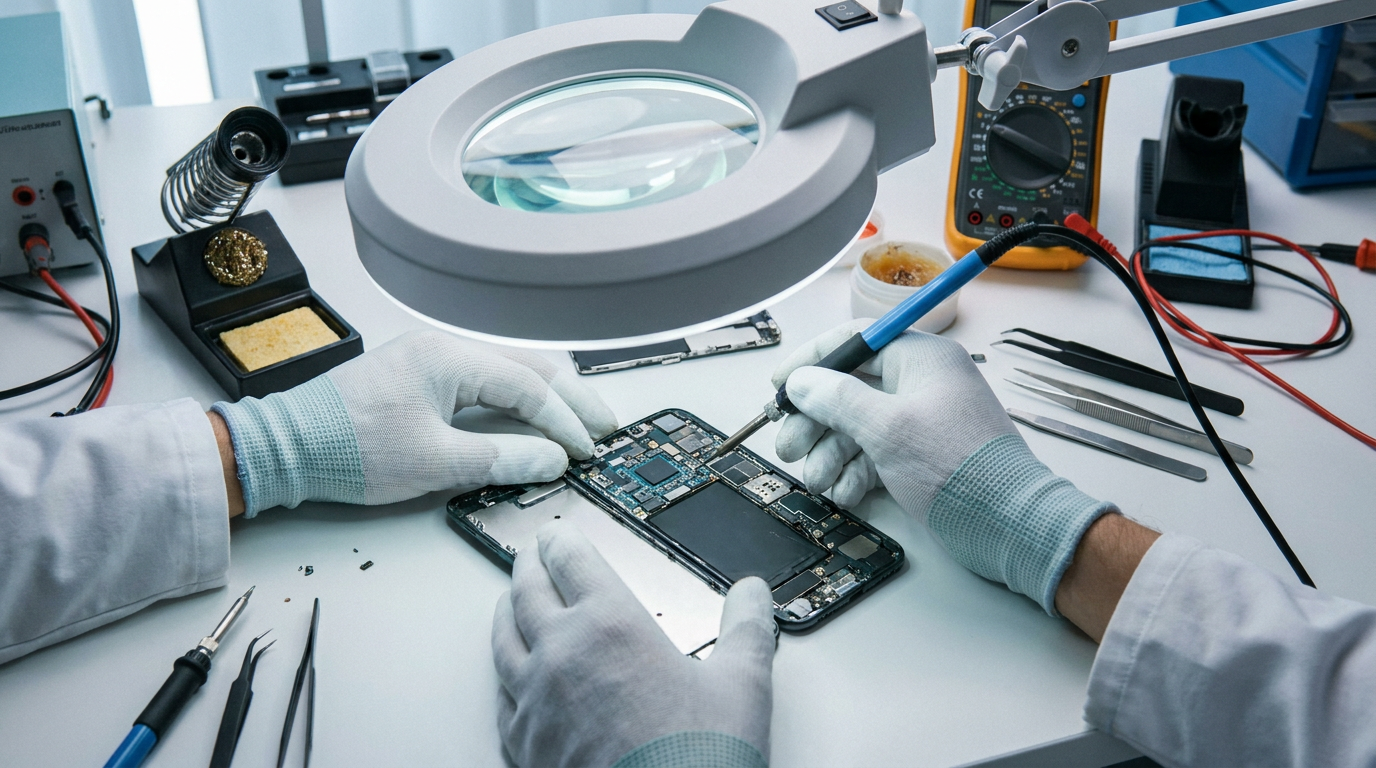
- Consumer & Environmental Advocates
- Argue that repair restrictions are artificial monopolies designed to force unnecessary upgrades.
- Original Equipment Manufacturers
- Argue that forced repair access compromises device security, user safety, and intellectual property.
- Independent Repair Providers
- Argue that timely access to OEM data and parts is an existential requirement for their businesses.
What's not represented
- · Raw material mining industry
- · Municipal waste management facilities
Why this matters
For decades, manufacturers have engineered products to be replaced rather than fixed, costing households hundreds of dollars a year and fueling an environmental crisis. The new wave of 2026 legislation legally empowers you to fix your own devices, fundamentally shifting the balance of power from corporations back to consumers.
Key points
- New 2026 laws in states like Colorado and Oregon mandate that manufacturers provide repair parts and tools to consumers.
- The EU now requires home appliance manufacturers to stock spare parts for up to 10 years.
- Evidence suggests households can save over $330 annually by repairing rather than replacing electronics.
- Global e-waste is projected to reach 82 million metric tons by 2030, a crisis these laws aim to mitigate.
- Manufacturers continue to push back, citing concerns over device security, battery safety, and intellectual property.
- The effectiveness of these laws hinges on whether regulators can successfully ban 'parts pairing' software locks.
The era of disposable technology is facing a sweeping legislative reckoning. For decades, the lifecycle of consumer electronics and appliances was dictated entirely by manufacturers, who often engineered products to be replaced rather than repaired. But in 2026, the "Right to Repair" has transitioned from a fringe hacker movement into binding law across major global markets.[1][11]
The core mechanism of these mandates is straightforward but transformative. Right to Repair laws compel Original Equipment Manufacturers (OEMs) to provide consumers and independent repair shops with access to the same diagnostic tools, software, repair manuals, and replacement parts that authorized dealers receive. They mandate that these resources be provided on "fair and reasonable" terms, effectively breaking the monopoly manufacturers have held over the aftermarket lifecycle of their products.[1][10]
The Primary Claim: Repair mandates significantly reduce electronic waste. The primary environmental argument for these laws is the mitigation of a rapidly escalating global crisis. According to the Global E-waste Monitor, the world generated a staggering 62 million metric tons of electronic waste in 2022.[2][7]

The evidence supporting this claim is rooted in lifecycle extension. Currently, e-waste is rising five times faster than documented recycling efforts, with only about 22% of discarded electronics being properly collected and processed. Without intervention, global e-waste is projected to reach 82 million metric tons by 2030.[2][7]
By legally requiring manufacturers to supply parts, Right to Repair laws attack the root cause of this waste: premature disposal. When a consumer can easily replace a degraded smartphone battery or a cracked screen rather than discarding the entire device, the lifespan of the product is extended. This directly translates to fewer new products manufactured, reducing the massive resource extraction and energy consumption required to build them.[2][4]
The Secondary Claim: Consumers realize substantial financial savings. The economic argument for the Right to Repair centers on the financial penalty consumers pay when forced into manufacturer-authorized repair ecosystems.[2][6]

The evidence for household savings is robust. Research compiled by U.S. PIRG and The Repair Association indicates that American households could save an average of $330 to $382 annually by repairing their phones, computers, and appliances instead of replacing them. Nationally, this equates to approximately $40 billion in total savings per year.[2][6]
These savings are particularly pronounced in the automotive sector. A 2026 report by MNP Canada, commissioned by the Automotive Industries Association of Canada, found that drivers save up to 30%—or roughly $500—on common repairs when the work is performed at independent shops rather than dealerships. For labor-heavy or complex repairs using aftermarket parts, the savings can reach up to 80%.[3]
However, modern vehicles are essentially rolling computers, and automakers currently control access to the telemetry and maintenance data required to fix them. The report notes that when independent shops are locked out of this data, consumers are forced back to expensive dealerships, costing independent shops an estimated $336 million in lost profit annually.[3]
However, modern vehicles are essentially rolling computers, and automakers currently control access to the telemetry and maintenance data required to fix them.
The Third Claim: State and regional laws are forcing a global hardware redesign. Rather than relying on a single federal mandate, the Right to Repair has advanced through a patchwork of aggressive state and regional laws that are now reaching critical mass.[1][8]

The evidence of this legislative wave is highly visible in 2026. Colorado's HB 1121, which took effect on January 1, 2026, represents one of the broadest laws to date, covering a vast array of digital electronic equipment. Similar comprehensive laws are now active in California, Minnesota, and New York.[5][8]
Internationally, the European Union is enforcing a massive shift in producer responsibility. By July 2026, all EU member states must transpose the Right to Repair Directive into national law. For the home appliance sector, this means manufacturers of washing machines, dishwashers, and refrigerators must keep essential spare parts available for 7 to 10 years after the last unit of a model is sold.[9][10]
This regulatory pressure is forcing OEMs to move away from "replace and forget" business models. Engineering teams are now required to factor repairability into the initial design process, ensuring that products can be disassembled with commonly available tools and that fasteners are reusable.[4][10]
The Counter-Claim: Repair mandates compromise device security, safety, and intellectual property. Manufacturers have not conceded the aftermarket without a fight, arguing that forced openness carries severe unintended consequences.[2][8]

The evidence for the counter-claim focuses on the risks of unvetted third-party intervention. Industry groups, such as the Security Industry Association, have raised alarms about the impact of repair laws on commercial security equipment and life-safety systems. Furthermore, OEMs argue that providing deep diagnostic access could expose consumers to data breaches, while the use of substandard third-party lithium-ion batteries poses genuine fire risks.[2]
There are also significant legal tensions regarding intellectual property. Legal analysts note that state repair laws often prioritize information access without providing sufficient clarity on how those provisions interact with an OEM's preexisting trade secrets. A manufacturer that refuses to hand over proprietary schematics to a potential competitor could face state-level violations, setting up a clash with federal antitrust and IP jurisprudence.[8]
Transparent Uncertainty: The effectiveness of "parts pairing" bans. The most significant unknown in the 2026 landscape is whether regulators can successfully defeat software-based repair restrictions.[2]
The evidence of this uncertainty lies in the ongoing use of "parts pairing"—a practice where a manufacturer cryptographically links a specific component to a device's motherboard. Independent technicians report that even when using genuine parts, software updates frequently trigger "Unknown Part" warnings or disable certain features if the repair wasn't authorized by the OEM's servers.[2]
While Oregon made history by becoming the first state to explicitly ban parts pairing, it remains unclear if other jurisdictions will successfully enforce similar bans, or if manufacturers will find new software loopholes to maintain their ecosystem control.[2]
Ultimately, the evidence pack strongly supports the conclusion that Right to Repair laws deliver measurable consumer savings and vital e-waste reduction. However, the true durability of these benefits will depend on how the courts resolve the looming battles over software locks, trade secrets, and fragmented state-by-state compliance.[1][2][8]
How we got here
2014
Automakers agree to a voluntary memorandum to provide independent shops with repair information.
2022
Global e-waste generation hits a record 62 million metric tons.
2024
Oregon passes a landmark Right to Repair bill that explicitly bans 'parts pairing'.
Jan 1, 2026
Colorado's HB 1121 takes effect, extending repair mandates to a broad range of digital electronics.
July 31, 2026
Deadline for EU member states to transpose the Right to Repair Directive into national law.
Viewpoints in depth
Consumer & Environmental Advocates
Argue that repair restrictions are artificial monopolies designed to force unnecessary upgrades.
Advocates point to the 82 million metric ton e-waste projection and the massive consumer savings as proof that repair laws are an economic and environmental necessity. They argue that security concerns are largely fabricated to protect OEM profit margins, citing companies like Patagonia that successfully balance product integrity with repairability.
Original Equipment Manufacturers (OEMs)
Argue that forced repair access compromises device security, user safety, and intellectual property.
Manufacturers and industry groups warn that opening up diagnostics and parts to unvetted third parties could expose consumers to data breaches, faulty lithium-ion batteries, and counterfeit components. They also argue that state laws infringe on their federal trade secret protections, forcing them to hand over proprietary schematics to potential competitors.
Independent Repair Providers
Argue that timely access to OEM data and parts is an existential requirement for their businesses.
Independent shops argue they are fully capable of safely repairing modern electronics and vehicles, provided they aren't locked out by software. They point out that without access to telemetry data and diagnostic tools, they are effectively legislated out of the market, forcing consumers into expensive dealership monopolies.
What we don't know
- Whether manufacturers will design universally repairable products or create fragmented, state-specific compliance models.
- How federal courts will ultimately rule on the tension between state repair mandates and federal intellectual property protections.
- If consumers will actually change their behavior and choose repair over the convenience of buying new devices.
Key terms
- Right to Repair
- Legislation requiring manufacturers to provide consumers and independent shops with the parts, tools, and documentation needed to fix products.
- Parts Pairing
- A software practice where a manufacturer digitally links a specific component to a specific device, preventing third-party replacement parts from functioning.
- E-waste
- Discarded electronic appliances, devices, and components, which often contain toxic heavy metals and represent a rapidly growing waste stream.
- OEM
- Original Equipment Manufacturer; the company that originally designed and built the product.
- Telemetry Data
- Data automatically transmitted from a device (like a modern car) to the manufacturer, often required for diagnostics and repair.
Frequently asked
Does repairing my own device void the warranty?
Under the federal Magnuson-Moss Warranty Act, manufacturers generally cannot void your warranty simply because you or an independent shop repaired the device, unless they can prove the repair caused the damage.
Which states currently have Right to Repair laws?
As of early 2026, states including California, Colorado, Minnesota, New York, and Oregon have active, comprehensive Right to Repair laws for electronics.
What is 'parts pairing'?
It is a software lock that prevents a device from recognizing a new part—like a replacement screen or battery—unless it is cryptographically verified by the manufacturer.
Sources
Source coverage
11 outlets
3 viewpoints surfaced











[1]Morgan LewisIndependent Repair Providers
Navigating the 'Right to Repair' Landscape in 2026
Read on Morgan Lewis →[2]Human-I-TConsumer & Environmental Advocates
How Right to Repair Laws Can Reduce E-Waste
Read on Human-I-T →[3]AIA CanadaIndependent Repair Providers
New report shows Right to Repair could save drivers up to $500 on common repairs
Read on AIA Canada →[4]ERP Global
Right to Repair: how laws are reshaping producer responsibility for e-waste
Read on ERP Global →[5]National Consumer Law CenterConsumer & Environmental Advocates
New Consumer Law Changes Taking Effect in 2026
Read on National Consumer Law Center →[6]U.S. PIRGConsumer & Environmental Advocates
Fair Repair Act and Consumer Savings
Read on U.S. PIRG →[7]Electronic Recyclers InternationalIndependent Repair Providers
The Rise of Formal E-Waste Ecosystems in 2026
Read on Electronic Recyclers International →[8]Reed Smith LLPOriginal Equipment Manufacturers
Navigating The Growing Thicket Of 'Right To Repair' Laws
Read on Reed Smith LLP →[9]Global Law ExpertsOriginal Equipment Manufacturers
Right To Repair In Germany 2026 Trademark Protection
Read on Global Law Experts →[10]ClaimlaneIndependent Repair Providers
Right to Repair for Home Appliances (2026)
Read on Claimlane →[11]Factlen Editorial Team
Synthesis by Factlen editorial team
Read on Factlen Editorial Team →
More in technology
See all 6 stories →Apple Intelligence
Apple's Siri AI Hands-On: The iOS 27 Overhaul Finally Delivers on Years of Promises
8 sources

Decentralized Web
The Decentralized Social Web: How ActivityPub and AT Protocol Actually Work
8 sources

Coffee Tech
Scientists Brew Espresso With Ultrasonic Waves Instead of Heat
7 sources
Autonomous Vehicles
Japan's Largest Taxi App Just Raised $553 Million to Replace Missing Drivers with Robotaxis
6 sources

Every angle. Every day.
Get technology stories with full source coverage and perspective breakdowns delivered to your inbox.