
How Small Modular Reactors Are Reshaping the Future of Clean Energy
Advanced nuclear developers are shifting from bespoke megaprojects to factory-built modular reactors, aiming to provide the zero-carbon baseload power demanded by the AI boom.
By Factlen Editorial Team
- Advanced Nuclear Developers
- Argue that factory-built modularity and novel coolants will solve nuclear's historical cost and timeline overruns.
- Tech & Industrial Consumers
- View SMRs as the only viable path to secure the massive, 24/7 zero-carbon baseload power required for AI and heavy industry.
- Regulatory & Safety Bodies
- Focus on standardizing international rules and ensuring that novel passive safety systems function flawlessly.
- Economic Skeptics
- Warn that first-of-a-kind premium costs and unproven supply chains may delay commercial viability well into the 2030s.
What's not represented
- · Local Communities Hosting Plants
- · Anti-Nuclear Environmental Groups
Why this matters
The global transition to clean energy and the explosive growth of AI data centers require massive amounts of reliable, 24/7 electricity. Small Modular Reactors represent the most viable zero-carbon solution to this demand, shifting nuclear power from bespoke, decade-long megaprojects to scalable, factory-built technology.
Key points
- Small Modular Reactors (SMRs) are designed to be manufactured in factories and assembled on-site, drastically reducing construction costs.
- Advanced designs utilize novel coolants like liquid sodium and feature passive safety systems that do not require human intervention.
- Tech giants like Meta and Amazon are directly funding SMR development to secure zero-carbon baseload power for AI data centers.
- TerraPower officially broke ground on its flagship Natrium plant in Wyoming in April 2026.
- Despite momentum, the industry faces challenges in proving the economics of scale and building robust manufacturing supply chains.
The global electrical grid is under unprecedented strain in 2026. The electrification of heavy industry and the exponential growth of artificial intelligence data centers demand massive amounts of uninterrupted, 24/7 power. Simultaneously, strict corporate and governmental climate mandates require that this new power generation be entirely carbon-free. While wind and solar energy have become remarkably cheap, their inherent intermittency leaves a critical gap in the grid. Traditional nuclear power provides the necessary steady baseload, but building a conventional gigawatt-scale plant historically takes over a decade and requires billions of dollars in bespoke, on-site construction.[4][6]
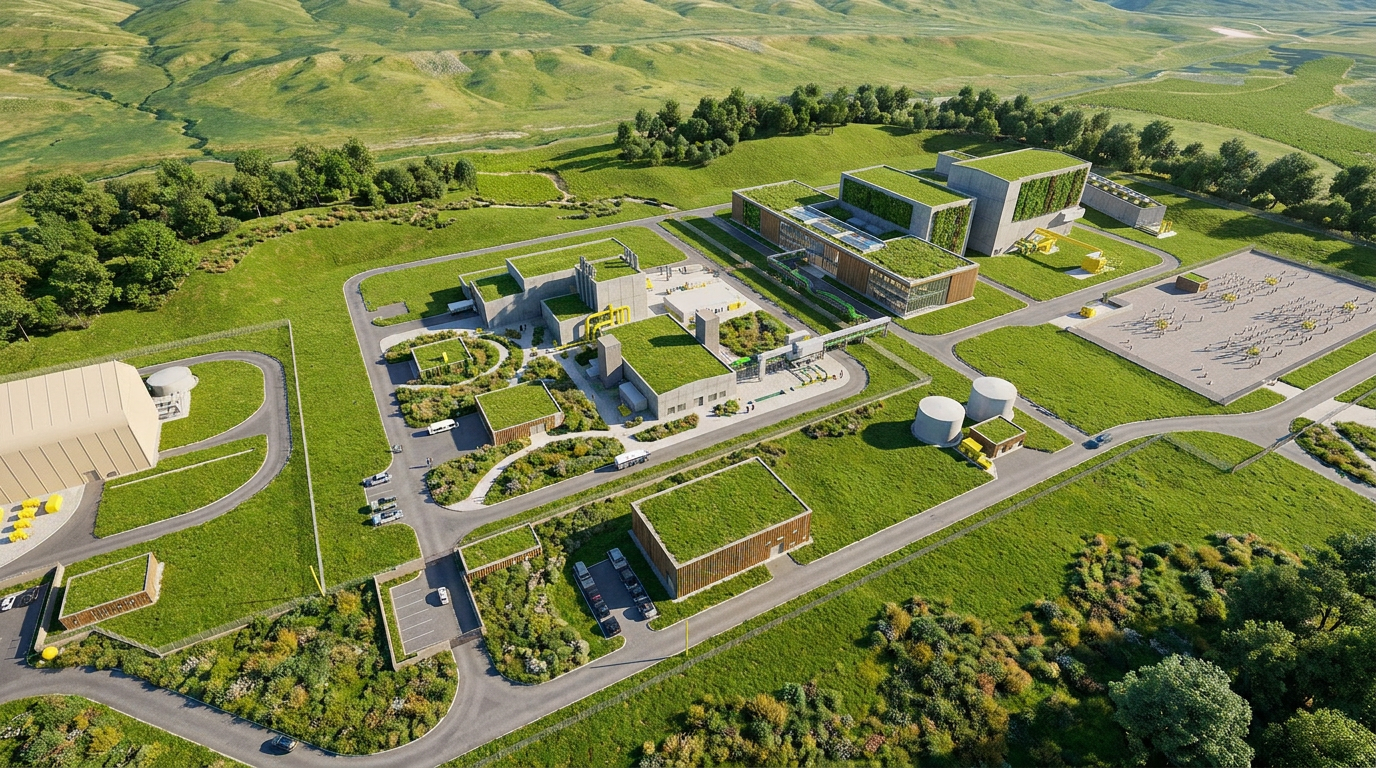
The nuclear industry's proposed solution to this energy paradox has officially moved from the drafting board to the dirt. Small Modular Reactors (SMRs) represent a fundamental rethinking of how atomic energy is deployed. Instead of constructing massive, custom-engineered megaprojects, developers are pivoting to a standardized manufacturing model designed to slash costs and accelerate deployment.[1][6]
By definition, an SMR has a power capacity of up to 300 megawatts electric per unit—roughly one-third the size of a traditional commercial reactor. However, the "small" aspect of the technology is arguably less transformative than the "modular" component.[1][4]
Modularity means that the complex reactor components can be mass-produced in a centralized, highly controlled factory environment. Once completed, these standardized modules are shipped by truck, rail, or barge to the final destination and assembled on-site. This assembly-line approach is specifically designed to circumvent the exorbitant capital costs, supply chain bottlenecks, and weather-related construction delays that have historically plagued the nuclear sector.[1][5]

The technology itself is also evolving well beyond the pressurized water reactors that dominate the current global fleet. Next-generation SMRs are utilizing novel coolants and advanced fuels to operate more efficiently, at higher temperatures, and with smaller physical footprints.[1][6]
A prime example of this technological leap is TerraPower, a nuclear innovation company backed by Bill Gates. In April 2026, the company officially broke ground on the nuclear components of its flagship Natrium plant in Kemmerer, Wyoming, marking the first authorization for a commercial non-light water reactor design in the United States in over 40 years.[2]
The Natrium design is a 345-megawatt sodium-cooled fast reactor. Because liquid sodium has a much higher boiling point than water, the reactor can operate at significantly lower pressures. This fundamental physics advantage eliminates the need for the massive, heavily reinforced concrete containment domes required by traditional water-cooled plants, further reducing construction costs and complexity.[2][6]
Crucially, TerraPower paired the reactor with an integrated molten salt-based energy storage system. This thermal battery allows the plant to store excess heat generated by the reactor core and subsequently boost its electrical output to 500 megawatts for up to five hours during periods of peak grid demand.[2]

This load-following capability solves a major friction point between nuclear power and renewable energy. When solar and wind farms are overproducing on a sunny, breezy afternoon, the SMR can store its thermal energy; when the sun sets and the wind dies down, the plant can dispatch maximum power to the grid, acting as a perfect complement to intermittent sources.[1][2]
This load-following capability solves a major friction point between nuclear power and renewable energy.
TerraPower is not alone in the 2026 deployment race. In Canada, Ontario Power Generation is actively pouring concrete and placing foundational structures for a GE-Hitachi BWRX-300 reactor at the Darlington site. Meanwhile, NuScale Power, which holds the only design currently fully approved by the U.S. Nuclear Regulatory Commission, is advancing a massive 6-gigawatt deployment plan with the Tennessee Valley Authority.[4][5]
The financial engine driving this sudden acceleration in nuclear deployment is the technology sector. Tech giants are increasingly realizing that their artificial intelligence ambitions are fundamentally constrained by electricity generation and grid capacity.[4][5]
To secure reliable, zero-carbon baseload power, companies like Meta and Amazon are bypassing traditional utility procurement processes and directly funding SMR development. Meta recently signed a landmark agreement with TerraPower to deploy up to eight Natrium plants by 2035, while Amazon is heavily backing X-energy's high-temperature gas reactors.[2][4]
According to industry analysts, the pipeline of agreements between SMR developers and digital infrastructure specialists surged to 45 gigawatts by the end of 2025. This massive influx of private capital is providing the bankability and financial certainty the nuclear sector desperately needed to move past the prototype phase.[5]

Safety paradigms have also shifted dramatically with these new designs. Modern SMRs rely heavily on "passive safety" systems. Instead of requiring active mechanical pumps, external power sources, and backup diesel generators to cool the core in an emergency, these designs use fundamental physics—gravity, natural circulation, and convection—to safely shut down and cool the reactor without human intervention.[1][6]
The International Atomic Energy Agency (IAEA), which currently tracks over 80 distinct SMR designs globally, has spent the last several years updating its international safety standards to accommodate and evaluate these innovative passive features, ensuring they meet rigorous global benchmarks.[1][6]
National regulators are also modernizing their frameworks. In 2026, the U.S. Nuclear Regulatory Commission finalized "Part 53," a sweeping update to reactor licensing standards designed specifically to evaluate advanced, non-light-water technologies efficiently. Simultaneously, the European Commission launched a comprehensive strategy to harmonize SMR supply chains and regulatory approvals across EU member states.[3][5]
Despite the tangible momentum, significant uncertainties remain. The industry is currently navigating the "first-of-a-kind" premium. The initial demonstration plants being built today are highly capital-intensive, and developers must prove they can actually achieve the promised economies of scale on the second, third, and tenth units off the assembly line.[5][6]

Supply chain bottlenecks also loom large over the sector. Scaling up from bespoke demonstration projects to true factory production requires a robust network of specialized forging facilities, advanced fuel fabricators, and a highly trained nuclear workforce—infrastructure that largely needs to be rebuilt from scratch in Western nations.[5]
How we got here
May 2022
NuScale Power goes public, becoming the first pure-play SMR company to trade on major markets.
July 2023
Ontario Power Generation announces plans to build three additional SMRs at the Darlington site in Canada.
January 2026
Meta signs an agreement with TerraPower to deploy up to eight Natrium SMR plants by 2035.
March 2026
The European Commission launches a comprehensive strategy to accelerate SMR deployment across the EU.
April 2026
TerraPower officially breaks ground on the nuclear components of its Kemmerer Unit 1 plant in Wyoming.
Viewpoints in depth
Advanced Nuclear Developers
The engineering pivot from construction to manufacturing.
Reactor developers argue that the nuclear industry's historical failures stem from treating every plant as a bespoke, multi-billion-dollar construction megaproject. By shifting to a manufacturing model—where standardized modules are built on an assembly line and shipped to the site—they believe they can drastically reduce capital costs and eliminate weather-related construction delays. They point to the integration of thermal storage and novel coolants as proof that next-generation nuclear can dynamically support, rather than compete with, renewable energy.
Tech & Industrial Consumers
The urgent demand for clean, dispatchable baseload power.
For hyperscalers like Amazon and Meta, the artificial intelligence boom has created an energy paradox: they need gigawatts of uninterrupted, 24/7 power, but they are also bound by strict corporate climate pledges. Wind and solar alone cannot guarantee the uptime required for data centers. These consumers view SMRs as the missing puzzle piece, prompting them to bypass traditional utilities and directly finance advanced nuclear startups to ensure their future infrastructure has a reliable, zero-carbon energy source.
Economic Skeptics
Concerns over unproven economics and supply chain bottlenecks.
Financial analysts and energy economists caution that the SMR sector is currently riding a wave of narrative hype that masks severe industrial challenges. The 'first-of-a-kind' demonstration plants are proving highly capital-intensive, and the specialized supply chains required for advanced fuels and heavy forging do not yet exist at scale. Skeptics argue that until developers can prove they can profitably manufacture the tenth or twentieth unit of a specific design, SMRs remain a speculative financial bet rather than a guaranteed grid solution.
What we don't know
- Whether developers can successfully reduce costs on subsequent reactor units after the initial 'first-of-a-kind' demonstration plants are built.
- How quickly global supply chains can scale up to manufacture the specialized heavy forgings and advanced fuels required for mass deployment.
- The exact timeline for when the first wave of commercial SMRs will reliably deliver power to the grid, as many projects target the early 2030s.
Key terms
- Small Modular Reactor (SMR)
- An advanced nuclear reactor with a capacity of up to 300 megawatts that is built in a factory and shipped to a site for assembly.
- Baseload Power
- The minimum amount of electric power needed to be supplied to the electrical grid at any given time, traditionally provided by coal or large nuclear plants.
- Passive Safety
- Safety systems that rely on natural physical phenomena like gravity and convection to cool a reactor in an emergency, rather than requiring active mechanical pumps.
- Sodium-Cooled Fast Reactor
- A type of reactor that uses liquid sodium instead of water as a coolant, allowing it to operate at lower pressures and higher temperatures.
- Load-Following
- The ability of a power plant to adjust its electricity output as demand fluctuates throughout the day, making it an ideal partner for intermittent renewable energy.
Frequently asked
Are Small Modular Reactors safer than traditional nuclear plants?
Yes, modern SMRs are designed with 'passive safety' features. In the event of a power loss, they use natural forces like gravity and convection to cool the core automatically, without needing human intervention or backup generators.
When will SMRs actually start powering homes?
While construction on initial demonstration plants like TerraPower's Wyoming facility began in 2026, most commercial SMRs are not expected to be fully operational and delivering power to the grid until the early 2030s.
Why are tech companies investing in nuclear energy?
The massive data centers required for artificial intelligence consume enormous amounts of electricity. Tech giants need reliable, 24/7 power that wind and solar cannot always guarantee, and SMRs offer a zero-carbon solution to meet their climate goals.
What happens to the nuclear waste from SMRs?
SMRs still produce radioactive waste, though some advanced designs use fuel more efficiently than traditional reactors. The waste will still require secure, long-term geological storage, which remains an ongoing policy challenge globally.
Sources
Source coverage
6 outlets
4 viewpoints surfaced






[1]International Atomic Energy AgencyRegulatory & Safety Bodies
Small modular reactors: flexible and affordable power generation
Read on International Atomic Energy Agency →[2]TerraPowerAdvanced Nuclear Developers
Construction on Kemmerer Unit 1 marks a new chapter for advanced nuclear industry
Read on TerraPower →[3]European CommissionRegulatory & Safety Bodies
Commission presents strategy to accelerate Small Modular Reactors
Read on European Commission →[4]Stanford UniversityTech & Industrial Consumers
Current and future trends in Small Modular Reactors
Read on Stanford University →[5]NatixisEconomic Skeptics
Small Modular (Nuclear) Reactors: is the dream still alive?
Read on Natixis →[6]Factlen Editorial Team
Synthesis by Factlen editorial team
Read on Factlen Editorial Team →
Every angle. Every day.
Get energy stories with full source coverage and perspective breakdowns delivered to your inbox.