
Scientists Brew Espresso With Ultrasonic Waves Instead of Heat
Researchers have developed a method to brew espresso using high-frequency sound waves and room-temperature water, cutting energy consumption by 75 percent without compromising taste.
By Factlen Editorial Team
- Scientific Innovators
- Focused on the energy efficiency and novel extraction mechanics of acoustic cavitation.
- Consumer Market Watchers
- Interested in how the technology affects the taste and daily habits of coffee drinkers.
What's not represented
- · Commercial espresso machine manufacturers
- · Specialty coffee roasters and professional baristas
Why this matters
Heating water for coffee accounts for a massive amount of global energy consumption. This breakthrough could drastically reduce the carbon footprint of industrial coffee production and eventually transform how home espresso machines operate.
Key points
- UNSW researchers brewed espresso using room-temperature water and ultrasonic sound waves.
- The process relies on acoustic cavitation to extract flavor, oils, and caffeine from coffee grounds.
- The new method cuts energy consumption by roughly 75 percent compared to traditional machines.
- In blind taste tests, 100 coffee drinkers could not tell the difference between traditional and ultrasonic espresso.
- The technology is being eyed for industrial-scale production of ready-to-drink coffee products.
For decades, the fundamental mechanics of making espresso have remained stubbornly unchanged: force highly pressurized, near-boiling water through a tightly packed puck of finely ground coffee. It is a process that yields a rich, complex beverage, but it also requires a massive amount of energy to heat the water. Now, researchers at the University of New South Wales (UNSW) in Sydney have rewritten the rules of brewing. By replacing the traditional heating element with high-frequency sound waves, the team has successfully extracted espresso-strength coffee using room-temperature water. The breakthrough promises to maintain the bold flavor profile of a traditional shot while drastically reducing the environmental footprint of one of the world's most widely consumed beverages.[1][2]
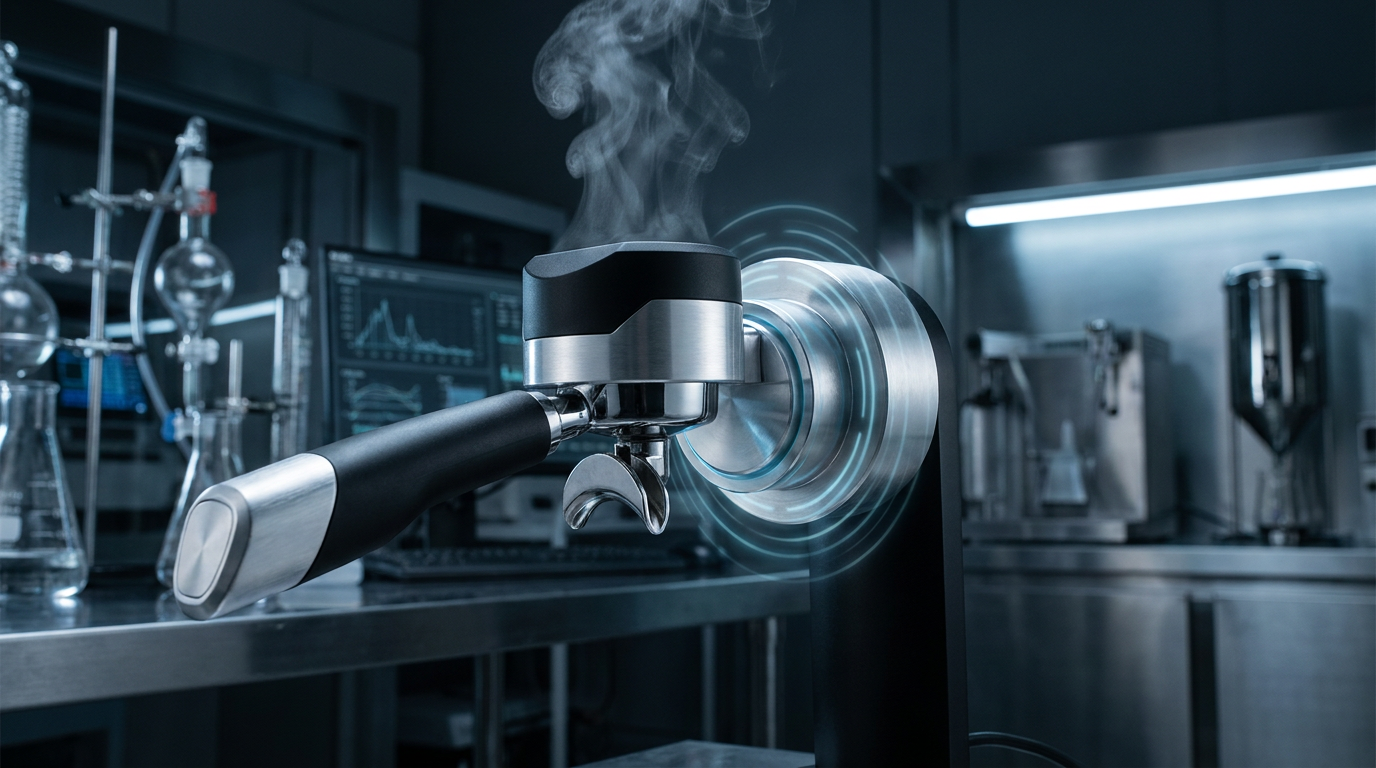
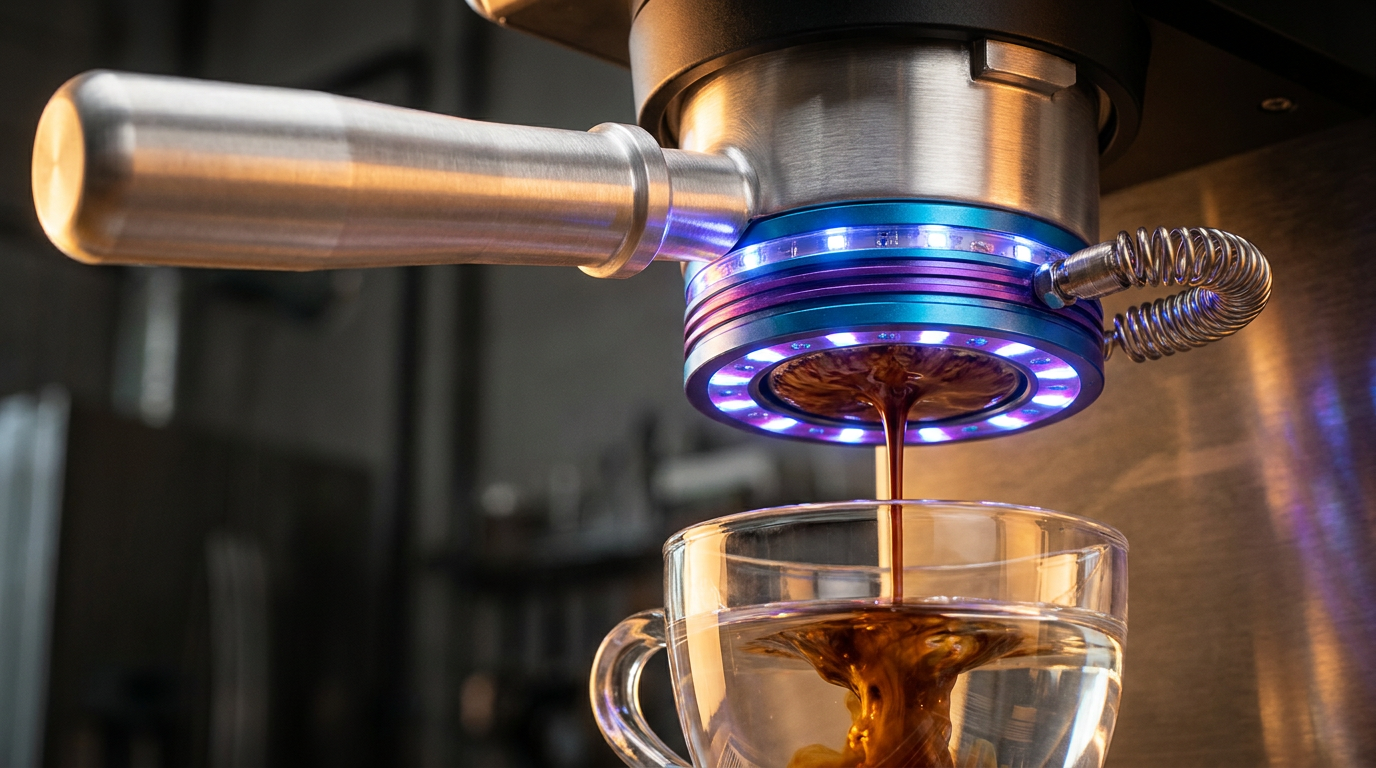
The research, led by chemical engineer Francisco Trujillo and published in the Journal of Food Engineering, builds on the team's previous success in accelerating the cold-brew process. While their earlier work reduced cold-brew times from 24 hours to just three minutes, the new study aimed at the holy grail of coffee extraction: the dense, oil-rich concentration of an espresso. To achieve this without heat, the scientists modified a standard espresso machine's portafilter—the metal basket that holds the coffee grounds. They attached a custom-built transducer, a small metallic horn designed to emit ultrasonic sound waves at frequencies well above the range of human hearing.[2][4][7]
When room-temperature water is pumped into the modified basket, the transducer is activated, sending intense vibrations through both the liquid and the coffee grounds. This high-frequency shaking triggers a physical phenomenon known as acoustic cavitation. Within the water, thousands of microscopic bubbles rapidly form and collapse in a matter of milliseconds. As these tiny bubbles implode, they generate localized microscopic shockwaves. These implosions act like invisible, miniscule brushes that aggressively scrub the coffee grounds, breaking open the cellular structure of the beans to release their trapped flavor molecules, oils, and caffeine.[2][5][6]
Because the extraction relies entirely on the mechanical force of cavitation rather than thermal degradation, the water never needs to be boiled. The entire brewing cycle takes roughly two and a half to three minutes—slightly longer than a standard 30-second hot espresso pull, but remarkably fast for a heatless brew. More importantly, because the system entirely bypasses the energy-intensive heating coils found in standard coffee equipment, it operates on just 24.3 percent of the electricity required by a conventional espresso machine, netting a total energy savings of over 75 percent.[4][5]

Because the extraction relies entirely on the mechanical force of cavitation rather than thermal degradation, the water never needs to be boiled.
Of course, the ultimate test for any coffee innovation is not its energy efficiency, but its taste. To determine if the sonic brew could stand up to traditional methods, the research team conducted a blind sensory analysis involving 100 non-expert coffee drinkers. Participants were asked to sample and compare the ultrasonic room-temperature espresso against a standard hot espresso pulled from the same beans. The researchers measured responses across multiple variables, including aroma, flavor depth, bitterness, and overall preference.[3][4][6]
The results of the taste test were striking. The vast majority of participants could not reliably tell the two beverages apart, rating them equally in richness and body. The sound waves had successfully extracted the exact same complex flavor profile that hot water usually coaxed out of the beans. Furthermore, in a separate test comparing traditional pour-over filter coffee to an ultrasonic version, participants actually preferred the sonic brew, noting that it had a more pleasant profile and significantly less bitterness than the heat-extracted cup.[1][3][5]

While the prospect of a silent, heatless espresso machine sitting on a kitchen counter is an exciting vision for gadget enthusiasts, the researchers see a much larger and more immediate application for their work. The true promise of ultrasonic brewing lies in commercial scalability and industrial manufacturing. The global appetite for ready-to-drink coffee products—such as bottled iced lattes, canned cold brews, and concentrated espresso syrups—requires massive industrial-scale brewing facilities. These factories currently consume vast amounts of electricity to heat thousands of gallons of water daily, contributing significantly to the agricultural and processing footprint of the coffee industry.[2][5][6]
Trujillo envisions the ultrasonic method fundamentally transforming this manufacturing pipeline in the coming years. By brewing entirely at room temperature, industrial producers could save massive amounts of energy and money while efficiently extracting highly concentrated coffee. This sonic concentrate could then be easily shipped and diluted later for a wide range of retail products, from milk-based beverages to iced coffees. Ultimately, the technology offers a rare win-win for the food and beverage sector: a practical method to drastically cut carbon emissions and production costs without ever forcing consumers to compromise on the taste, aroma, or caffeine kick of their daily routine.[3][6]
How we got here
2024
The UNSW research team successfully develops a method to brew cold-brew coffee in three minutes using ultrasonic waves.
June 2026
The team publishes new findings in the Journal of Food Engineering, applying the technology to espresso-strength coffee.
June 2026
Blind taste tests confirm the ultrasonic espresso is indistinguishable from traditional hot-brewed espresso.
Viewpoints in depth
The Researchers
The UNSW team views this as a scalable solution for industrial energy reduction.
Chemical engineer Francisco Trujillo and his team emphasize the environmental and efficiency benefits of the technology. They argue that while home applications are a fun novelty, the true value lies in mass production. By eliminating the need to heat thousands of gallons of water, commercial manufacturers of ready-to-drink coffees and concentrates can drastically cut their carbon footprint and operational costs.
Coffee Purists
Traditionalists remain skeptical of replacing heat and pressure with sound.
While blind taste tests showed no significant difference for average consumers, specialty coffee enthusiasts often view the precise manipulation of water temperature and pressure as an art form. Some industry observers question whether acoustic cavitation can truly replicate the complex chemical extraction that occurs at exactly 93 degrees Celsius, particularly for lighter, more acidic roasts that require heat to fully develop their flavor profiles.
What we don't know
- It is unclear when or if this technology will be miniaturized and priced for the consumer home-appliance market.
- Researchers have not yet detailed how the ultrasonic method performs across different roast profiles, such as ultra-light specialty beans.
Key terms
- Acoustic Cavitation
- The formation and rapid collapse of microscopic bubbles in a liquid, caused by high-frequency sound waves.
- Transducer
- An electronic device that converts energy from one form to another, used here to generate ultrasonic sound waves.
- Portafilter
- The spoon-like handle and basket that holds ground coffee in a traditional espresso machine.
Frequently asked
Does the ultrasonic espresso taste different?
In blind taste tests with 100 coffee drinkers, participants could not reliably tell the difference between the ultrasonic brew and traditional espresso.
How much energy does this save?
Because it uses room-temperature water instead of a heating element, the ultrasonic method uses about 75 percent less energy.
Can I buy an ultrasonic espresso machine?
Not yet. The technology is currently in the prototype phase, with researchers focusing first on scaling it for commercial coffee manufacturers.
Sources
Source coverage
7 outlets
2 viewpoints surfaced







[1]WiredScientific Innovators
Scientists Invent a Way to Brew Espresso With Ultrasonic Waves—No Hot Water Required
Read on Wired →[2]Popular ScienceScientific Innovators
Ultrasonic waves make espresso without heat
Read on Popular Science →[3]SprudgeConsumer Market Watchers
Ultrasonic Espresso – a game changer for the coffee industry?
Read on Sprudge →[4]CTV NewsConsumer Market Watchers
Researchers invent 'ultrasonic espresso' made with sound waves
Read on CTV News →[5]Anthropocene MagazineScientific Innovators
Ultrasonic sound waves brew espresso from room-temperature water
Read on Anthropocene Magazine →[6]SlashdotScientific Innovators
Researchers Brew Espresso Using Ultrasonic Waves
Read on Slashdot →[7]Journal of Food EngineeringScientific Innovators
Ultrasonic espresso: A room-temperature brewing process
Read on Journal of Food Engineering →
Every angle. Every day.
Get technology stories with full source coverage and perspective breakdowns delivered to your inbox.