
The Decentralized Social Web: How ActivityPub and AT Protocol Actually Work
As millions of users migrate to platforms like Mastodon, Threads, and Bluesky, the underlying technology of social media is shifting from walled gardens to open protocols. Here is how the decentralized 'Fediverse' works, and why it matters for the future of online connection.
By Factlen Editorial Team
- Open-Web Advocates
- Focus on non-profit governance, self-hosting, and the ActivityPub standard.
- Protocol Developers & Analysts
- Focus on the technical architecture, data portability, and algorithmic choice of the AT Protocol.
- Digital Sovereignty Proponents
- Focus on regulatory frameworks, interoperability mandates, and breaking corporate monopolies.
What's not represented
- · Legacy Platform Executives
- · Mainstream Casual Users
Why this matters
For the past fifteen years, your social media identity has been locked inside corporate servers—if a platform changed its rules or shut down, you lost your audience. The shift to open protocols means you now own your digital identity and can seamlessly move your connections across the internet, much like keeping your phone number when switching carriers.
Key points
- Open protocols like ActivityPub and the AT Protocol are replacing closed corporate social networks.
- Users on decentralized networks own their data and can move their followers between different apps.
- ActivityPub acts like email for social media, allowing independent servers to communicate seamlessly.
- The AT Protocol allows users to choose their own algorithms through community-built Custom Feeds.
- European regulators are exploring mandates to force larger platforms to interoperate with these open standards.
For more than a decade, the social internet was defined by the concept of the walled garden. If you spent years building an audience, curating a feed, and establishing a digital identity on a single platform, your connections were entirely trapped within those specific corporate servers. You were subject to the shifting whims of private ownership, sudden API paywalls, and opaque algorithmic changes that could throttle your reach overnight. But in 2026, a quiet revolution is fundamentally rewriting the underlying architecture of online connection. Millions of users are now interacting across entirely different platforms without even realizing it, powered by a new generation of open social protocols that treat social media less like a proprietary app and more like a public utility.[8]
This shift was catalyzed by the turbulence of legacy platforms in the early 2020s, which sent users searching for alternatives that offered more stability, transparency, and control. The resulting migration didn't just crown a new corporate winner; it accelerated the mass adoption of decentralized frameworks that had been quietly building in the background for years. Today, the conversation around the future of the internet is dominated by two foundational technologies: ActivityPub and the Authenticated Transfer (AT) Protocol.[2][4][7]
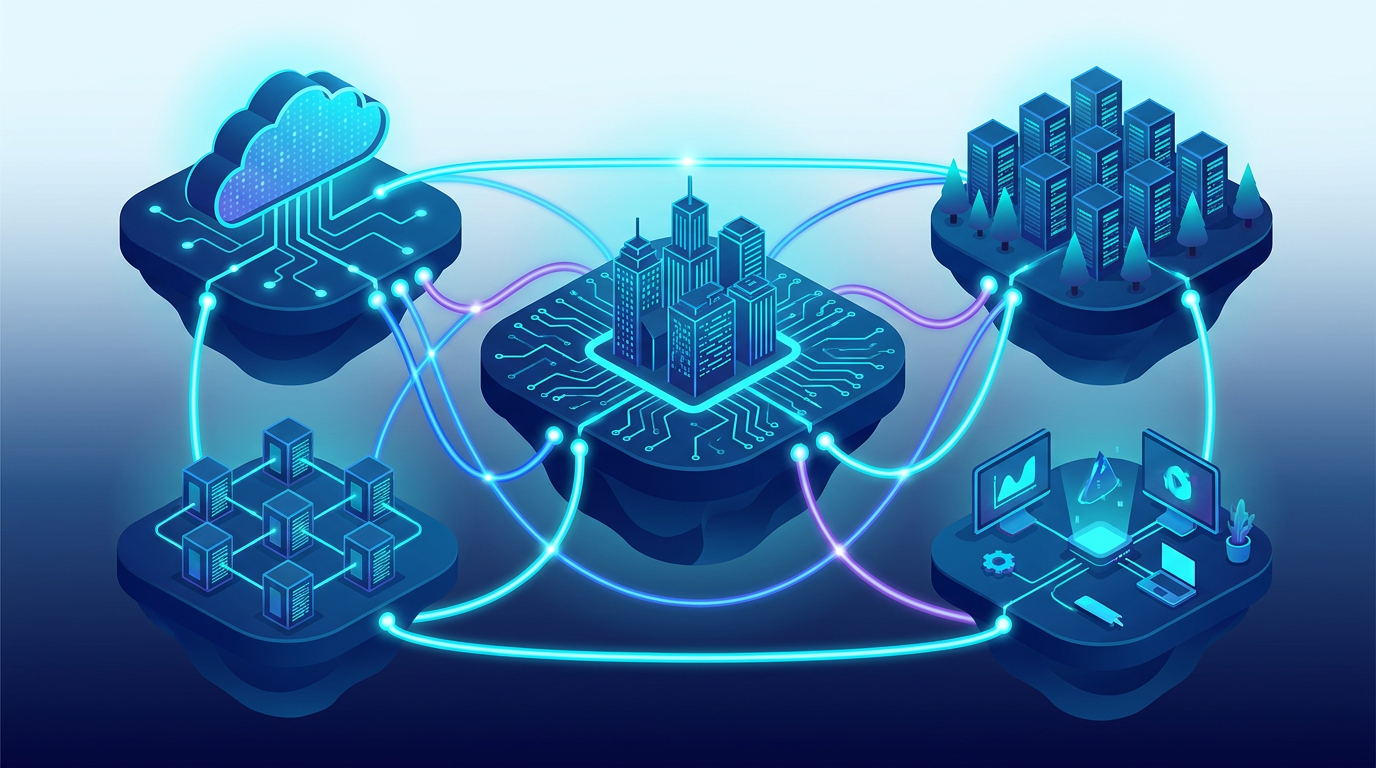
To understand decentralized social media, it helps to look at the architecture of email. You can seamlessly send a message from a Google Gmail account to a Microsoft Outlook or Yahoo account because all of those competing services use the exact same underlying languages, known as SMTP and IMAP. Decentralized social networks apply this exact same principle to modern social interactions—posts, likes, reposts, and follows. By separating the user interface (the app you tap on your phone) from the underlying data (the actual content and connections), these protocols ensure that no single company can ever own the entire network or hold your social graph hostage.[6]
The most widely adopted standard in this new ecosystem is ActivityPub, which was published as an official recommendation by the World Wide Web Consortium (W3C) back in 2018. ActivityPub operates as the defining language of the 'Fediverse'—a portmanteau of federation and universe. It provides a highly standardized way for completely independent servers to talk to one another, allowing users on entirely different software platforms to seamlessly interact. Whether you are sharing a photo on Pixelfed, uploading a video to PeerTube, or writing a microblog post, ActivityPub ensures that the data can travel across the network and be understood by any other participating server.[7]

Under the hood, ActivityPub gives every single user an 'inbox' and an 'outbox,' utilizing a structure very similar to a traditional email client. When you publish a post (which the protocol technically refers to as a 'note'), your home server formats it using a standard JSON data structure and pushes it directly to the inboxes of your followers, regardless of which independent server they happen to reside on. This constant, standardized server-to-server communication is what allows the sprawling Fediverse to function as a cohesive, unified social experience, even though it is actually made up of thousands of independently operated nodes.[6]
The most prominent and widely recognized resident of the Fediverse is Mastodon. By 2026, Mastodon has grown into a highly mature ecosystem, boasting between 10 and 15 million registered accounts and maintaining roughly 1.5 million monthly active users. Operating as a registered nonprofit organization with a community-first governance model, Mastodon has become a vital haven for privacy-conscious users, academic researchers, and open-source developers. These communities deeply value the platform's strict anti-advertising philosophy and the fact that its growth is not driven by venture capital demands for endless scale. Instead, it thrives on sustainable, niche communities that moderate themselves according to their own specific cultural norms.[5]
But ActivityPub is no longer just a playground for indie developers and niche, privacy-focused communities. The protocol received a massive, industry-validating endorsement when Meta launched its Threads platform and officially committed to deep ActivityPub integration. As this unprecedented interoperability continues to roll out, a user hosted on a small, self-funded Mastodon server in Germany can seamlessly follow, like, and reply to a Threads user in the United States. This bridges the historical gap between a massive, publicly traded commercial network and the decentralized, open web, proving that the protocol can handle immense scale.[1][7]
But ActivityPub is no longer just a playground for indie developers and niche, privacy-focused communities.
While ActivityPub powers the sprawling Fediverse, a powerful parallel ecosystem has emerged around Bluesky and its custom-built Authenticated Transfer (AT) Protocol. Originally incubated as an internal research project within Twitter before spinning out as a completely independent entity, Bluesky experienced explosive growth, crossing the 40 million registered user milestone in early 2026. Rather than simply joining the existing ActivityPub network, Bluesky's engineering team built the AT Protocol from scratch to solve a slightly different set of structural problems, specifically focusing on seamless account portability and algorithmic choice.[3][4]

The AT Protocol treats every user's public data as a cryptographically signed, highly portable data repository. If you decide you no longer like the specific app or interface you are using to access the Bluesky network, you can literally pack up your digital identity, your entire history of posts, and your complete list of followers, and plug them into a competing interface. This foundational architecture guarantees that users are never locked into a single platform's user experience, fundamentally shifting the balance of power away from the platform owners and back into the hands of the creators and consumers.[3][4]
Perhaps the most celebrated and disruptive feature of the AT Protocol is its radically different approach to content discovery. Instead of relying on a single, opaque, corporate-controlled algorithm dictating what goes viral and what gets buried, Bluesky allows users to subscribe to 'Custom Feeds' built by the community. These feeds operate like transparent mini-algorithms curated around specific themes, keywords, or user behaviors. Whether you want a feed dedicated entirely to scientific research, local news, or chronological updates from close friends, the protocol gives users ultimate control over their own digital diet.[3]
This structural shift in how content is surfaced is fundamentally changing how information spreads online. On legacy platforms, the primary goal for brands and creators was often to broadcast a single provocative statement to the widest possible audience, heavily relying on algorithmic amplification and engagement bait. In the decentralized web of 2026, the focus has shifted dramatically toward 'relevance over scale.' These new platforms inherently reward genuine conversation, sustained community participation, and engagement velocity within specific, intentionally opted-in feeds, rather than rewarding sheer outrage.[3][5]
The inherent data transparency of these open protocols is also revitalizing the broader software developer ecosystem. After legacy platforms aggressively locked down their APIs and priced out independent researchers with exorbitant enterprise fees in 2023, the open nature of the AT Protocol and ActivityPub has been a massive relief. Because public posts are served over unauthenticated endpoints by design, academic researchers, investigative journalists, and independent developers can study community dynamics and build innovative third-party tools without the constant fear of sudden API revocation.[4]

Global regulators are also taking keen notice of this architectural shift, recognizing its potential to curb monopolistic abuses. In Europe, the 2026 review of the landmark Digital Markets Act (DMA) is heavily focused on expanding strict interoperability provisions to explicitly encompass social networking platforms. European policymakers increasingly view open protocols like ActivityPub as essential, non-negotiable tools for digital sovereignty. They argue that public institutions and citizens must be able to reach each other through resilient communication channels that aren't exclusively controlled by foreign corporate gatekeepers.[1]
Of course, decentralization introduces entirely new challenges, particularly around the complex issue of content moderation. Without a central corporate trust-and-safety team to unilaterally ban bad actors across the entire network, the Fediverse relies heavily on a concept known as 'instance-based moderation.' Individual servers are empowered to set their own strict community rules; if one server becomes a haven for harassment, hate speech, or spam, other server administrators can simply 'defederate' from it. This severs the connection entirely, protecting their users through a system of digital borders and community self-defense.[2][5]
As we look toward the end of the decade, the initial fragmentation of the social media landscape is finally resolving into a new, healthier kind of unity. The era of the monolithic digital town square—where billions of people were crammed into a single algorithmic feed—is effectively over, replaced by a vast constellation of interconnected digital neighborhoods. Whether a user chooses the nonprofit, privacy-first ethos of Mastodon, the algorithmic freedom of Bluesky, or the sheer commercial scale of Threads, the underlying technological promise remains exactly the same.[8]
For the first time in the turbulent history of the social internet, the fundamental power dynamic has shifted away from the platforms and toward the people. The open protocols maturing in 2026 ensure that your digital identity truly belongs to you, your hard-earned audience cannot be held hostage by a billionaire's whim, and the future of online connection will be built on resilient, interoperable standards rather than fragile walled gardens.[6][8]
How we got here
Jan 2018
The W3C officially publishes ActivityPub as a recommended standard for decentralized social networking.
Late 2022
Turbulence at legacy platforms triggers a massive wave of user migration to Mastodon, stress-testing the Fediverse.
Early 2024
Meta's Threads begins rolling out ActivityPub integration, bridging commercial and decentralized networks.
Early 2026
Bluesky crosses 40 million registered users, cementing the AT Protocol as a major parallel standard.
Mid 2026
EU regulators review the Digital Markets Act to potentially mandate broader social media interoperability.
Viewpoints in depth
Open-Web Advocates
Champions of non-profit, community-owned infrastructure like Mastodon.
This camp views the Fediverse as a digital commons that must be protected from corporate enclosure. They argue that true decentralization requires not just open protocols, but non-profit governance structures. For these advocates, the primary benefit of ActivityPub is the ability to self-host and maintain absolute sovereignty over community moderation, free from the surveillance capitalism and advertising models that define legacy tech.
Algorithmic Choice Proponents
Supporters of the AT Protocol's focus on customizable feeds and portable identities.
Users and developers in this camp believe that the biggest problem with legacy social media wasn't just centralized ownership, but centralized algorithmic control. By championing Bluesky and the AT Protocol, they emphasize the importance of decoupling the user interface from the data layer. They argue that users should have a marketplace of algorithms to choose from, allowing them to curate their own digital diets without losing their social graph.
European Regulators
Policymakers viewing open protocols as a path to digital sovereignty.
For European institutions, protocols like ActivityPub represent a strategic opportunity to break the monopoly of foreign tech giants. Through frameworks like the Digital Markets Act (DMA), regulators are pushing for mandated interoperability. They argue that public digital infrastructure should be treated like a public utility, ensuring that citizens and governments can communicate freely without being subject to the arbitrary rules of commercial gatekeepers.
What we don't know
- Whether smaller decentralized servers can sustainably fund their rising infrastructure costs as millions of new users migrate to the Fediverse.
- How effectively decentralized networks will handle coordinated, state-sponsored disinformation campaigns without a centralized trust-and-safety team.
- Whether Meta's Threads will fully open its ActivityPub integration to allow seamless two-way data portability, or keep certain features walled off.
Key terms
- ActivityPub
- An open, decentralized social networking protocol that allows different platforms to communicate with each other, much like email.
- Fediverse
- A network of independent social media servers that can seamlessly interact with one another using shared protocols.
- AT Protocol
- The open-source framework underlying Bluesky, designed to allow users to port their identities and choose their own content algorithms.
- Instance
- An independent server within a decentralized network that hosts a specific community of users and sets its own moderation rules.
- Defederation
- The process by which one decentralized server severs its connection to another server, usually to protect its users from harassment or spam.
Frequently asked
Do I need to understand protocols to use these apps?
No. Apps like Mastodon and Bluesky are designed to look and feel just like traditional social media platforms. The complex protocols simply run quietly in the background.
Can Mastodon users talk to Bluesky users?
Currently, no. Mastodon uses ActivityPub, while Bluesky uses the AT Protocol. However, developers are actively working on software 'bridges' to connect the two ecosystems.
Who controls my data on a decentralized network?
You do. Because the underlying protocols separate your data from the app interface, you can export your followers and posts and move to a different provider at any time.
Sources
Source coverage
8 outlets
3 viewpoints surfaced








[1]Open FutureDigital Sovereignty Proponents
The DMA interoperability provisions in 2026
Read on Open Future →[2]Cairn.infoOpen-Web Advocates
Federating the alternatives: The case of the ActivityPub protocol
Read on Cairn.info →[3]Sprout SocialProtocol Developers & Analysts
How to build your Bluesky strategy: The complete guide for modern brands
Read on Sprout Social →[4]Dev.toProtocol Developers & Analysts
Bluesky Scraper: The Complete Guide to AT Protocol Data
Read on Dev.to →[5]Marketing AgentOpen-Web Advocates
The Complete Mastodon Marketing Strategy for 2026
Read on Marketing Agent →[6]ButtondownOpen-Web Advocates
What ActivityPub success looks like
Read on Buttondown →[7]WikipediaOpen-Web Advocates
ActivityPub
Read on Wikipedia →[8]Factlen Editorial TeamDigital Sovereignty Proponents
Synthesis by Factlen editorial team
Read on Factlen Editorial Team →



Every angle. Every day.
Get technology stories with full source coverage and perspective breakdowns delivered to your inbox.