
The End of Walled Gardens: How Social Media Protocols Are Finally Bridging Together
Driven by new bridging technologies and regulatory pressure, decentralized networks like Mastodon and Bluesky are achieving unprecedented interoperability in 2026. The shift allows users to own their social graphs and communicate across competing platforms without creating new accounts.
By Factlen Editorial Team
- Decentralization Advocates
- Believe that users must have absolute ownership over their digital identities and social graphs.
- Commercial Platforms
- Aim to balance the consumer demand for open networks with the financial realities of running massive platforms.
- Regulatory Watchdogs
- Focus on the societal risks and moderation challenges introduced by decentralized communication.
What's not represented
- · Independent server administrators managing moderation costs
- · Mainstream users confused by decentralized onboarding
Why this matters
For the first time in the modern internet era, users are gaining the ability to migrate their followers and content between competing social media platforms. This fundamental shift reduces corporate lock-in, giving individuals the power to choose their preferred interface and moderation rules without losing touch with their digital communities.
Key points
- Decentralized social media is moving from a niche alternative to a mainstream infrastructure layer in 2026.
- Meta's Threads has integrated with the ActivityPub protocol, connecting its 400 million users to the broader Fediverse.
- Third-party bridging tools now allow seamless interaction between competing open protocols like ActivityPub and Bluesky's AT Protocol.
- The European Union is evaluating whether to mandate social media interoperability under the Digital Markets Act.
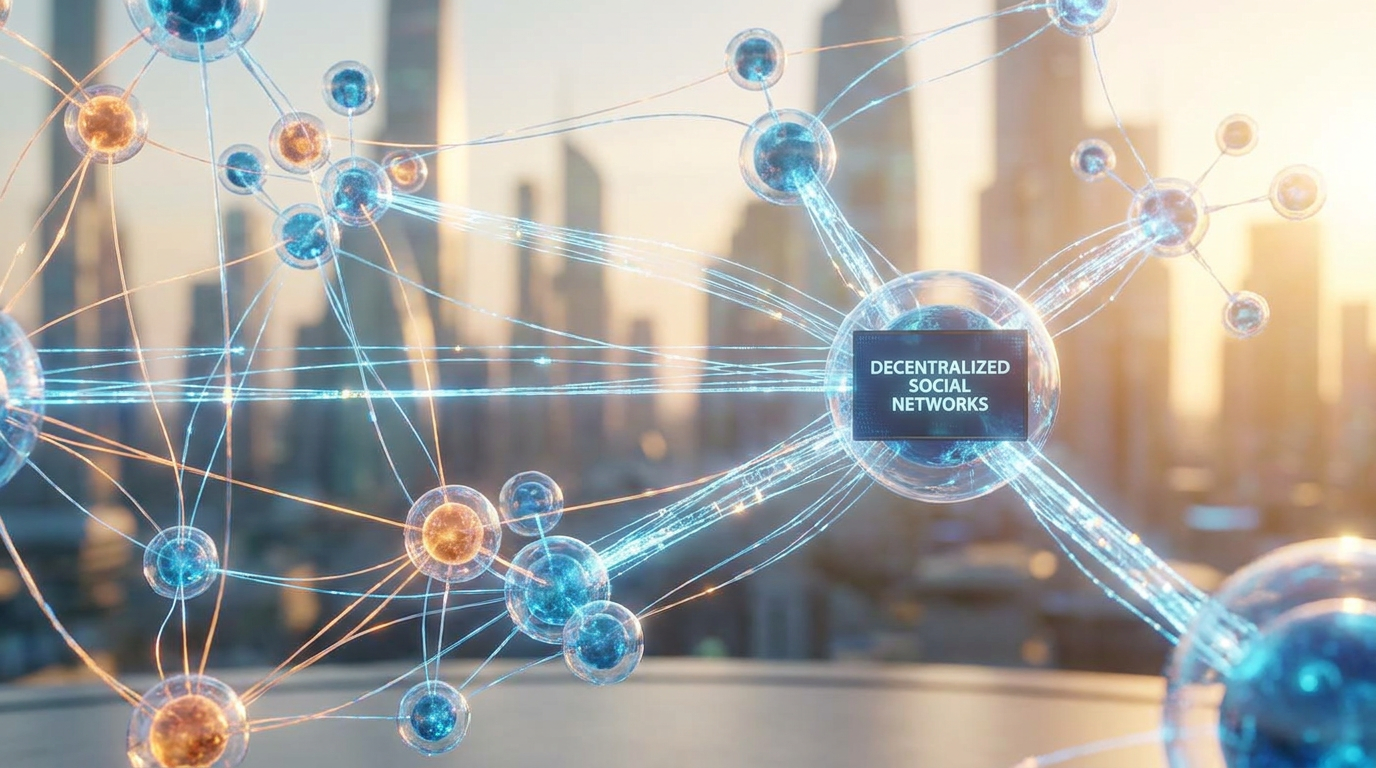
For more than a decade, the social internet operated under a strict feudal system. If a user wanted to participate in a conversation on Twitter, they needed a Twitter account; if they wanted to see photos on Instagram, they had to log into Meta's ecosystem. These "walled gardens" were designed to trap engagement, forcing users to rebuild their social graphs from scratch every time they migrated to a new platform. But in 2026, the architecture of the social web is undergoing a profound structural renovation.
The era of platform lock-in is giving way to an era of protocol-level interoperability. Instead of competing solely on user acquisition, the next generation of social media is competing on interfaces, algorithms, and moderation philosophies, all while sharing a common underlying data layer. This shift empowers users to own their digital identities and seamlessly communicate across entirely different applications, much like an Outlook user emailing a Gmail account.
At the center of this transformation is the Fediverse, a sprawling, decentralized network of independent servers that communicate with one another. Unlike traditional platforms hosted on centralized corporate servers, the Fediverse allows anyone to spin up their own "instance" or community. These instances can set their own rules and cater to specific niches, yet their users can still follow, reply to, and share content with users on entirely different servers.
The technical foundation making this possible is ActivityPub, an open, decentralized social networking protocol established by the World Wide Web Consortium (W3C). ActivityPub serves as the universal translator for the Fediverse. It is the engine behind Mastodon, the largest decentralized microblogging platform, which boasts an estimated 10 to 15 million accounts across thousands of federated servers.[1][6]

The most significant validation of ActivityPub has come not from a grassroots open-source project, but from the world's largest social media conglomerate. Meta's text-based app, Threads, has steadily rolled out deep integration with the Fediverse throughout 2025 and 2026. This move marked a stunning departure from Meta's historical strategy of aggressively enclosing its user data.[3]
By early 2026, Threads had surpassed 400 million monthly active users, making it the largest single node in the decentralized ecosystem. Users on Threads can now opt-in to share their posts with the wider Fediverse, allowing Mastodon users to follow them, like their posts, and reply directly from their own independent servers. This integration has effectively blended the massive reach of a mainstream commercial platform with the resilience of the open web.[3]
However, ActivityPub is not the only protocol vying to define the future of social media. Bluesky, which originated as an internal project at Twitter before spinning out as an independent entity, operates on its own custom architecture known as the Authenticated Transfer (AT) Protocol. Bluesky has grown to tens of millions of users by offering a highly polished, Twitter-like experience with a unique focus on algorithmic choice, allowing users to subscribe to custom feeds rather than relying on a single corporate algorithm.[1]
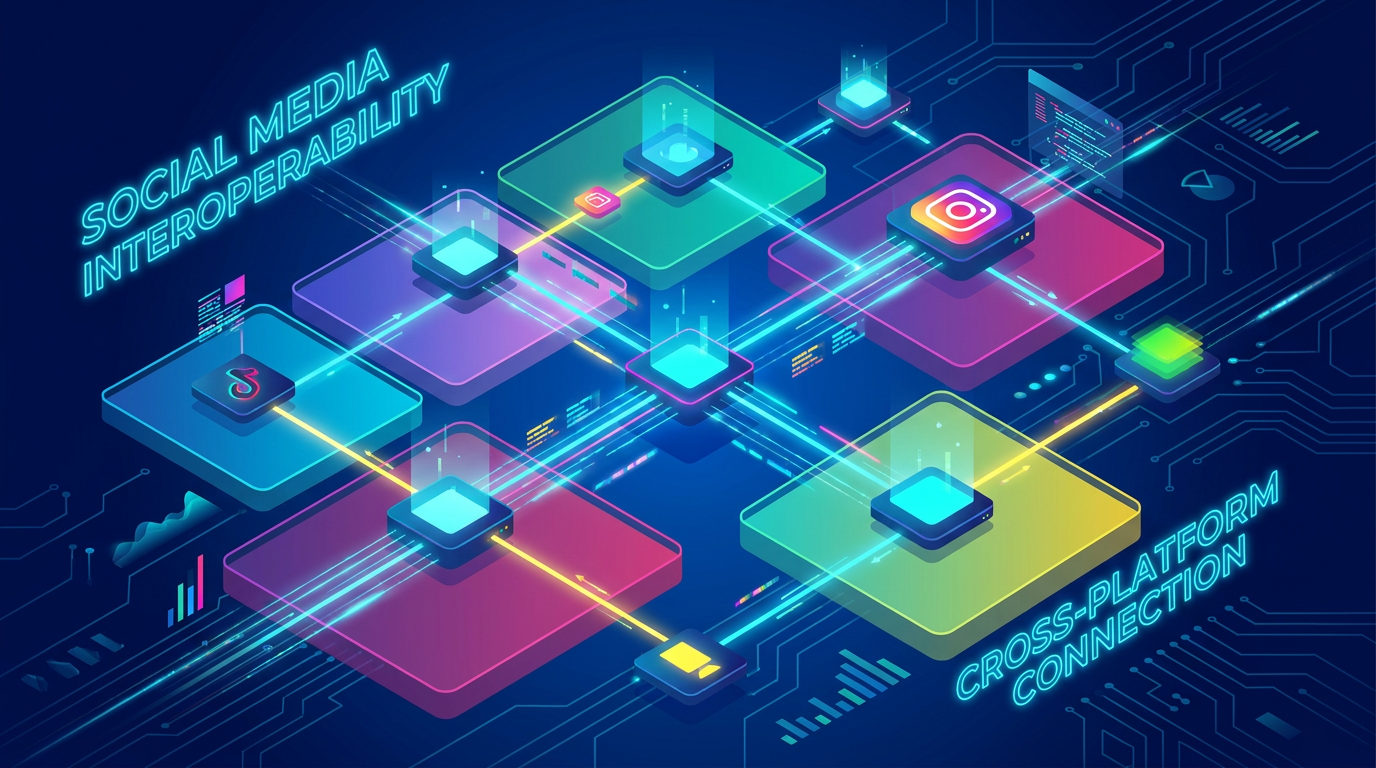
For a time, the existence of two competing open protocols—ActivityPub and the AT Protocol—threatened to recreate the very fragmentation that decentralized social media was meant to solve. Users who committed to Mastodon found themselves entirely cut off from the vibrant communities forming on Bluesky, and vice versa. The promise of a unified open social web seemed stalled by technical incompatibilities.[2]

Users who committed to Mastodon found themselves entirely cut off from the vibrant communities forming on Bluesky, and vice versa.
That divide is now being actively dismantled by a wave of third-party bridging technologies. Independent developers and open-source collectives have launched services like Bridgy Fed and Bounce, which act as real-time translators between the two protocols. These bridges allow a Bluesky user to seamlessly follow and interact with a Mastodon user without either party needing to create an account on the opposing network.[4]
The latest iterations of these bridging tools have achieved remarkable sophistication. In 2026, services like Bounce Beta 2 introduced the ability for users to fully merge their social graphs across protocols. If a user decides to migrate from Mastodon to Bluesky, they can now bring their entire list of followers and bridged connections with them, effectively eliminating the switching costs that have historically kept users tethered to platforms they no longer enjoy.[4]
This push for data portability is converging with broader trends in the Web3 and cryptocurrency sectors, where the concept of "SocialFi" is gaining major traction. Prominent figures, including Ethereum co-founder Vitalik Buterin, have championed 2026 as the year of decentralized social media, arguing that true digital sovereignty requires separating the application layer from the data layer. In this model, a user's identity and social graph are stored on decentralized networks or blockchains, completely immune to corporate censorship.[5]
As the number of protocols and platforms proliferates, the user experience is being streamlined by a new class of applications known as aggregators. Tools like Firefly allow users to plug in their credentials for Mastodon, Bluesky, Farcaster, and even legacy platforms, combining them into a single, unified feed. This aggregator model shifts the power dynamic entirely, turning social networks into mere data providers while the user controls the interface.[5]

Beyond technological innovation, the march toward interoperability is being heavily accelerated by international regulators. In the European Union, the Digital Markets Act (DMA) has already forced major tech "gatekeepers" to open up their messaging applications, such as WhatsApp, to third-party services. Now, the regulatory spotlight is turning toward public social networks.[2][6]
The European Commission's 2026 review of the DMA includes a specific evaluation of whether horizontal interoperability mandates should be expanded to cover social media platforms. If enacted, such a mandate would legally require dominant platforms to allow smaller, decentralized networks to interface with their systems. Proponents argue this is the only way to break the entrenched network effects that protect incumbent monopolies.[2][6]
Yet, the utopian vision of a fully interconnected digital public square is not without profound challenges, particularly regarding content moderation. When platforms interoperate, the boundaries of responsibility blur. If a user on a loosely moderated server sends harassing content to a user on a strictly moderated server, the receiving instance is burdened with filtering that content.[2]

Decentralized networks handle this through instance-level blocking, often referred to as "defederation." If a specific server becomes a haven for bad actors, other servers can simply sever the connection, cutting the offending instance out of the broader network. While effective, this creates a complex, patchwork landscape of community standards that can be confusing for mainstream users accustomed to centralized trust and safety teams.[1]
Commercial platforms also face a delicate balancing act. While Meta has embraced ActivityPub for Threads, critics note that the integration remains somewhat asymmetrical, designed more to pull Fediverse content into Meta's ecosystem than to encourage users to leave. True interoperability threatens the advertising-based business models of legacy platforms, which rely on keeping users captive within their proprietary apps.[2][7]
Despite these hurdles, the momentum behind the open social web appears irreversible. The infrastructure built throughout the mid-2020s has proven that social media does not have to be a zero-sum game controlled by a handful of billionaires. By prioritizing protocols over platforms, the internet is slowly returning to its foundational promise: a decentralized, interoperable network where connection is a fundamental right, not a corporate commodity.[7]
How we got here
July 2023
Meta launches Threads, promising future integration with the open social web.
March 2024
Threads officially enters the Fediverse, allowing Mastodon users to follow Threads accounts.
Late 2025
Bridging tools like Bridgy Fed launch, enabling cross-protocol communication between Bluesky and Mastodon.
Early 2026
Threads surpasses 400 million active users; the EU begins reviewing the DMA for social media interoperability mandates.
Viewpoints in depth
Decentralization Advocates
Believe that users must have absolute ownership over their digital identities and social graphs.
This camp, which includes open-source developers, digital rights groups like the EFF, and Web3 pioneers, views the walled-garden model of the 2010s as a historical anomaly. They argue that social media should function like email—a foundational utility where the protocol is open and the user chooses their preferred client. For these advocates, true success is not just interoperability, but the complete separation of a user's data from the corporate entity providing the interface, ensuring immunity from arbitrary bans or algorithmic manipulation.
Commercial Platforms
Aim to balance the consumer demand for open networks with the financial realities of running massive platforms.
Major tech conglomerates recognize that the era of complete data enclosure is ending, driven by both user fatigue and regulatory pressure. By adopting open protocols like ActivityPub, platforms like Threads can tap into external communities and generate goodwill. However, their implementations are often strategic; they seek to make their own apps the most attractive 'window' into the decentralized web, ensuring they can still serve ads and collect behavioral data while technically complying with interoperability standards.
Regulatory Watchdogs
Focus on the societal risks and moderation challenges introduced by decentralized communication.
Policy experts and regulators warn that interoperability is not a silver bullet and carries significant unintended consequences. When platforms are forced to connect, the accountability for content moderation becomes fractured. A hate-speech campaign originating on an unmoderated fringe server can easily flood the feeds of users on mainstream platforms. This camp argues that any legal mandates for interoperability must be paired with robust frameworks for cross-platform trust and safety, preventing the open web from becoming a haven for abuse.
What we don't know
- How smaller, volunteer-run Mastodon servers will handle the moderation burden of an influx of users from massive commercial platforms.
- Whether the EU will officially classify social networks as core services requiring mandatory interoperability under the DMA.
- If legacy platforms like X (formerly Twitter) or TikTok will ever adopt open protocols to stem user migration.
Key terms
- Fediverse
- A decentralized network of independent social media servers that can communicate with each other, allowing users on different sites to interact.
- ActivityPub
- An open, decentralized social networking protocol established by the W3C, used by Mastodon and Threads.
- AT Protocol
- The Authenticated Transfer Protocol, a decentralized networking framework developed and used primarily by Bluesky.
- Interoperability
- The ability of different computer systems, software, or platforms to connect and exchange information seamlessly.
- Instance
- An independent server within a federated network that hosts its own community of users and sets its own moderation rules.
Frequently asked
Can I follow a Bluesky user from my Mastodon account?
Yes. Through third-party bridging services like Bridgy Fed, users on ActivityPub networks can follow and interact with users on the AT Protocol without creating a new account.
Does Meta control the Fediverse now that Threads joined?
No. The Fediverse is decentralized. While Threads is the largest single node, independent Mastodon servers can choose whether to federate with Threads or block it entirely.
What happens if the server hosting my account shuts down?
On decentralized networks, you can migrate your account to a different server. However, you must initiate the transfer before the original server goes offline to keep your followers.
Is the European Union forcing social networks to connect?
Not yet. The EU's Digital Markets Act currently mandates interoperability for messaging apps, but a 2026 review is evaluating whether to extend those rules to social media platforms.
Sources
Source coverage
7 outlets
3 viewpoints surfaced






[1]Electronic Frontier FoundationDecentralization Advocates
The Open Social Web Needs Section 230 to Survive
Read on Electronic Frontier Foundation →[2]Centre on Regulation in EuropeRegulatory Watchdogs
Interoperability of Social Networking Services under the DMA
Read on Centre on Regulation in Europe →[3]ThurrottCommercial Platforms
Meta's Threads App Continues Fediverse Integration
Read on Thurrott →[4]A New SocialDecentralization Advocates
Bounce Beta 2: Merging Mastodon and Bluesky Social Graphs
Read on A New Social →[5]KuCoin ResearchDecentralization Advocates
Vitalik's Vision: The Full Return of Decentralized Social Media in 2026
Read on KuCoin Research →[6]Open FutureDecentralization Advocates
EU DMA 2026 and Interoperability: Why It Matters for the Fediverse
Read on Open Future →[7]Factlen Editorial TeamRegulatory Watchdogs
Synthesis by Factlen editorial team
Read on Factlen Editorial Team →
More in technology
See all 75 stories →Virtual Reality
Valve's 'Steam Frame' VR Headset Nears Launch After 32-Ton US Import Drop
7 sources

AI Reliability
Google Researchers Propose 'Faithful Uncertainty' to Solve AI Hallucinations Without Sacrificing Utility
7 sources

Virtual Reality
Inside the Steam Frame: How Valve's Hybrid Headset Aims to Rewire Virtual Reality
7 sources

AI Metacognition
How 'Faithful Uncertainty' Could Solve the AI Hallucination Problem
8 sources

Every angle. Every day.
Get technology stories with full source coverage and perspective breakdowns delivered to your inbox.