
Renewable Energy Groups Sue Pentagon Over 'Total Halt' of Wind Power Reviews
A coalition of clean energy groups has filed a federal lawsuit against the Department of Defense, alleging the military has unlawfully frozen national security reviews for onshore wind farms.
By Factlen Editorial Team
- Renewable Energy Developers
- Developers view the Pentagon's freeze as an unlawful and economically devastating departure from established administrative norms.
- Legal & Economic Analysts
- Analysts focus on the collision between executive branch national security deference and the administrative requirements of federal permitting.
- Department of Defense
- The military maintains that the rapid proliferation of massive wind turbines poses unacceptable risks to national security infrastructure.
What's not represented
- · Local landowners leasing property for wind farms
- · Utility companies relying on the delayed power generation
Why this matters
The Pentagon's indefinite freeze on wind farm reviews has stalled $47 billion in energy investments across 21 states, threatening to severely delay the U.S. energy transition just as nationwide electricity demand surges.
Key points
- A coalition of renewable energy groups is suing the Pentagon over a freeze on wind farm security reviews.
- The lawsuit alleges the Department of Defense has halted all review activity since April 2026.
- The delay affects at least 106 onshore wind projects across 21 states.
- An estimated $47 billion in capital investments is currently jeopardized by the logjam.
- The Pentagon cites the need to reevaluate how wind turbines impact military radar and airspace.
- Plaintiffs are seeking a preliminary injunction to force the resumption of ordinary review processes.
A coalition of nine renewable energy trade associations has filed a federal lawsuit against the U.S. Department of Defense and Defense Secretary Pete Hegseth, alleging the Pentagon has unlawfully frozen national security reviews for onshore wind farms. The complaint, filed in the U.S. District Court for the District of Oregon, claims the military has instituted a "de facto moratorium" on wind development across the country.[1][5]
The legal action brings to a head a quiet administrative standoff that has been escalating since late last year. According to the plaintiffs, the Department of Defense's Military Aviation and Installation Assurance Siting Clearinghouse has systematically halted the issuance of routine clearances required for wind turbines to be built on private land.[3][4]
The scale of the logjam is massive. Industry data and court filings indicate that at least 106 to 160 utility-scale wind projects are currently stalled in the review queue. These projects span 21 to 25 states and represent an estimated $47 billion in capital investments, jeopardizing thousands of construction and engineering jobs.[2][6][7]

The mechanism of the freeze centers on the Federal Aviation Administration's permitting process. By federal law, any structure taller than 200 feet must be evaluated by the FAA and the Defense Department to ensure it does not interfere with military operations. Historically, the DoD Siting Clearinghouse conducts a 60-day review to check for conflicts with radar systems, low-altitude flight corridors, and training routes.[4][8]
For 15 years, this process was highly predictable. If a proposed wind farm fell within the line of sight of a military radar, the developer and the Pentagon would typically negotiate a mitigation agreement—such as paying for radar software upgrades or adjusting turbine layouts. Once signed, the FAA would issue a "Determination of No Hazard," allowing construction to proceed.[4][7]
The lawsuit alleges that this established pipeline began to break down in August 2025, when the Defense Department suddenly stopped countersigning completed mitigation agreements. By December 2025, the department ceased issuing draft agreements entirely. Finally, in April 2026, the Pentagon canceled all pending meetings with developers and halted all review activity.[1][5]
By December 2025, the department ceased issuing draft agreements entirely.
The Department of Defense has not commented directly on the active litigation, but internal memos and letters sent to developers shed light on the agency's rationale. In April, the department informed developers it was "reevaluating how it reviews wind projects' national security impacts." A subsequent May interim guidance document stated that wind projects would remain subject to indefinite delay pending "further interagency coordination."[4][8]
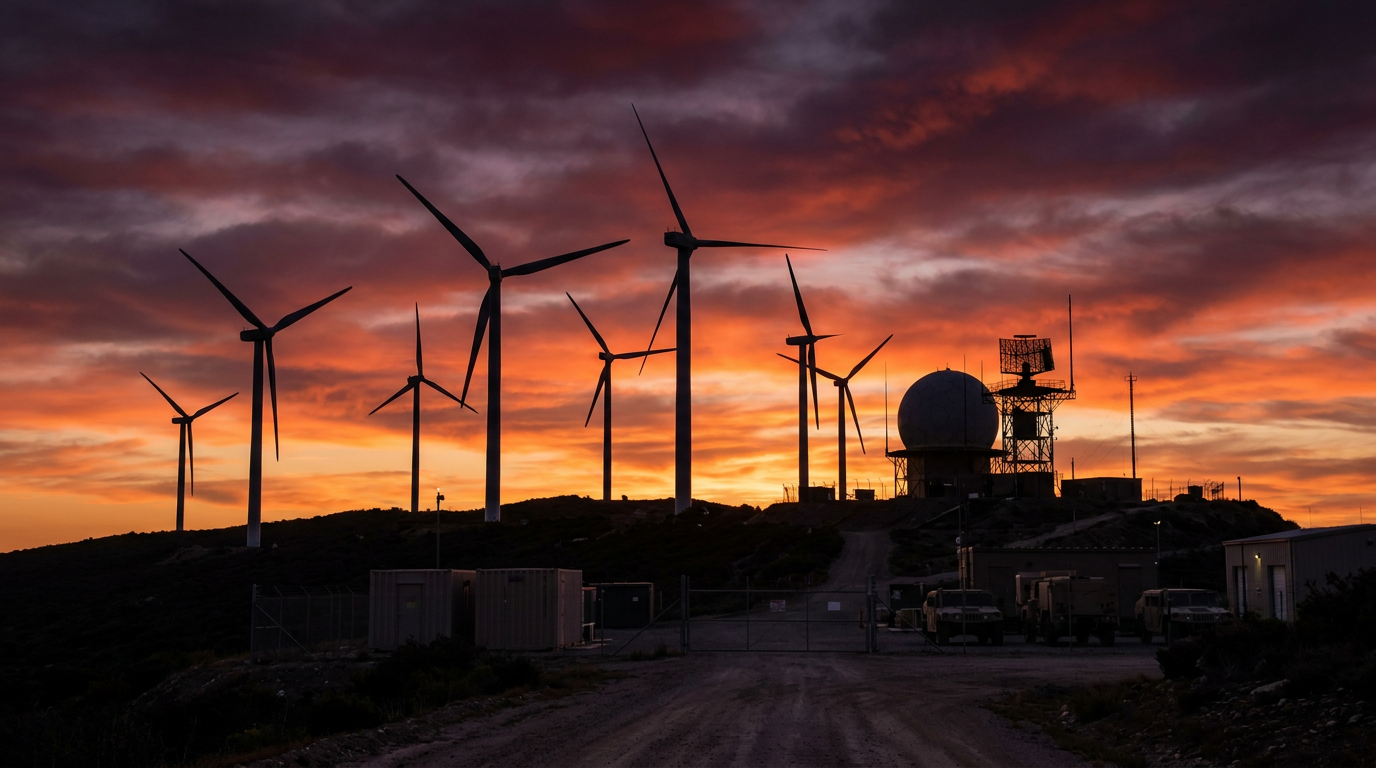
The core of the military's concern lies in the physical characteristics of modern wind turbines. The massive, fast-spinning blades can generate significant radar clutter, potentially masking military targets and creating false positives on defense screens. The Pentagon argues it must carefully balance the integration of new domestic energy sources against its mandate to maintain unimpeded airspace for national security.[2][8]
However, renewable energy advocates argue the sudden halt is an arbitrary departure from administrative norms. Jason Grumet, CEO of the American Clean Power Association, characterized the freeze as a "bewildering departure" from established policy, noting that the mitigation process functioned smoothly even during the first Trump administration.[4][7]
The economic fallout of the delay is already materializing. An economic analysis conducted by Charles River Associates, submitted alongside the plaintiffs' motion for a preliminary injunction, details the severe sunk costs borne by developers. These include non-refundable deposits for turbine manufacturing, contractor retainers, and fees to maintain positions in regional grid interconnection queues.[2][6]
The administrative bottleneck has contributed to a sharp deceleration in the U.S. energy transition. The first quarter of 2026 recorded the slowest start to the year for new land-based wind power installations since 2018. Wind power currently provides roughly 10 percent of the nation's electricity, making it the largest single source of renewable generation in the United States.[1][2][7]

The plaintiffs are seeking a preliminary injunction to compel the Pentagon to resume its ordinary review process. They argue that the military's inaction violates the Administrative Procedure Act by effectively halting a multi-billion-dollar industry without formal rulemaking or public comment.[5][9]
The legal battle will likely hinge on the degree of deference the federal judiciary is willing to grant the executive branch on matters of national security. While courts historically give the military wide latitude in defining defense requirements, the plaintiffs contend that a blanket, indefinite refusal to process applications crosses the line from security precaution to unlawful obstruction.[5][9]
The outcome of the litigation carries high stakes for the broader U.S. power grid. As electricity demand surges nationwide—driven heavily by the rapid expansion of artificial intelligence data centers and the electrification of transportation—utilities are increasingly reliant on the timely completion of utility-scale wind and solar projects to maintain grid reliability and meet capacity shortfalls.[4][9]

How we got here
August 2025
The Department of Defense stops countersigning completed mitigation agreements for new wind projects.
December 2025
The DoD ceases issuing draft mitigation agreements to wind developers.
April 2026
The Pentagon formally halts all review activity and cancels pending meetings with developers, citing a reevaluation of national security impacts.
May 31, 2026
A coalition of renewable energy groups files a federal lawsuit in Oregon against Defense Secretary Pete Hegseth and the DoD.
June 2026
Plaintiffs file a motion for a preliminary injunction to force the resumption of ordinary review processes.
Viewpoints in depth
Renewable Energy Developers
Developers view the Pentagon's freeze as an unlawful and economically devastating departure from established administrative norms.
Industry groups argue that the DoD Siting Clearinghouse process functioned predictably for 15 years, allowing developers to safely mitigate radar and airspace concerns without halting the entire sector. They contend that the sudden "de facto moratorium" is an arbitrary policy shift that bypasses formal rulemaking, stranding $47 billion in capital and threatening the viability of over 100 projects. For developers, the delay is not just a bureaucratic hurdle, but an existential threat to the onshore wind industry that incurs massive daily costs in land leases and grid interconnection fees.
Department of Defense
The military maintains that the rapid proliferation of massive wind turbines poses unacceptable risks to national security infrastructure.
From the Pentagon's perspective, the physical characteristics of modern wind turbines—which frequently exceed 500 feet in height and feature fast-spinning blades—create severe radar clutter that can mask military targets and generate false positives. The DoD argues that the sheer volume of new project applications necessitates a comprehensive interagency reevaluation of how national security impacts are assessed. They maintain that their primary statutory mandate is to ensure unimpeded airspace for military readiness, which must take precedence over expedited energy permitting.
Legal & Economic Analysts
Analysts focus on the collision between executive branch national security deference and the administrative requirements of federal permitting.
Legal observers note that the lawsuit tests the boundaries of the Administrative Procedure Act against the broad deference courts typically grant the military. While the DoD has wide latitude to reject individual projects on security grounds, analysts point out that a blanket, unannounced freeze on all processing may be vulnerable to legal challenge. Economically, energy analysts warn that the logjam arrives at a precarious moment for the U.S. power grid; as electricity demand spikes from AI data centers and electrification, the indefinite delay of 60 gigawatts of wind capacity could exacerbate regional capacity shortfalls and drive up energy prices.
What we don't know
- Whether the federal courts will compel the Pentagon to resume processing applications, or if national security deference will shield the delay.
- How long the Department of Defense's 'interagency coordination' reevaluation will take to complete.
- How many of the stalled wind projects will face bankruptcy or cancellation if the freeze extends through the end of the year.
Key terms
- DoD Siting Clearinghouse
- A military office responsible for evaluating energy projects to ensure they do not pose unacceptable risks to national security or military readiness.
- Determination of No Hazard (DNH)
- An official clearance issued by the FAA, often contingent on DoD approval, required before construction of tall structures can begin.
- Mitigation Agreement
- A negotiated settlement between developers and the military to resolve airspace or radar conflicts, such as upgrading radar software or adjusting turbine placement.
- Radar Clutter
- Unwanted signals or interference on radar screens caused by the massive, fast-spinning blades of wind turbines, which can potentially mask military targets.
Frequently asked
Why does the military review wind farms on private land?
Federal law requires the FAA and the Department of Defense to evaluate any structure taller than 200 feet to ensure it does not interfere with military airspace, training routes, or radar systems.
What exactly did the Pentagon change?
The DoD has not formally changed its regulations, but it stopped countersigning mitigation agreements in August 2025 and halted all review activity by April 2026, citing the need for further interagency coordination.
How much wind energy is currently delayed?
Industry groups and economic analysts estimate that over 100 projects representing up to 60 gigawatts of potential power generation are stuck in the review queue.
Sources
Source coverage
9 outlets
3 viewpoints surfaced









[1]The New York TimesLegal & Economic Analysts
Renewable Groups Ask Courts to End Pentagon’s ‘Total Halt’ of Wind Power
Read on The New York Times →[2]Associated PressLegal & Economic Analysts
Pentagon reviews are blocking wind farms, putting jobs at risk, lawsuit says
Read on Associated Press →[3]PoliticoLegal & Economic Analysts
Renewable energy groups sue Defense Department over stalled wind reviews
Read on Politico →[4]Canary MediaRenewable Energy Developers
The Defense Department has stopped once-routine reviews that even wind projects on private land need to pass
Read on Canary Media →[5]U.S. District Court for the District of OregonLegal & Economic Analysts
Complaint for Declaratory and Injunctive Relief: Renewable Northwest et al. v. Hegseth et al.
Read on U.S. District Court for the District of Oregon →[6]Charles River AssociatesLegal & Economic Analysts
Economic Impact Analysis of Delayed DoD Siting Clearinghouse Reviews
Read on Charles River Associates →[7]American Clean Power AssociationRenewable Energy Developers
U.S. Wind Energy Project Pipeline and Federal Permitting Bottlenecks: Q1 2026 Report
Read on American Clean Power Association →[8]U.S. Department of DefenseDepartment of Defense
Departmental Review Procedures for Decisions Related to Wind and Solar Energy Facilities
Read on U.S. Department of Defense →[9]Factlen Editorial TeamLegal & Economic Analysts
Synthesis by Factlen editorial team
Read on Factlen Editorial Team →

More in science
See all 80 stories →AI Capabilities
AI Models Hit a Wall on 'First Proof,' a Rigorous New Benchmark for Research Mathematics
7 sources

Next-Gen Geothermal
The Evidence Pack: How Next-Generation Geothermal Cracked the Commercial Code in 2026
8 sources
Wind Power
Renewable Energy Groups Sue Pentagon Over 'Total Halt' of Onshore Wind Reviews
8 sources

Structural Biology
A 75-Kilowatt Laser Just Solved Cryo-Electron Microscopy's Biggest Blind Spot
7 sources

Every angle. Every day.
Get science stories with full source coverage and perspective breakdowns delivered to your inbox.