
Polestar's 2027 US Sales Ban: What the Connected Vehicle Rule Means for EV Buyers
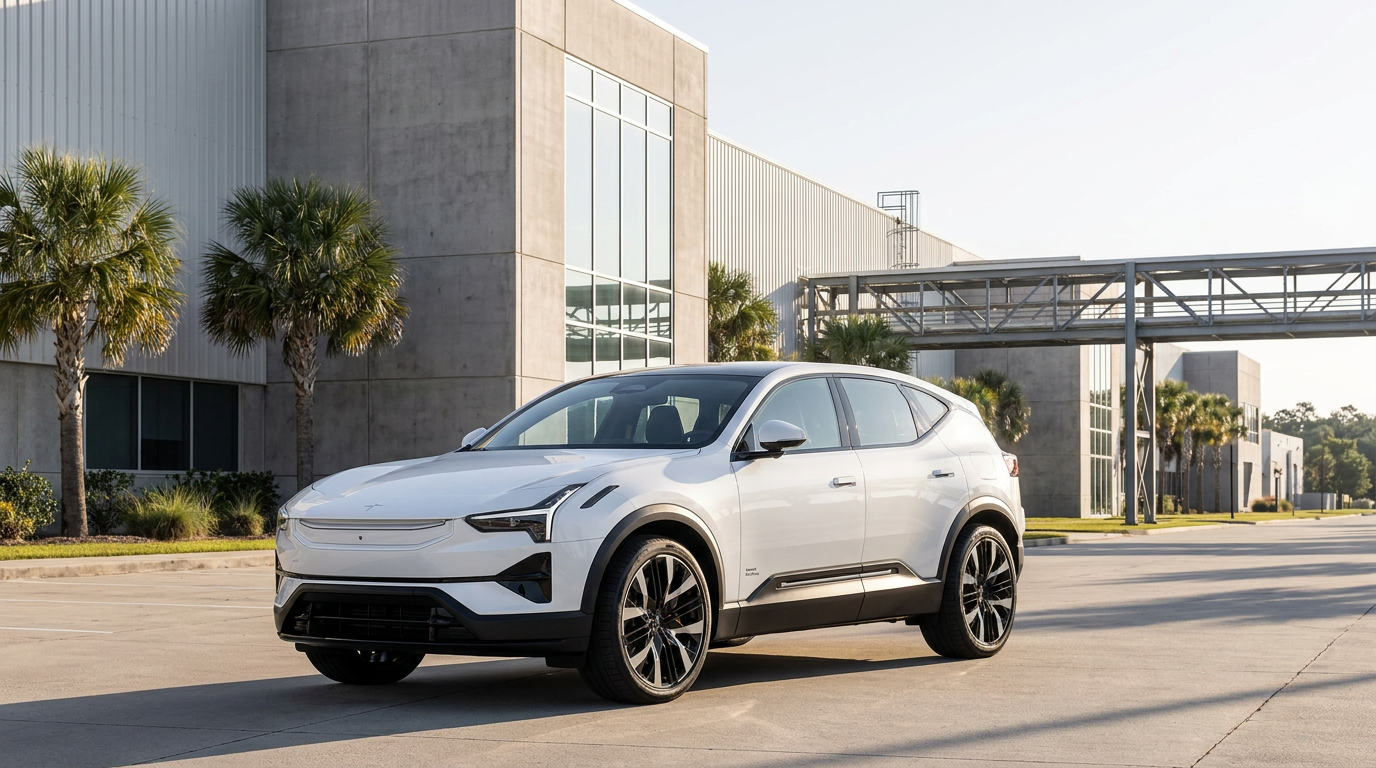
The US Commerce Department has blocked Polestar from selling new vehicles starting in 2027 over Chinese software concerns, creating a unique buyer's market for its remaining US inventory. Here is how the orphaned Polestar 3 compares to its fully authorized sibling, the Volvo EX90.
By Factlen Editorial Team
- National Security Regulators
- Federal agencies prioritizing the protection of US data and infrastructure from foreign adversaries.
- Automotive Industry Analysts
- Market experts tracking the financial and strategic impacts of software-based trade restrictions.
- Consumer Advocates
- Voices focused on the rights, investments, and long-term support of vehicle owners.
What's not represented
- · Dealership owners holding Polestar franchises in the US who now face a hard stop on future inventory.
- · Software engineers at Geely navigating the bifurcated development requirements for US versus European markets.
Why this matters
For premium EV buyers, the 2027 software ban fundamentally changes the math on purchasing a Polestar. Understanding why one Geely-owned brand was banned while another was exempted reveals exactly how modern cars are regulated as rolling computers rather than just assembled hardware.
Key points
- The US Commerce Department denied Polestar authorization to sell vehicles from the 2027 model year onward under the Connected Vehicle Rule.
- The rule targets software and hardware linked to China, rendering the Polestar 3's South Carolina assembly location irrelevant.
- Sister brand Volvo, which shares the same Chinese parent company, successfully secured an exemption in May 2026.
- Polestar will continue to sell existing 2025 and 2026 inventory and maintain its US service network.
- The ban forces buyers to weigh the immediate value of a discounted Polestar against the long-term software security of a Volvo.
The US Commerce Department's Bureau of Industry and Security has officially denied Polestar authorization to sell vehicles in the United States starting with the 2027 model year. The decision falls under the Connected Vehicle Rule, a regulation finalized in early 2025 that prohibits the sale of vehicles utilizing software or hardware with a sufficient nexus to China or Russia. Because Polestar is majority-owned by China's Geely Holding Group, its underlying software architecture triggered the restriction, effectively capping the brand's American lifespan at the end of the 2026 model year.[1][5]
The ruling highlights a profound shift in how the United States regulates the automotive industry: cars are now treated as rolling computers, and their nationality is determined by their code, not their assembly line. The Polestar 3 is manufactured in Ridgeville, South Carolina, following a $1.3 billion investment to localize production and avoid import tariffs. Yet, because the vehicle's telematics, Bluetooth, and automated driving software retain links to Chinese development ecosystems, the physical manufacturing location was deemed irrelevant by federal regulators.[2][5]
This creates a fascinating paradox when compared to Volvo, Polestar's sister brand. Volvo is also majority-owned by Geely and also builds vehicles in South Carolina, including the EX90 electric SUV, which rolls off the exact same assembly line as the Polestar 3. However, Volvo successfully secured a special authorization from the Commerce Department in May 2026. By demonstrating a different governance structure, distinct data security protocols, and a separate software supply chain, Volvo was cleared to continue its US expansion, leaving Polestar as the sole casualty of the shared factory.[3][4]

For current owners and prospective buyers of 2025 and 2026 models, Polestar has guaranteed that the vehicles will not be bricked or abandoned. The company will continue to sell its existing inventory of the US-built Polestar 3 and the South Korean-built Polestar 4. Furthermore, Polestar has committed to maintaining its North American service network to support these vehicles indefinitely. The ban strictly applies to the introduction of new models, such as the upcoming Polestar 7, and the importation of 2027 model-year software systems.[1][2]
With Polestar pivoting its focus to Europe—which already accounts for 80 percent of its global volume and where it faces no such software bans—the US market is left with a unique consumer scenario. Buyers looking for a premium electric SUV now face a distinct side-by-side trade-off between the orphaned Polestar 3 and the fully authorized Volvo EX90. Analyzing this choice requires looking past the sheet metal and evaluating the long-term realities of automotive software ownership.[1][4]
Buyers looking for a premium electric SUV now face a distinct side-by-side trade-off between the orphaned Polestar 3 and the fully authorized Volvo EX90.
In evaluating the Polestar 3, the argument for the vehicle centers on immediate availability, superior driving dynamics, and the likelihood of aggressive run-out pricing. As the brand prepares to exit the new-car market, dealerships will likely offer substantial incentives to clear remaining 2025 and 2026 inventory. Against this option is the hard stop on the vehicle's software ecosystem. While basic functionality and service will continue, a brand that no longer sells cars in a region is unlikely to prioritize bespoke over-the-air feature updates for that specific market. Evidence from Polestar's Q1 2026 financial filings shows the US accounted for just 6 percent of its sales, meaning engineering resources will naturally shift to European compliance and features.[3][4]
Conversely, the argument for the Volvo EX90 centers on regulatory certainty and long-term ecosystem support. Because Volvo secured its Commerce Department exemption, buyers have a guarantee that the vehicle's software will remain fully supported, updated, and compliant with US data security laws for the next decade. Against the EX90 is its higher initial purchase price, less aggressive styling, and the lack of the deep clearance discounts that Polestar models may soon see. Evidence from Volvo's May 2026 regulatory clearance confirms that the company is actively expanding its US footprint, ensuring a robust dealer and software support network.[3][5]

Quantifying this trade-off comes down to depreciation and software reliance. A premium EV typically loses 40 to 50 percent of its value in the first three years. For the Polestar 3, the exit of the brand from the US new-car market could accelerate that depreciation curve, making it a risky proposition for cash buyers. However, for those leasing the vehicle, the depreciation risk is entirely absorbed by the financing company, allowing the driver to enjoy a $75,000 luxury EV at a potentially fraction of the monthly cost.[2][6]
Ultimately, the Polestar 3 fits well when a buyer intends to lease rather than own, prioritizes sport-focused driving dynamics over long-term software evolution, and wants to capitalize on the unique market conditions of a brand's exit. It offers a localized, high-quality build without the long-term commitment of ownership.[1][2]
The Polestar 3 does not fit when a buyer purchases a vehicle to hold for seven to ten years, relies heavily on continuous over-the-air software upgrades to keep the infotainment system feeling modern, or lives far from an established Polestar service center. For those buyers, the regulatory safety and guaranteed software roadmap of the Volvo EX90 make it the far more prudent choice in the evolving landscape of connected vehicles.[3][4]
How we got here
Jan 2025
The Biden administration finalizes the Connected Vehicle Rule targeting Chinese and Russian automotive software.
Mar 2026
Polestar consolidates production of the Polestar 3 at its South Carolina plant to avoid import tariffs.
May 2026
Volvo secures a special authorization from the Commerce Department to continue US sales despite its Geely ownership.
Jun 2026
The Commerce Department officially denies Polestar's authorization, effectively banning the brand's new models from 2027 onward.
Viewpoints in depth
National Security Regulators
Federal agencies focused on data privacy and infrastructure protection.
The Commerce Department argues that modern vehicles are essentially networked sensors capable of mapping critical infrastructure and collecting sensitive biometric data on American citizens. From this perspective, the physical assembly location of a car is irrelevant if the underlying code, telematics, and over-the-air update servers are subject to the jurisdiction of a foreign adversary. Regulators view the 2027 software ban as a necessary preemptive measure to secure the US automotive supply chain.
Automotive Industry Analysts
Market experts tracking the financial and strategic impacts of the ban.
Industry analysts view the Polestar ban as a watershed moment that redefines automotive trade. They point out that the ruling effectively weaponizes software compliance as a new form of tariff. While Polestar is the most visible casualty, analysts note that the granular nature of the exemptions—such as Volvo's successful clearance—gives the US government immense discretionary power to pick winners and losers in the EV transition based on opaque data-security audits.
Consumer Advocates
Voices focused on the rights and investments of vehicle owners.
Consumer protection groups emphasize the precarious position of early adopters. While Polestar has promised ongoing service and support, advocates warn that orphaned vehicles historically suffer from accelerated depreciation and delayed software patches. They argue that the federal government and automakers must establish clearer, legally binding frameworks to ensure that vehicles banned for geopolitical reasons do not become financial liabilities or cybersecurity risks for the Americans who already own them.
What we don't know
- Whether the US government will eventually force Polestar to disable certain connected features on existing 2025 and 2026 models currently on American roads.
- How steeply the remaining US inventory of Polestar vehicles will be discounted as the brand pivots its primary focus to Europe.
- Whether Polestar will attempt to re-enter the US market in the 2030s by entirely replacing its software supply chain with non-Chinese vendors.
Key terms
- Connected Vehicle Rule
- A US federal regulation prohibiting the sale of vehicles that use telematics, Bluetooth, or automated driving software linked to foreign adversaries.
- Over-the-Air (OTA) Updates
- Wireless delivery of new software, features, and security patches directly to a vehicle's computer systems.
- Telematics
- The integrated use of telecommunications and informatics to send, receive, and store information related to remote objects, such as vehicles.
- Orphaned Vehicle
- A car model whose manufacturer has ceased sales or operations in a specific market, often leading to reduced long-term support.
Frequently asked
Will my current Polestar stop working in 2027?
No. The ban only applies to the sale of new vehicles starting with the 2027 model year. Existing vehicles will continue to operate normally.
Can I still get my Polestar serviced in the US?
Yes. Polestar has committed to maintaining its North American service network to support all existing customers indefinitely.
Why is Volvo allowed to sell cars but Polestar isn't?
While both are owned by Geely, Volvo proved to US regulators that its software architecture, data security, and governance structure are sufficiently independent from Chinese control.
Is the Polestar 3 built in China?
No. The Polestar 3 models sold in the US are manufactured at a facility in Ridgeville, South Carolina. The ban is based on the vehicle's software, not its physical assembly location.
Sources
Source coverage
6 outlets
3 viewpoints surfaced






[1]ReutersAutomotive Industry Analysts
US Ban on Polestar and Its Implications for the EV Market
Read on Reuters →[2]CNETConsumer Advocates
Polestar Banned From Selling New Cars in the US After 2026
Read on CNET →[3]AutoEvolutionConsumer Advocates
Polestar Exits US Market After 2026, But Volvo Stays
Read on AutoEvolution →[4]CarExpertConsumer Advocates
Polestar ending US sales after failing to get Volvo's exemption
Read on CarExpert →[5]Bureau of Industry and SecurityNational Security Regulators
Commerce Department Finalizes Rule on Connected Vehicles With Supply Chain Links to China and Russia
Read on Bureau of Industry and Security →[6]Financial TimesAutomotive Industry Analysts
Polestar seeks new suppliers to get around US software ban
Read on Financial Times →
Every angle. Every day.
Get automotive stories with full source coverage and perspective breakdowns delivered to your inbox.