
Is the 'Indo' Out? Analyzing the Strategic Implications of the US Pacific Command Name Reversion
The Pentagon has officially reverted the name of its largest combatant command back to the U.S. Pacific Command, dropping the 'Indo' prefix. While officials cite historical heritage, analysts see a profound shift in Washington's strategic priorities.
By Factlen Editorial Team
- U.S. Defense Administration
- The reversion honors military heritage and aligns with a leaner, homeland-first defense strategy.
- Realist Defense Analysts
- The reversion correctly prioritizes the Western Pacific and clarifies the actual theater of competition with China.
- Indian Strategic Establishment
- The name change is a symbolic downgrade that signals a shrinking U.S. commitment to India.
What's not represented
- · Southeast Asian Nations (ASEAN)
- · Chinese Strategic Planners
Why this matters
Military nomenclature is rarely just about branding; it signals where the world's most powerful military intends to focus its resources. This name change suggests the U.S. is prioritizing the Western Pacific over the Indian Ocean, a shift that could redefine security alliances and trade route protections across Asia.
Key points
- The Pentagon has officially reverted the name of the U.S. Indo-Pacific Command back to the U.S. Pacific Command (PACOM).
- The geographic area of responsibility, stretching from the U.S. West Coast to India's western border, remains unchanged.
- U.S. officials frame the move as honoring the command's 1947 heritage and fostering institutional pride.
- Indian analysts view the removal of the 'Indo' prefix as a symbolic downgrade of India's strategic importance.
- Realist scholars argue the change correctly signals that the primary theater of competition with China is the Western Pacific.
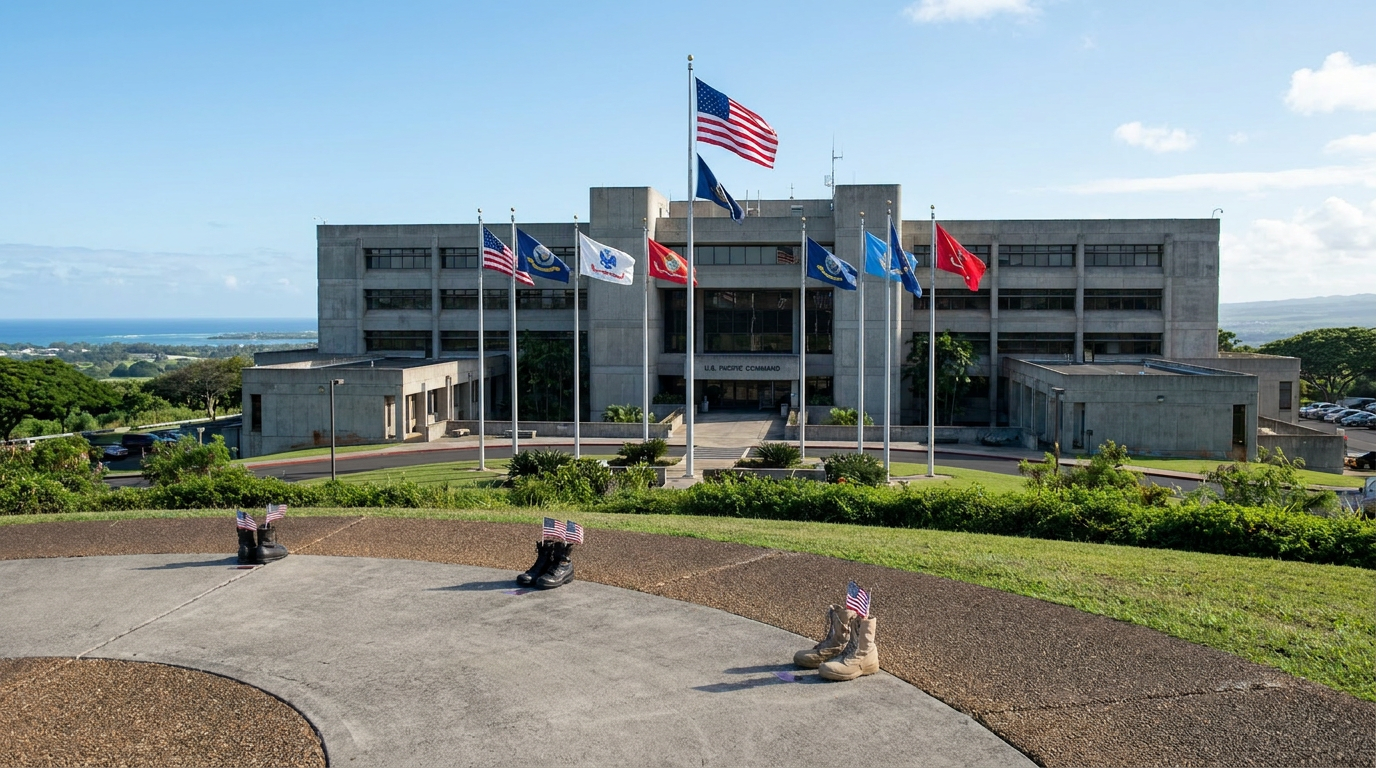
The United States military’s largest and oldest combatant command has quietly dropped a four-letter prefix, sparking a loud debate about the future of global security. On June 16, 2026, the Pentagon announced that the U.S. Indo-Pacific Command (INDOPACOM) is officially reverting to its legacy name: the U.S. Pacific Command (PACOM). The command, headquartered at Camp H.M. Smith in Hawaii, oversees American military operations across roughly half the planet. While military officials insist the change is merely a nod to institutional heritage, international observers and defense analysts are interpreting the reversion as a profound signal about Washington’s shifting strategic priorities in Asia, marking a pivot away from expansive multilateral coalitions toward a more concentrated, transactional defense posture.[1][2][7][8]
Officially, the Department of War—the recently revived moniker for the Department of Defense under Secretary Pete Hegseth—frames the decision as an exercise in historical pride. Established on January 1, 1947, by President Harry S. Truman, the command operated under the PACOM banner for over seven decades before its 2018 rebranding. According to the official release, restoring the legacy designation honors the command's "deep historical roots" and its role in shaping the post-World War II security architecture, from the Korean War to the Vietnam War and countless modern humanitarian missions. The Pentagon argues that the reversion fosters a collective spirit among all service members stationed in the theater.[1][5][8]
To grasp the magnitude of the command, one must look at its sheer scale. PACOM consists of roughly 375,000 military and civilian personnel, making it the undisputed heavyweight of the United States’ unified combatant commands. Its area of responsibility encompasses 36 nations, more than half the world’s population, and several of the globe's most critical maritime choke points. From the U.S. Pacific Fleet to the Pacific Air Forces, the assets under PACOM's umbrella represent the tip of the spear for American power projection. Because of this massive footprint, even a seemingly cosmetic change to its letterhead sends ripples through defense ministries from Tokyo to New Delhi.[3][4][8]

Despite the symbolic contraction of its title, the command’s actual footprint remains completely untouched. PACOM’s vast area of responsibility still stretches from the waters off the U.S. West Coast all the way to the western border of India. Military officials have stressed that the command’s fundamental mission and its unwavering commitment to maintaining a "free and open theater" alongside regional allies remain exactly the same. No troops are being repositioned, no assets are being withdrawn, and no operational boundaries are being redrawn as a direct result of the name change. The day-to-day mechanics of the fleet remain anchored in the same strategic reality.[1][4][7][8]
To understand the weight of the reversion, one must look back to why the "Indo" prefix was added in the first place. In May 2018, during the first Trump administration, then-Defense Secretary Jim Mattis oversaw the renaming to INDOPACOM during a change-of-command ceremony at Joint Base Pearl Harbor-Hickam. Mattis explicitly stated that the change was made in recognition of the increasing connectivity between the Indian and Pacific Oceans. It was a deliberate strategic signal designed to formally court India into a broader maritime coalition aimed at countering China’s sprawling Belt and Road Initiative, which was rapidly expanding its infrastructure and influence westward toward Africa.[1][2][5][7]
Eight years later, the geopolitical landscape and Washington's defense philosophy have drastically shifted. Under Secretary Hegseth, the second Trump administration has prioritized a leaner, "homeland-first" military ethos that favors transactional realism over expansive multilateral coalitions. This shift was heavily foreshadowed at the Shangri-La Dialogue in Singapore in late May 2026, where Hegseth laid out a vision demanding greater allied self-reliance. He explicitly warned against "freeloading" and called for Asia-Pacific allies to raise their defense spending to 3.5 percent of their gross domestic product, signaling that the era of the United States unconditionally underwriting global security architectures was coming to an end.[4][6]

Eight years later, the geopolitical landscape and Washington's defense philosophy have drastically shifted.
For realist defense analysts, the reversion to PACOM makes perfect strategic sense. They argue that the "Indo-Pacific" moniker implied that U.S. taxpayers would underwrite the security of the entire Indian Ocean. By dropping the prefix, Washington is clarifying exactly where it intends to concentrate its forces in a potential conflict with China: the Taiwan Strait, the South China Sea, and the immediate Western Pacific. The message to allies and partners is blunt but clear—local powers must take primary responsibility for funding and securing their own immediate neighborhoods, while American forces focus on the most acute conventional threats.[6][7]
The strategic logic of decoupling the two oceans also reflects shifting economic realities. Over the past fifteen years, China has steadily worked to reduce its reliance on maritime energy routes through Indian Ocean chokepoints, such as the Strait of Malacca, by developing overland pipelines across Central Asia. Realist scholars argue that as Beijing pivots toward Eurasia, the Indian Ocean becomes less central to the immediate military containment of China. By reverting to PACOM, the Pentagon is acknowledging that the decisive economic and military friction points—such as semiconductor supply chains and territorial disputes—are concentrated heavily in the Pacific theater.[6]
In New Delhi, however, the name change is being received as a stark symbolic downgrade. Indian policymakers and strategic analysts view the reversion as a pointed signal that India’s place in Washington’s strategic imagination is shrinking, effectively walking back the integration efforts of the past decade. The timing is particularly sensitive, arriving amid a battered bilateral relationship that has been severely strained by recent tariff disputes and ongoing friction over India's energy ties with Moscow. Furthermore, the recent deaths of Indian seafarers during a U.S. Navy strike on a merchant vessel in the Strait of Hormuz have already cast a long shadow over maritime cooperation between the two nations.[2][4]

Critics of the reversion argue that the diplomatic fallout far outweighs any internal morale boost generated by honoring military heritage. Christopher Clary, a political scientist at the University at Albany, labeled the renaming "senseless," warning that it inflicts unnecessary symbolic damage on ties with the world’s most populous country at a time when democratic alliances are crucial. Some skeptics even worry that the move could be interpreted as an attempt to appease Beijing. China has long viewed the "Indo-Pacific" framework—alongside the Quad and the AUKUS submarine pact—as a hostile containment strategy, and dropping the prefix could be perceived as a softening of that containment ring.[2][7]
While India processes the perceived slight, other regional allies are carefully parsing the announcement for clues about their own security guarantees. Nations like Japan, Australia, and the Philippines have heavily integrated the "Indo-Pacific" concept into their own national security strategies and diplomatic lexicons. The May 2026 Quad foreign ministers' joint statement, for instance, relied heavily on the term. For these partners, a change to regional naming conventions risks creating a scenario where allies are talking at crossed purposes, potentially sowing confusion about whether the United States still views the Pacific and Indian Oceans as a single, indivisible strategic theater.[7]

The PACOM reversion is not an isolated incident, but rather part of a broader wave of nomenclature changes sweeping through the Pentagon. Over the past year, the Hegseth-led defense establishment has restored the original names of several Army bases and pushed forward legislation to officially ratify the department's rebrand back to the "Department of War"—a designation it held from 1789 until 1947. These changes reflect a concerted effort by the current administration to strip away recent ideological frameworks and return the military to what it views as its traditional, unvarnished roots, focusing strictly on warfighting lethality over diplomatic signaling.[1][5]
Ultimately, the reversion to PACOM serves as a masterclass in how bureaucratic nomenclature acts as a powerful vehicle for strategic signaling. While diplomatic frameworks like the Quad may continue to use the "Indo-Pacific" terminology in their joint statements, the U.S. military has clearly delineated its primary theater of focus and its expectations for regional partners. Whether this contraction represents a prudent, realistic consolidation of American military resources or a diplomatic blunder that alienates a crucial partner in the Indian Ocean will likely define the security architecture of Asia for the next decade.[3][4][7]
How we got here
Jan 1, 1947
President Harry S. Truman establishes the U.S. Pacific Command (PACOM).
May 2018
The command is renamed U.S. Indo-Pacific Command to reflect the connectivity of the two oceans.
May 2026
Defense Secretary Pete Hegseth demands greater allied self-reliance at the Shangri-La Dialogue.
Jun 16, 2026
The Pentagon officially announces the reversion back to U.S. Pacific Command.
Viewpoints in depth
U.S. Defense Administration
The reversion honors military heritage and aligns with a leaner, homeland-first defense strategy.
Pentagon leadership, under Secretary Pete Hegseth, views the reversion as a necessary correction. By returning to the PACOM designation, the administration aims to strip away what it considers sprawling, overly diplomatic frameworks in favor of a traditional warfighting ethos. They argue that the United States cannot indefinitely underwrite the security of the entire Indian Ocean, and that local powers must step up to fund and secure their own immediate neighborhoods.
Indian Strategic Establishment
The name change is a symbolic downgrade that signals a shrinking U.S. commitment to India.
For New Delhi, the removal of the 'Indo' prefix is seen as a deliberate slight, effectively walking back the strategic integration efforts championed over the last decade. Analysts in this camp argue that the move undermines the conceptual foundation of the Quad and signals that Washington may be retreating from its broader maritime containment strategy against China. They warn that such symbolic damage could chill future bilateral defense cooperation.
Realist Defense Analysts
The reversion correctly prioritizes the Western Pacific and clarifies the actual theater of competition with China.
Realist scholars and think tanks argue that the 'Indo-Pacific' concept was always geographically overextended. They point out that the immediate, conventional military threats—such as a potential conflict over the Taiwan Strait or the South China Sea—are concentrated squarely in the Pacific. By dropping the prefix, they believe Washington is sending a healthy, realistic signal to both allies and adversaries about where American military resources will actually be deployed in a crisis.
What we don't know
- How the nomenclature change will practically affect joint military exercises between the U.S. and India.
- Whether diplomatic groupings like the Quad will eventually drop the 'Indo-Pacific' terminology to match the Pentagon.
- If the name reversion will embolden Beijing's strategic posture in the Indian Ocean.
Key terms
- Combatant Command
- A joint military command of the U.S. Department of Defense that is composed of forces from two or more military departments and has a broad, continuing mission.
- Area of Responsibility (AOR)
- The specific geographic region assigned to a combatant commander for military operations.
- The Quad
- A strategic security dialogue between Australia, India, Japan, and the United States aimed at maintaining a free and open Indo-Pacific.
- Shangri-La Dialogue
- An annual inter-governmental security forum held in Singapore, attended by defense ministers and military chiefs from the Asia-Pacific region.
- Belt and Road Initiative
- A massive global infrastructure development strategy adopted by the Chinese government to invest in over 150 countries.
Frequently asked
Did the physical boundaries of the command change?
No. The area of responsibility still stretches from the waters off the U.S. West Coast to the western border of India.
Why was the 'Indo' prefix added in 2018?
It was added to recognize the increasing connectivity between the Indian and Pacific Oceans and to formally court India into a broader maritime coalition.
How has India reacted to the name reversion?
Indian policymakers and analysts have largely viewed the change as a symbolic downgrade, signaling that India's place in Washington's strategic priorities is shrinking.
Does this mean the U.S. is abandoning the Indian Ocean?
Not officially. The Pentagon insists its commitment to a free and open theater remains unchanged, though analysts suggest it signals a shift toward prioritizing the Western Pacific.
Sources
Source coverage
8 outlets
3 viewpoints surfaced








[1]Breaking DefenseU.S. Defense Administration
Goodbye INDOPACOM: Pentagon reverts back to Pacific Command
Read on Breaking Defense →[2]South China Morning PostIndian Strategic Establishment
US Pacific Command name change risks damaging India ties: 'senseless'
Read on South China Morning Post →[3]The Japan TimesRealist Defense Analysts
Does the Pacific Command name change signal a shift on India?
Read on The Japan Times →[4]Hindustan TimesIndian Strategic Establishment
US renames Indo-Pacific Command to Pacific Command, raises questions in India
Read on Hindustan Times →[5]Military TimesU.S. Defense Administration
Fair winds, INDOPACOM: Pentagon returns command name to US Pacific Command
Read on Military Times →[6]Hudson InstituteRealist Defense Analysts
The Strategic Logic of the PACOM Reversion
Read on Hudson Institute →[7]ASPI StrategistRealist Defense Analysts
The likely reasons for INDOPACOM becoming PACOM again
Read on ASPI Strategist →[8]U.S. Pacific CommandU.S. Defense Administration
Department of War Restores U.S. Pacific Command Designation
Read on U.S. Pacific Command →
Every angle. Every day.
Get opinion stories with full source coverage and perspective breakdowns delivered to your inbox.