
The Home Insurance Crisis: How Climate Risk is Driving Up Premiums and Forcing Insurers to Flee
As climate disasters render historical underwriting models obsolete, home insurance premiums are skyrocketing and carriers are abandoning high-risk states. In response, homeowners are turning to 'home hardening' and state-mandated mitigation discounts to secure coverage.
By Factlen Editorial Team
- Risk-Averse Insurers
- Carriers argue that rates must accurately reflect the new reality of climate risk to prevent industry insolvency.
- Mitigation Proponents
- Experts believe the solution lies in physically adapting the housing stock to withstand climate disasters.
- Consumer Advocates
- Advocates warn that skyrocketing premiums are creating an affordability crisis that threatens homeownership.
What's not represented
- · Renters facing indirect cost increases
- · Municipal planners managing zoning laws
Why this matters
Insurance premiums now account for a record 9% of the typical homeowner's monthly mortgage payment, fundamentally altering the cost of living. Understanding how to navigate state-backed FAIR plans and secure mitigation discounts is becoming essential for preserving property value and financial stability.
Key points
- The average U.S. home insurance premium increased 24% between 2021 and 2024, significantly outpacing inflation.
- Major insurers are pulling out of climate-vulnerable states, forcing hundreds of thousands onto state-backed FAIR plans.
- The California FAIR Plan has grown by 152% since 2022 and is implementing a 29% average rate increase in late 2026.
- Homeowners can lower their risk profile and return to the standard market by completing verified 'home hardening' upgrades.
The renewal notice arrives quietly, but the numbers inside are rewriting the economics of American homeownership. Across the country, property insurance premiums have surged, fundamentally altering the cost of living in climate-vulnerable states. Between 2021 and 2024, the average U.S. home insurance premium jumped 24 percent, outpacing broader inflation by a staggering 11 percent. By 2026, insurance costs account for nearly 9 percent of the typical homeowner's monthly mortgage payment, an all-time high.[6]
But the crisis extends far beyond rising costs. In states like California, Florida, Colorado, and Louisiana, major carriers are simply refusing to write new policies or are declining to renew existing ones. This retreat has left hundreds of thousands of homeowners scrambling for coverage, forcing them into state-backed "insurers of last resort." The result is a fractured market where the fundamental promise of insurance—spreading risk to protect individual assets—is buckling under the weight of a changing climate.[1][2][3]
To understand why the market is failing, one must look at the underlying math of the insurance industry. For decades, carriers relied on historical data to predict future losses, allowing them to price premiums accurately. But climate change has rendered those historical models obsolete. Extreme weather events, from atmospheric rivers to prolonged wildfire seasons, are occurring with unprecedented frequency and severity.[2][3]

The financial toll on insurers has been catastrophic. In 2023, the industry paid out $1.11 in claims for every $1.00 it earned in premiums, effectively operating at a loss. Natural disaster payouts skyrocketed from $30.8 billion in 2013 to nearly $80 billion a decade later. Faced with these mounting losses, carriers have opted to shed risk entirely, pulling out of ZIP codes where the threat of total loss is deemed too high to underwrite.[2][3][6]
This dynamic is compounded by the hidden engine of the insurance world: reinsurance. Primary insurers purchase their own insurance to protect against catastrophic, market-wiping events. As global climate disasters multiply, reinsurance companies have drastically raised their rates. Those costs are inevitably passed down to the consumer, creating a cascading effect that drives retail premiums higher even in years without a localized disaster.[3][7]
As private carriers flee, the burden has fallen on state-mandated FAIR (Fair Access to Insurance Requirements) plans. Originally designed as a temporary safety net for properties that couldn't secure traditional coverage, these programs have ballooned into massive, heavily exposed entities. In California alone, the FAIR Plan grew by 152 percent between 2022 and early 2026, swelling to over 680,000 policies.[1]

But the insurer of last resort is not immune to the laws of economics. Facing unprecedented exposure, the California FAIR Plan announced an average rate increase of 29 percent slated for October 2026. For many homeowners, this means their last remaining option is becoming prohibitively expensive, threatening property values and complicating real estate transactions.[1][3]
But the insurer of last resort is not immune to the laws of economics.
Yet, amid the market contraction, a new paradigm is emerging: the shift from passive coverage to active mitigation. Rather than simply accepting higher rates or policy cancellations, homeowners and regulators are focusing on "home hardening"—the physical modification of properties to resist climate threats. This approach treats the home not as a static asset waiting to be damaged, but as a defensible structure that can actively repel disaster.[5][7]
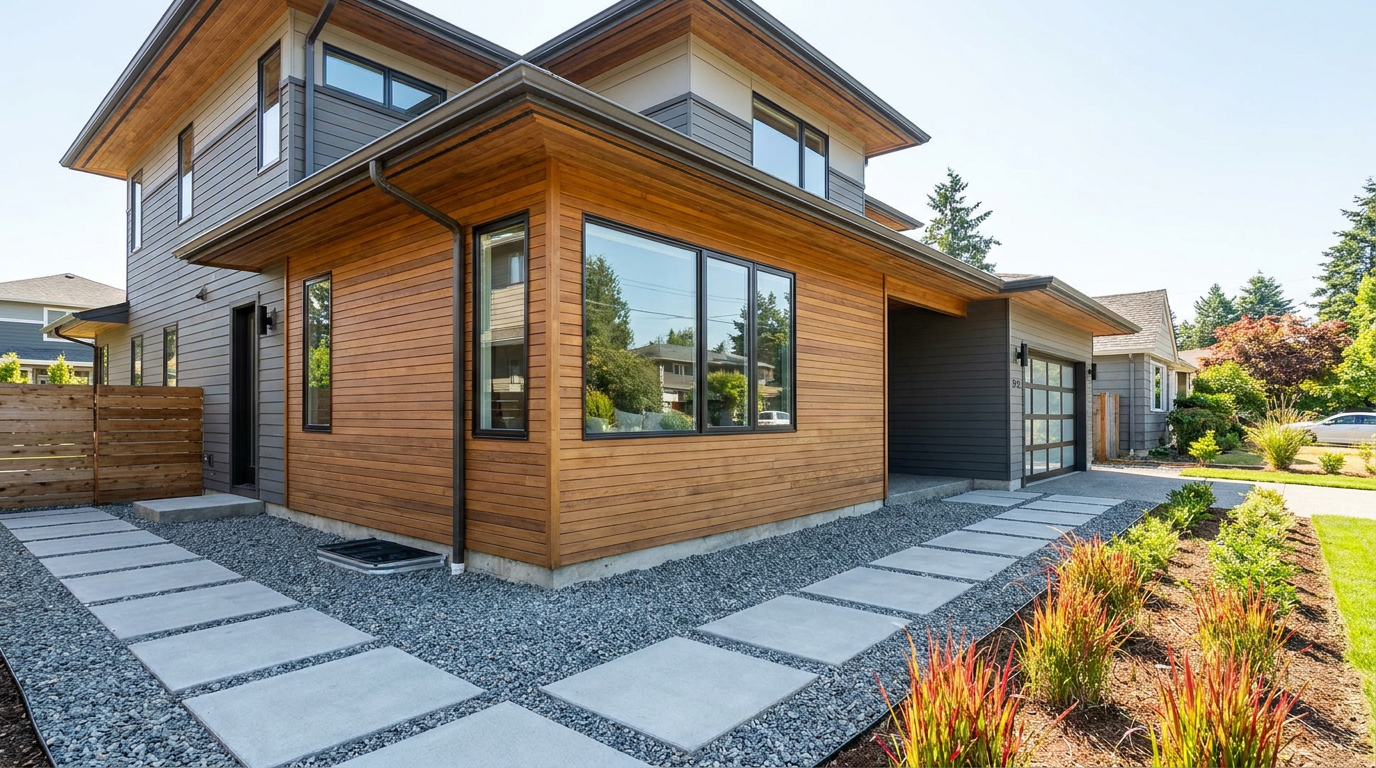
For wildfire-prone areas, the science of home hardening is highly specific. It begins with "Zone 0" defensible space, which requires removing all combustible materials within five feet of the home's perimeter. This includes replacing wood mulch with gravel, removing attached wooden fencing, and clearing overhanging vegetation. These seemingly minor landscaping changes drastically reduce the chance of a home igniting from wind-blown embers, which are responsible for the vast majority of structural fires during a wildfire event.[4][5][7]
Beyond the perimeter, structural upgrades are becoming the new standard for insurability. Installing ember-resistant vents prevents burning debris from entering attics and crawlspaces, while Class A fire-rated roofing materials provide a critical shield against airborne threats. Some homeowners are even installing active wildfire defense systems that deploy non-toxic, plant-safe fire retardants when a threat approaches, operating independently of municipal water supplies.[5][7]

The regulatory landscape is slowly adapting to reward these mitigation efforts. In California, the Department of Insurance issued Bulletin 2022-08, a landmark mandate requiring admitted carriers to explicitly account for wildfire mitigation actions in their rate filings. Insurers must now offer specific, documented discounts for homes that achieve defensible space compliance and complete hardening retrofits.[4]
This regulatory push is creating a tangible path back to the standard insurance market. Homeowners who find themselves relegated to a FAIR plan are not permanently trapped. By documenting their mitigation work—often guided by the Insurance Institute for Business & Home Safety's (IBHS) Wildfire Prepared Home standards—property owners can significantly lower their risk profile.[5]
The process requires meticulous documentation. Homeowners must submit photographs, contractor invoices, and standardized inspection reports to prove that their property meets the new, rigorous safety thresholds. Once verified, this evidence forces insurers to recalculate the property's risk score, often moving it from "uninsurable" back into the acceptable underwriting tier.[5][7]

Industry data from 2026 shows that most FAIR Plan policyholders who achieve verified Zone 0 compliance and complete essential retrofits can return to a standard carrier within 12 to 24 months. While the upfront cost of home hardening can be substantial, the long-term savings on insurance premiums, combined with the preservation of property value, make it a necessary investment for modern homeownership.[4][7]
The home insurance crisis represents a painful but necessary repricing of environmental risk. The era of cheap, universally available property insurance in high-risk zones is likely over. However, the emerging framework offers a more resilient future: one where insurance costs are directly tied to a home's physical preparedness, incentivizing a massive, nationwide upgrade of the housing stock.[3][7]
How we got here
Oct 2022
California issues Insurance Bulletin 2022-08, mandating that insurers offer discounts for documented wildfire mitigation.
2023
The insurance industry pays out $1.11 in claims for every $1.00 earned, driven by severe climate disasters.
Late 2024
The California FAIR Plan raises its dwelling coverage cap to $3 million to accommodate rising home replacement costs.
Early 2026
The California FAIR Plan swells to over 680,000 policies, a 152% increase since 2022.
Oct 2026
The California FAIR Plan implements an average rate increase of 29% to maintain solvency.
Viewpoints in depth
Risk-Averse Insurers
Carriers argue that rates must accurately reflect the new reality of climate risk to prevent industry insolvency.
Insurance companies emphasize that they cannot operate at a loss. With climate change rendering historical underwriting models obsolete and reinsurance costs skyrocketing, carriers argue that pulling out of high-risk areas or drastically raising premiums is the only mathematically sound option. They maintain that artificially capping rates through regulation only accelerates market collapse by forcing companies to take on unpriced risk.
Consumer Advocates
Advocates warn that skyrocketing premiums are creating an affordability crisis that threatens homeownership.
Consumer protection groups argue that the insurance industry is abandoning its core function of spreading risk. They highlight that sudden policy cancellations and massive rate hikes disproportionately harm lower-income homeowners and destabilize local housing markets. These advocates push for stronger state intervention, demanding transparency in how insurers calculate climate risk and insisting on strict caps for annual premium increases.
Mitigation Proponents
Experts believe the solution lies in physically adapting the housing stock to withstand climate disasters.
Building scientists and regulators argue that the focus must shift from financial maneuvering to physical resilience. By mandating 'home hardening' and defensible space, they believe properties can be made insurable again. This camp champions policies that force insurers to offer substantial discounts for verified mitigation work, arguing that rewarding homeowners for reducing risk is the only sustainable path to stabilizing the market.
What we don't know
- Whether state-mandated mitigation discounts will be large enough to offset the broader, climate-driven baseline increases in premiums.
- How quickly the reinsurance market will stabilize if global temperatures continue to drive unpredictable extreme weather.
- If other climate-vulnerable states will adopt California's strict mandates requiring insurers to reward home hardening.
Key terms
- Home Hardening
- The process of upgrading a home's physical structure—such as installing fire-resistant roofing and ember-proof vents—to make it less vulnerable to climate disasters.
- Defensible Space (Zone 0)
- The critical five-foot perimeter immediately surrounding a home where all combustible materials, including plants and wood mulch, are removed to prevent ignition.
- Reinsurance
- Insurance purchased by primary insurance companies to protect themselves against massive, catastrophic losses from major disasters.
- FAIR Plan
- Fair Access to Insurance Requirements plans are state-backed insurance pools that offer coverage to high-risk properties rejected by the standard market.
Frequently asked
Why are home insurance premiums rising so fast?
Climate change is causing more frequent and severe weather events, leading to massive payouts. Insurers are raising rates to cover these escalating risks and the rising cost of reinsurance.
What is a FAIR Plan?
A FAIR Plan is a state-mandated 'insurer of last resort' that provides basic coverage for homeowners who cannot secure policies from traditional private carriers.
How can I lower my home insurance premium?
Homeowners can secure mitigation discounts by documenting 'home hardening' upgrades, such as creating defensible space, installing ember-resistant vents, and upgrading to fire-rated roofing.
Can I get off a FAIR Plan once I'm on it?
Yes. By completing verified property upgrades and maintaining a clean loss history, many homeowners can return to the standard insurance market within 12 to 24 months.
Sources
Source coverage
7 outlets
3 viewpoints surfaced







[1]KPBSConsumer Advocates
California FAIR Plan Rates Are Rising Again
Read on KPBS →[2]Inside Climate NewsRisk-Averse Insurers
Premiums Have Gone Through the Roof as Insurers Leave States
Read on Inside Climate News →[3]Harvard Business SchoolRisk-Averse Insurers
Climate change is causing turbulence in homeowner insurance markets
Read on Harvard Business School →[4]California Department of InsuranceMitigation Proponents
Insurance Bulletin 2022-08: Mitigation Discount Mandate
Read on California Department of Insurance →[5]Insurance Institute for Business & Home SafetyMitigation Proponents
Wildfire Prepared Home Standards and Mitigation
Read on Insurance Institute for Business & Home Safety →[6]Consumer Federation of AmericaConsumer Advocates
Home Insurance Premiums Outpace Inflation by 11%
Read on Consumer Federation of America →[7]Factlen Editorial TeamMitigation Proponents
Synthesis by Factlen editorial team
Read on Factlen Editorial Team →
Every angle. Every day.
Get home stories with full source coverage and perspective breakdowns delivered to your inbox.