
FIDE Women's Circuit Standings: Assaubayeva Takes the Lead as Teenagers Hnatyshyn and Savitha Shri Crash the Top 10
Kazakhstan's Bibisara Assaubayeva has claimed the top spot in the 2026-2027 FIDE Women's Circuit, but a wave of teenage prodigies is rapidly reshaping the race for the 2028 Candidates Tournament.
By Factlen Editorial Team
- Established Contenders
- Acknowledge the excitement but face the grueling reality of maintaining peak performance across a relentless travel schedule to fend off point spikes from juniors.
- Rising Junior Talents
- See the Circuit as a meritocratic pathway to instantly vault into Candidates contention by targeting high-coefficient regional championships.
- FIDE Leadership
- Views the Circuit system as a massive success that incentivizes top players to compete frequently and democratizes opportunity for rising stars.
What's not represented
- · Tournament Organizers
- · National Chess Federations
Why this matters
The FIDE Women's Circuit is the premier qualification pathway for the World Championship cycle. The sudden rise of under-18 players disrupting the established hierarchy signals a generational shift in women's chess, promising a highly unpredictable race for the coveted 2028 Candidates spots.
Key points
- Bibisara Assaubayeva took the overall lead in the FIDE Women's Circuit after winning Norway Chess.
- Zhu Jiner and Vaishali Rameshbabu currently sit in second and third place, respectively.
- 15-year-old Anastasiia Hnatyshyn vaulted to fourth place after a shock victory at the European Championship.
- Savitha Shri B also entered the top ten following her win at the Asian Women's Championship.
- The Circuit winner at the end of 2027 earns a direct spot in the 2028 Candidates Tournament.
The race for the 2028 Women's Candidates Tournament has officially entered a volatile new phase. Following a dense cluster of high-stakes tournaments in May and June 2026, the FIDE Women's Circuit leaderboard has been completely rewritten, setting the stage for a thrilling two-year qualification battle.[1][5]
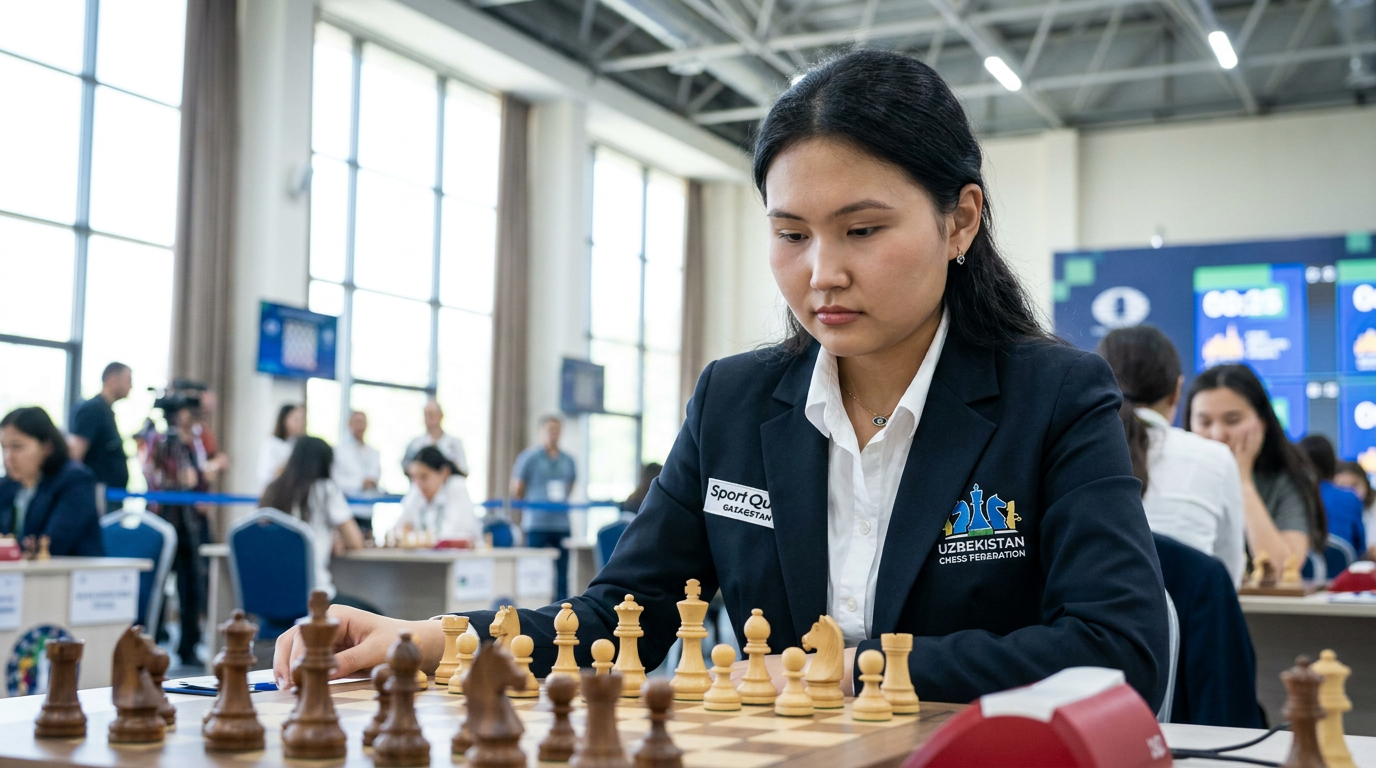
At the summit, Kazakhstan's Bibisara Assaubayeva has seized the overall lead. Capitalizing on her recent triumph at the prestigious Norway Chess Women tournament, Assaubayeva secured a massive 29.7 circuit points, vaulting her past the early frontrunners and establishing her as the player to beat in the current cycle.[1][2]
Assaubayeva's surge displaced China's Zhu Jiner, who now sits in second place despite a strong showing that netted her 21.6 points in Oslo. India's Vaishali Rameshbabu, who had previously commanded the top spot following her victory at the Women's Candidates earlier in the year, has temporarily slipped to third in the overall standings.[1][7]

But while the reshuffling among the established elite was expected, the real shockwaves in the FIDE Women's Circuit are emanating from the junior ranks. A wave of teenage prodigies has weaponized the circuit's point system, using high-coefficient continental championships to bypass the traditional rating grind and crash the top ten.[3][8]
The most spectacular disruption came from Batumi, Georgia, where 15-year-old Ukrainian Anastasiia Hnatyshyn pulled off one of the biggest upsets in recent chess history. Entering the European Women's Individual Championship as the 76th seed, Hnatyshyn tore through a field of seasoned grandmasters to emerge as the outright winner.[1][8]
The most spectacular disruption came from Batumi, Georgia, where 15-year-old Ukrainian Anastasiia Hnatyshyn pulled off one of the biggest upsets in recent chess history.
This historic victory did more than just secure a continental title; it catapulted the teenager straight to fourth place in the global FIDE Women's Circuit standings. By capturing maximum points in a heavily weighted eligible event, Hnatyshyn proved that a single transcendent performance can instantly transform a young player into a legitimate Candidates contender.[1][5]

Halfway across the world in Ulaanbaatar, Mongolia, another teenager was executing a similar leap. Indian Woman Grandmaster Savitha Shri B captured the Asian Women's Individual Chess Championship, scooping up enough circuit points to firmly plant herself inside the top ten.[1][6]
The FIDE Women's Circuit was designed specifically to reward this kind of dynamic activity. By calculating a player's final score based on their best results across up to twelve eligible events—including continental championships, national championships, and major opens—the system incentivizes frequent participation rather than rating protection.[5]
Other notable movers taking advantage of the circuit format include Azerbaijan's Ulviyya Fataliyeva. Her commanding victory at the IV International Women's Tournament in Uzbekistan earned her 15.37 points, keeping her comfortably in the top five and proving the value of targeting specific regional events.[3]

The stakes for this marathon race are absolute: the highest-placed eligible player at the conclusion of the 2027 season will receive a direct qualification ticket to the 2028 FIDE Women's Candidates Tournament, the final stepping stone to a World Championship match.[5]
With over a year of eligible tournaments remaining, the leaderboard is guaranteed to see further turbulence. The established grandmasters must now navigate a grueling schedule to accumulate steady points, all while fending off a fearless younger generation that has already proven capable of stealing the spotlight—and the circuit points—on any given Sunday.[1][3]
Ultimately, the 2026-2027 FIDE Women's Circuit is delivering exactly the kind of high-stakes drama it was designed to create. By bridging the gap between seasoned world champions and unheralded teenage prodigies, the standings race has transformed every major continental open into a must-watch event for the global chess community.[1][5]
How we got here
April 2026
Vaishali Rameshbabu wins the Women's Candidates, taking an early lead in the new Circuit cycle.
May 2026
Ulviyya Fataliyeva captures the IV International Women's Tournament in Uzbekistan, breaking into the top five.
June 5, 2026
Bibisara Assaubayeva wins Norway Chess Women, securing 29.7 points to seize the overall Circuit lead.
June 2026
15-year-old Anastasiia Hnatyshyn shocks the field to win the European Women's Individual Championship, vaulting to fourth.
Viewpoints in depth
FIDE Leadership
Views the Circuit system as a massive success that incentivizes top players to compete frequently and democratizes opportunity for rising stars.
The International Chess Federation designed the Circuit to solve a persistent problem in modern chess: top players sitting on their ratings and avoiding open tournaments. By shifting the qualification pathway to reward active participation, FIDE officials argue the system has revitalized the calendar. They point to the sudden rise of teenagers through Continental events as proof that the Circuit democratizes opportunity, allowing breakout performances to be immediately rewarded on the global stage.
Established Contenders
Acknowledge the excitement but face the grueling reality of maintaining peak performance across a relentless travel schedule to fend off point spikes from juniors.
For veteran grandmasters and former world champions, the Circuit represents a grueling marathon. Because the system counts a player's best results across up to twelve events, established professionals must maintain peak performance across a relentless, year-round travel schedule. They face immense pressure to consistently place high in major tournaments just to keep pace with the massive point spikes earned by rising juniors who manage to string together a single, transcendent week at a regional championship.
Rising Junior Talents
See the Circuit as a meritocratic pathway to instantly vault into Candidates contention by targeting high-coefficient regional championships.
For the younger generation, the Circuit is a game-changer. Rather than waiting years to slowly build their classical Elo ratings through incremental gains, teenagers can target high-coefficient regional and continental championships. A single victory in these heavily weighted events can instantly vault an unheralded junior into Candidates contention, providing a fast track to the highest echelons of the sport that simply did not exist in previous World Championship cycles.
What we don't know
- Whether the teenage prodigies can maintain their momentum across the grueling two-year schedule required to stay in the top ten.
- How the current top three will adjust their tournament schedules in late 2026 to defend their positions against the rising juniors.
- Which upcoming FIDE Grand Prix events will carry the heaviest point coefficients to further disrupt the standings.
Key terms
- FIDE
- The International Chess Federation, the global governing body of the sport.
- Candidates Tournament
- The final qualification tournament that determines who will challenge the reigning World Chess Champion for the title.
- Circuit Points
- The scoring system used to rank players in the FIDE Circuit, weighted by the strength and prestige of the tournament.
- Seed
- A player's preliminary ranking in a tournament based on their classical Elo rating before the event begins.
Frequently asked
What is the FIDE Women's Circuit?
It is a series of eligible top-tier women's chess tournaments held throughout 2026 and 2027. Players earn points based on their performances, with the overall winner qualifying for the 2028 Women's Candidates Tournament.
How many tournaments count toward a player's score?
A player's final Circuit score is calculated as the sum of their ranking points in up to twelve of their best eligible events.
Who currently leads the standings?
As of June 2026, Kazakhstan's Bibisara Assaubayeva leads the standings, followed by China's Zhu Jiner and India's Vaishali Rameshbabu.
How did a 15-year-old reach fourth place?
Ukrainian teenager Anastasiia Hnatyshyn won the European Women's Individual Championship as the 76th seed, earning a massive haul of circuit points that catapulted her straight into the top five.
Sources
Source coverage
8 outlets
3 viewpoints surfaced







[1]FIDEFIDE Leadership
FIDE Circuit 2026–2027: Abdusattorov maintains lead; Assaubayeva seizes top spot in women's race
Read on FIDE →[2]Kursiv MediaRising Junior Talents
Kazakh grandmaster Bibisara Assaubayeva leads FIDE world rankings
Read on Kursiv Media →[3]ChessBaseEstablished Contenders
Recent events reshape FIDE Circuit standings
Read on ChessBase →[4]Liquipedia ChessRising Junior Talents
FIDE Women's Circuit 2026-2027 - Standings
Read on Liquipedia Chess →FIDE Women's Circuit 2026 - 2027 Regulations
Read on FIDE Official Regulations →[6]The Indian ExpressRising Junior Talents
Savitha Shri wins Asian Women's Chess Championship, enters FIDE Circuit top 10
Read on The Indian Express →[7]The Times of IndiaEstablished Contenders
Vaishali slips to third in FIDE Women's Circuit standings as Assaubayeva takes lead
Read on The Times of India →[8]Kyiv PostRising Junior Talents
15-Year-Old Ukrainian Anastasiia Hnatyshyn Crowned European Women's Chess Champion
Read on Kyiv Post →

More in sports
See all 30 stories →WWE Championship
Sami Zayn Captures Undisputed WWE Championship in Triple Threat Victory at Night of Champions
6 sources

Injury
Chess Injury Report: Abasov's ACL Recovery, Humpy's Stand, and the Medical Power of the Board
6 sources

Injury
Global Netball Injury Report: Harvey Returns to Form as Poi Leads Steel From the Sidelines
7 sources

Standings
Northern Mystics Claim Record Fourth ANZ Premiership Title With Grand Final Victory Over Southern Steel
4 sources

Every angle. Every day.
Get sports stories with full source coverage and perspective breakdowns delivered to your inbox.