
Trump Nominates Former Oklahoma Trooper Lance Schroyer to Head ICE
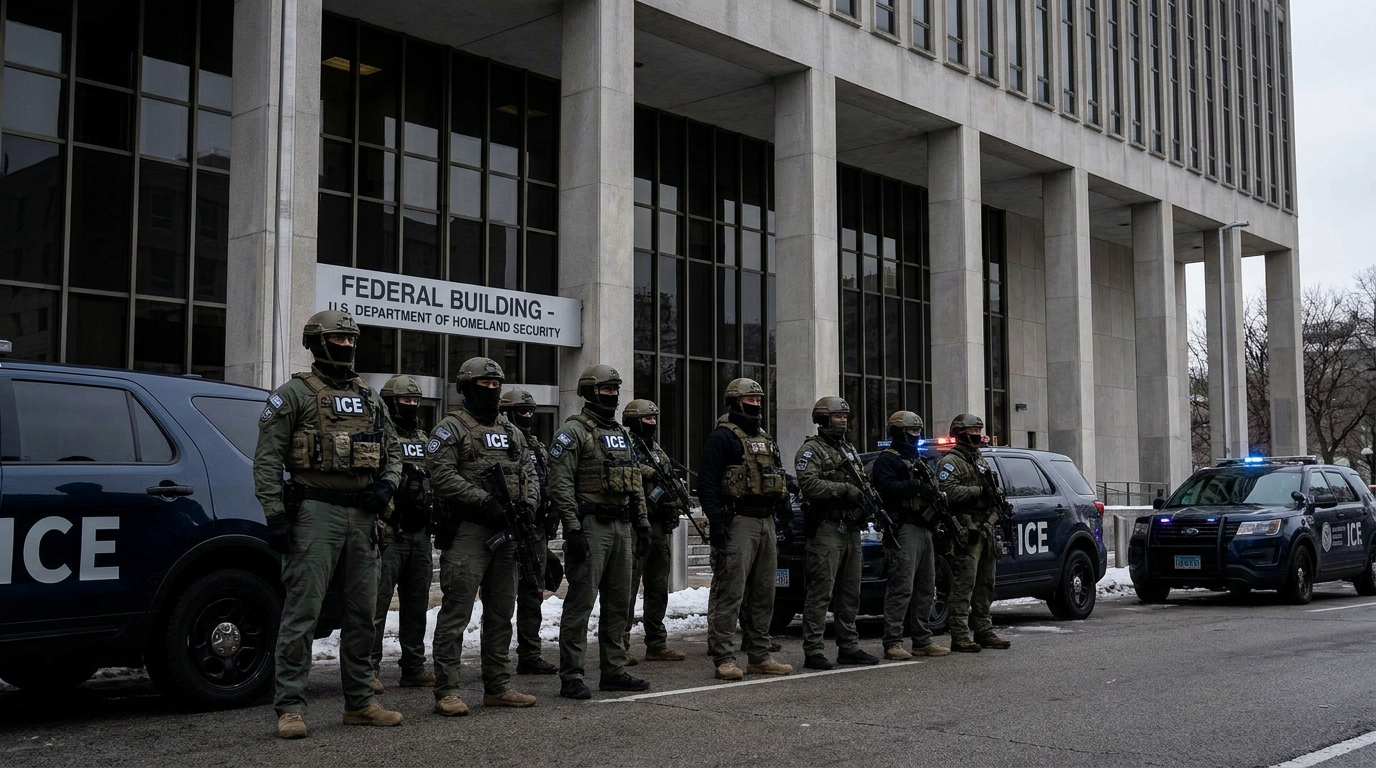
President Donald Trump has nominated Lance Schroyer, a former Oklahoma state trooper with a tactical background, to lead U.S. Immigration and Customs Enforcement amid a massive expansion of the agency.
By Factlen Editorial Team
- Administration & Enforcement Proponents
- Argues that Schroyer's tactical, on-the-ground experience is necessary to execute the mandate of mass deportations.
- Civil Rights & Immigration Advocates
- Warns that appointing a tactical operator will militarize the agency and erode constitutional due process.
- Institutional & Oversight Observers
- Focuses on the administrative challenges of elevating a state-level trooper to manage a sprawling federal bureaucracy.
What's not represented
- · Local community leaders in 287(g) jurisdictions
- · Rank-and-file ICE agents
Why this matters
ICE is currently executing the largest deportation campaign in U.S. history following a $75 billion budget injection. The appointment of a tactical operator rather than a career administrator signals a shift toward a more militarized approach to domestic immigration enforcement.
Key points
- President Trump nominated former Oklahoma state trooper Lance Schroyer to lead ICE.
- Schroyer has 29 years of law enforcement experience and a heavily tactical background.
- He was instrumental in expanding the 287(g) program, which deputizes local police for immigration enforcement.
- ICE has not had a Senate-confirmed director since early 2017.
- The nomination follows the resignation of acting director Todd Lyons amid intense scrutiny of the agency's tactics.
President Donald Trump announced on Saturday that he will nominate Lance Schroyer, a former Oklahoma state trooper and U.S. Marine, to serve as the next director of U.S. Immigration and Customs Enforcement. The nomination places a veteran state law enforcement figure with a heavily tactical background in line to oversee one of the federal government’s most consequential and heavily scrutinized agencies. In a statement posted to Truth Social, Trump praised Schroyer as a "proven leader" with decades of experience, emphasizing his firsthand operational background in removing undocumented immigrants from American streets. The announcement signals a clear escalation in the administration's mass deportation campaign, prioritizing on-the-ground enforcement execution over traditional administrative management.[1][2]
The stakes for the agency's leadership have never been higher. ICE currently operates at the center of the administration's aggressive immigration crackdown and is undergoing a massive structural expansion. Following a one-time congressional injection of $75 billion last year, the agency is actively scaling its detention capacity and hiring an additional 12,000 officers. Whoever takes the helm will inherit a multibillion-dollar budget and a mandate to execute deportations at an unprecedented scale. Schroyer’s nomination is intended to provide permanent leadership to an agency that has operated exclusively under acting directors for nearly a decade.[2][4]
ICE has not had a Senate-confirmed director since the final days of the Obama administration in early 2017. The position has historically been a lightning rod for partisan gridlock, with successive nominees failing to secure confirmation amid deep national divisions over immigration policy. By selecting Schroyer, the administration is betting that a candidate with a strict law enforcement pedigree—rather than a career Washington bureaucrat or immigration attorney—can break the confirmation stalemate and unify the agency's rapidly expanding workforce.[1][3]
Schroyer brings 29 years of law enforcement experience to the table, though his professional background is rooted almost entirely at the state level. He spent the vast majority of his career with the Oklahoma Highway Patrol, rising through the ranks from a patrol trooper to a major. Before entering law enforcement, Schroyer served in the United States Marine Corps, an experience that shaped his approach to command and operational structure. His lack of federal administrative experience makes him an unconventional choice for a cabinet-level agency director, a distinction that lawmakers are expected to scrutinize heavily during his confirmation hearings.[4][6]

Within the Oklahoma Department of Public Safety, Schroyer commanded the Emergency Services Unit, a specialized division tasked with high-stakes tactical operations. Under his leadership, the unit handled disaster response, civil disturbance mitigation, and riot control. This combat-command background is a central selling point for his supporters, who argue that executing a nationwide deportation campaign requires a leader who understands large-scale logistical and tactical maneuvers. However, critics warn that applying a tactical mindset to a domestic civil agency risks militarizing its operations and eroding procedural safeguards.[3][6]
Schroyer’s rapid ascent to the federal stage is closely tied to his relationship with Department of Homeland Security Secretary Markwayne Mullin, a fellow Oklahoman. Schroyer currently serves as Mullin’s senior adviser, overseeing the strategic coordination of immigration enforcement and acting as a liaison between federal authorities and local police. Mullin quickly championed the nomination on Saturday, stating that Schroyer is "coming straight from the operational field" and possesses the exact leadership required to secure the homeland. The selection underscores Mullin’s influence over the department's direction, preferring a trusted ally from his home state to execute the president's agenda.[2][6]
A defining feature of Schroyer’s career has been his aggressive expansion of the 287(g) program in Oklahoma. Named after a section of the 1996 Immigration and Nationality Act, the 287(g) program allows ICE to formally deputize state and local law enforcement officers to perform specific federal immigration duties. Under these agreements, local police are trained and authorized to identify, process, and detain undocumented immigrants who are arrested on criminal charges, effectively multiplying ICE's workforce without requiring additional federal agents on the ground.[1][5]
A defining feature of Schroyer’s career has been his aggressive expansion of the 287(g) program in Oklahoma.
Schroyer spearheaded the cultivation of these multi-agency partnerships, viewing them as a critical tool for maximizing enforcement reach. Nationally, the 287(g) program has exploded under the Trump administration as part of its broader deportation strategy. When President Joe Biden left office, only 135 police agencies across 16 states were enrolled in the program. As of this month, that number has surged to 2,033 agencies covering 39 states and two U.S. territories. Schroyer’s success in integrating local police into the federal deportation apparatus is widely seen as the blueprint he intends to implement nationwide.[1][4]

The rapid expansion of 287(g) partnerships remains fiercely contested. Proponents argue it is a necessary force multiplier that removes dangerous criminals from communities by ensuring local jails cooperate with federal authorities. Conversely, civil rights organizations and immigration advocates contend that deputizing local police blurs the lines of jurisdiction and fundamentally damages community trust. Critics argue that when local police act as immigration enforcers, undocumented residents become terrified to report crimes or cooperate with investigations, fearing deportation. There are also persistent concerns regarding inadequate federal oversight and allegations of racial profiling by local officers.[1][4]
Schroyer’s nomination arrives at a moment of profound internal turmoil for ICE. The agency has spent the past year navigating intense public backlash and operational strain. In April 2026, acting ICE Director Todd Lyons announced his resignation, stepping down at the end of May after leading the agency through a highly controversial period. Lyons had presided over the initial wave of the administration's rapid expansion, deploying federal officers into Democratic-led cities to conduct sweeping arrests—operations that frequently resulted in aggressive confrontations with protesters.[1][6]
The breaking point for the agency's public image occurred in January 2026, when federal immigration agents fatally shot two U.S. citizens, Renee Good and Alex Pretti, during operations in Minneapolis. The killings sparked nationwide protests, severe congressional scrutiny, and a crisis of legitimacy for ICE's tactical deployments. Lyons faced intense pressure to rein in the agency's use of force but remained defiant during congressional hearings, ultimately choosing to resign and transition to the private sector citing a desire to spend more time with his family.[2][7]
Following Lyons' departure, the administration appointed David Venturella to serve as the interim head of the agency starting June 1. Venturella’s brief tenure immediately drew fire due to his background as a former executive at the GEO Group, one of the nation’s largest private prison and detention contractors. Advocacy groups condemned the appointment as a glaring example of the revolving door between federal immigration enforcement and the private corporations that profit from mass incarceration. Venturella is expected to remain in the acting role until Schroyer secures Senate confirmation.[2][3]

By pivoting from a private prison executive to a tactical state trooper, the administration is signaling a distinct shift in how it plans to manage the next phase of its immigration agenda. Immigration advocates warn that appointing an "operator" like Schroyer confirms a trajectory away from administrative management and toward a model of pure tactical enforcement. The concern is that a leader trained in emergency response and riot control may view immigration enforcement strictly as a combat operation, prioritizing arrest metrics over the complex legal and humanitarian nuances of civil immigration law.[4][5]
Legal experts and oversight observers fear that applying a combat-command mentality to a domestic agency will further erode procedural due process. ICE is already facing a surge in lawsuits claiming unlawful arrests and excessive use of force. Critics argue that elevating a commander whose primary expertise lies in tactical maneuvers rather than constitutional law or bureaucratic administration could exacerbate the agency's existing accountability issues, leading to further civil rights violations in immigrant communities.[3][7]
The path forward for Schroyer hinges on a high-stakes Senate confirmation battle. Lawmakers are expected to heavily scrutinize his lack of federal administrative experience, his tactical record in Oklahoma, and his aggressive championing of the 287(g) program. Democrats have consistently demanded that any new ICE funding or leadership be tied to strict oversight measures, including mandatory body cameras and standards against racial profiling. Securing the necessary votes will require the administration to convince skeptical senators that a state-level operator is equipped to manage a sprawling, multibillion-dollar federal bureaucracy.[4][5]
Despite the anticipated opposition, the White House and DHS leadership remain steadfast in their support for Schroyer. They argue that the traditional administrative approach has failed to secure the border or enforce interior immigration laws effectively. For the administration, Schroyer’s firsthand experience on the ground is not a liability, but the exact qualification needed to execute a historic mandate. As the confirmation process begins, the debate over Schroyer’s nomination will serve as a proxy battle for the future of American immigration enforcement and the limits of federal tactical power.[2][4]
How we got here
Early 2017
The last Senate-confirmed ICE director steps down at the end of the Obama administration.
January 2026
Federal immigration agents fatally shoot two U.S. citizens in Minneapolis, sparking nationwide protests.
April 2026
Acting ICE Director Todd Lyons announces his resignation amid mounting scrutiny over the agency's tactics.
June 1, 2026
David Venturella, a former private prison executive, assumes the role of interim ICE director.
June 27, 2026
President Trump nominates Lance Schroyer to permanently lead the agency.
Viewpoints in depth
Trump Administration & DHS Leadership
Argues that Schroyer's tactical, on-the-ground experience is necessary to execute the mandate of mass deportations.
Administration officials, including DHS Secretary Markwayne Mullin, view Schroyer's lack of Washington administrative experience as an asset rather than a liability. They argue that the traditional bureaucratic approach has failed to secure the border or enforce interior immigration laws effectively. By elevating a commander who has spent decades running large-scale tactical operations and coordinating with local police, the administration believes it has found the exact leadership profile required to execute a historic deportation mandate.
Immigration & Civil Rights Advocates
Warns that appointing a tactical operator will militarize the agency and erode constitutional due process.
Civil rights organizations express profound concern over the shift toward a combat-command mentality within a domestic civil agency. Advocates argue that an 'operator' trained in emergency response and riot control may view immigration enforcement strictly as a tactical mission, prioritizing arrest metrics over complex legal and humanitarian nuances. They fear this approach will exacerbate existing accountability issues, leading to further civil rights violations and excessive use of force in immigrant communities.
Local Law Enforcement Skeptics
Expresses concern that expanding 287(g) programs blurs the line between community policing and federal immigration enforcement.
Critics of the 287(g) program, which Schroyer aggressively championed in Oklahoma, argue that deputizing local police damages community trust. When local officers act as federal immigration enforcers, undocumented residents become terrified to report crimes or cooperate with local investigations, fearing deportation. Skeptics also point to persistent concerns regarding inadequate federal oversight and allegations of racial profiling by local officers operating under these agreements.
What we don't know
- Whether Schroyer can secure the necessary votes in the Senate to become the first confirmed ICE director since 2017.
- How Schroyer's tactical background will translate to managing a sprawling federal bureaucracy and a multibillion-dollar budget.
- The exact timeline for the Senate confirmation hearings.
Key terms
- 287(g) Program
- A section of the Immigration and Nationality Act that allows ICE to partner with state and local police to enforce federal immigration laws.
- Immigration and Customs Enforcement (ICE)
- The federal agency under the Department of Homeland Security responsible for cross-border crime and interior immigration enforcement.
- Emergency Services Unit
- A specialized tactical division within state police departments, often responsible for disaster response, SWAT operations, and riot control.
Frequently asked
What is the 287(g) program?
It is a federal initiative under the Immigration and Nationality Act that deputizes state and local law enforcement officers to perform certain immigration enforcement duties.
Why hasn't ICE had a confirmed director since 2017?
The position has been mired in partisan gridlock over immigration policy, leading successive administrations to rely on acting directors rather than fighting Senate confirmation battles.
Who did Lance Schroyer replace?
If confirmed, Schroyer will replace interim director David Venturella, who took over after acting director Todd Lyons resigned in May 2026.
Sources
Source coverage
7 outlets
3 viewpoints surfaced







[1]The Washington PostInstitutional & Oversight Observers
Trump taps Lance Schroyer to lead ICE, agency at center of deportation campaign
Read on The Washington Post →[2]PBS NewsInstitutional & Oversight Observers
Trump says he is nominating former Oklahoma state trooper Lance Schroyer as ICE director
Read on PBS News →[3]CBS NewsAdministration & Enforcement Proponents
Trump nominates former Oklahoma trooper Lance Schroyer to be ICE director
Read on CBS News →[4]NewsweekAdministration & Enforcement Proponents
Who Is Lance Schroyer? What to Know About Trump ICE Director Nominee
Read on Newsweek →[5]Al JazeeraCivil Rights & Immigration Advocates
Trump nominates former Oklahoma state trooper to head ICE
Read on Al Jazeera →[6]CNNInstitutional & Oversight Observers
Trump says he'll nominate former Oklahoma state trooper Lance Schroyer as ICE director
Read on CNN →[7]The GuardianCivil Rights & Immigration Advocates
Trump says he will nominate Lance Schroyer as next ICE director
Read on The Guardian →
More in news politics
See all 4 stories →
Every angle. Every day.
Get news politics stories with full source coverage and perspective breakdowns delivered to your inbox.