
International Testing Agency Launches Pilot to Use Power Data for Anti-Doping in Pro Cycling
A two-year study involving 60 professional riders will determine if longitudinal power modeling can act as an intelligence tool to target drug testing.
By Factlen Editorial Team
- Anti-Doping Authorities
- Integrity officials view power data as an untapped intelligence goldmine.
- Participating Teams
- Early adopters see data transparency as a necessary step to prove the peloton is clean.
- Riders' Union
- Labor representatives fear privacy breaches and false accusations based on flawed data.
What's not represented
- · Power meter manufacturers
- · Independent sports physiologists
Why this matters
If validated, this model would fundamentally change how cycling polices itself, turning the sport's most guarded proprietary performance metric into a mandatory integrity tool.
Key points
- The ITA has launched a two-year pilot study to use power data as an anti-doping tool.
- 60 riders from five teams, including Visma-Lease a Bike, are participating.
- The data will not be used to issue bans, but to target physical testing and investigations.
- If validated, the UCI could make power data sharing mandatory for all pro men's riders.
The International Testing Agency (ITA) has officially launched a two-year feasibility and pilot study to determine if professional cyclists' power data can be used as a supplementary anti-doping tool.[1][2]
Approved by the Union Cycliste Internationale (UCI) Funding Committee, the initiative represents a major shift in how the sport monitors performance and targets its testing resources.[1][6]
Currently, 60 riders across four UCI WorldTeams and one ProTeam have voluntarily joined the study.[1][5]
Participating squads include heavyweights like Team Visma-Lease a Bike, Decathlon-CMA CGM, Team Jayco-AlUla, Picnic-PostNL, and Cofidis.[4][5]
Researchers from the University of Kent and University College London are analyzing how a rider's power output naturally evolves over their career.[1][6]

The goal is not to issue anti-doping rule violations (ADRVs) based solely on a high power file.[3][5]
Instead, the ITA aims to identify "excess performances"—individual trajectories that deviate significantly from expected age-adjusted baselines.[2][5]
If the model flags an abnormal spike in sustained power, it will act as an intelligence trigger.[3][6]
This data will direct targeted blood and urine testing, inform sample retention decisions, and guide deeper laboratory investigations.[1][5]
This data will direct targeted blood and urine testing, inform sample retention decisions, and guide deeper laboratory investigations.
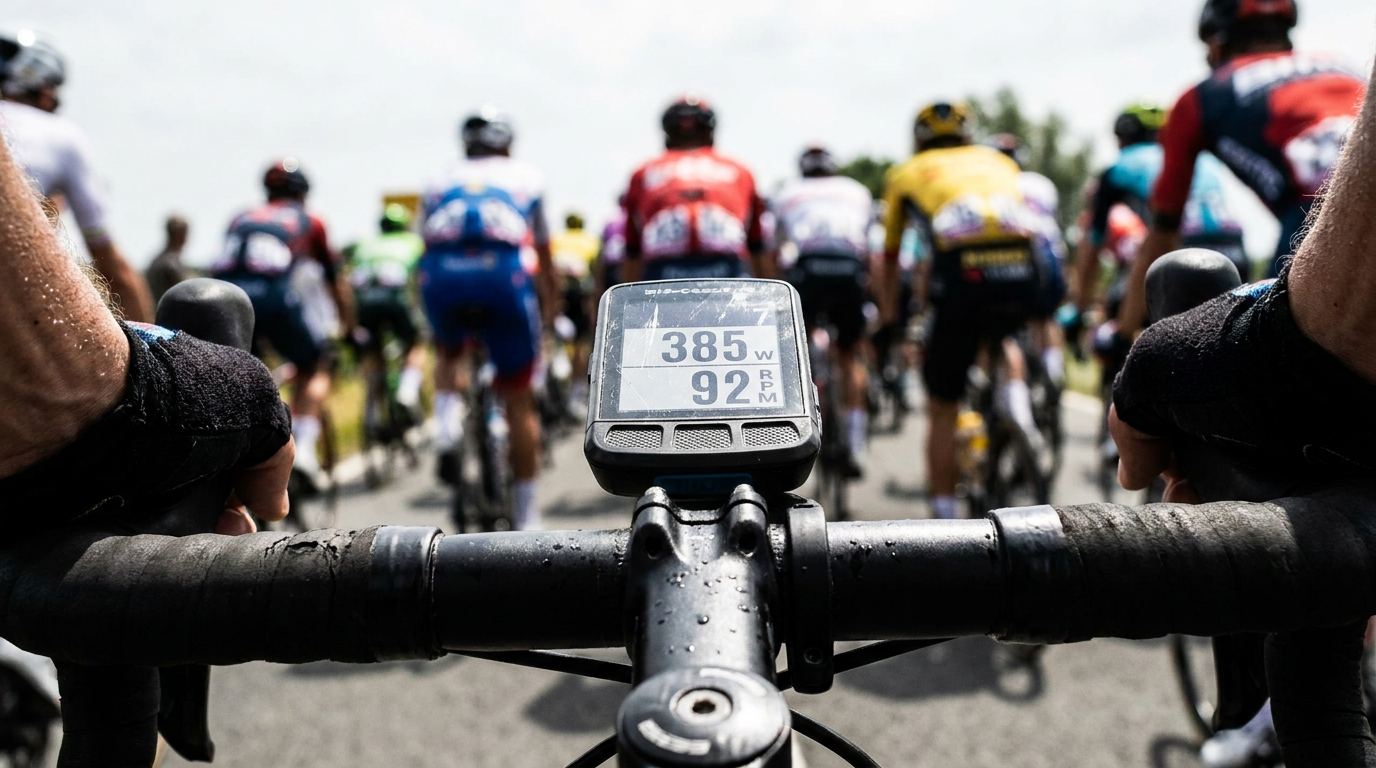
Power data—measured in watts—has been the defining metric of professional cycling for two decades.[1][6]
Mechanics optimize bikes for it, coaches design training blocks around it, and fans debate it during Grand Tour mountain stages.[5][6]
ITA Director General Benjamin Cohen noted that while power data is the sport's most widely used performance tool, its potential for anti-doping has remained "largely unexplored."[2][4]
The pilot study mirrors the philosophy behind the Athlete Biological Passport (ABP), introduced in 2008.[3][6]

Rather than catching a prohibited substance in a single test, the ABP tracks blood variables over time to detect the physiological effects of doping.[1][3]
However, translating raw watts into a reliable anti-doping metric presents significant scientific hurdles.[5][6]
Power files are highly sensitive to external variables. A rider's output can be skewed by their specific race role, pacing strategies, drafting dynamics, altitude, ambient heat, and even the calibration of different power meter brands.[5]
The two-year pilot is specifically designed to determine if these confounding variables can be accurately filtered out to create a scientifically robust and operationally meaningful model.[1][2]
There is transparent uncertainty regarding rider acceptance. Adam Hansen, president of the Cyclistes Professionnels Associés (CPA) riders' union, has previously stated that the organization is "100 percent against" mandatory power data sharing.[2][5]

Critics cite concerns over data privacy, the proprietary nature of training metrics, and the risk of false suspicions generated by inaccurate power meter calibrations.[3][5]
If the feasibility study proves successful and earns approval from the UCI Management Committee, the landscape of the sport will change.[1][5]
How we got here
2008
The UCI introduces the Athlete Biological Passport (ABP) to track blood values longitudinally.
March 2025
The UCI Funding Committee approves the initial proposal for a power data anti-doping study.
June 2026
The ITA officially launches the two-year pilot study with 60 riders from five professional teams.
2028 (Projected)
Conclusion of the pilot study and potential UCI vote on mandatory data sharing.
Viewpoints in depth
Anti-Doping Authorities
Integrity officials view power data as an untapped intelligence goldmine.
For the ITA and UCI, the era of relying solely on random urine and blood tests is over. They argue that just as the Athlete Biological Passport revolutionized anti-doping by tracking physiological changes, a 'Power Data Passport' can track mechanical output. By establishing a rider's natural performance ceiling, authorities believe they can flag unnatural spikes—'excess performances'—and deploy their limited testing resources more efficiently. They emphasize that this is an intelligence tool, not a standalone mechanism for issuing bans.
Participating Teams
Early adopters see data transparency as a necessary step to prove the peloton is clean.
Teams like Visma-Lease a Bike and Decathlon-CMA CGM have volunteered their riders' data to help build the model. For these squads, sharing power files is a proactive defense against the sport's historical reputation. They argue that if their riders are producing record-breaking watts cleanly, providing the underlying data to an independent body is the best way to validate those performances. They view the pilot as a necessary scientific hurdle to ensure the eventual model accounts for real-world racing variables.
Riders' Union
Labor representatives fear privacy breaches and false accusations based on flawed data.
The Cyclistes Professionnels Associés (CPA) has historically opposed mandatory power sharing. Union leadership argues that power meters are notoriously finicky, subject to calibration drift, temperature changes, and mechanical discrepancies. They fear that a 'false positive' in the data model could cast unwarranted suspicion on a clean rider. Furthermore, they view power data as proprietary intellectual property—the result of highly guarded training regimens—and are wary of handing it over to a centralized database.
What we don't know
- Whether the algorithm can successfully filter out the noise of drafting, altitude, and heat to create a reliable baseline.
- If the wider peloton will accept mandatory data sharing if the UCI attempts to enforce it post-pilot.
- How the ITA will handle discrepancies between different brands of power meters, which often read watts differently.
Key terms
- Power Meter
- A device fitted to a bicycle's drivetrain that measures the mechanical power (in watts) a rider produces.
- Longitudinal Analysis
- Studying data collected from the same subjects repeatedly over a long period of time to establish personal baselines.
- Athlete Biological Passport (ABP)
- An individual electronic record that tracks an athlete's biological markers over time to detect the effects of doping, rather than testing for specific substances.
- Excess Performance
- A statistical term used by the ITA to describe a sudden, unnatural spike in a rider's power output that deviates from their historical age-adjusted trajectory.
- Confounding Variables
- External factors—such as altitude, heat, or drafting—that can artificially inflate or depress a rider's power data.
Frequently asked
Will riders be banned just for having high power numbers?
No. The ITA has explicitly stated that power data will not be used to establish anti-doping rule violations on its own. It will only be used as an intelligence tool to direct targeted physical testing.
Which teams are participating in the pilot?
Around 60 riders from five teams are currently involved, including Team Visma-Lease a Bike, Decathlon-CMA CGM, Team Jayco-AlUla, Picnic-PostNL, and Cofidis.
Why are some riders against this?
The riders' union (CPA) has expressed concerns over data privacy, the proprietary nature of training metrics, and the potential for false suspicions caused by inaccurate power meter calibrations.
Sources
Source coverage
6 outlets
3 viewpoints surfaced






[1]International Testing AgencyAnti-Doping Authorities
The ITA Explores the Potential of Power Data in Cycling's Anti-Doping Efforts
Read on International Testing Agency →[2]Cycling WeeklyRiders' Union
'Its potential contribution to anti-doping has remained largely unexplored' – trial to use power data to fight cheats in pro cycling
Read on Cycling Weekly →[3]CyclingnewsRiders' Union
ITA launches pilot study to use power data for anti-doping in cycling
Read on Cyclingnews →[4]Escape CollectiveParticipating Teams
The International Testing Agency is looking into power testing as an anti-doping tool
Read on Escape Collective →[5]CyclingUpToDateParticipating Teams
Cycling's next anti-doping frontier? ITA study could make rider power data mandatory as Visma, Decathlon and Jayco AlUla join pilot
Read on CyclingUpToDate →[6]Inside The GamesAnti-Doping Authorities
ITA launches pilot study to assess power data in cycling
Read on Inside The Games →

More in sports
See all 15 stories →Olympic Expansion
Ski Mountaineering Secures Olympic Future With Expanded Roster for 2030 French Alps Games
6 sources
WWE Championship
Sami Zayn Captures Undisputed WWE Championship in Triple Threat Victory at Night of Champions
6 sources

Injury
Chess Injury Report: Abasov's ACL Recovery, Humpy's Stand, and the Medical Power of the Board
6 sources

Standings
FIDE Women's Circuit Standings: Assaubayeva Takes the Lead as Teenagers Hnatyshyn and Savitha Shri Crash the Top 10
8 sources

Every angle. Every day.
Get sports stories with full source coverage and perspective breakdowns delivered to your inbox.